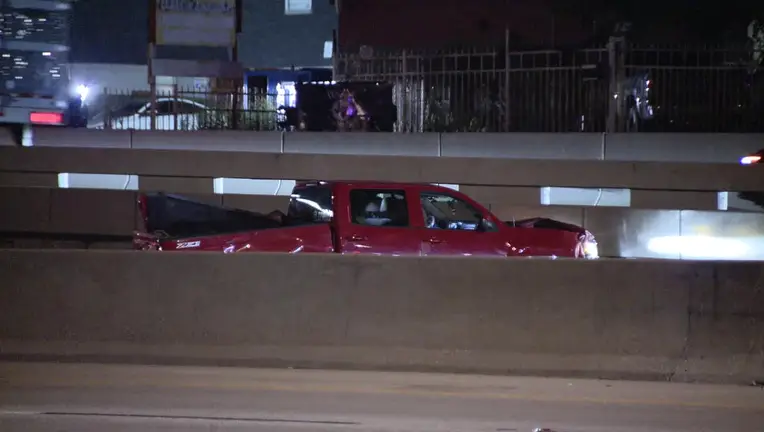
A Fort Worth man lost his life in the early morning hours of Sunday, May 31, 2026, in a scenario that plays out more often than most drivers realize: a minor fender-bender that seemed manageable turned into something far worse the moment he stepped out of his car. What began as a routine low-speed collision on a busy Texas freeway ended with a fatality, a hit-and-run, and a sobering reminder that freeway shoulders are not safe places to stand.
Fort Worth Police Department officers from the Central Division were called to the southbound lanes of the South Freeway near East Ripy Street just before 2 a.m. When they arrived, they found an adult male dead at the scene, according to local news. He had been struck by a passing vehicle after exiting his own car to inspect damage from what investigators described as a minor crash. A second, unrelated collision then occurred directly behind the original scene, sending the occupants of those vehicles to a local hospital with injuries that were not life-threatening.
The driver who struck the pedestrian did not stay at the scene. That decision to flee added a hit-and-run investigation on top of an already active fatality case. Police did locate and detain the driver at a separate location, and the Fort Worth Police Department’s Traffic Investigation Unit has taken over the case. The identity of the man who was killed had not been released as of Sunday morning.
As of this writing, no charges have been publicly announced, and the investigation remains ongoing. But the circumstances of this crash are worth examining closely, because they represent a preventable situation that safety experts and experienced drivers have been warning about for decades.
Why Getting Out of Your Car on a Freeway Is So Dangerous
Any driver who has been through a fender-bender knows the instinct: get out, check the bumper, exchange insurance information, and figure out what just happened. On a quiet residential street, that instinct is reasonable. On a freeway at 2 a.m., it can be fatal.
Freeway speeds create an environment where reaction times are compressed and sightlines can be deceptive, especially at night. A vehicle traveling at 65 miles per hour covers roughly 95 feet per second. A pedestrian standing alongside a travel lane, even partially off the road, is in serious danger, particularly when other drivers may not expect anyone to be standing there. Poor lighting, fatigue, inattention, or impairment can all contribute to a driver failing to spot someone on foot until it is far too late.
Traffic safety professionals consistently advise drivers involved in a minor crash on a freeway to stay inside their vehicles with seatbelts fastened, activate hazard lights immediately, and if possible, move the vehicle to the nearest exit or a well-lit parking area before getting out. Calling 911 and waiting for law enforcement is the recommended course of action. The damage to a bumper or quarter panel can be assessed and repaired. That math does not work the other way.
What Texas Law Says About Stopping After an Accident
Under Texas Transportation Code, any driver involved in a collision resulting in injury or death is required to stop at the scene, render aid if possible, and provide their information to law enforcement. Leaving the scene of a fatal accident is a felony offense in Texas. The driver who struck the pedestrian on Sunday morning fled, which is precisely the situation the law is designed to deter.
Texas takes hit-and-run offenses seriously, particularly when a fatality is involved. A conviction for failing to stop and render aid in a fatal crash can carry a sentence of two to ten years in a Texas state prison, along with significant fines. The fact that the driver was located and detained relatively quickly suggests that investigators had enough information from the scene to pursue a lead without much delay.
A Second Crash Compounded an Already Dangerous Scene
One of the more troubling details of this incident is the secondary collision that occurred directly behind the initial crash. While police noted that the two crashes are unrelated in cause, the proximity is not coincidental. Active crash scenes on freeways create what safety researchers sometimes call a “rubbernecking effect” combined with sudden congestion, where drivers approaching the scene brake unexpectedly or fail to notice stopped or slowed traffic in time. Emergency responders who arrive at crash scenes face this hazard routinely.
The occupants of the vehicles in the secondary crash were taken to a local hospital, though their injuries were not life-threatening. That outcome, while still serious, underscores how quickly a situation on a busy freeway can compound. One minor collision at 2 a.m. produced a fatality, a hit-and-run, and a second multi-vehicle crash, all within the same stretch of road.
The Bottom Line for Drivers
This incident is a pointed reminder that the instincts developed over years of driving in normal conditions do not always translate to freeway emergencies. The impulse to get out and assess damage is deeply ingrained, but on a high-speed roadway at night, it is one of the most dangerous decisions a driver can make.
Experienced drivers know that a car is a steel shell that offers considerable protection. The moment you step outside of it on a live freeway lane, that protection is gone entirely. If your car can move after a minor collision, move it. If it cannot, stay buckled and call for help. No dent or crumpled bumper is worth the risk of standing in traffic at highway speed.
The Fort Worth Police Department’s Traffic Investigation Unit continues to investigate the fatal crash. Anyone with information is encouraged to contact the department.