The first-generation Porsche Panamera has spent years living in the shadow of the 911, Cayman, and Cayenne, but that has also made it one of the brand’s biggest bargains on the used market. High original prices combined with steep depreciation have created an opportunity for enthusiasts willing to look beyond first impressions.
That opportunity led detailing expert and YouTuber Larry Kosilla of AMMO NYC to purchase a 2013 Porsche Panamera GTS that originally carried a window sticker of roughly $137,000. While the car remained mechanically solid, years of wear, neglected cosmetics, and accumulated grime kept it from looking or feeling like the premium performance sedan it once was.
Rather than modifying it into something radically different, Kosilla’s goal was simple: return the Panamera “back to zero.” That meant restoring its appearance, refreshing its mechanical components, and preserving everything that made the naturally aspirated V8 sports sedan special.
The result showcases why many enthusiasts believe the Panamera GTS deserves far more attention than it receives today, especially as naturally aspirated V8 luxury performance cars become increasingly rare.
Why the 2013 Panamera GTS Still Stands Out

Introduced as the sweet spot of the first-generation lineup, the 2013 Panamera GTS blended everyday practicality with genuine Porsche performance.
Power comes from a naturally aspirated 4.8-liter V8 producing 430 horsepower, paired with Porsche’s seven-speed PDK dual-clutch transmission and all-wheel drive. It offers the refinement of a luxury sedan while delivering the sharp handling expected from the Stuttgart automaker.
Kosilla considers it one of the most overlooked Porsche models on the market today, noting that it combines family-car practicality with grand touring capability in a package that has become surprisingly affordable.
A Complete Cosmetic Reset
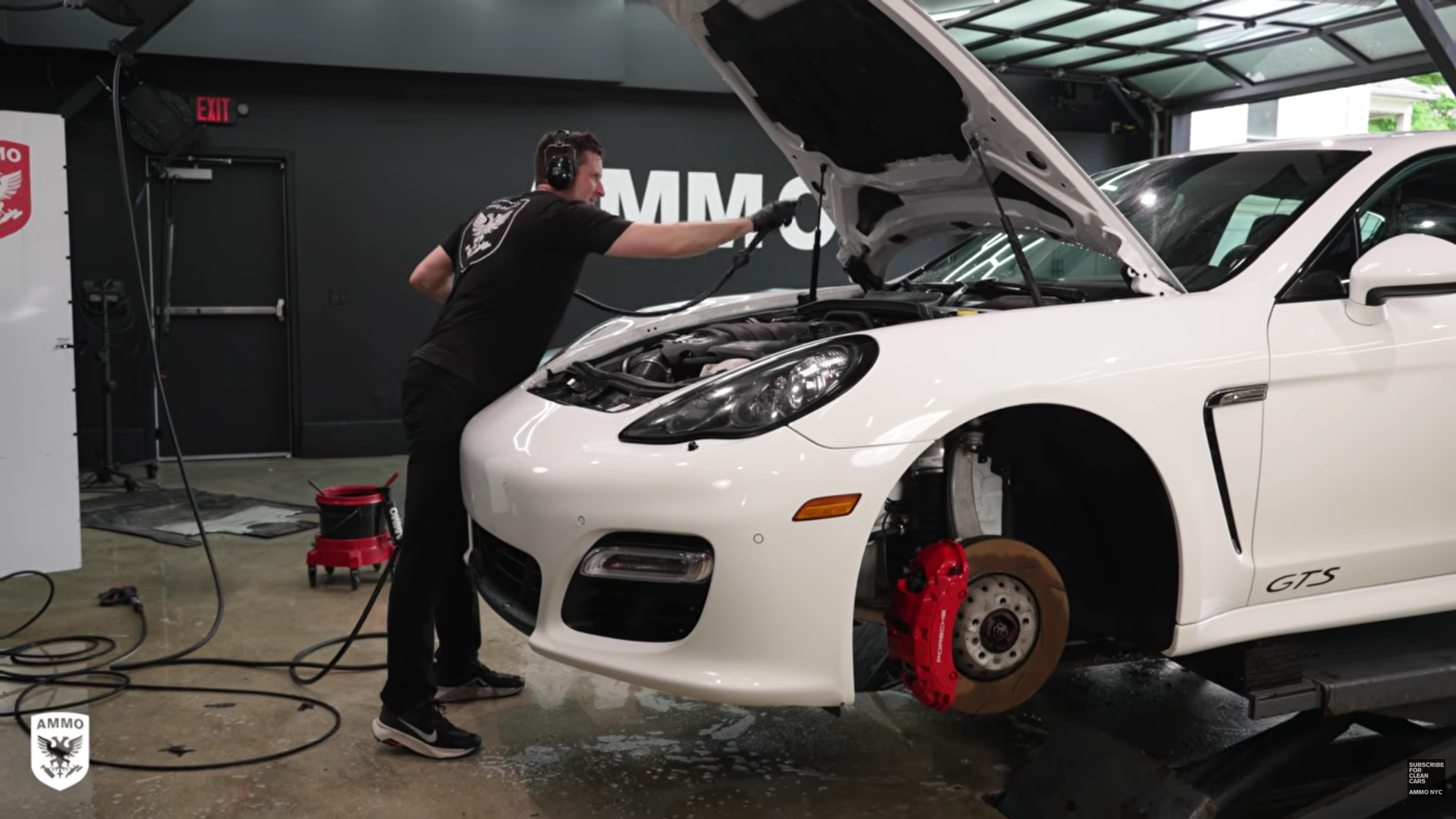
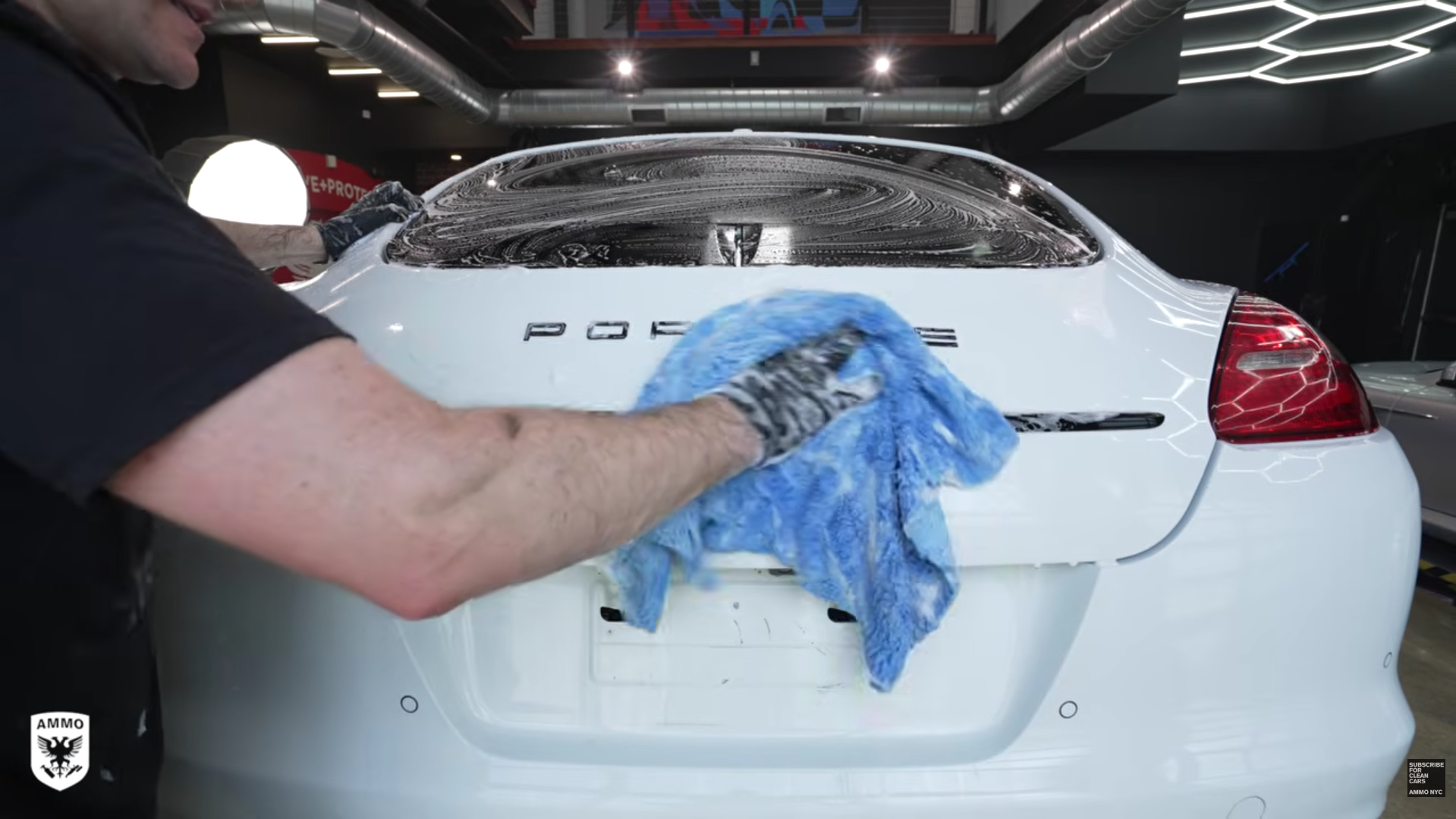
The restoration began with an intensive cleaning from top to bottom. The Panamera’s underbody, suspension components, wheel wells, engine bay, door jambs, and radiators were thoroughly cleaned to remove years of dirt, leaves, brake dust, and road debris. Every area that could trap moisture or contaminants received careful attention before work shifted to the paint.
The white exterior was heavily contaminated with embedded iron particles and environmental fallout that couldn’t be removed through washing alone. After a chemical decontamination and clay treatment, the paint underwent a multi-stage correction process that eliminated years of swirl marks, oxidation, and surface imperfections.
Although white paint tends to hide scratches better than darker colors, polishing dramatically restored its brightness and clarity, giving the Panamera a noticeably deeper gloss.
Additional refinements included polishing the brake calipers, restoring the glass, refreshing faded trim, removing old emblems before paint protection, and carefully correcting the heavily scratched piano black interior trim.
Restoring the Cabin
Inside, the focus shifted to returning the cabin to its original premium feel. The Alcantara upholstery received a deep steam cleaning to remove years of embedded oils and dirt, while the leather surfaces were cleaned, conditioned, and protected.
Seat belts, carpets, and hard surfaces were also thoroughly detailed before drying equipment ensured every fabric surface was completely moisture-free.
Kosilla described the process as removing the previous owner’s presence from the vehicle, creating a cabin that once again felt fresh and factory-new.
Modern Protection With Subtle Personal Touches

Rather than leaving the freshly corrected paint exposed, the Panamera received a full-body paint protection film. The clear film protects the finish from chips and scratches while preserving the freshly polished appearance.
To give the car a slightly more modern look without altering its character, the roof was wrapped in gloss black paint protection film, creating a two-tone appearance reminiscent of newer Porsche models.
Fresh gloss black badges replaced the original rear emblems, while newly refinished factory wheels were fitted with performance tires before receiving protective ceramic coating. The side windows also received new tint after imperfections were discovered in the original film.
Mechanical Refresh Completes the Transformation
The cosmetic restoration was matched by an extensive round of preventative mechanical maintenance. The Panamera received fresh engine oil, PDK transmission fluid, front and rear differential fluids, new spark plugs, ignition coils, filters, brake pads, and cryogenically treated brake rotors designed for increased durability.
Adjustable suspension links were installed to fine-tune the ride height, while wheel spacers helped improve the car’s stance without compromising its factory character. Several rounds of adjustments followed until the suspension delivered the balance Kosilla was aiming for.
The result wasn’t an aggressively lowered show car, but a subtle refinement that complemented the Panamera’s proportions.
An Overlooked Porsche Worth a Second Look
Once the restoration was complete, the decade-old sports sedan looked remarkably close to how it would have appeared leaving the showroom.
The refreshed paint, spotless interior, updated protection, and comprehensive mechanical servicing transformed a well-used luxury sedan into a car that once again reflected the engineering beneath its sheet metal.
As values of naturally aspirated performance cars continue to attract enthusiasts, projects like this highlight why the first-generation Panamera GTS has become one of Porsche’s most underrated buys. With its V8 soundtrack, everyday usability, and surprisingly attainable price, it remains an appealing alternative to far more expensive modern performance sedans.