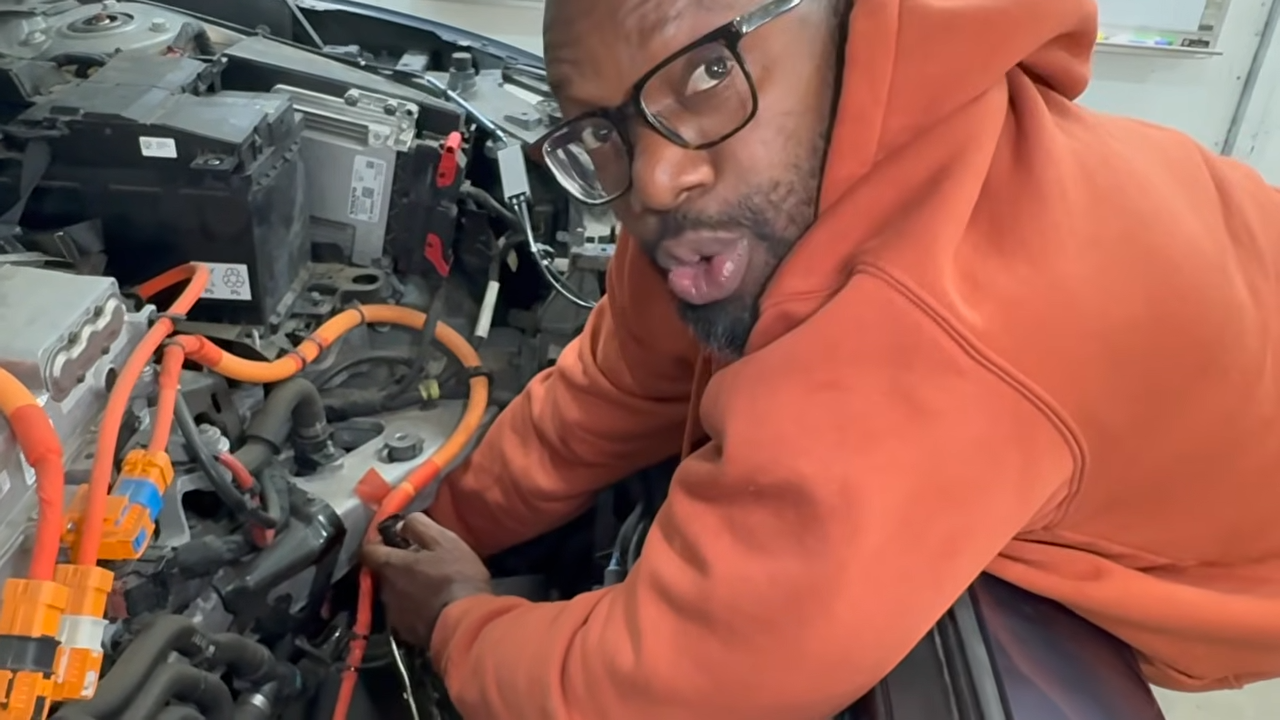
A nearly 500-horsepower electric car for around $3,000 sounds like an incredible deal. There’s just one problem: this one wouldn’t run, and its previous owner, rental giant Hertz, had already sent it to a salvage auction.
YouTuber Rich Rebuilds decided to take the gamble on a dual-motor Polestar 2 with roughly 80,000 miles. The car was listed with undercarriage damage, raising the possibility that its expensive high-voltage battery pack had been damaged.
Instead of finding a destroyed battery, Rich and his team uncovered a collection of mechanical and electrical problems, including a coolant leak, a faulty cooling-system component, and a broken suspension part.
In an October 20 video, the team documented the repairs before taking the Polestar onto the road to see whether the bargain-priced EV could deliver the performance it promised.
A $3,000 Gamble
Embedded media follows; please allow a moment to load.
The Rich Rebuilds video begins with a completely unresponsive Polestar. After inspecting the exterior and interior, Rich finds that the 12-volt battery needs charging.
Restoring power brings the dashboard back to life, but the vehicle still refuses to drive. A diagnostic scan identifies 14 fault codes, several of which involve the battery cooling system.
The coolant reservoir is low, prompting the team to investigate a possible leak. A pressure test eventually reveals a cracked coolant hose near a pump.
Rich trims the damaged end of the hose and installs another clamp. Although the leak appears to be resolved, the vehicle still has cooling-related fault codes that prevent normal operation.
Another Problem Appears
Further inspection reveals a missing component in the high-voltage disconnect circuit. Rich obtains a replacement, but the Polestar still won’t cooperate.
He then suspects the coolant control valve, which directs coolant to different parts of the electric drivetrain. Rather than replacing the entire assembly, he installs a used component purchased for $12.
After clearing the remaining diagnostic codes, the Polestar finally begins charging and moves under its own power.
Unfortunately, the first drive produces alarming banging noises from the rear suspension.
Back in the shop, the team discovers a broken mounting section on one of the car’s adjustable Öhlins shocks. Rich purchases a used replacement instead of attempting to repair the damaged shock with epoxy.
The Final Test
With the repairs completed, Rich drives the Polestar to a Tesla fast charger. Charging power climbs above 100 kilowatts, and the team finds no visible coolant leaks.
The biggest surprise comes during acceleration testing. The car initially reaches 60 mph in 4.1 seconds before improving to 3.9 seconds on a second attempt.
Rich is impressed by the performance and the condition of the interior, particularly considering the vehicle’s rental history and mileage.
The project also comes as Polestar faces a major change in its American business. The company announced in June that it would be unable to sell vehicles from model year 2027 onward in the United States under the federal Connected Vehicle Rule. Sales of remaining eligible inventory and support for existing customers would continue.
As for the salvaged Polestar, Rich says the successful repair earned it a permanent place in his collection. He also cautions viewers against treating non-running auction EVs as easy bargains, acknowledging how difficult the electrical problems were to diagnose.