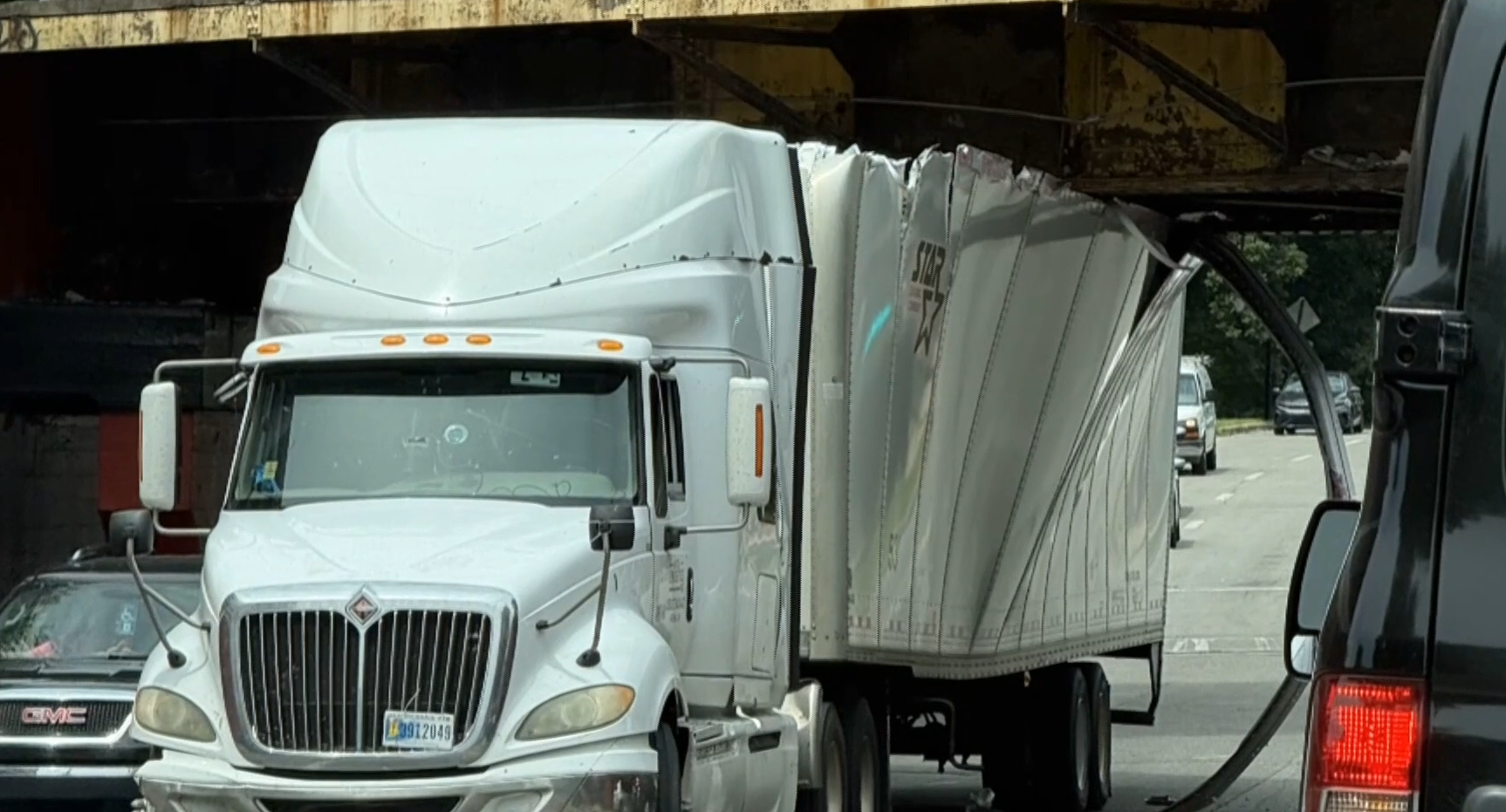
Louisville, Kentucky has no shortage of character, but one particular stretch of road near the University of Louisville has spent decades developing a reputation that the city never quite asked for. The railroad overpass where Third Street meets Eastern Parkway has become something of a local institution, though not for any reason a civil engineer would celebrate. Locals call it the “can opener,” and the name fits.
The structure clears just 11.8 feet on one side and exactly 12 feet on the other, both well short of the roughly 13.6 feet that a standard semi-truck stands tall. The result, repeated with almost comedic regularity, is a truck that goes in one height and comes out another.
The can opener has long operated on a modest but steady diet of inattentive or GPS-trusting truck drivers who missed the warning signs. Flashing lights and signage have stood guard at the overpass for years, and still, trucks continue to get wedged and damaged each year.
Over time the overpass accumulated enough of a following that a dedicated Facebook group and several Reddit threads emerged, used by locals to report and, for some, to mock the phenomenon. Metal debris from previous encounters reportedly litters the sidewalk nearby, serving as a kind of informal monument to past miscalculations. It is, in other words, a well-documented hazard with an established audience.
Then came June 1, 2026. Interstate 65 closed between Jefferson Street and I-264, shutting down a five-mile stretch of highway that ordinarily carries roughly 125,000 vehicles per day through Louisville. The closure is part of a $150 million Central Corridor Project replacing three aging bridges and is expected to last through August 1, with full reopening pushed to late 2027. With that kind of traffic volume suddenly rerouted through surface streets, the can opener’s diet changed considerably.
As truck drivers searched for alternate routes during the interstate closure, many bypassed the official detours, apparently preferring to trust navigation apps or their own judgment rather than follow signage designed specifically to keep large vehicles off local streets.
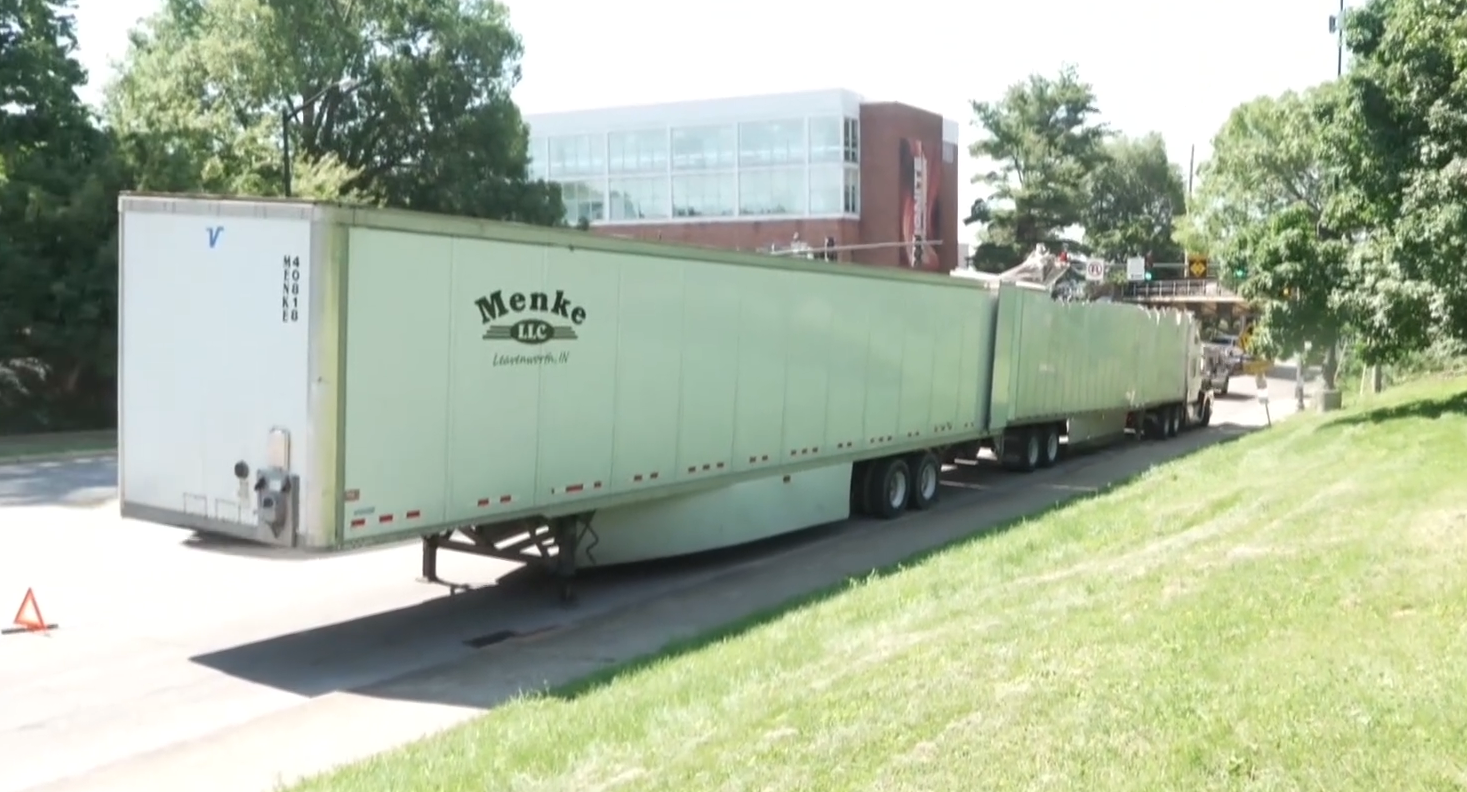
That decision has not been working out well. By Wednesday of the first week, LMPD confirmed six incidents at the overpass since the closure began, with four crashes logged on Monday alone and another at 1 a.m. Tuesday. A local tow company reportedly positioned a truck nearby in anticipation of continued business.
A Bridge Inspector on Speed Dial
One detail that puts the frequency of these incidents in perspective: Norfolk Southern, which owns the railroad tracks running over the Third Street and Eastern Parkway overpass, sends a railroad bridge inspector out to assess the structure after every single incident.
When crashes are a once-in-a-while occurrence, that policy is manageable. During a week when trucks are hitting the overpass multiple times a day, it represents a rather brisk inspection schedule. The railroad’s concern is understandable; a freight rail bridge that absorbs repeated hits from loaded semi-trucks is not a structure anyone wants to leave uninspected, and the cumulative effects of repeated impacts are a legitimate engineering concern even when individual strikes appear minor.
Signs, More Signs, and Then Some More Signs
Transportation officials moved quickly to respond to the surge. The Kentucky Transportation Cabinet noted that 29 warning signs were already in place near the overpasses before the I-65 closure began. Within the first few days, that number grew. By Friday of the first week, KYTC reported that more than 30 signs had been posted along South Third Street, Eastern Parkway, and Winkler Avenue.
Officials also reached out to major navigation platforms, with the transportation cabinet indicating it was working with Google Maps, Waze, and Apple Maps to add warnings for the low-clearance overpasses. A camera was also installed by Louisville Metro to monitor the intersection in real time.
KYTC spokesperson Mindy Peterson was direct about the situation: the official detour exists precisely to route commercial truck traffic away from streets that cannot handle it, and drivers ignoring that detour in favor of local shortcuts are creating problems for themselves and for other motorists. One incident at the Winkler Avenue overpass resulted in a truck getting pinned while an SUV behind it ran into the back of the stopped vehicle, with at least one person reported injured.
The Clearance Is Not Changing
For anyone hoping the city might simply raise the bridge or lower the road to fix the problem once and for all, officials have been clear. The can opener’s height is staying exactly where it is. The railroad infrastructure above is not easily modified, and the roadway beneath has its own constraints. The answer, according to transportation officials, is not to redesign the overpass but to keep large trucks on routes built to accommodate them.
This is not an unusual position. Throughout the United States, hundreds of low-clearance bridges share a similar story: fixed infrastructure, recurring strikes, and ongoing signage battles with drivers who either miss the warnings or assume their vehicle will fit when it will not.
The 11th Street railroad bridge in Durham, North Carolina developed such a following for truck strikes that it earned national media coverage and its own website. Louisville’s can opener is cut from the same cloth, just currently enjoying an unusually active stretch.
What the I-65 Closure Means for Louisville Drivers
The full I-65 closure is scheduled through August 1, at which point two lanes in each direction are expected to reopen. A partial southbound reopening between University Boulevard and the Watterson Expressway is anticipated by July 1.
The official signed detour for through traffic routes drivers via I-64 and I-264, bypassing the closed section entirely and keeping large vehicles off the city streets that were never designed for that volume or that size.
For local Louisville drivers, the next two months will require patience and route planning. For truck drivers approaching Louisville from outside the city, the advice from transportation officials is straightforward: use the designated detour, ignore the GPS if it suggests otherwise, and do not bet on fitting under a bridge with less than 12 feet of clearance. The can opener has a long memory and no interest in giving out second chances