There is something about driving a small car that’s just…different. If you’ve driven a Miata through the mountains, hit corners in an Elise, or zipped around town in a classic MINI, you know just how fun and nimble these smaller, lightweight platforms can be. As an adult, they are pretty much the closest you can get to driving a street-legal go-kart while still explaining to your wife why the purchase is completely reasonable.
Some smaller cars focus on having a lightweight, lower-displacement engine under the hood, not pushing the envelope too much, but instead focusing on the ride. Others, however, have a secret hiding under the hood, and these little cars have some pretty big engines compared to their small stature. They may be impractical and nonsensical, but that’s all part of the fun.
Small But Mighty (Mighty Crazy)

There were just two requirements to be included in this collection of misfits — be small and have a large engine. We know that even something this simple may still cause some debate, so here’s what we were thinking.
We looked for cars where the engine size, especially the cylinder count or displacement, seemed disproportionately large for the vehicle’s footprint or weight. We hunted for those rare beasts where a V8 (or even a massive V6) was shoehorned into a chassis that typically hosted a modest four-banger. We prioritized the unexpected, the audacious, and the ones that make you do a double-take.
Honestly, this is just for fun and you will probably get some laughs out of this strange collection. But if you want to debate us on what makes a car small or makes an engine big, feel free! We’re taking out our measuring tape!
Mercedes SLK 55 AMG
Okay, confession time. When my mom purchased her Mercedes SL 550 a few years ago, I didn’t really get the hype. To me, it was just an older luxury cruiser with some wear and tear, mostly useful for carrying shopping bags. Little did I know, under that stately hood was a proper V8 engine.
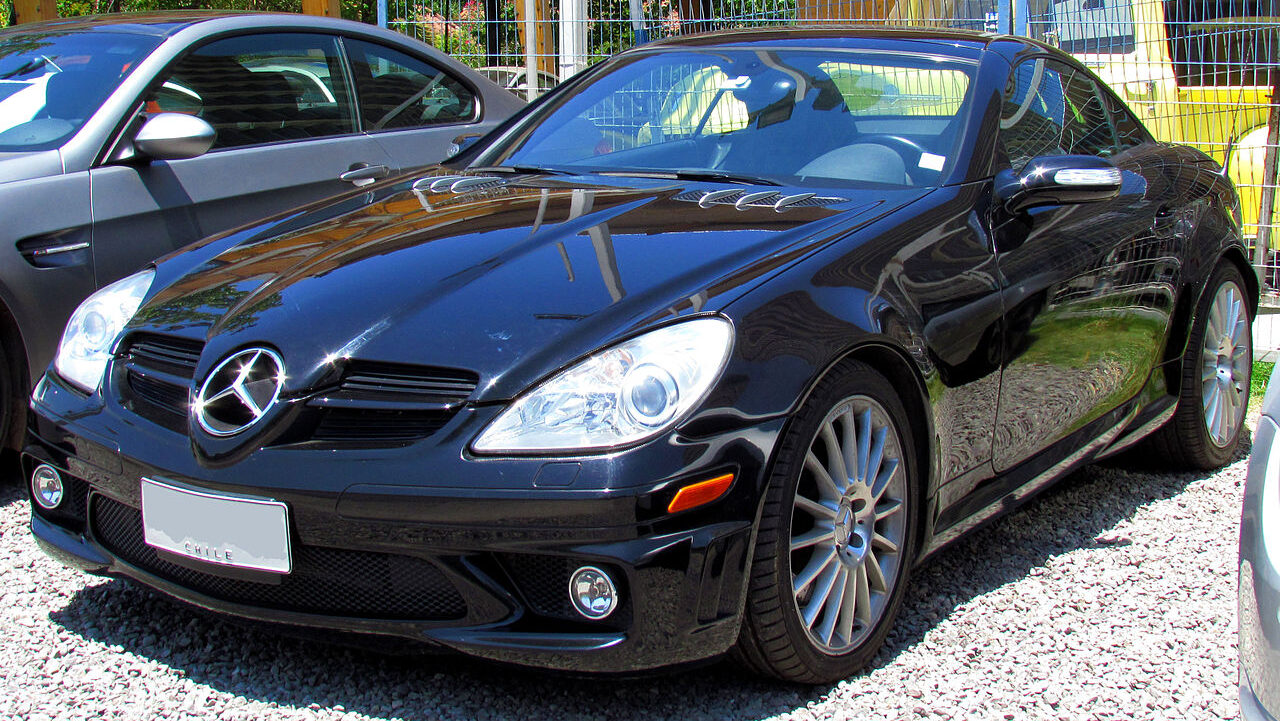
After taking it for a spin (with her permission, of course, I don’t have a death wish or a desire to pay for her insurance), I’ll never look at the brand the same. Now, let’s talk about the Mercedes-Benz SLK 55 AMG. While the first generation SLK 32 AMG had to make do with a supercharged 3.2-liter V6, the second generation (R171 chassis, 2004-2010) received a much more substantial, naturally aspirated power plant.
The SLK 55 AMG packs a hefty 5.4-liter M113 V8 engine (the same basic unit found in the full-fat E55 and CLS55), sending a glorious 355 hp and 376 lb-ft of torque to the rear wheels. When I say this sporty little two-door gets out of its own way, I mean it goes from 0-60 mph in a blink-and-you’ll-miss-it 4.9 seconds. This thing is a genuinely fast, surprisingly loud (thanks to that V8), and often overlooked convertible. This is pure, unadulterated madness in a package usually associated with tanning salons.
Renault Clio V6
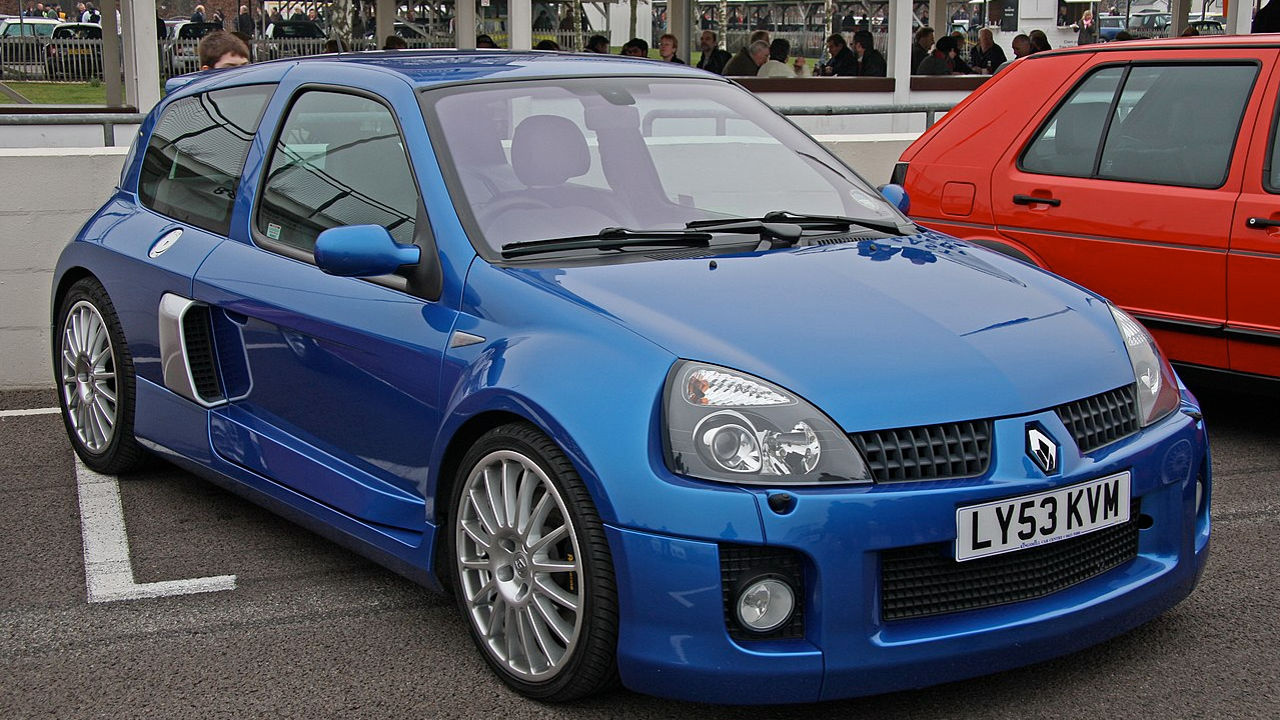
Renault has made some truly awesome small hatchbacks over the decades, from the classic turbo-nutcase Renault 5 Turbo to various sporty Clio versions. But one of the most iconic (and insane) models is the Clio V6. And no, before you start frantically checking Facebook Marketplace, we didn’t get them here in the States, which is a tragedy. But that doesn’t make them any less cool, or any less worthy of a spot on this list.
For the Clio V6 (both Phase 1 and Phase 2), Renault basically ripped out the rear seat and replaced it with a massive 2.9-liter (Phase 1) or 3.0-liter (Phase 2) V6 engine, mounted transversely. It also received a much wider body, flared arches, and an aggressive stance that makes it look ready to fight a Golf GTI.
Interestingly (and hilariously), despite being a mid-engined, V6-powered monster, the Clio V6 wasn’t much faster in a straight line than the lighter, front-engined, FWD Clio 172 or 182 Cup. But that’s not the point, is it? The point is the engineering audacity, the sheer lunacy of sticking a big V6 where your groceries usually go. It’s the ultimate “because we can” car.
Ariel Atom 500
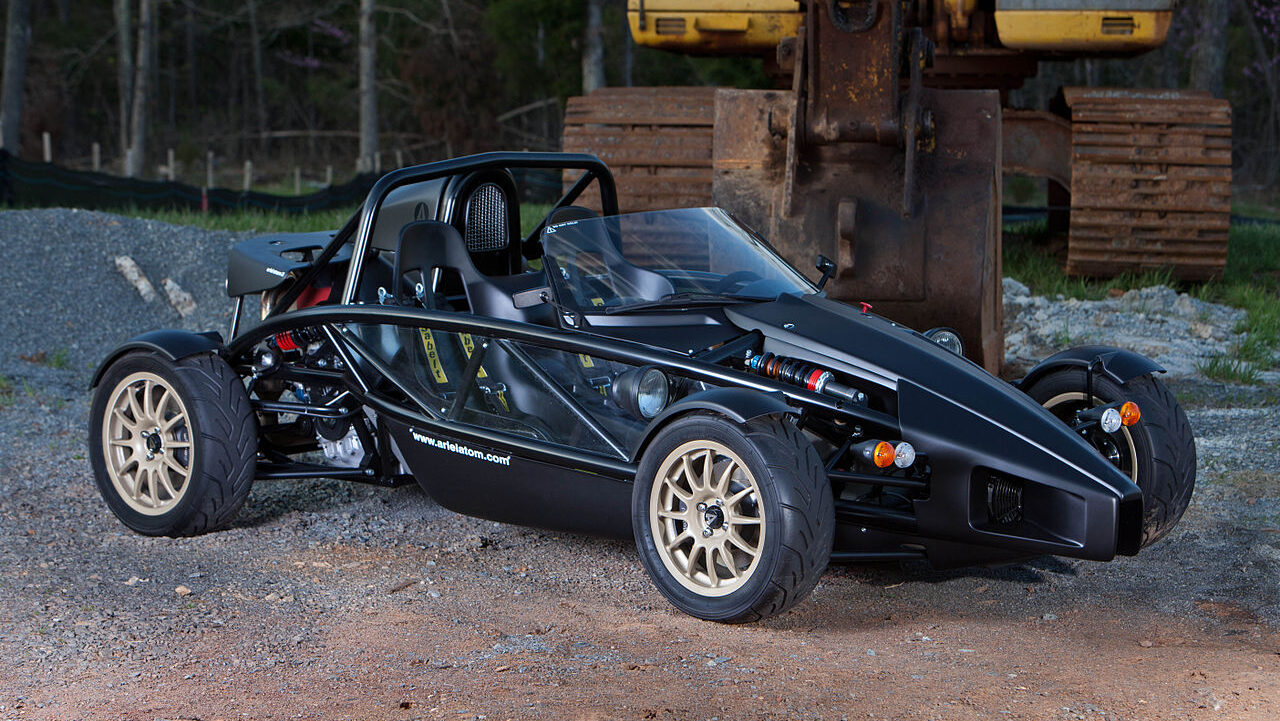
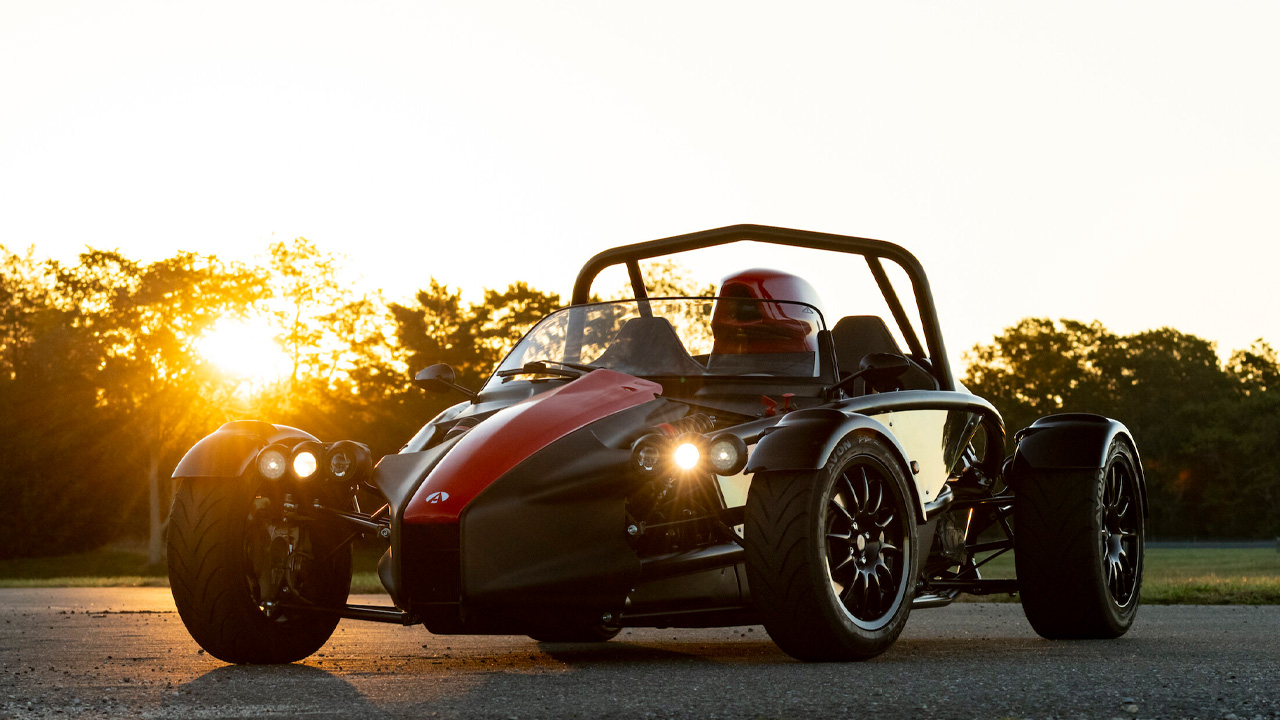
If you see an Ariel Atom, you’re probably either at a track day or you’re witnessing someone’s incredibly brave (or foolish) commute. Purely a track day toy for most, the Atom is as basic as a car can possibly be — it’s literally an exoskeleton with wheels. It only weighs a ridiculous 1,213 lbs (550 kg), but Ariel, bless their cotton socks, decided it needed a V8 engine. From the outside, it looks like a go-kart that escaped a science experiment, and it’s interesting to think that it is somehow legal on the roads. (Ariel, if you’re reading this, please let me take one for a spin… I’ll even provide the involuntary screams.)
Sure, the V8 engine in the Atom 500 only measures 3.0 liters (a custom flat-plane crank unit from Hartley Enterprises, essentially two Suzuki Hayabusa engines fused together), but that’s still pretty massive for a car this small and light. It also produces an insane 500 hp, sending this bare-bones sports car from 0 to 62 mph in just 2.3 seconds. This isn’t just power-to-weight; this is a power-to-weight ratio that could dislodge your fillings. It’s the automotive equivalent of strapping a jet engine to a bicycle.
Sunbeam Tiger
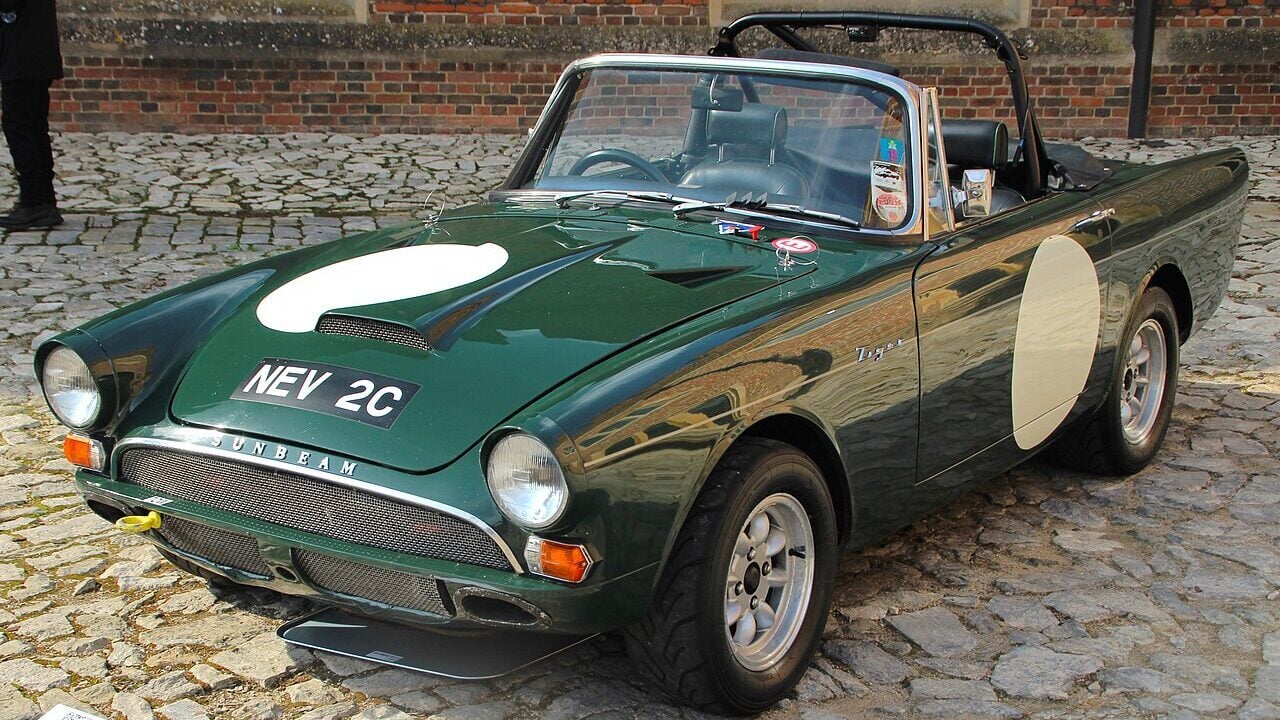
The Sunbeam Tiger is the high-performance V8-powered version of the charming, but somewhat underpowered, Sunbeam Alpine roadster. And who did you call when you wanted to shove an American V8 into a svelte British chassis? The pony car icon himself, Carroll Shelby. He was hired to create a prototype and managed to shoehorn a 4.3-liter (260 cu in) Ford V8 under its hood. Really, we expect nothing less from the man who put a Cobra in everything. The Sunbeam is all the better for it.
According to Shelby, it was a tight squeeze to make that engine fit. In his own words: “There was a place for everything and a space for everything, but positively not an inch to spare.” Later Tigers even got the more powerful 4.7-liter (289 cu in) V8. This transformed the polite Alpine into a hairy-chested beast, giving it a glorious rumble and enough grunt to embarrass much larger cars. It’s a perfect example of what happens when British elegance meets American brute force.
Shelby Cobra 427
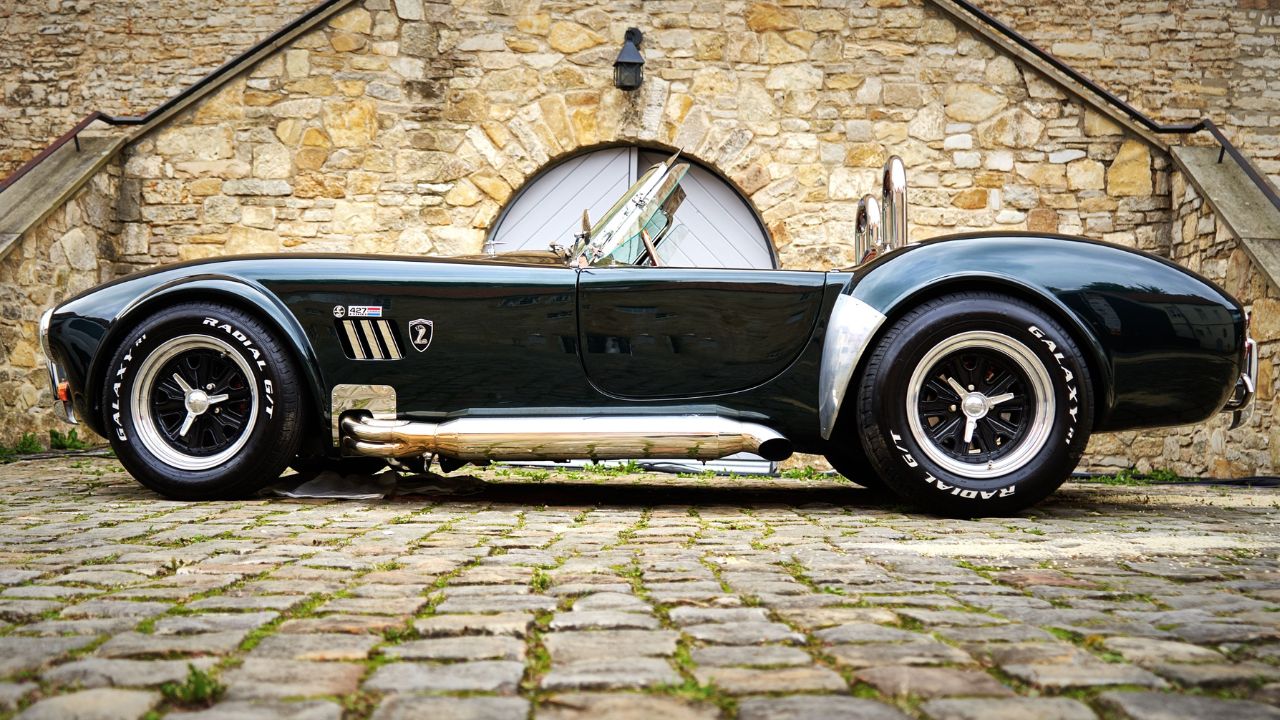
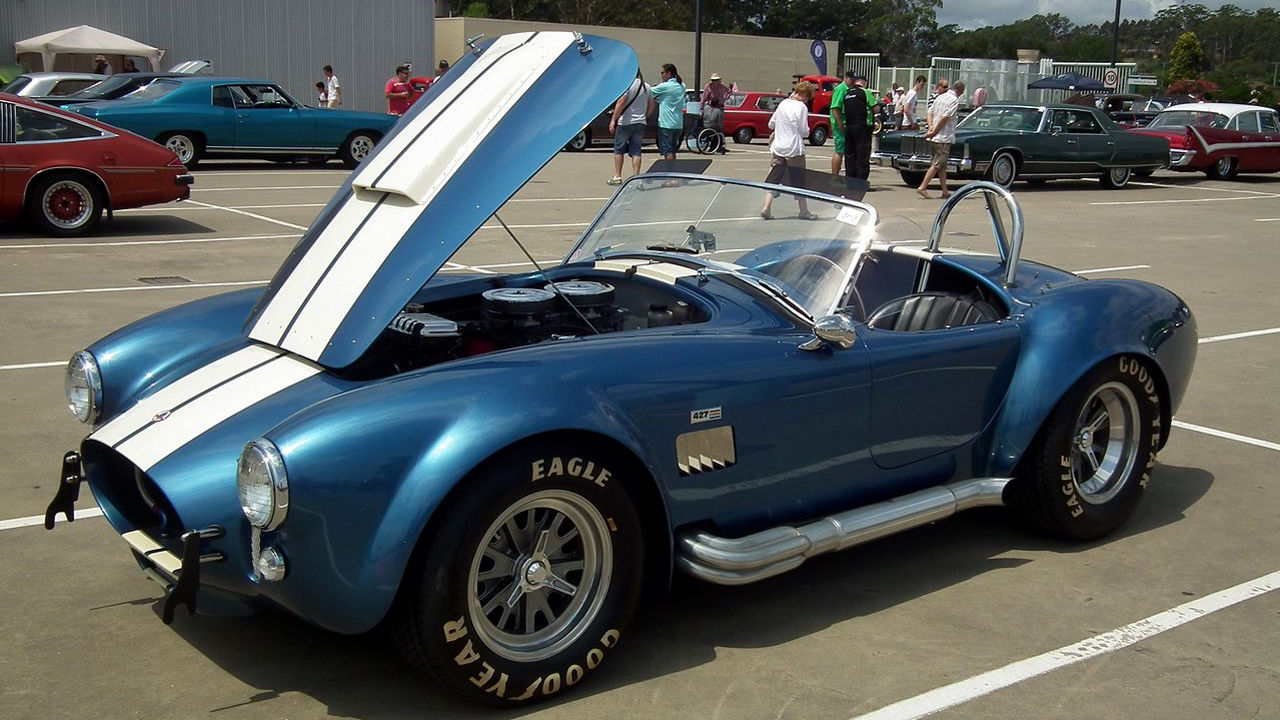
The Sunbeam Tiger wasn’t the first rodeo for Carroll Shelby when it came to squeezing a large Ford V8 engine under the hood of a svelte British sports car. Shelby’s original Cobra was famously based on an AC Ace, and his team apparently spent less than eight hours to fit Ford’s new 4.7-liter (289 cu in) V8 under its hood. If you see one flitting around town, chances are it’s one of the many fantastic replicas built by different companies around the country, and to be honest, some of them are pretty impressive.
However, the later MkIII Cobra 427 (1965-1967) was a much more potent, and terrifying, beast. It used Ford’s massive 7.0-liter (427 cu in) V8, which could churn out an advertised 425 hp (and often much more in competition tune). While the MkIII was slightly beefier and wider than the original Cobra, it’s still a tiny car by American standards.
If you’ve never seen one in person, I promise, they are smaller than you think — barely enough room for two people, an engine, and your fear. It’s like holding a hand grenade with the pin pulled.
Hennessey Venom GT
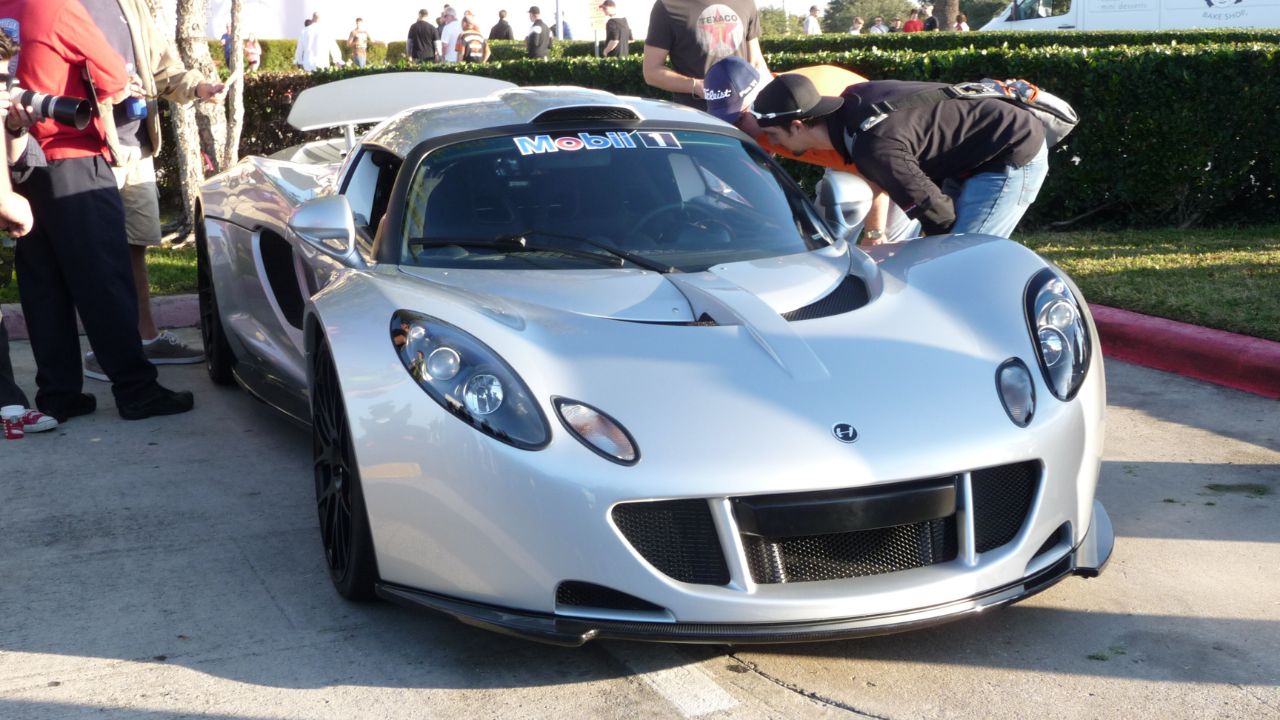
Based on the love of my life, the featherlight Lotus Elise, the Henessey Venom GT is American-modified and utterly insane. Shelby isn’t the only American to install a big, 7.0-liter American V8 engine (specifically, a twin-turbocharged LS7) in a small British sports car. I’ve personally never been in one, but I’ve been in a 660 horsepower K-series swapped Elise, and that in itself was an intense ride that felt like it was trying to rip my face off.
Whoever thought strapping a V8 (and then twin turbos!) into the back of a car that is half go-kart and half papier mache project is wild… though, as an avid Lotus fan, I have to admit the thought has crossed my mind more than once.
Hennessey got its hands on an Elise, stretched its aluminum tub a bit, and dropped in the mighty LS7 engine. However, they still weren’t happy, so a couple of massive turbochargers were fitted to it, pushing its power beyond the 1,200 hp mark. The Hennessey Venom GT then went on to briefly claim the title of the world’s fastest production car, hitting 270.49 mph. It’s the ultimate “hold my beer and watch this” car.
Lotus Exige Cup 430
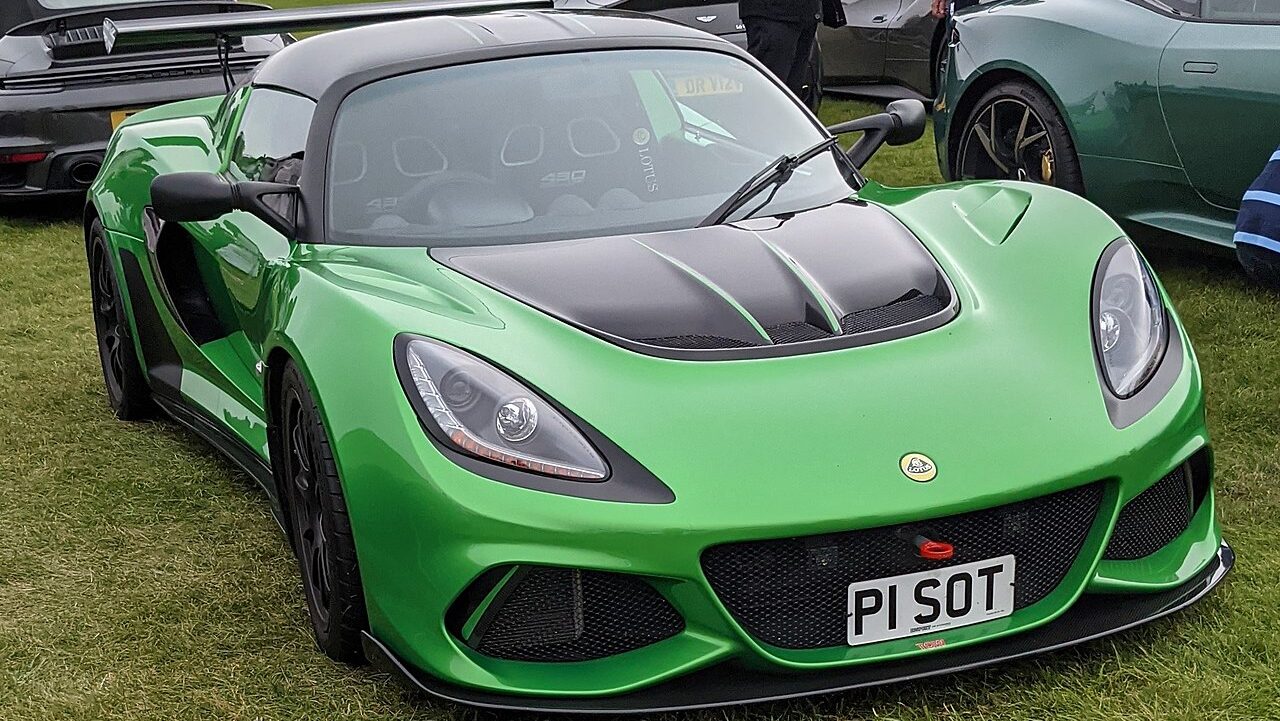
You weren’t getting away from me without another British car on this list (I have a preference, sue me, preferably in a small claims court). Compared to the Lotus-based Hennessey, the Lotus Exige Cup 430 doesn’t seem all that special in terms of sheer displacement. But it’s still a tiny car, and it has a remarkably large engine (for a Lotus) crammed in there.
Behind the driver, you’ll find a supercharged 3.5-liter V6 unit (sourced from Toyota, then supercharged by Lotus) that produces a howling 424 hp and 325 lb-ft of torque, making it the most powerful Exige ever and propelling it to 60 mph in just 3.2 seconds. The powertrain comes from the slightly larger and heavier Lotus Evora GT430 and has been cleverly modified to fit in the smaller Exige. Is there space in that tiny engine bay, crammed behind the driver’s seat, to actually work on that supercharger? Who knows. But I’d sure love to find out (preferably by being given one).
It’s a lightweight precision instrument with a surprisingly big punch.
Alfa Romeo 147 GTA
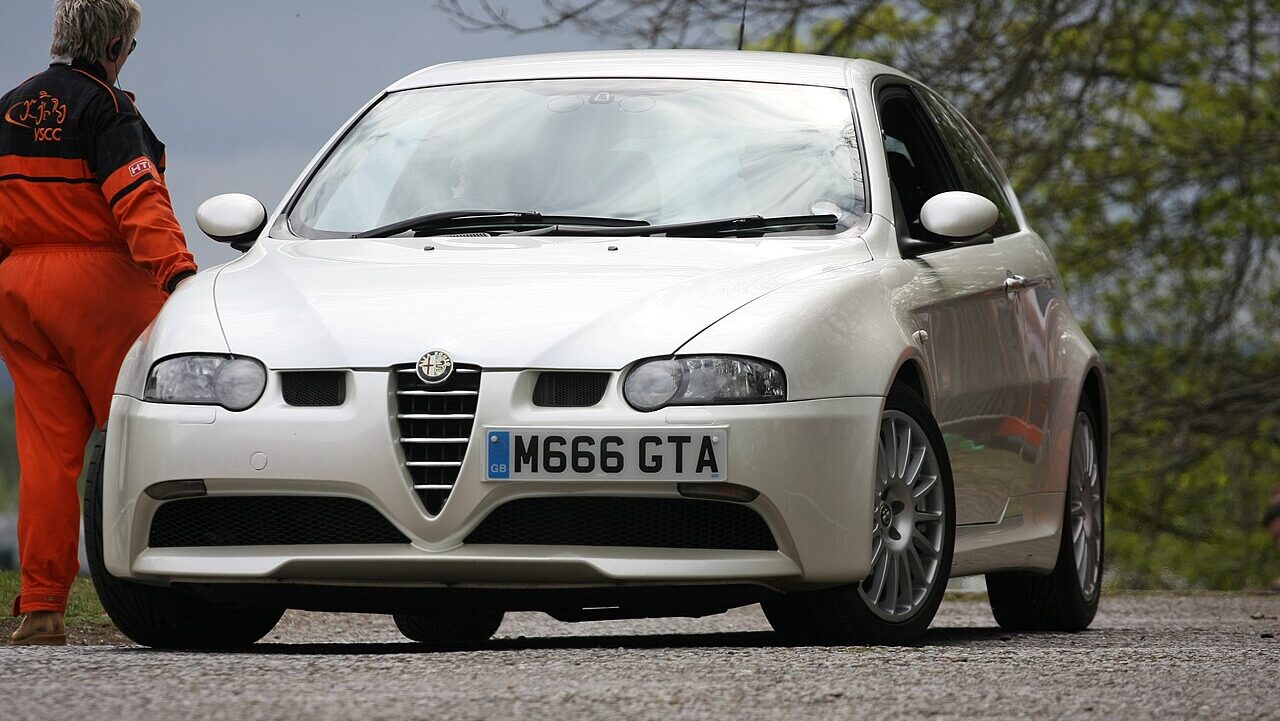
According to Jeremy Clarkson, you can’t call yourself a real car enthusiast until you’ve owned an Alfa Romeo. I mean, I haven’t yet, but I’m just waiting for the right 4C to cross my path. Another car we didn’t get here in the US but absolutely deserves a spot on this list is the Alfa Romeo 147 GTA. This small hatchback (built on the compact Fiat Tipo platform) was propelled by the fantastic 3.2-liter Busso V6 unit. Go big, or go home, right?!
The car itself is pretty small, and with that 247 hp monster singing under its hood, it’ll accelerate to 60 mph in a respectable 6.3 seconds. Okay, by modern standards, that’s not exactly blistering, but this list isn’t just about being fast; it’s about engine size relative to the package. Plus, it’s front-wheel drive, trying its absolute best to put all that power down without tearing the steering wheel from your hands. It’s like a soprano in a wrestling match — unexpected, but glorious. That Busso V6 sound alone is worth the price of admission.
Holden Torana
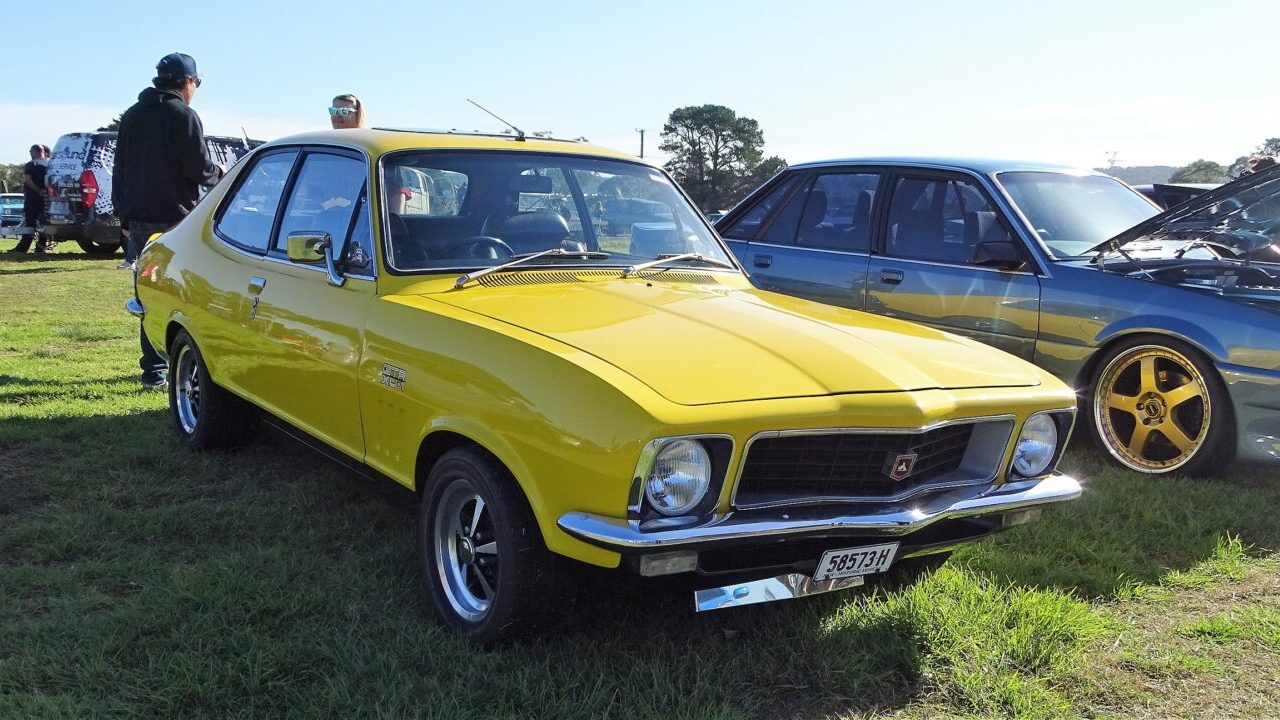
Australians love their six- and eight-cylinder engines, apparently, because even small cars like the Holden Torana have been fitted with meaty V8s. The Torana started life as a rebadged Vauxhall Viva (if you’re American and you haven’t heard of any of these, you probably aren’t alone). The early base models were fitted with a puny 1.2-liter four-cylinder. Obviously, that wasn’t enough for the land down under, so Holden quickly dropped in a 3.0-liter inline-six with 160 hp.
But the real party started with later generations, specifically the LH and LX Toranas (1974-1978), which even got a mighty 5.0-liter (308 cu in) Holden V8 in the SL/R 5000 and the legendary A9X versions. That’s a massive increase from the basic 1.2-unit, turning a humble family car into a genuine muscle car capable of dominating the track (and the street). It’s the definitive “sleeper” from the land of kangaroos and thunder.
Aston Martin Cygnet V8
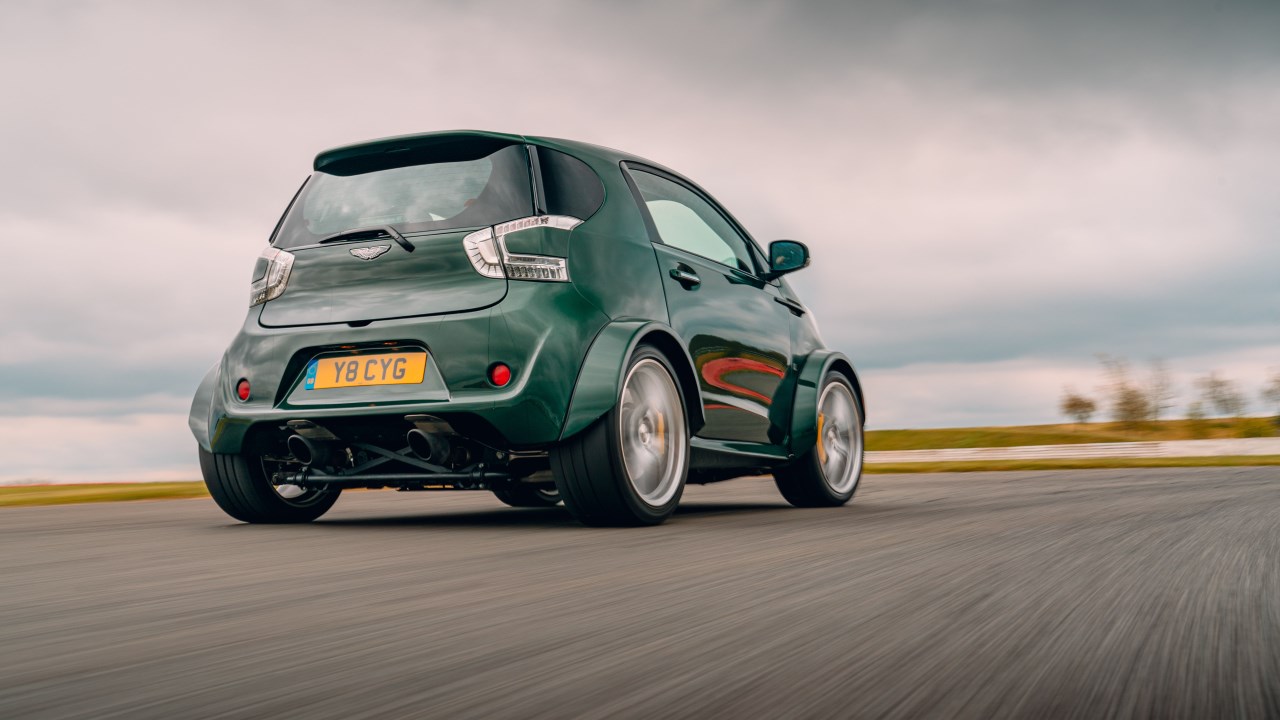
This one takes the cake for sheer, glorious absurdity. Aston Martin needed a tiny city car to comply with the EU’s 2012 fleet average emissions regulations, so they simply rebadged the Toyota/Scion iQ. Toyota’s version had either a 1.0-liter or a 1.3-liter engine, and Aston initially only offered the 1.3-liter. It was basically a Toyota with expensive leather, selling for over $40,000.
At least that was the only engine option until one anonymous (and clearly deranged) customer handed over a wad of cash for a truly special Cygnet fitted with the 4.7-liter V8 from the Vantage S. If you’re rolling your eyes wondering why someone would do such a thing, remember: part of the rules of being a car guy is to respect that we all have different tastes in cars and builds… even if it’s as nonsensical as strapping a race engine into a glorified golf cart. Now that you’ve given it some thought, maybe it is a cool idea after all.
It’s a 430 hp, rear-wheel-drive, V8-powered shopping trolley, capable of 0-60 mph in 4.2 seconds and a 170 mph top speed. It’s peak “because I can, and I’m rich.”
Ford Capri Perana
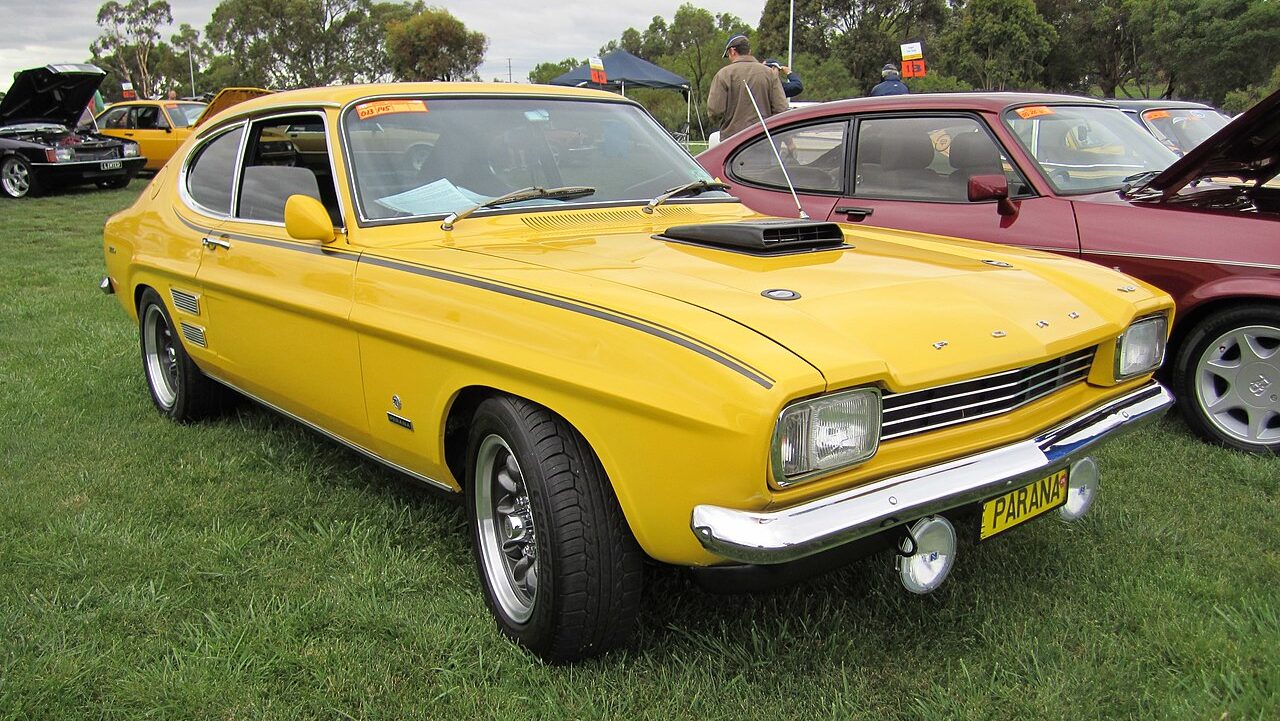
I don’t care what anyone else thinks, I’ve always liked the Ford Capri. The European Ford Capri was a sporty-looking coupe with a vast range of available engines, affectionately known as the “European Mustang.” While the cars sold in Europe could be ordered with some reasonably large V6 engines, including a 2.8-liter and a 3.0-liter, these were dwarfed compared to what was available in South Africa.
Enter Basil Green Motors, a legendary South African tuner. They didn’t just drop; they crammed a 302 cu in (4.9-liter) Ford V8 into the Capri, immediately transforming it into some kind of muscle sports car hybrid. This was the Capri Perana. Making around 280 hp and weighing just 2,300 pounds, it was an absolute rocket. The Capri Perana was also a hugely successful touring car racer, dominating and winning the 1970 and 1971 South African championships.
It’s the kind of car that makes you wonder what else could have been if Ford had unleashed this beast globally.
Randall 401-XR
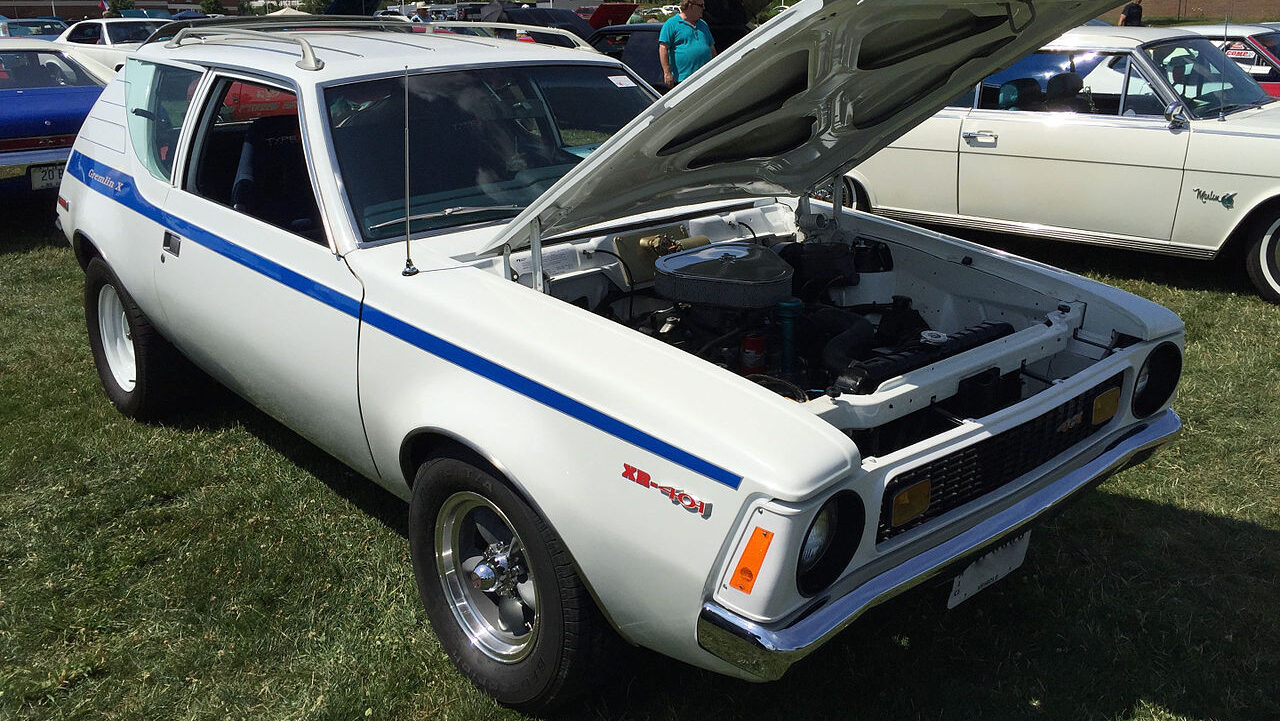
There aren’t many enthusiasts who think the AMC Gremlin looks good, but if you haven’t figured it out already, I love a good underdog, especially one that bites. The regular production Gremlin, particularly with the 360 V8 option, was already one of the fastest and most powerful subcompacts of its time. But that was just the appetizer.
Randall AMC, a car dealership in Arizona, was approved by AMC to build a truly special version of the Gremlin, dubbed the Randall 401-XR. This insane creation had a massive 401 cu-in (6.6-liter) AMC V8 engine jammed into its tiny bay. It was essentially a drag car for the street, capable of doing the quarter-mile run in a blistering 13.9 seconds at 100 mph — yes, back in 1972!
So maybe it’s not a sub-10-second car by today’s standards, but that’s still a whole lot of engine in a very little, very uniquely styled ride. It’s the ultimate “ugly duckling turned into a drag-strip monster.”
Aston Martin V12 Vantage S
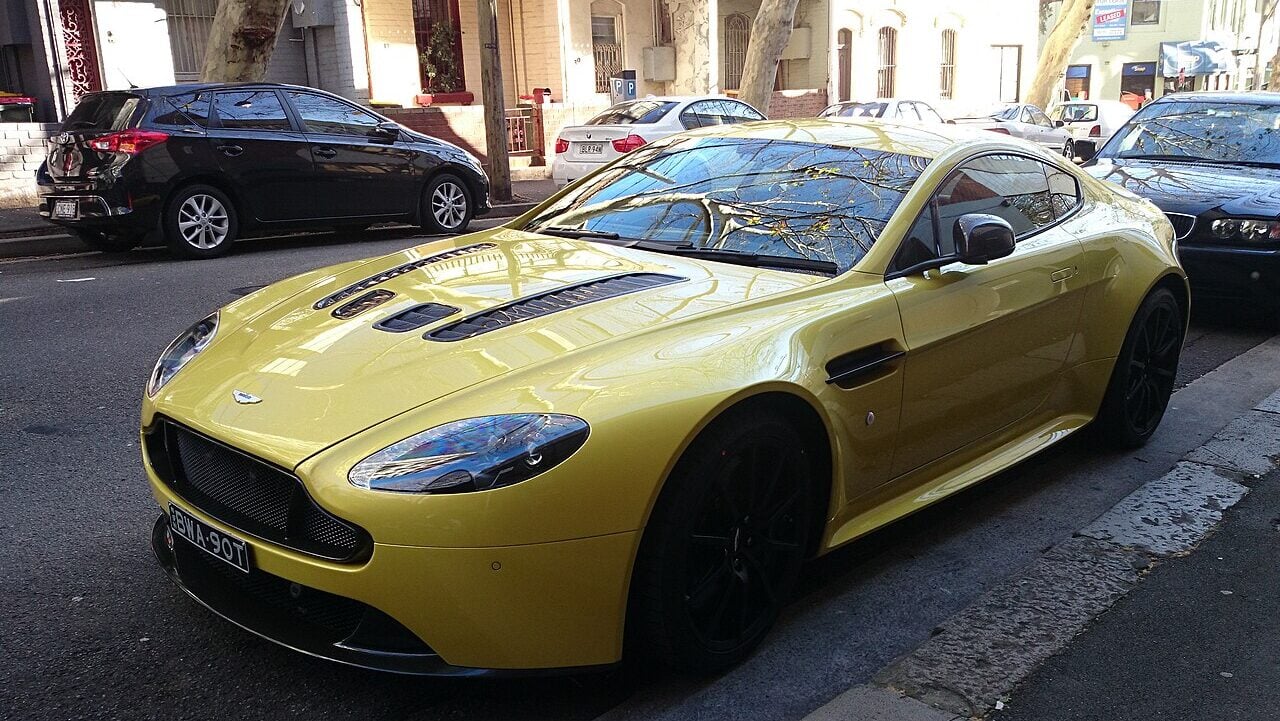
The Aston Martin V12 Vantage S is one of those cars that’s much smaller than it looks on TV or in magazines, probably because it’s almost perfectly proportioned. It only has a 102.4-inch (2601 mm) wheelbase length, which, for context, is almost identical to that of a Chevrolet Bolt EV — yes, the electric economy car. And its body lines were reportedly designed using the golden ratio, which gives it arguably perfect proportions and a timeless aesthetic.
Up front, crammed into that relatively compact nose, sits a huge 5.9-liter (5935cc) naturally aspirated V12 engine (derived from two Ford Duratec V6s, believe it or not). This magnificent beast produces a wailing 565 hp and 457 lb-ft of torque, which is sent to the rear wheels via a single-clutch automated manual transmission (which, let’s be honest, was its only real weak point). This results in a staggering 0 to 60 mph time of 3.7 seconds and a 205 mph top speed.
It’s a tiny, elegant, and hiding a powerful, opera-singing monster under the hood.
Little Cars, Big Dreams
Call me a dreamer, but I will always believe that small cars with big engines are something special. They can be a little wacky, kind of hard to work on unless you have tiny hands (or are a contortionist), and if you’re much taller than I am (which is most people), probably a little uncomfortable to drive.
But the handling, the sound, and the sheer driving experience are truly unmatched. They remind us that sometimes, the best things come in small, ridiculously powerful packages.
What’s your favorite small car that is secretly hiding a big engine under the hood (or frunk, or rear seat)? Let us know in the comments for our next list! Maybe your weird, wonderful choice will make the cut.