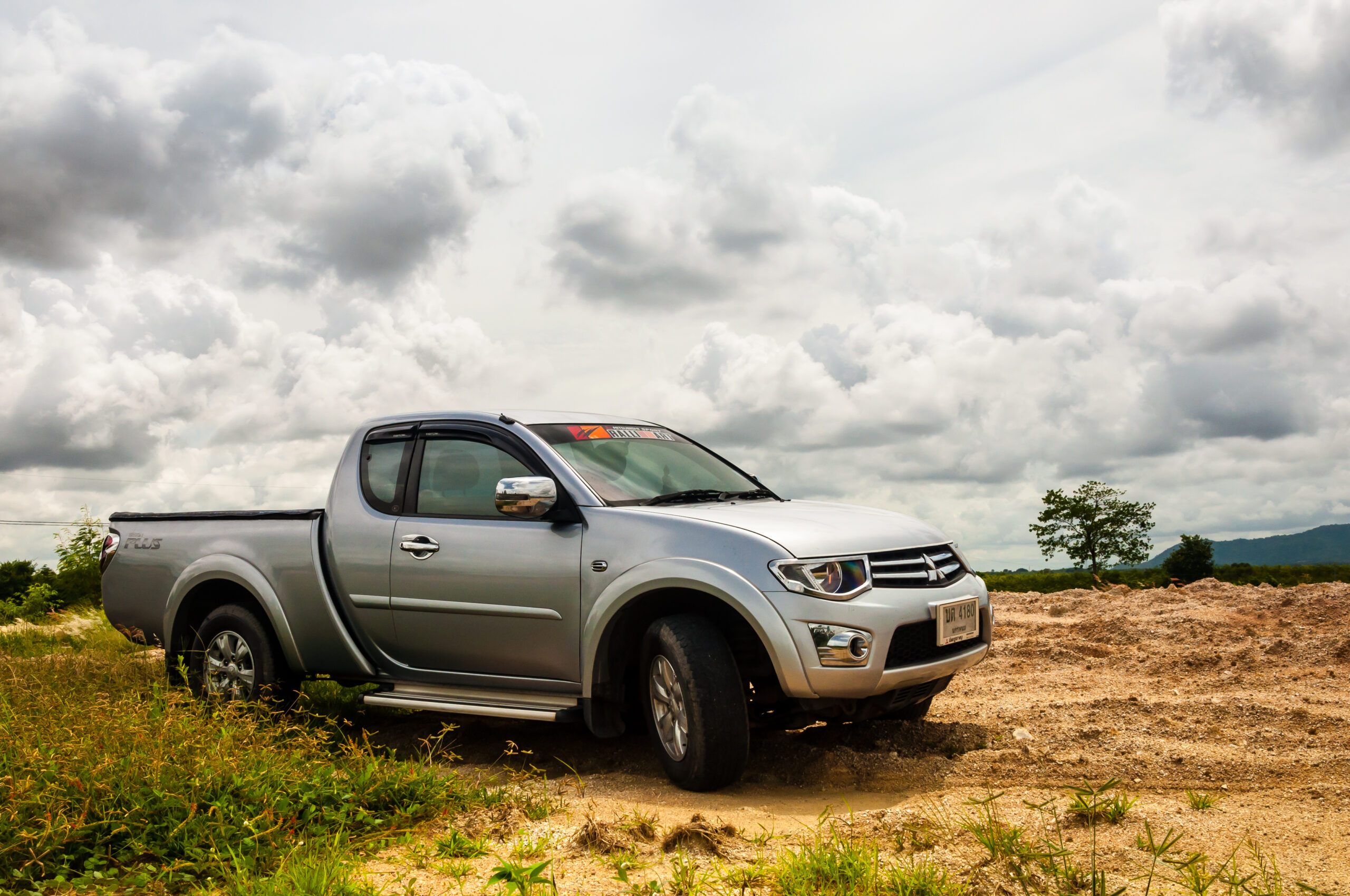
America loves pickup trucks more than just about any country on Earth, but here’s the twist: some of the world’s most capable and interesting trucks have never touched American soil.
While we’ve got the F-150 and Silverado dominating dealer lots, there’s a whole universe of forbidden pickups out there that would feel right at home on our highways and job sites. From diesel-sipping workhorses to supercharged Australian muscle utes, these trucks represent what might have been if not for tariffs, regulations, and market calculations. Some would blend right into the midsize segment, while others would rewrite what we think a pickup can be.
Let’s take a tour through the pickup trucks that got away.
Toyota Hilux

You’ve probably heard about the Hilux’s legendary toughness, especially if you caught that famous episode where it survived drowning, fire, and a building demolition. Oh, and Antarctica. This truck is essentially the Tacoma’s tougher overseas cousin, sold everywhere from Australia to the Middle East.
While it shares some DNA with our Tacoma, the Hilux offers configurations we don’t get, including single-cab models and a range of diesel engines that deliver impressive torque and fuel economy. It’s been in production since 1968 and has sold over 18 million units worldwide, building a reputation for indestructibility that’s become automotive legend.
Toyota replaced the Hilux nameplate in the U.S. with the Tacoma in 1995, deciding that American buyers wanted something bigger and more powerful, but many enthusiasts still wonder what could have been.
Volkswagen Amarok

The Amarok might be the ultimate forbidden fruit in the pickup world, because VW has been crystal clear about keeping it away from American customers despite our truck obsession. This midsize body-on-frame truck has been a genuine success story globally, selling nearly a million units since its 2010 debut.
Buyers can choose between turbocharged gas and diesel engines, plus full-time or part-time four-wheel drive with proper low-range gearing. The latest generation was even co-developed with the Ford Ranger, which makes its absence from U.S. showrooms feel even stranger. VW executives have cited the Chicken Tax tariffs and profitability concerns, with one memorably stating the Amarok is “too good and, therefore, too expensive” for the American market.
It’s a premium truck that emphasizes comfort and refinement, and while that might work here, the economics apparently never lined up.
Holden HSV Maloo

This Australian legend takes the car-based pickup concept and injects it with pure muscle car DNA. While Americans largely viewed vehicles like the El Camino as novelties, Australians embraced these “utes” wholeheartedly, and Holden Special Vehicles turned them into something extraordinary.
The Maloo story began in 1990, but by its final curtain call in 2017, it had evolved into an absolute monster. The ultimate version, the GTSR Maloo, packed a supercharged 6.2-liter LSA V8 producing 583 horsepower and 545 pound-feet of torque, all driving the rear wheels through either a six-speed manual or automatic. That’s enough power to smoke the tires at will and sprint from zero to 60 mph in around 4.5 seconds. A Z Series Maloo even set the Guinness World Record for fastest production pickup at 168.66 mph, a record it still holds.
It’s the truck that answers a question nobody asked but everybody should have.
Nissan Navara

While Nissan has been selling a dated Frontier in the U.S. for years, the rest of the world has been enjoying the much more modern Navara. This global midsize truck received a significant facelift recently that brought aggressive styling and updated technology, making it look fresh next to our aging Frontier.
The Navara comes with a 2.3-liter twin-turbo diesel engine producing 188 horsepower and 332 pound-feet of torque, along with impressive capabilities including a towing capacity over 7,700 pounds. It’s available in single-cab, king-cab, and crew-cab configurations with multiple trim levels, including the rugged Pro-4X Warrior version sold in Australia.
Nissan chose to develop an entirely new truck specifically for North America rather than federalizing the Navara, apparently finding it more cost-effective to build us a separate model than to meet standards across multiple continents and market preferences.
Isuzu D-Max

Remember when Isuzu sold vehicles in the U.S.? The brand pulled out of the American passenger vehicle market in 2009, but they’re still building excellent trucks for the rest of the world.
The D-Max is a capable midsize pickup that shares much of its underpinnings with the Chevrolet Colorado, which makes its absence from American roads feel particularly strange. Current models feature diesel engines ranging from 2.5 to 3.0 liters, producing between 140 and 190 horsepower with torque figures reaching 450 Nm. The truck rides on a fully boxed ladder frame, offers respectable towing capacity around 7,700 pounds, and comes in various cab configurations.
It’s engineered for durability and reliability, characteristics that Isuzu built its reputation on, and it would slot nicely into the American midsize truck segment if the economics ever made sense for a return.
Ford Ranger (Global)
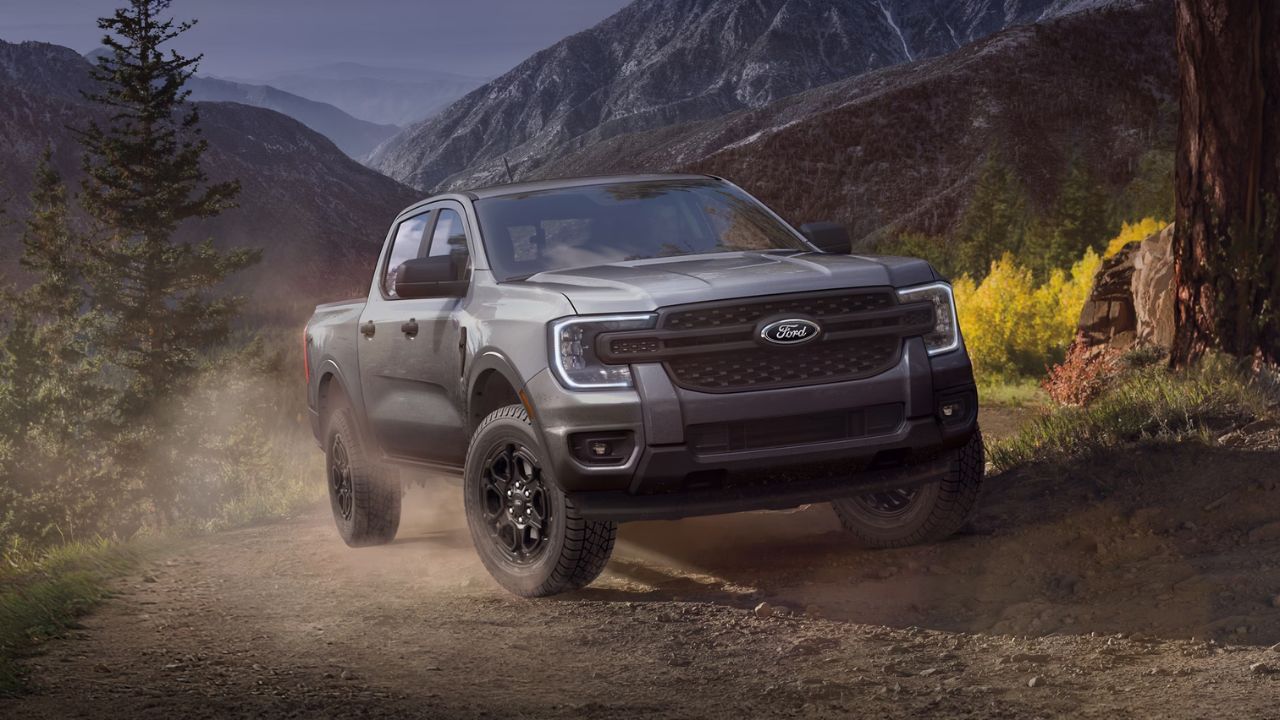
This one requires some explanation, because we do get a Ranger in America now, but for years, the global Ranger was a completely different truck. While the U.S. Ranger disappeared from 2012 to 2019, Ford kept selling it in 180 markets worldwide as a genuinely excellent midsize truck.
Even today’s American Ranger, while sharing the name and some engineering with the global version, is specifically tailored for the U.S. market with different dimensions, features, and powertrains. The global Ranger has long offered diesel engines, single-cab configurations, and features that American buyers never got. It’s been a sales success internationally, particularly in Australia and Southeast Asia, proving that Ford knows how to build a world-class midsize truck.
The fact that it took so long to bring any version back to American shores shows how different our market expectations can be.
Mitsubishi Triton

Mitsubishi has faded to near-invisibility in the American market, but they’re still building solid trucks for other regions. The Triton is their midsize pickup offering, featuring a 2.4-liter turbodiesel four-cylinder engine producing 188 horsepower and respectable torque.
It’s a workhorse designed for durability rather than luxury, but it delivers on fundamental truck duties with a payload capacity approaching 1,900 pounds and towing capability near 7,000 pounds. The Triton is available in single-cab configurations, which would be a refreshing option for American work-truck buyers who don’t need rear seats.
Mitsubishi has expressed interest in bringing a pickup truck to the U.S., potentially leveraging its partnership with Renault and Nissan, but so far, it remains just a conversation. For a brand struggling in America, a capable, affordable truck might be exactly what they need.
Ford F-1000

Brazil got its own unique F-Series truck for decades, and it’s wild how different it was from American F-Series models. The F-1000 launched in Brazil in 1979 using the body and chassis from the fifth-generation Ford F-250, which had already been discontinued in the U.S. by 1972.
Ford kept producing this design in Brazil until 1992, giving it a remarkable run. What made the F-1000 particularly interesting was its specification for the Brazilian market, including diesel engines from MWM and later turbodiesel options. It was even available as a two-door crew cab with an extremely short bed, a configuration that looked quirky but made sense for South American needs.
The F-1000 represented Ford’s commitment to regional customization, building trucks specifically suited to local preferences and requirements rather than forcing a one-size-fits-all approach.
Mazda BT-50

The BT-50 represents Mazda’s continued presence in the pickup truck market outside North America, even though the brand has retreated from trucks domestically. The current generation shares its platform with the Isuzu D-Max and is built in the same Thai factory, representing an efficient partnership approach to truck building.
The BT-50 features Mazda’s Kodo design language, giving it a more stylish appearance than many competitors while maintaining serious capability. It’s powered by diesel engines and offers both manual and automatic transmissions, along with configurations ranging from single-cab work trucks to well-equipped crew cabs. The truck delivers solid towing capacity and payload ratings while providing car-like driving dynamics that Mazda is known for.
When Ford and Mazda’s partnership ended, Mazda had to find a new truck platform partner, and the Isuzu collaboration has proven successful in markets where both brands compete.
RAM 700

Here’s a RAM you can’t buy in America, which feels almost wrong given the brand’s dominance in the U.S. truck market. The RAM 700 is sold primarily in Mexico as a compact pickup truck based on the Fiat Strada platform.
It’s a supermini utility vehicle by American standards, designed for markets where smaller, more efficient trucks make sense. The name comes from its 700-kilogram payload capacity, which translates to about 1,500 pounds. Despite its compact dimensions, it’s surprisingly capable for its size and comes with affordable pricing, with basic configurations available around the equivalent of $20,000. It’s powered by modest engines that prioritize efficiency over power, which suits its intended role perfectly.
The RAM 700 proves that the pickup truck concept scales down effectively, even if American buyers have shown little interest in trucks this size.
Great Wall Wingle

Chinese automaker Great Wall Motors might not be a household name in America, but they’re building interesting trucks for global markets. The Wingle 7 is sold across Asia, Africa, and South America as a midsize pickup with respectable specifications.
It comes with either a 2.4-liter gas engine producing 148 horsepower or a 2.0-liter diesel making 141 horsepower, paired with manual transmissions and available four-wheel drive using Borg Warner’s electronic system. The truck sits on a 132-inch wheelbase, placing it between short and long bed F-150 configurations in terms of size. Standard features include leather seats with power adjustment, a rear-view camera, dual airbags, and an optional sound system with modern connectivity.
While Great Wall hasn’t made moves into the American market yet, they represent the kind of global competition that could eventually cross the Pacific if trade barriers and market conditions align.
Peugeot Landtrek

Peugeot returning to the pickup truck segment after decades away shows how global truck demand continues growing. The Landtrek was developed in partnership with China’s Changan and launched in Latin America and sub-Saharan Africa before expanding to other markets.
It’s sold as the Fiat Titano in Brazil and Algeria, showcasing Stellantis’s strategy of badge-engineering for different regions. The truck offers two engine options: a 1.9-liter turbodiesel with 150 horsepower or a 2.4-liter turbocharged gas engine delivering 210 horsepower. It comes with either a six-speed manual or automatic transmission, three cab styles, and modern features including a 10-inch touchscreen with Apple CarPlay and Android Auto. The Landtrek can tow up to 7,700 pounds and carry a payload approaching 1,500 pounds, making it genuinely capable.
It represents European and Chinese collaboration creating a competitive product for markets that American manufacturers sometimes overlook.
Conclusion

These forbidden trucks tell an interesting story about the global pickup market and how differently it operates around the world. While America dominates pickup sales numbers and innovation in the full-size segment, the midsize and compact categories thrive internationally with options we never see.
Some of these trucks would genuinely succeed here if given the chance, offering diesel efficiency, unique configurations, or simply fresh alternatives to established names. Others are perfectly suited to their home markets but wouldn’t translate to American preferences and expectations. The reasons they stay overseas range from the infamous Chicken Tax to simple business calculations about development costs and potential sales volumes.
Still, it’s fun to imagine a parallel universe where Hilux diesels and Maloo muscle trucks cruise American highways alongside F-150s and Silverados, adding even more diversity to our truck-crazy culture.