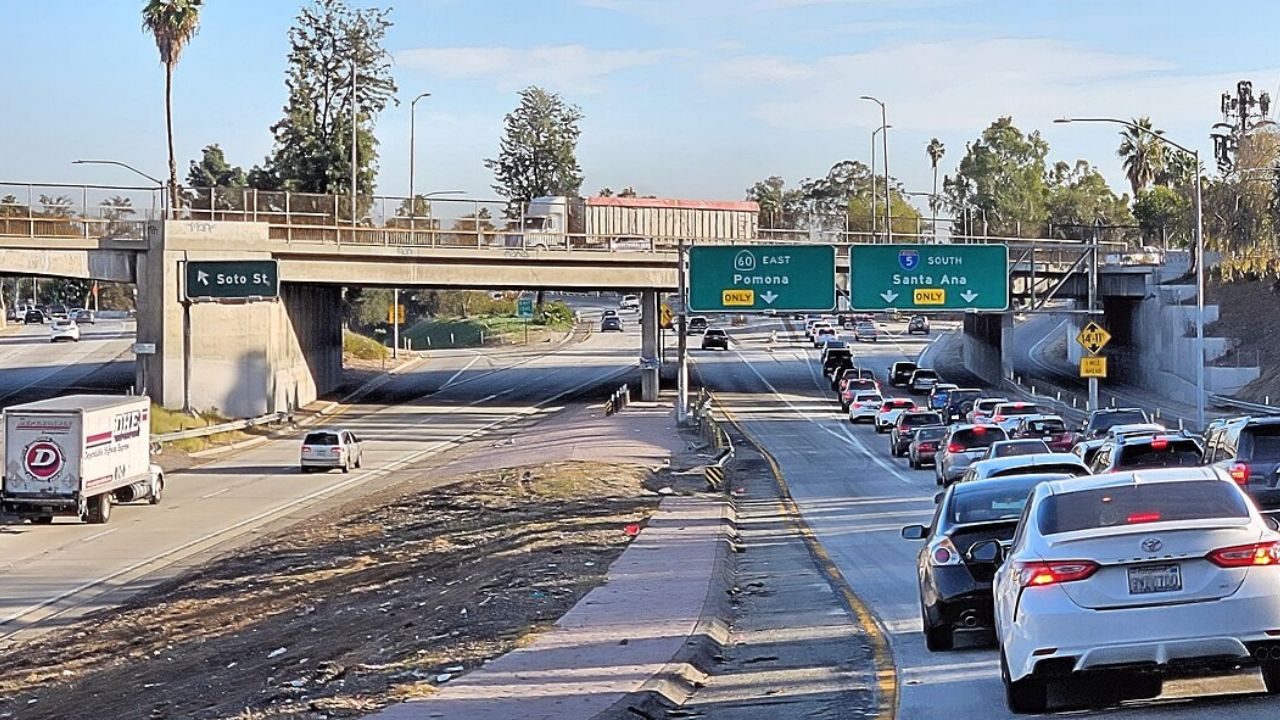

If you drive, bike, or ride a bus in Los Angeles, it might feel like the streets are quietly falling apart right under your tires. Sadly, that feeling isn’t just a mood on social media or a handful of anecdotal pothole photos.
It is reflected in official city data showing that since the start of the current fiscal year, Los Angeles has repaved zero miles of roadway. And preliminary city budget plans suggest this will continue into the next fiscal cycle.
This has left streets filled with cracks, rutted pavement, and potholes that shake cars and force-swerve cyclists.
The High Cost of Compliance: ADA as a Deterrent
A sprawling city of nearly four million residents should be resurfacing streets constantly. There are 7,500 miles of streets in Los Angeles to maintain, and even before this year, only about 60 percent were considered in good condition.
Yet full-width street resurfacing has stopped almost completely. Crews are still working, but almost exclusively on what the city calls “large asphalt repairs,” a category of patching that focuses on making small sections usable rather than resurfacing an entire street.
The city insists this work is maintenance. But infrastructure and transportation advocates say something very different is going on: Los Angeles is effectively avoiding a legal obligation that kicks in when a street is rebuilt from curb to curb. That legal trigger is tied to federal accessibility rules under the Americans with Disabilities Act.
Under current federal guidelines, repaving a street is classed as an “alteration.” When that happens, the city must also bring adjacent curb ramps and pedestrian access points up to current accessibility standards.
Those upgrades often involve installing new ramps with truncated domes for blind pedestrians and ensuring smooth transitions from sidewalk to street at every intersection along the newly paved stretch.
In a city with thousands of intersections that still lack compliant ramps, upgrading these elements can double the cost of a repaving project and add months of design and construction work.
A Short-Term Fix with Long-Term Consequences
Faced with these added costs and complexity, Los Angeles has instead redefined the work it does on streets as maintenance, which does not trigger the ADA requirement.
“Large asphalt repair” has become a kind of bureaucratic workaround. Instead of repaving from curb to curb, the city resurfaces portions of a street, fills potholes, and patches severely deteriorated areas. That allows the city to avoid mandatory curb upgrades; while still claiming it is caring for the street network.
Critics say this approach is short sighted and expensive in the long run. Patching and partial repairs tend to cost more per mile than full resurfacing, because crews and equipment are deployed repeatedly to the same trouble spots.
The city’s pavement condition index is projected to decline further next year, which would place Los Angeles well behind other Southern California cities that continue to invest in full resurfacing.
There is also concern that the city is sidestepping voter-approved mandates meant to improve mobility for people walking, biking, and using public transit.
Measure HLA, approved by Los Angeles voters in 2024, requires that the city implement its mobility plan whenever it repaves a 1/8 mile or more of street, including new bus lanes, bike lanes, and safer pedestrian crossings.
By not repaving streets in a way that triggers Measure HLA, the city effectively delays or avoids improvements that voters want.
This, by implication, hurts the most vulnerable residents. Older Angelenos, people with disabilities, families with young children, and anyone who walks or uses a wheelchair have to navigate streets that remain unsafe to cross. Cracked pavement and uneven curb cuts make basic mobility difficult, while potholes and ruts damage cars and make biking perilous.
Budgets, Bureaucracy, and Broken Promises
City officials counter that budget limitations and the sheer scale of the street network make it impractical to pursue full repaving everywhere at once.
Multiple departments are responsible for different pieces of the street environment, from paving to striping to sidewalks, creating logistical bottlenecks that make coordinated projects slow and expensive to execute.
But critics point out that other big cities spend more per capita on road and sidewalk maintenance and still manage to keep their street surfaces in much better condition.
For the average Angeleno, the practical effect is that roads that should be smooth feel like obstacle courses. Complaints about potholes keep rising. Tire damage claims against the city have climbed.
Many residents are left asking when the city will repave streets again in a way that makes life easier to navigate for every road user.
The answer remains uncertain today, and until city leaders find a way to balance legal obligations with infrastructure needs, many miles of Los Angeles streets may continue to deteriorate.
Sources: LAStreetBlog, Los Angeles Times, ALT 98.7