

Jim Cramer’s recent comments that Farley has “done a great job” reflect a market narrative, if not a textbook resume of wins. His endorsement assumes that Farley’s strategic repositioning of Ford, especially around hybrids and the broader Ford+ plan, is working and that recent sales and execution justify optimism.
Cramer has long talked up value at Ford and hinted that Farley gets the core business. According to Insider Monkey, Farley deserves more credit than he gets, and his work has been underestimated.
Put another way: Cramer’s view is rooted in stock sentiment and repositioning, not a pure nod to engineering triumph or industry-leading innovation. That distinction matters because Farley’s tenure is a tale of two very different Ford stories.
Jim Cramer’s influence extends beyond television theatrics. A former hedge fund manager and longtime observer of corporate strategy, he occupies a position at the intersection of Wall Street psychology and executive decision-making. His opinions matter not because they are infallible, but because they often mirror how institutional investors are thinking in real time.

Traditional Strengths Have Returned — But It’s Not Irrefutable
Under Farley, Ford’s internal combustion engine (ICE) business — trucks, SUVs, hybrids, and commercial vehicles — has regained stability. Third-quarter earnings beat expectations, revenues climbed, and Ford Pro remains a profit engine analysts frequently cite as evidence of improved cost discipline.
This is a legitimate accomplishment. For years, investors worried that legacy costs and global inefficiencies would swamp Ford. Farley’s focus on trimming complexity and leaning into high-margin truck and fleet sales helped arrest that decline.
But stability is not the same as transformation. Much of Ford’s renewed strength comes from doubling down on what Detroit has always done well rather than redefining the competitive landscape. That may be smart management, but it falls short of the kind of leadership typically described as “great.”
And here’s where expert critics get animated. Farley’s approach to electric vehicles has been, at best, uneven. After major operating losses in the Model e EV division and a strategic pullback from high-cost EV programs, including the F-150 Lightning, Ford effectively acknowledged that its early EV bets were priced and engineered too aggressively for real-world demand.
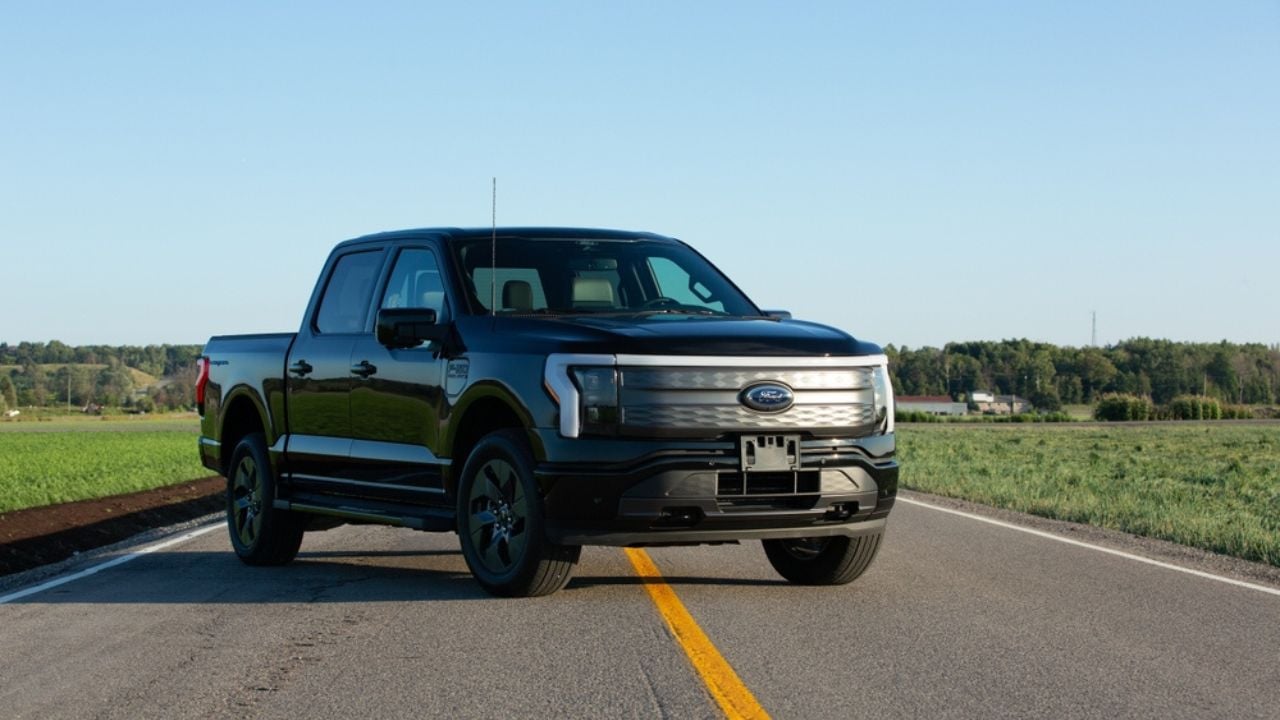
A CEO seeking favorable headlines might call this “strategic pivoting.” Industry veterans see something more sobering. Farley has publicly acknowledged that Ford’s early EV efforts were outmatched on basic efficiency benchmarks, including internal comparisons showing Tesla’s Model 3 wiring architecture to be significantly lighter and more efficient. The episode underscored how far Ford still had to go in EV cost discipline and engineering optimization.
Scrapping or pivoting is one thing; acknowledging a flawed go-to-market approach is another. The fact that Ford will now target smaller, cheaper EVs and hybrids reflects a realistic reset, not visionary leadership.
Strategic Realism vs. Strategic Leadership
If you prize pragmatism (and Wall Street certainly does at times), Farley’s reset is defensible. He has refocused investment where customer demand actually is, trimmed costs, and reminded markets that Ford is not just an EV hopeful but a broad mobility company that must survive today’s economics.
On that front, Cramer’s praise aligns with a market narrative that Ford’s earnings, dividends, and hybrid strategy make it a value play. That is a fair perspective, especially in the context of a turbulent EV market. “He’s a car guy,” Cramer reportedly said about Farley. “… he’s not a financial guy, he’s a car guy, and it’s starting to pay off.”
But here’s the rub: executing a pivot isn’t the same as setting the strategic agenda. Part of being a visionary CEO is proactively shaping markets, not simply responding to them. On EVs, Farley repeatedly reacted to market signals rather than getting ahead of them.

Cramer himself framed Ford’s EV pullback less as a failure than a course correction, suggesting that early enthusiasm for electrification outpaced its immediate payoff. In his view, Farley’s renewed emphasis on hybrids and practical utility reflects a more grounded understanding of how customers—and investors—actually behave.
Farley has had to steer Ford through relentless external volatility — shifts in U.S. emissions and EV policies, tariffs, supply constraints, and uneven consumer demand. That undeniably earns him points for resilience.
Still, you can admire the handling without overstating the outcome. Even Cramer’s praise reflects nuanced support and cautious optimism about Ford’s value, not an unqualified endorsement of Farley as the next great auto visionary.
A Song Worth Singing?
So, does Farley deserve the accolade that he’s done a “great job”?
Yes — at steadiness, pragmatism, and stabilizing a bruised legacy business. Ford today is more profitable on a cash basis, better positioned on its core strengths, and less dangerously overexposed to an unproven EV roadmap.
No — if you define “great” as steering Ford into the future with bold engineering, clear differentiation from competitors, and sustained market leadership in electrification. That future still feels more aspirational than achieved.
Sources: Insider Monkey