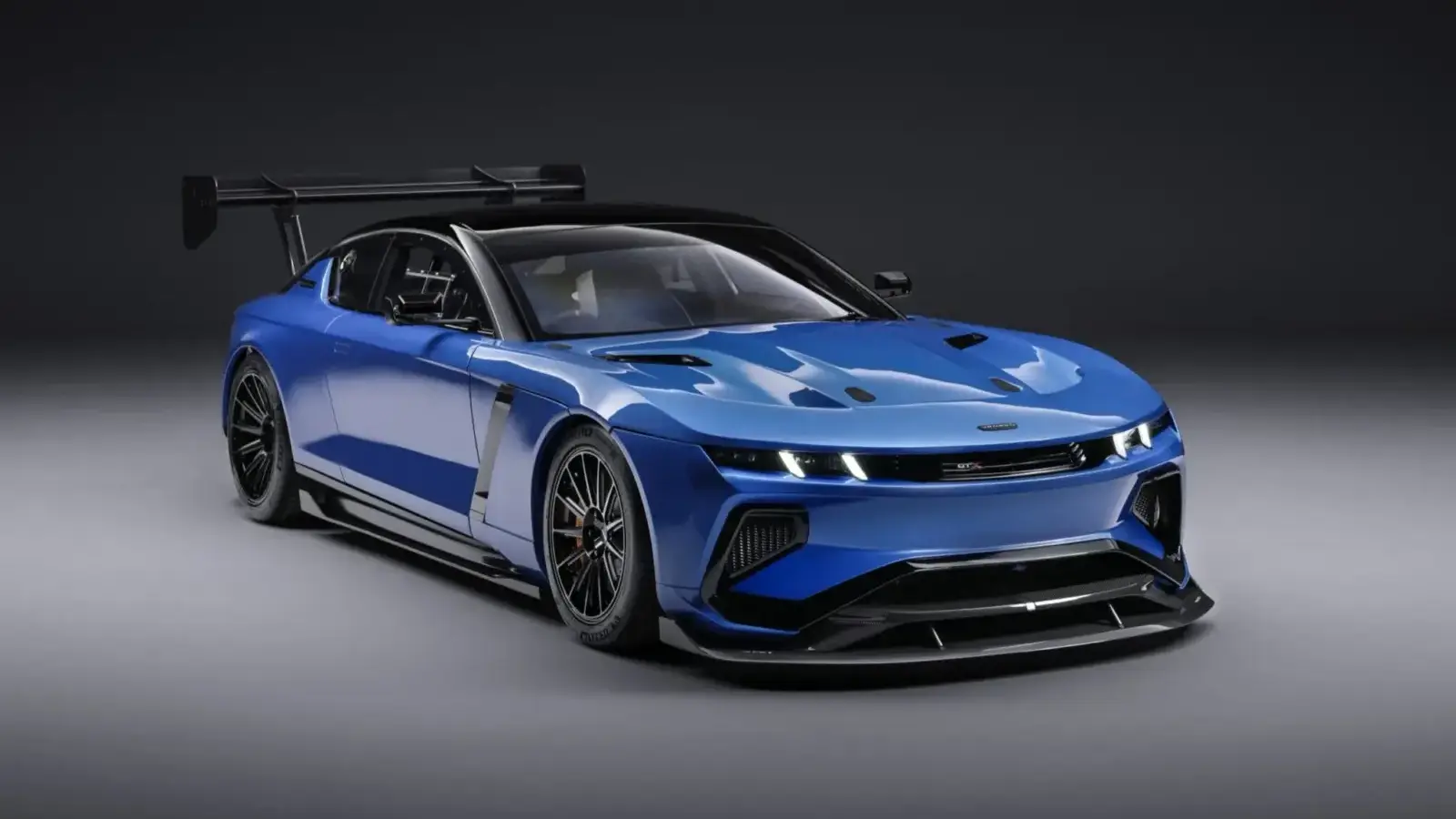
The Jensen Interceptor name is back, attached to a car that would have looked completely alien alongside its grand-touring ancestor. Its long hood and fastback proportions provide the family resemblance, while the enormous carbon-fiber wing makes it immediately clear this isn’t a nostalgic recreation.
Called the Interceptor GTX, the new machine is a track-focused prototype rather than a restomod of an existing classic. Jensen has built an entirely new car around a lightweight aluminum structure, a rear-mounted transaxle, serious aerodynamic hardware, and a thoroughly reworked American V8.
Jensen International has now fully revealed the GTX as the first step toward reviving the Interceptor as a modern model line. Autocar reports that the company recently secured the U.K. trademark for the Interceptor name and intends to use this prototype to develop future road-going versions.
Those eventual cars should be considerably more civilized. For now, however, Jensen has built something closer to a front-engined GT racer, complete with 960 horsepower and a wing capable of generating hundreds of pounds of downforce.
There’s A 960-HP V8 Up Front
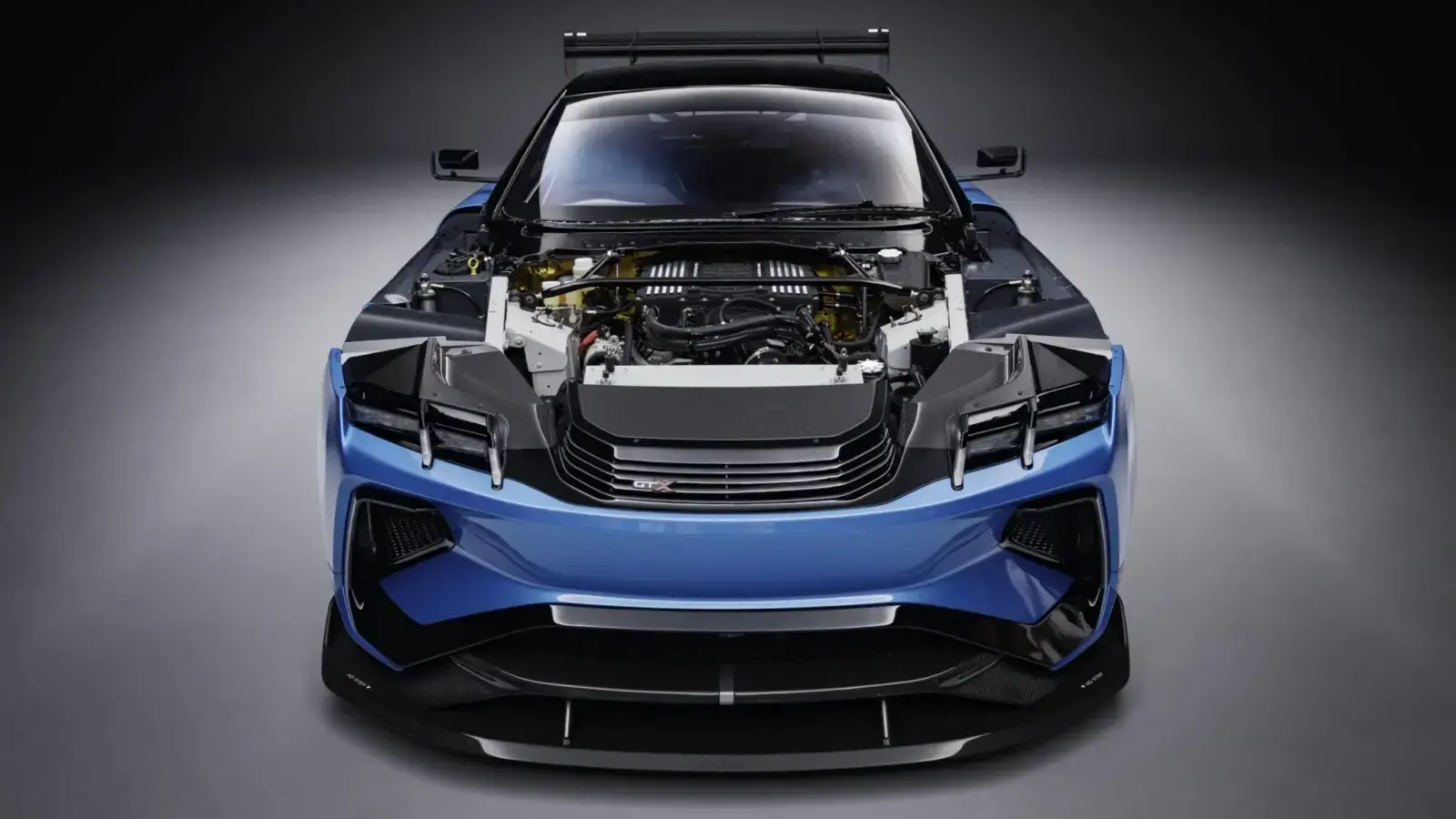
The GTX’s 6.8-liter supercharged V8 traces its roots to a General Motors engine, although calling it a stock Chevy crate motor would seriously undersell the work involved. Texas-based Late Model Engines extensively reengineered it, with Jensen saying fewer than 20 percent of the original components remain.
The engine features CNC-machined cylinder heads, titanium valves, and a 2.65-liter Roots-type supercharger with electronic boost control. Output currently stands at 960 hp, although Jensen says the package is capable of supporting as much as 1,200 hp and over 1,000 lb-ft of torque.
Power travels through a carbon-fiber driveshaft to a rear-mounted six-speed sequential transaxle. Drivers can change gears using steering-column paddles or a conventional lever mounted on the transmission tunnel.
That Giant Wing Actually Does Something
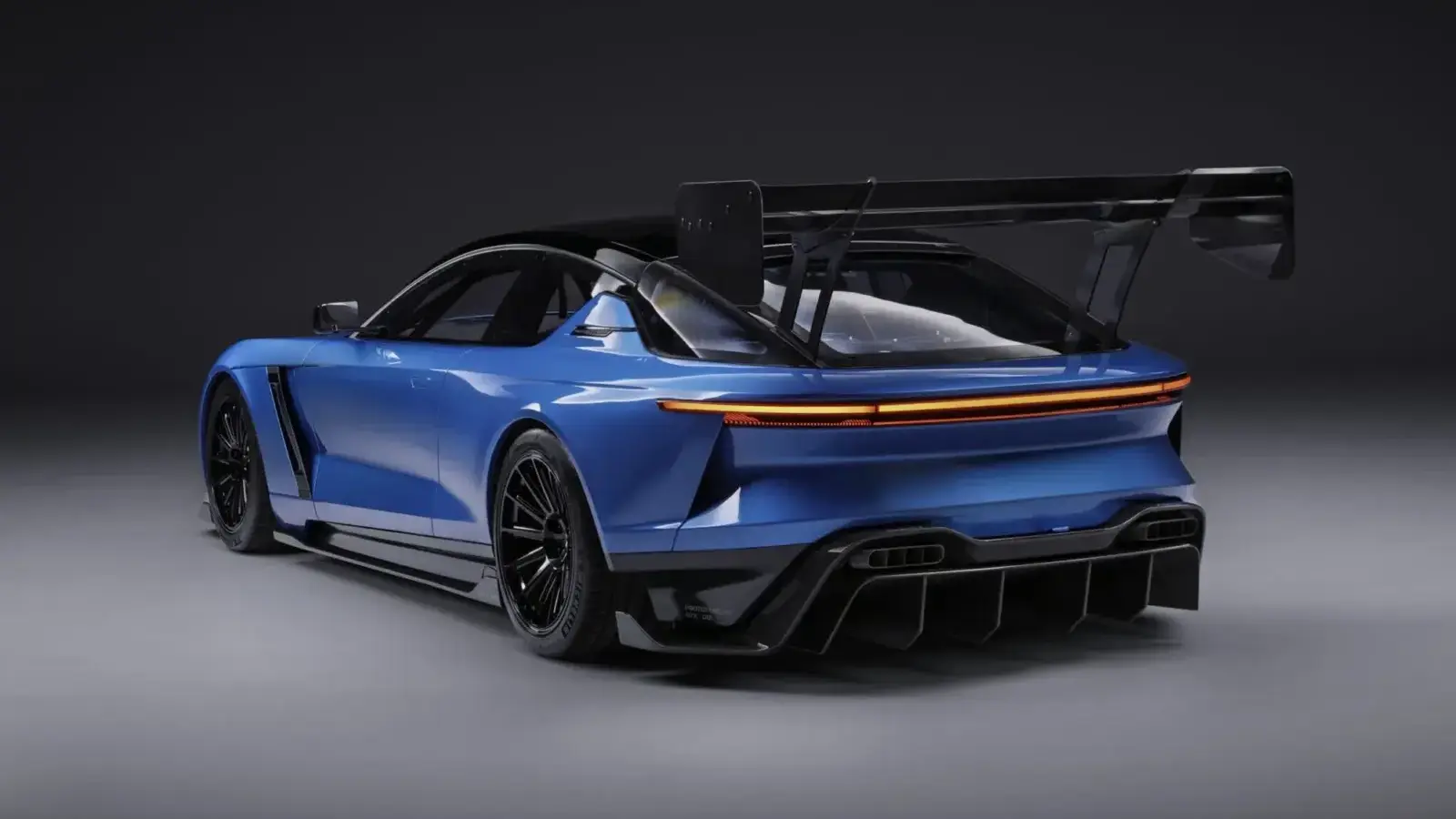
The GTX’s styling references the original Interceptor through its long nose, fastback roof, and large rear glass area, but the similarities quickly disappear once the aerodynamic hardware enters the picture. A substantial front splitter, aggressive side skirts, flat-floor treatment, rear diffuser, and enormous adjustable carbon wing transform it into something unmistakably track-focused.
Jensen says the aerodynamic package can generate over 350 kg, or roughly 772 pounds, of downforce. Underneath sits double-wishbone suspension with adjustable Nitron dampers, while AP Racing brakes use six-piston front and four-piston rear calipers.
The handcrafted aluminum body rides on 20-inch wheels wearing enormous Michelin tires, including 345-section rubber at the rear. Autocar reports the GTX measures roughly 5.2 meters long and two meters wide, with a claimed weight of around 1,650 kg and 50:50 weight distribution.
The Interior Is All Business
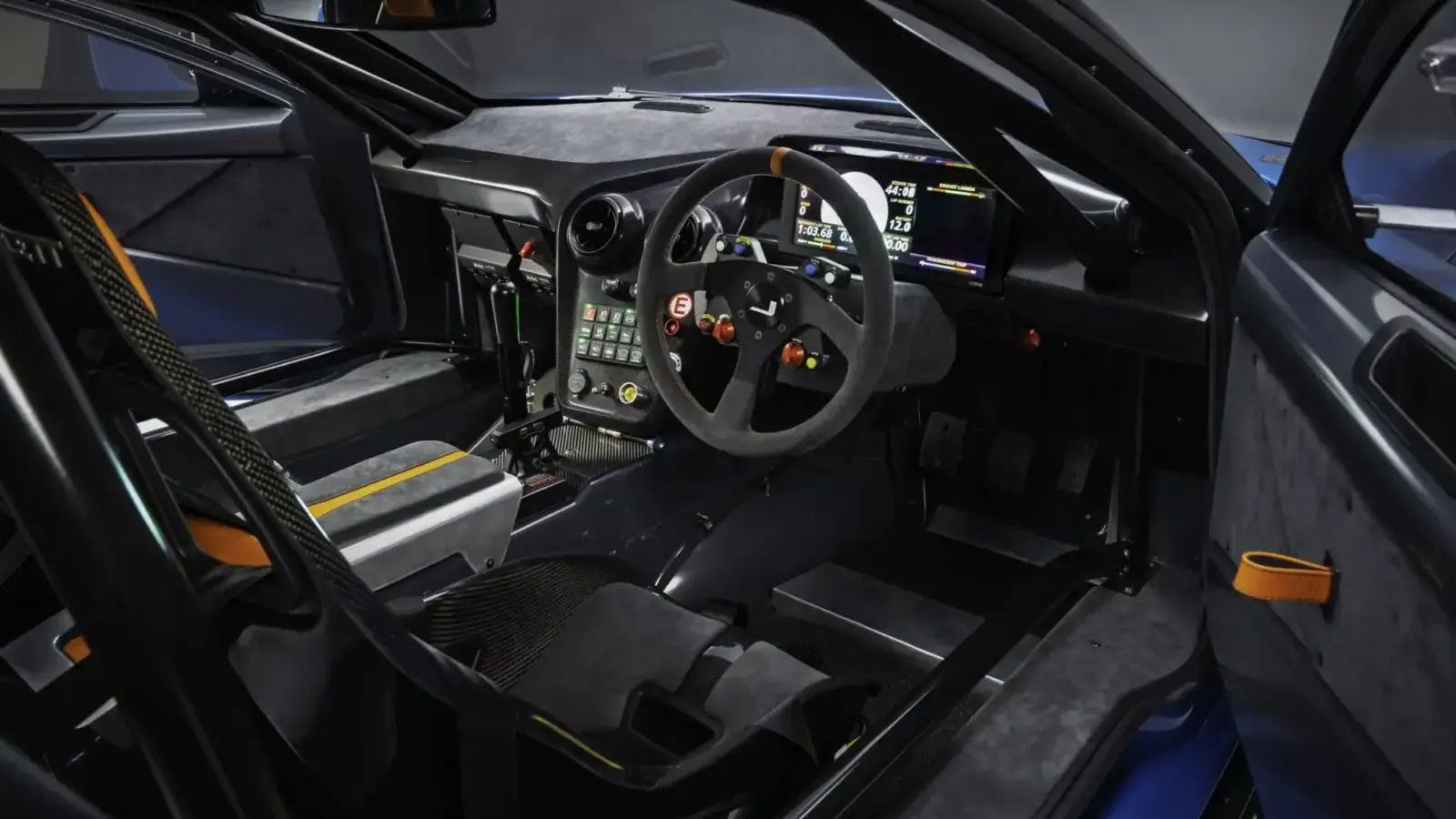
There isn’t much grand touring happening inside this particular Interceptor. The GTX gets an FIA-compliant roll cage, carbon-fiber competition seats, six-point harnesses, a race fuel tank, polycarbonate windows, and MoTeC electronics.
Jensen has at least added Alcantara-covered padding with contrasting stitching to soften the surroundings slightly. Traditional luxury equipment and large infotainment screens aren’t the priority here, since this car’s immediate job is development and track testing.
Road-Going Interceptors Are Coming
The wild GTX won’t represent the entire Interceptor revival. Jensen plans to follow it with the GTR, described as a track-oriented road car, before introducing a more luxurious GT intended to compete in territory occupied by the Aston Martin DB12 and Bentley Continental GT.
Those versions are expected to gain four seats and potentially four doors, while their wings, splitters, and other aerodynamic additions will be considerably toned down. Jensen has also suggested future road cars could use either an automatic or a traditional manual transmission.
Pricing and production plans are undecided, although Autocar says a customer wanting a GTX similar to the prototype could be looking at roughly £850,000 to £950,000, or roughly $1.15 million to $1.3 million. The prototype now faces around six months of development testing, meaning Jensen’s huge-winged 960-hp experiment is only the opening act for the Interceptor’s return.