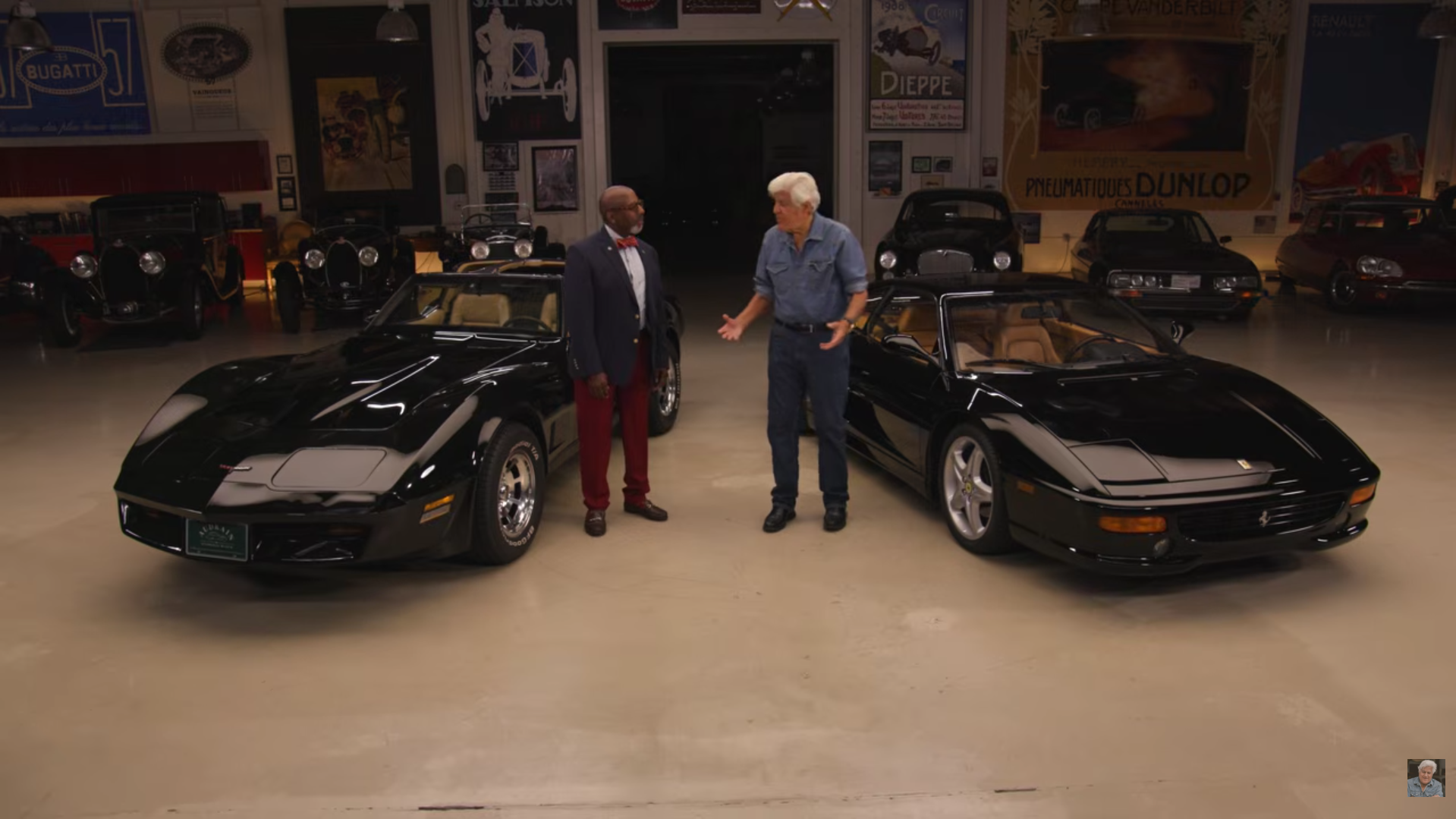
A 1997 Ferrari F355 F1 and a 1981 Chevrolet Corvette don’t have much business being compared. One brought Formula 1-inspired technology to the street, while the other came from an era when American performance was being squeezed by emissions regulations and tight budgets.
Put their badges and performance figures aside, though, and both offer an old-school two-seat sports car experience. They also represent very different ways to spend collector-car money.
That’s the setup for the latest “Assess and Caress” episode on Jay Leno’s Garage. Leno and collector-car expert Donald Osborne examined both cars at the Audrain Automobile Museum in Newport, Rhode Island.
Their discussion eventually came down to two questions: which has performed better financially over the past five years, and which would you actually want to own? The answers weren’t necessarily the same.
The Ferrari Was A Glimpse Into The Future
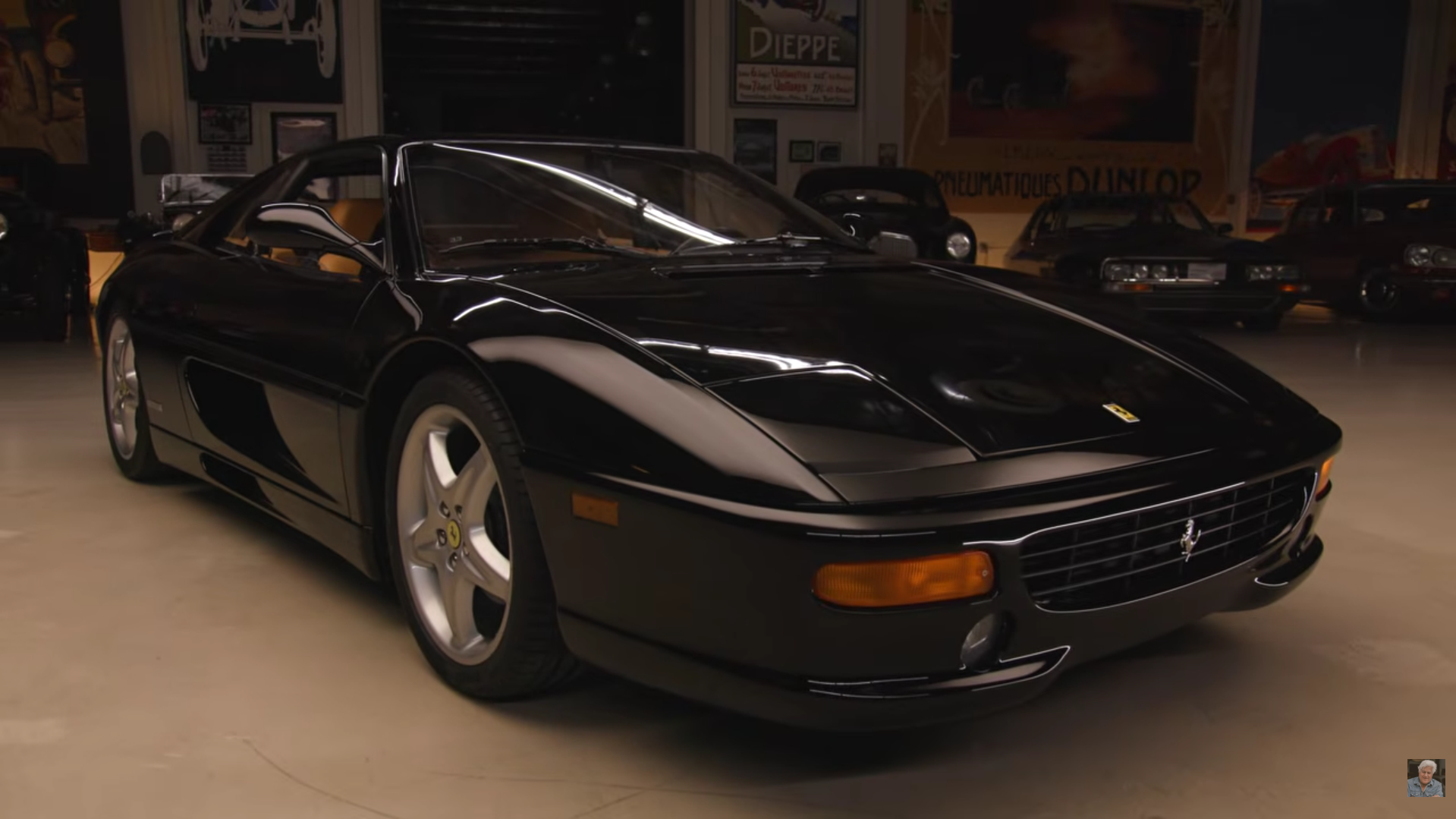
The F355 uses a 3.5-liter V8 producing 375 horsepower, but this particular car’s transmission is the star. Ferrari’s F1 system uses electro-hydraulic actuation and steering-wheel paddles rather than the famous gated shifter.
Ferrari had introduced paddle shifting to Formula 1 with the 640 in 1989 before bringing the concept to a road car years later. By today’s dual-clutch standards, the F355’s shifts feel slow, and Leno wasn’t especially impressed after getting behind the wheel.
He had much nicer things to say about the chassis, steering, engine, and overall driving experience. Osborne also argued that original F1-equipped cars could become increasingly interesting to collectors as others are converted to gated manuals.
The Corvette Makes Just 190 HP
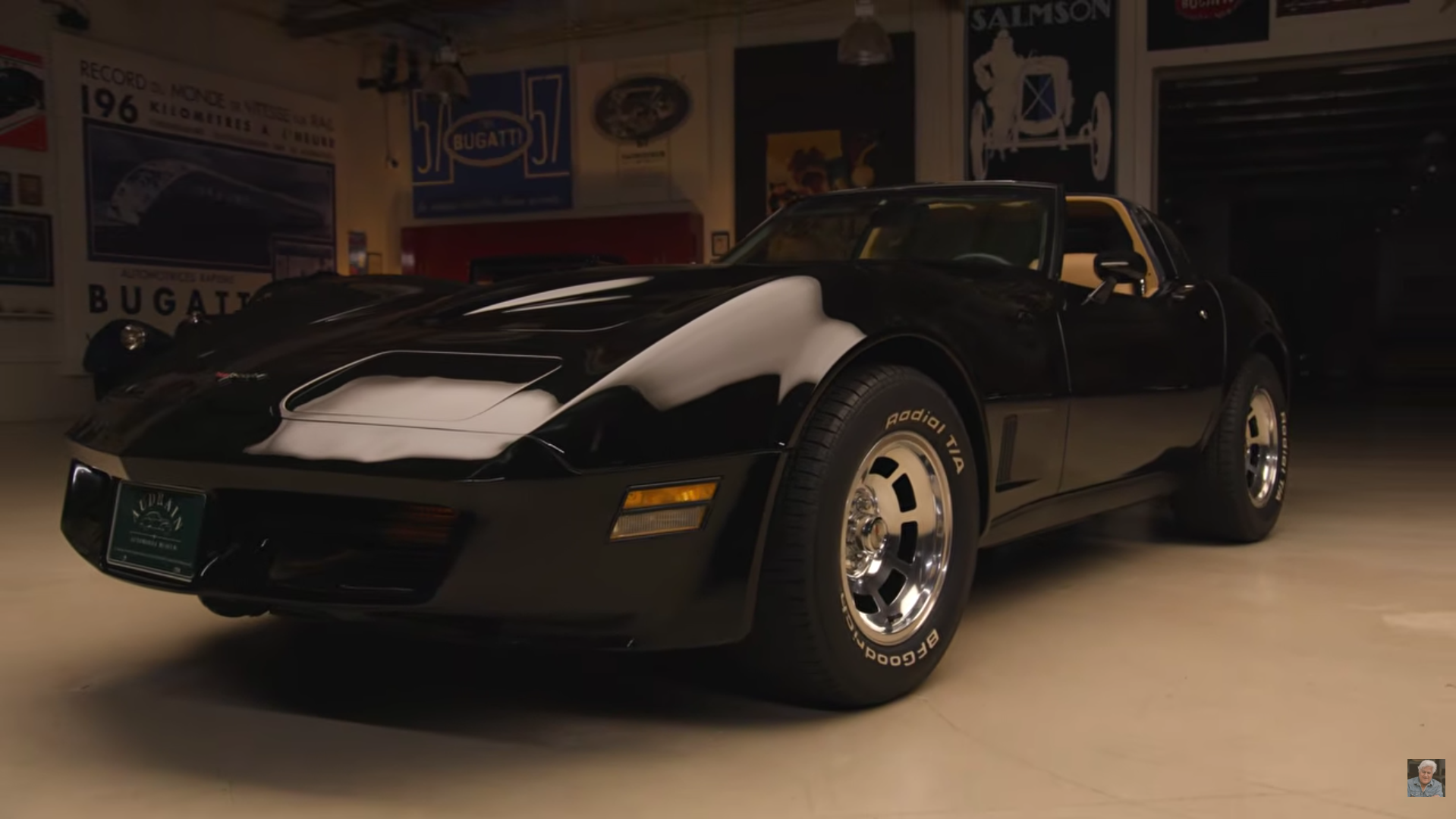
The 1981 Corvette is a very different machine. Its V8 produces only 190 hp, a figure Leno was quick to point out, yet Osborne highlighted the engineering used to cut weight when extracting more power wasn’t easy.
Chevrolet used components including a fiberglass rear leaf spring and magnesium valve covers. More importantly for an owner today, the Corvette is mechanically simple, and parts are relatively inexpensive.
Leno argued that this accessibility makes the C3 easier to enjoy without worrying about painful repair bills. A serious problem with the Ferrari’s F1 system could quickly cost thousands.
One Made More Money, The Other Costs Less To Enjoy
Five years ago, Osborne estimated a similar 1981 Corvette at around $20,000. Today, he puts the figure near $27,000.
The Ferrari’s jump was far larger. An F355 F1 valued around $95,000 five years ago could now command roughly $175,000, giving it the stronger appreciation of the pair.
Leno still leaned toward the Corvette as the better option. Its lower purchase price, cheap parts, and DIY-friendly mechanicals make it far less intimidating to own.
The Ferrari offers the history, sound, and driving experience expected from Maranello, plus much stronger recent appreciation. The Corvette counters with something equally tempting: the freedom to drive it without wondering whether the next repair bill requires a second mortgage.