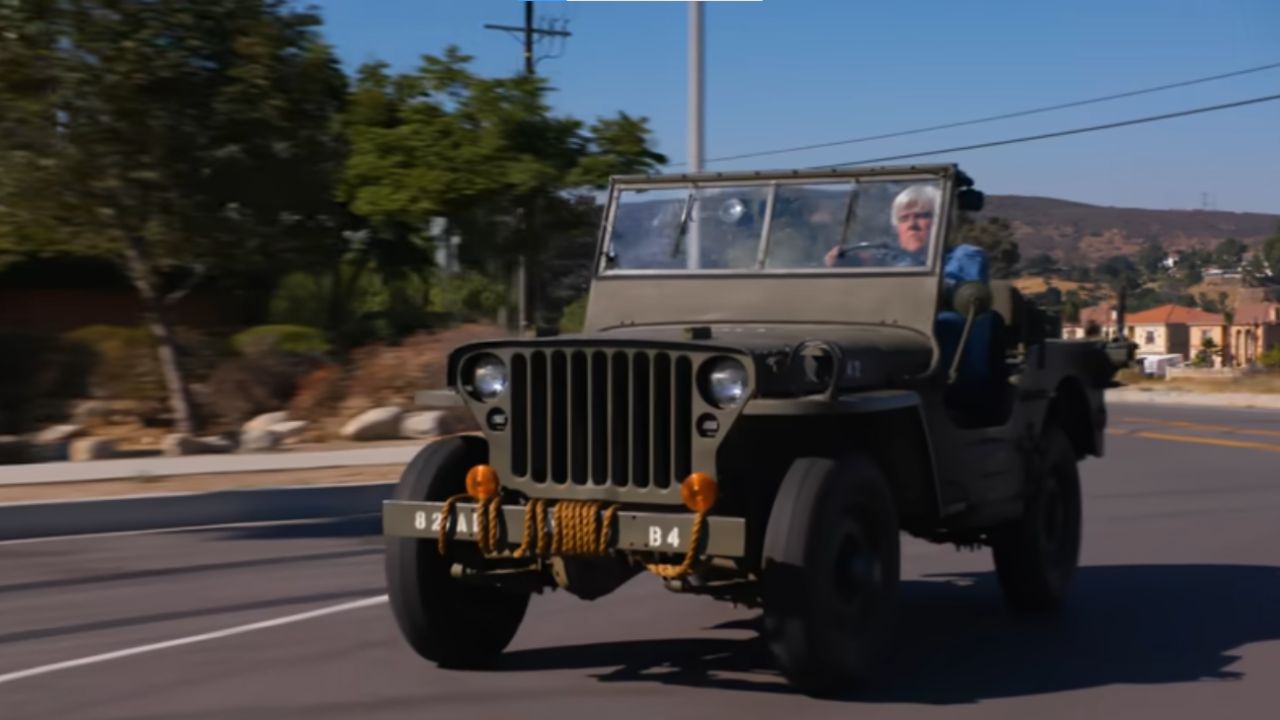

Jay Leno, the legendary car collector and former late-night host, is known for his encyclopedic knowledge of automobiles, but when it comes to the crown jewel of all vehicles, he has a clear favorite: the 1942 Ford GPW Jeep. In a recent episode of Jay Leno’s Garage, Leno took viewers on a spirited tour of the classic World War II-era vehicle, offering both history lessons and firsthand driving impressions that left no doubt about his admiration.
“It doesn’t matter where you are,” Leno said while bouncing over a patch of rough Los-Angeles road, “these things feel right at home.” Indeed, the Jeep’s lightweight frame, 60-horsepower flathead engine, and simple, rugged design make it deceptively nimble. Leno described it as the “original dune buggy,” built not for freeway cruising but for conquering all types of terrain with ease.
How the 1942 Jeep Became an American Icon
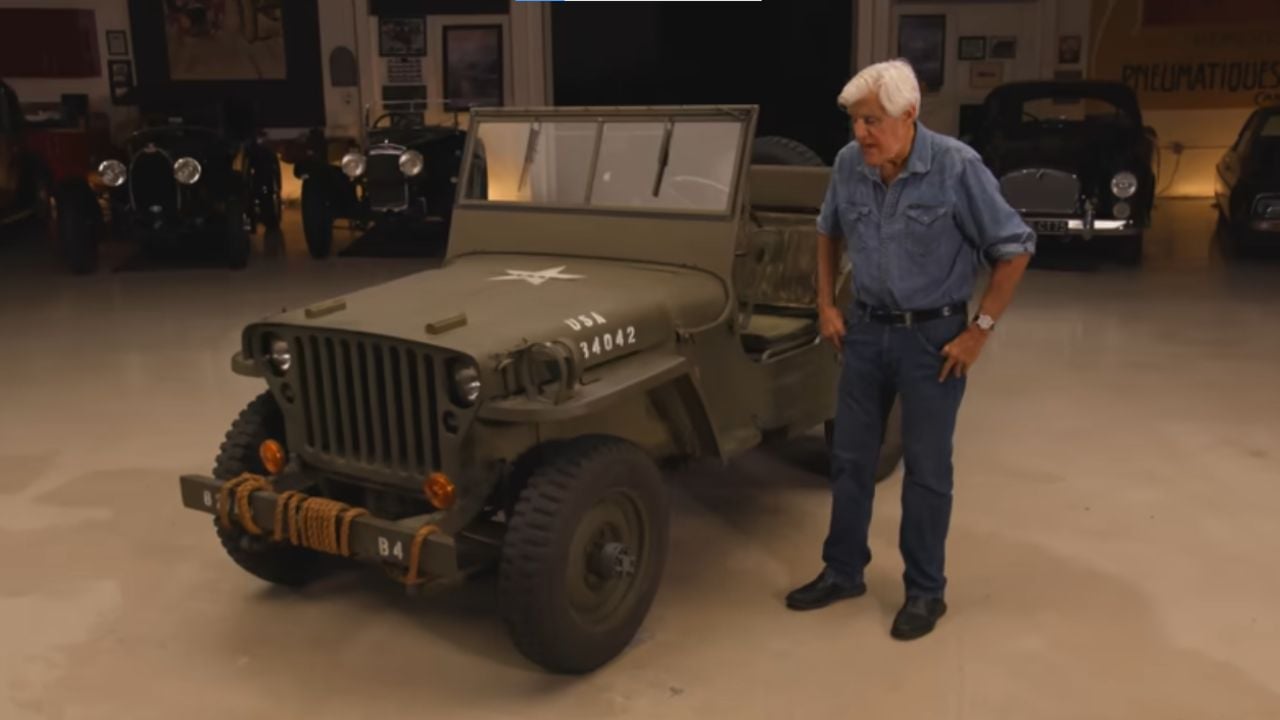
The story of the 1942 Ford GPW Jeep is a tale of ingenuity and wartime necessity. Originally based on a Willys design, the Jeep was mass-produced by Ford under an unusual collaboration. Willys had the patent and a chassis ready but could not meet the government’s urgent demand for vehicles.
Ford, famous for its assembly line efficiency, stepped in, using Willys chassis while producing its own bodies and engines. The result was a vehicle that could be churned out quickly, stamped with Ford’s distinctive grills, and shipped to the frontlines in Europe, where it became an iconic part of the Allied victory.
Leno’s enthusiasm for the Jeep goes beyond its historical significance. He recalled seeing them advertised in comic books and magazines as a teenager, sold in wooden crates coated with heavy Cosmoline grease. For just about $100, which translates to roughly $1,200 today, a young car enthusiast could take home a piece of history. “They were everywhere in the 1940s and 50s, and then suddenly, they became collector’s items,” Leno said.

Driving the Jeep, Leno highlighted its practicality and clever design. From the fold-down windshield to the accessible engine components, every feature was built for reliability and resilience. The vehicle’s mechanical brakes, blackout lights, and jerry cans for fuel emphasized its wartime purpose. Leno even demonstrated how the fan could be disengaged to prevent damage while fording rivers. “Everything is easily accessible. You could work on this anywhere,” he noted.
Fun, Fearless, and Forever Iconic
Perhaps what Leno finds most charming is the Jeep’s simplicity and enduring fun factor. Weighing around 2,400 pounds and sporting a three-speed transmission, it handles with surprising agility, especially on rough terrain. “These are so much fun to drive,” he said, grinning, as he navigated a stretch of dirt road. “You just put your foot down and go. You can’t get speeding tickets, and it makes you smile the whole way.”
The Jeep’s legacy extends beyond Leno’s garage. He recalled veterans who owned these vehicles after the war, farmers who relied on their toughness, and even the Europeans who preserved and cherished the leftovers left behind. “This is what protected us,” Leno said, reflecting on its historical importance and the brave men who drove it under fire.
In the end, Leno’s endorsement is as much about history and practicality as it is about sheer driving joy. The 1942 Ford GPW Jeep combines military ingenuity, mechanical simplicity, and timeless fun in a way few vehicles can match.
When asked to name the greatest car ever made, Leno’s choice is clear. For him, the 1942 Ford GPW Jeep is a marvel of engineering and wartime collaboration, but also the ultimate driving experience—fun, fearless, and forever iconic.