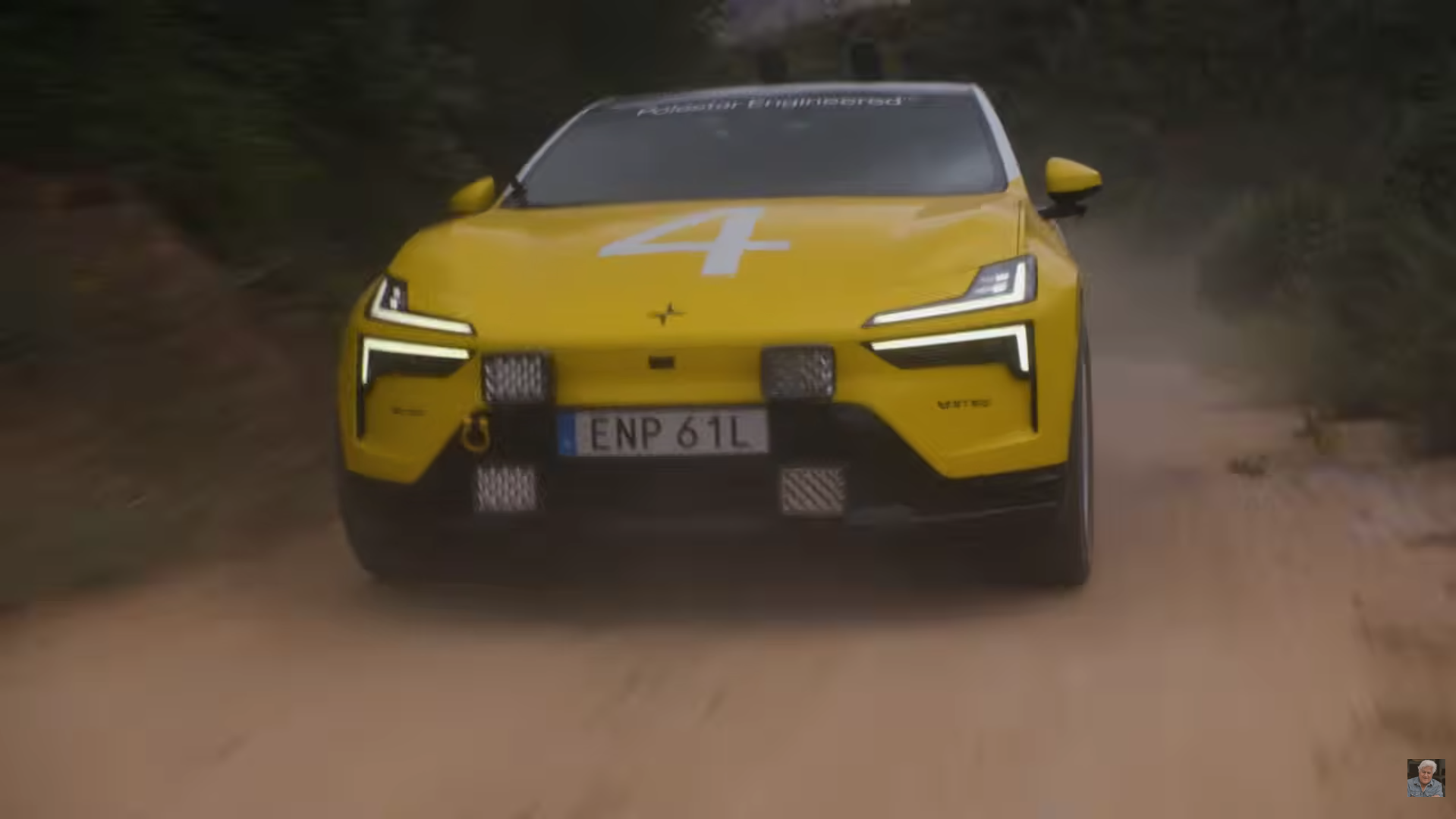
Jay Leno has driven just about everything imaginable, from priceless classics and steam cars to modern hypercars and fire-breathing muscle machines. This time, however, the longtime car enthusiast found himself kicking up dirt in something rather different: a 544-horsepower electric Polestar built for sliding across frozen Scandinavian landscapes.
The car is the Polestar 2 Arctic Circle, an experimental version of the electric fastback created as a rolling test bed for extreme winter driving. With all-wheel drive, lifted suspension, adjustable racing dampers, and a hydraulic handbrake, it has far more in common with a rally car than the typical luxury EV.
Polestar’s Head of Driving Performance, Joakim Rydholm, joined Leno for the demonstration and encouraged him to explore exactly what the prototype could do. That meant taking the car out of Jay Leno’s Garage, onto rough, dusty roads outside Los Angeles and putting its 544 horsepower to work wherever traction allowed.
Leno didn’t exactly need much convincing. Once Rydholm told him to floor it and let the car slide, the Polestar quickly became another reminder that electric performance can involve considerably more than simply posting a quick 0-60 mph time.
The Polestar 2 Gets The Rally Treatment
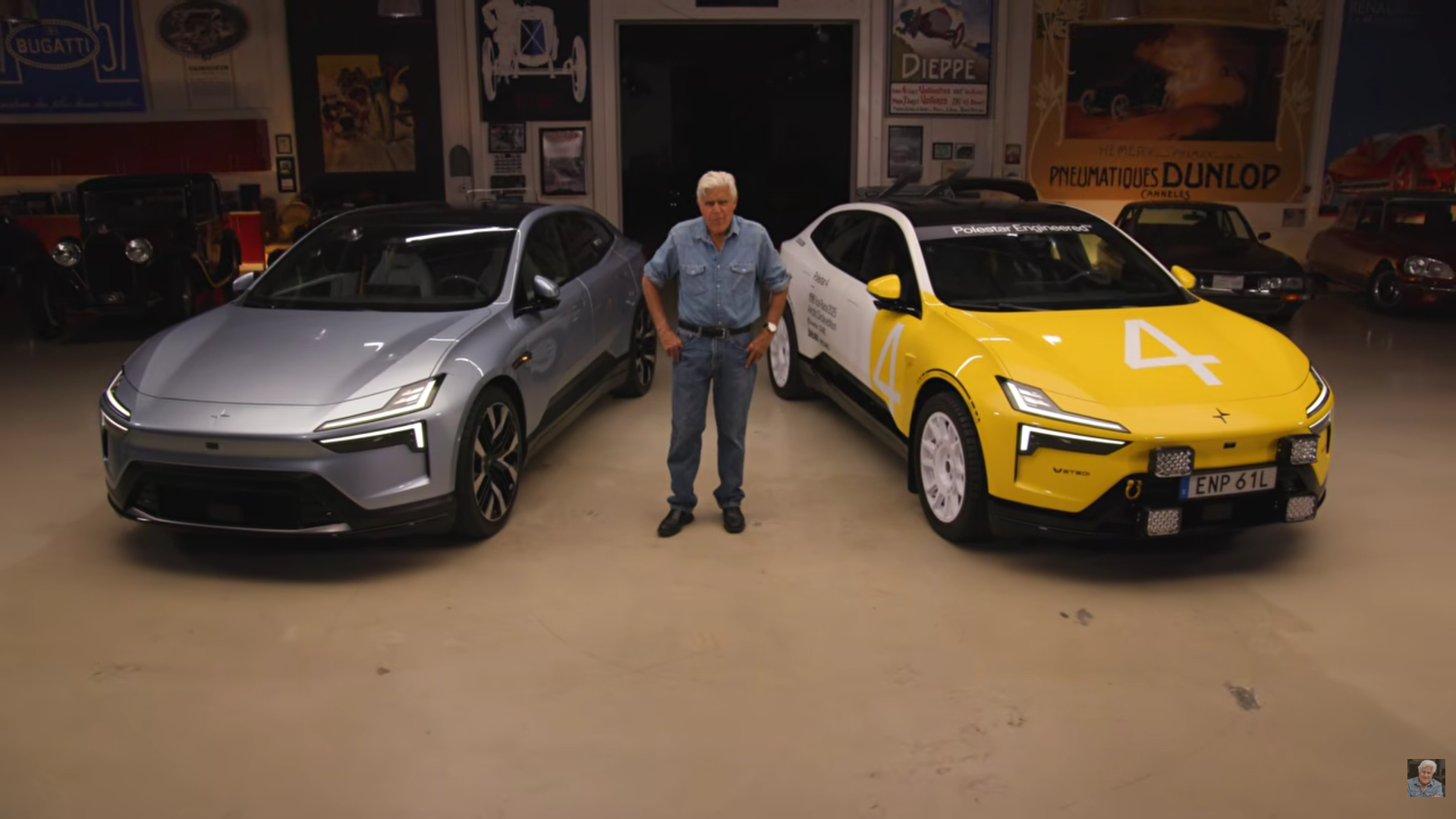
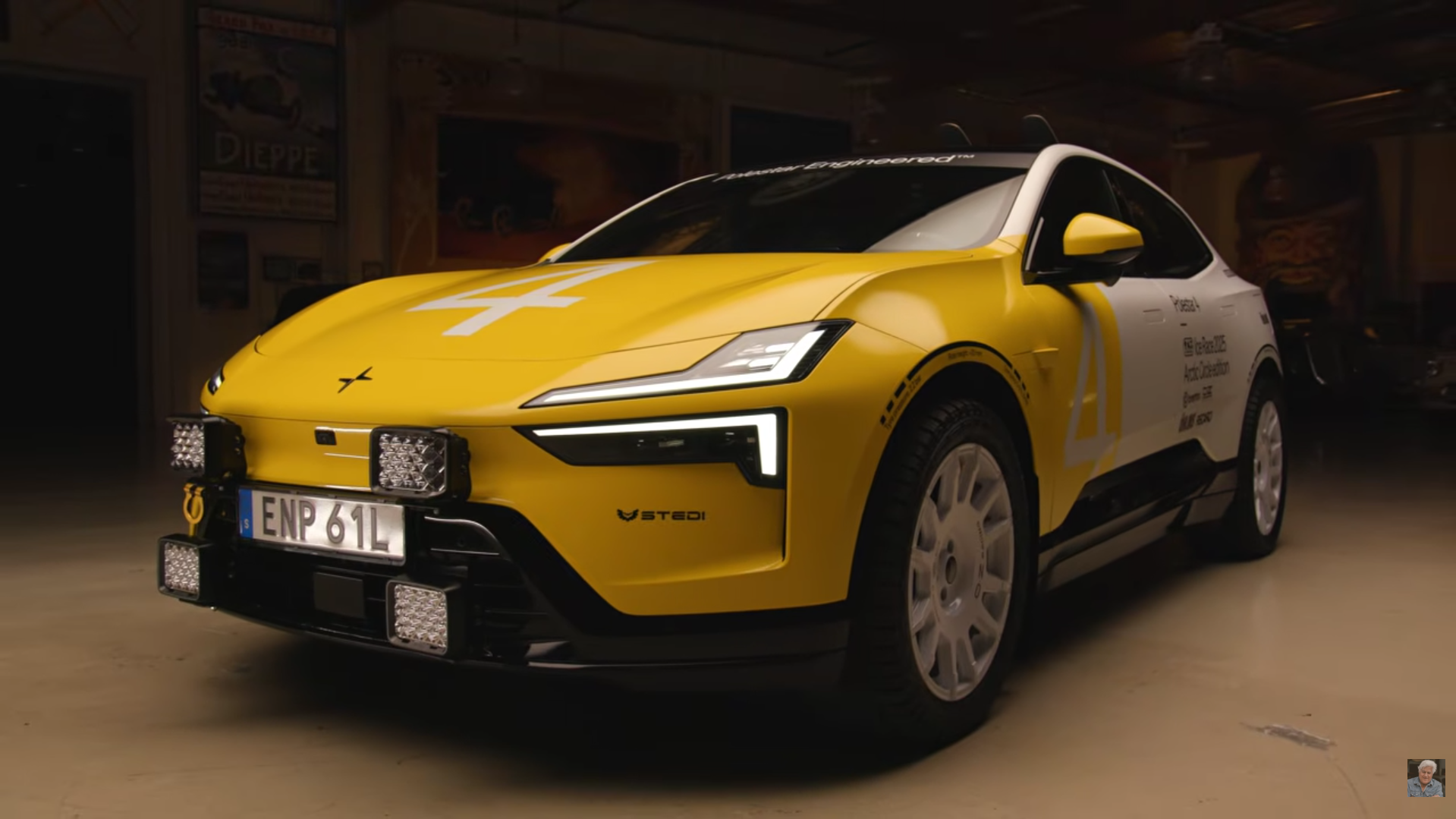
The Arctic Circle car retains the dual-motor all-wheel-drive powertrain found in the high-performance Polestar 2, producing 544 horsepower and capable of reaching 60 mph in about 3.7 seconds. Polestar’s modifications, however, focus less on outright acceleration and much more on control when the road surface becomes loose, icy, or covered in snow.
The suspension has been raised by approximately 20 millimeters and fitted with adjustable Öhlins dampers that allow compression and rebound settings to be tuned for different conditions. Polestar also equipped the car with specially developed OZ Racing wheels, Brembo brakes, additional front lighting, and more supportive seats.
Rydholm explained that the setup was developed for severe winter environments, including temperatures around minus 30 degrees Celsius. Testing on frozen lakes in northern Sweden gave Polestar’s engineers thousands of hours to refine how the electric all-wheel-drive system distributes power during aggressive driving.
Yes, It Has A Hydraulic Handbrake
Perhaps the most enthusiast-friendly modification is the old-fashioned hydraulic handbrake mounted prominently inside the cabin. Pulling a traditional handbrake in an all-wheel-drive EV isn’t quite as straightforward as doing the same thing in an old rally-prepped hatchback, though.
Polestar had to engineer the system so the rear electric motor disengages before the hydraulic brake locks the rear wheels. That allows the driver to rotate the car into a corner and initiate the kind of controlled slide that Scandinavian drivers have been practicing on snowy roads and frozen parking lots for generations.
According to Rydholm, developing the system took considerable effort because the electronics and mechanical braking system needed to work together naturally. The result gives the driver a surprisingly traditional rally tool inside a thoroughly modern electric car.
Jay Leno Takes It To The Dirt
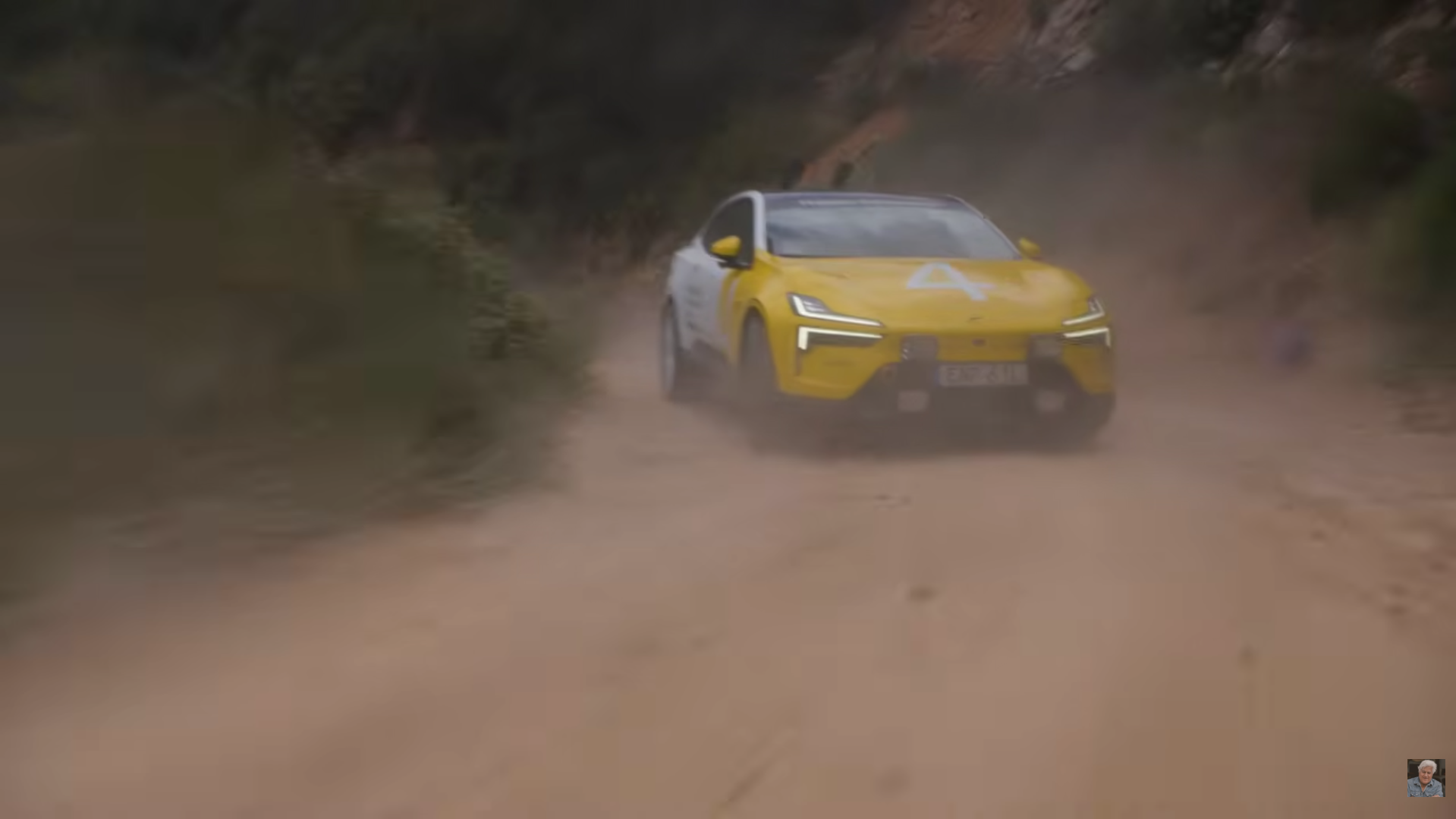
The California roads used in the episode were considerably dustier than Polestar’s usual frozen Swedish testing grounds, but the Arctic Circle prototype appeared perfectly happy being thrown around on loose surfaces. Leno repeatedly praised how controllable the car felt while Rydholm encouraged him to carry more speed and let the chassis move beneath him.
Instant electric torque certainly helps. Rydholm explained that Polestar can use information from the steering, accelerator, and yaw sensors to continuously adjust torque distribution, giving engineers significant control over how the car behaves as grip changes.
That electronic precision doesn’t mean the experience has to feel sterile. Watching Leno slide the car through dirt while joking about ending up completely off the road suggests Polestar’s engineers succeeded in creating something playful rather than merely fast.
Electric Rally Cars Might Have A Future
Rydholm, who has a background in rally driving, still acknowledged some practical advantages for combustion-powered competition cars, particularly when racing deep in forests where charging infrastructure may not exist. At the same time, he argued that electric powertrains can be remarkably effective on low-grip surfaces because their torque arrives instantly and can be distributed with exceptional precision.
He even suggested that electric cars can already be quicker than combustion-powered alternatives on ice. The challenge is that there currently aren’t many serious competition environments designed specifically for fully electric rally machinery.
The Polestar 2 Arctic Circle isn’t a production model, so buyers won’t be walking into a showroom and ordering one with a hydraulic handbrake and rally suspension. As a demonstration of what an electric performance car can become when engineers prioritize sideways fun, however, it makes a convincing argument.
Leno seemed to agree. For a man whose garage celebrates virtually every era and form of automotive propulsion, watching him throw a 544-horsepower EV down a dirt road with a grin on his face might be one of the stronger endorsements Polestar could ask for.