
Jay Leno has driven countless rare machines, yet the 1914 Knox Model 46 “Little Six” still managed to surprise him. Its name sounds modest, but the car carries a colossal 496-cubic-inch six-cylinder engine and the road presence of an early automotive locomotive.
The Knox came from the Nethercutt Collection and is believed to be one of only two surviving examples. Curator Cameron Richards brought the enormous touring car to Jay Leno’s Garage, where its engineering, history, and unexpected road manners took center stage.
Although the engine produces only around 46 horsepower, its low-speed torque is the real attraction. Leno and Richards estimated output at well above 500 lb-ft, giving the Knox effortless pulling power despite its size and age.
Modern upgrades have also made this 112-year-old machine remarkably usable. Hidden rear disc brakes, an alternator, a stronger driveshaft, and turn signals allow it to travel at highway speeds without completely abandoning its original character.
The “Little Six” Was Anything but Small
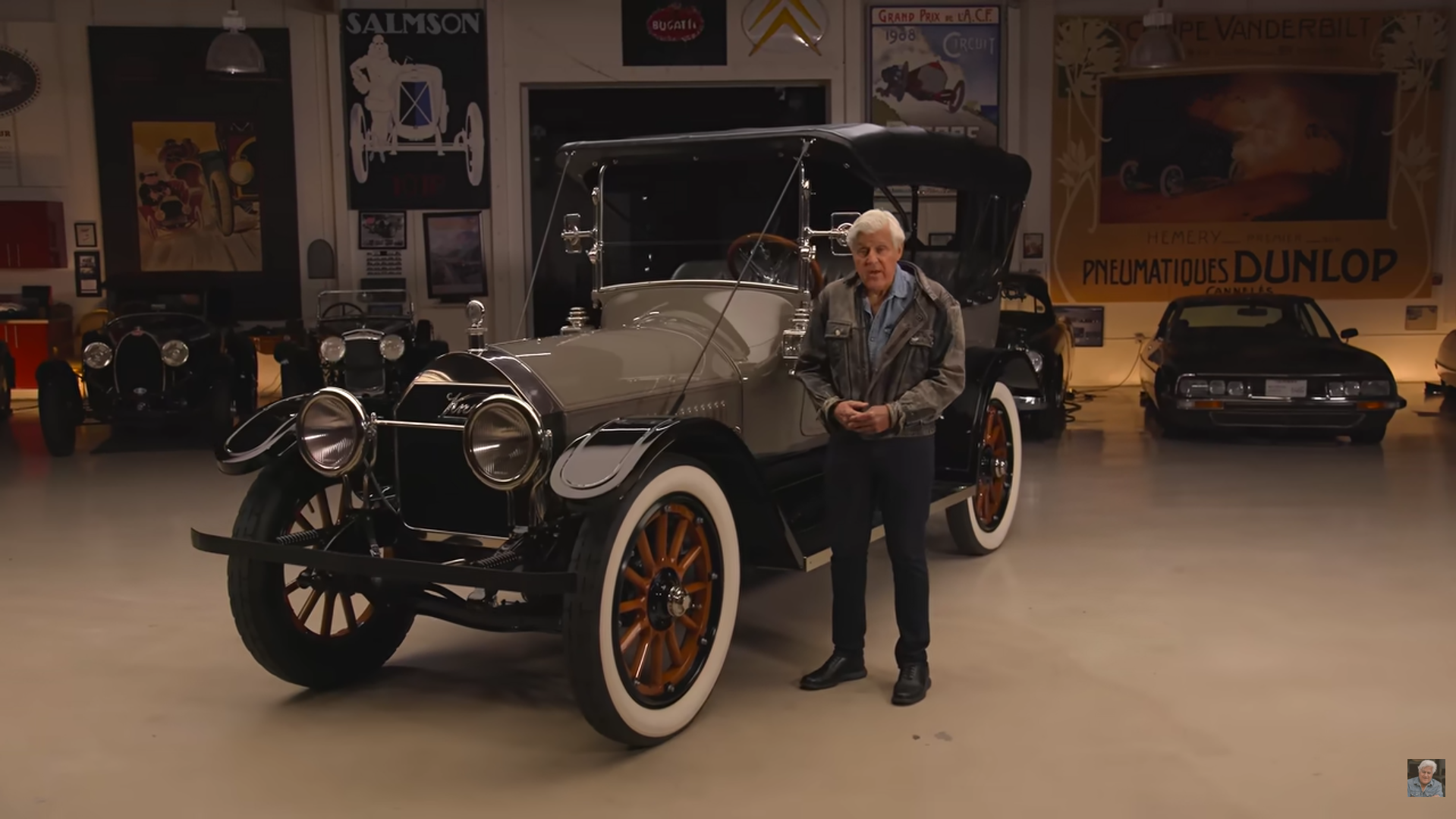
Knox Automobile Company built cars in Springfield, Massachusetts, during the early years of the American motor industry. The company also produced trucks and fire apparatus, but its passenger-car operation disappeared after only a relatively brief run.
The Model 46 was the largest automobile Knox offered, despite carrying the “Little Six” nickname. Its overhead-valve engine displaced 496 cubic inches, making it larger than many celebrated American V8s built decades later.
Only six Little Six models were reportedly produced, and just two are believed to survive. That scarcity makes the Nethercutt car an important piece of brass-era history rather than simply another oversized prewar touring machine.
A Supercar Before the Word Existed
The Knox cost approximately $4,350 when new, at a time when a house could cost roughly $1,200. Its price placed it far beyond the reach of most buyers and even made it more expensive than comparable models from better-known luxury manufacturers.
For wealthy motorists in 1914, its performance must have seemed extraordinary. Most people were familiar with the pace of horses and carriages, while the Knox could travel at 50 mph and potentially reach considerably higher speeds.
Leno described cars like this as the supercars of their era. The Knox combined speed, luxury, advanced engineering, and exclusivity long before the modern performance-car category had a name.
Mechanical Complexity Is Fully Exposed
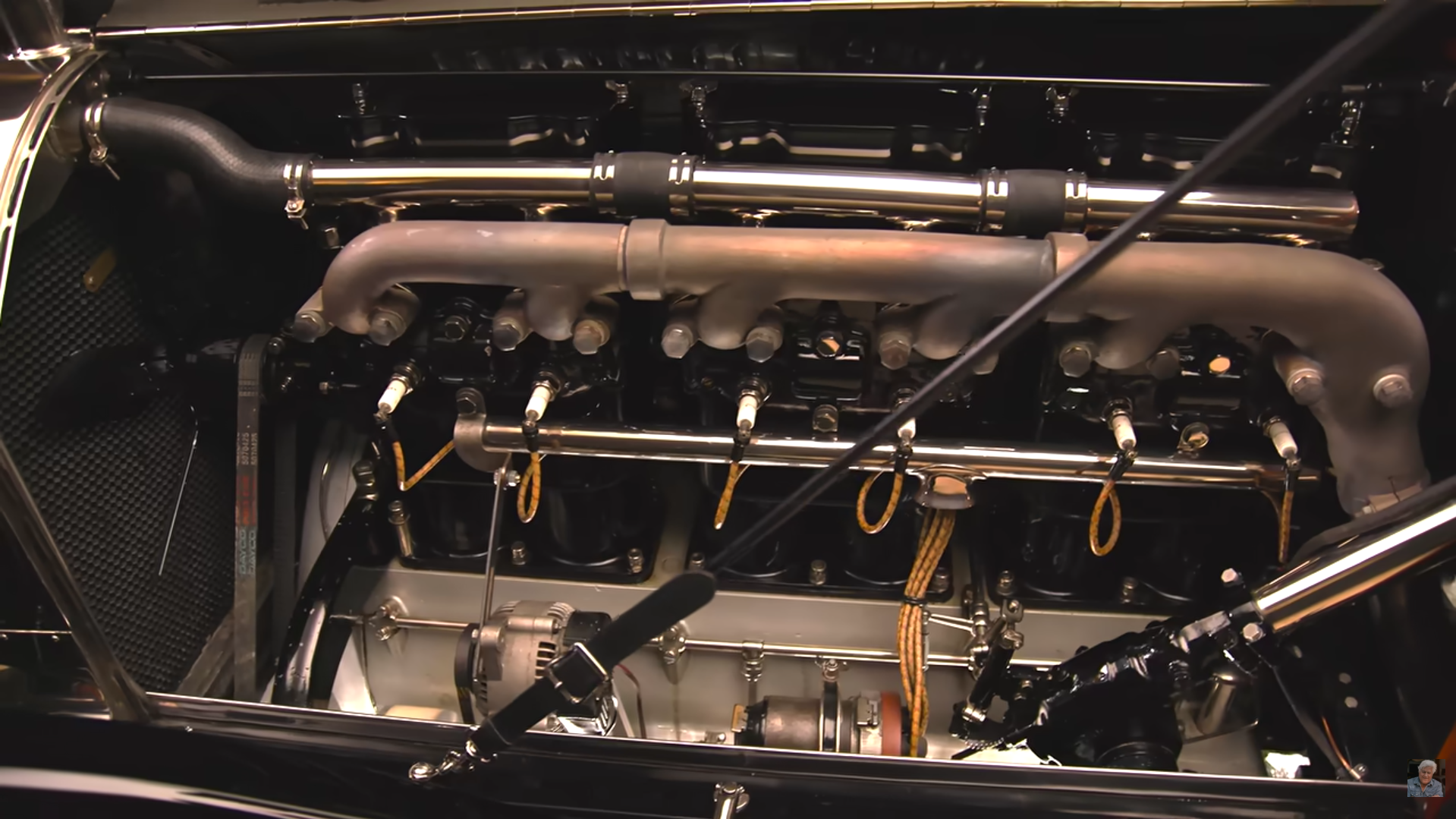
Opening the long hood reveals a spectacular display of early engineering. The pushrods, rocker arms, valve springs, ignition components, and lubrication points are visible rather than hidden beneath plastic covers.
The engine uses a total-loss oiling system, meaning owners had to lubricate components frequently and accept that some oil would end up underneath the car. Regular valve adjustment and manual oiling were normal responsibilities rather than specialist maintenance jobs.
A magneto provides ignition independently of the main electrical system. As long as the engine can be turned and the magneto can create a spark, the Knox can theoretically run even if the battery and other electrical equipment fail.
Carefully Updated for Modern Touring
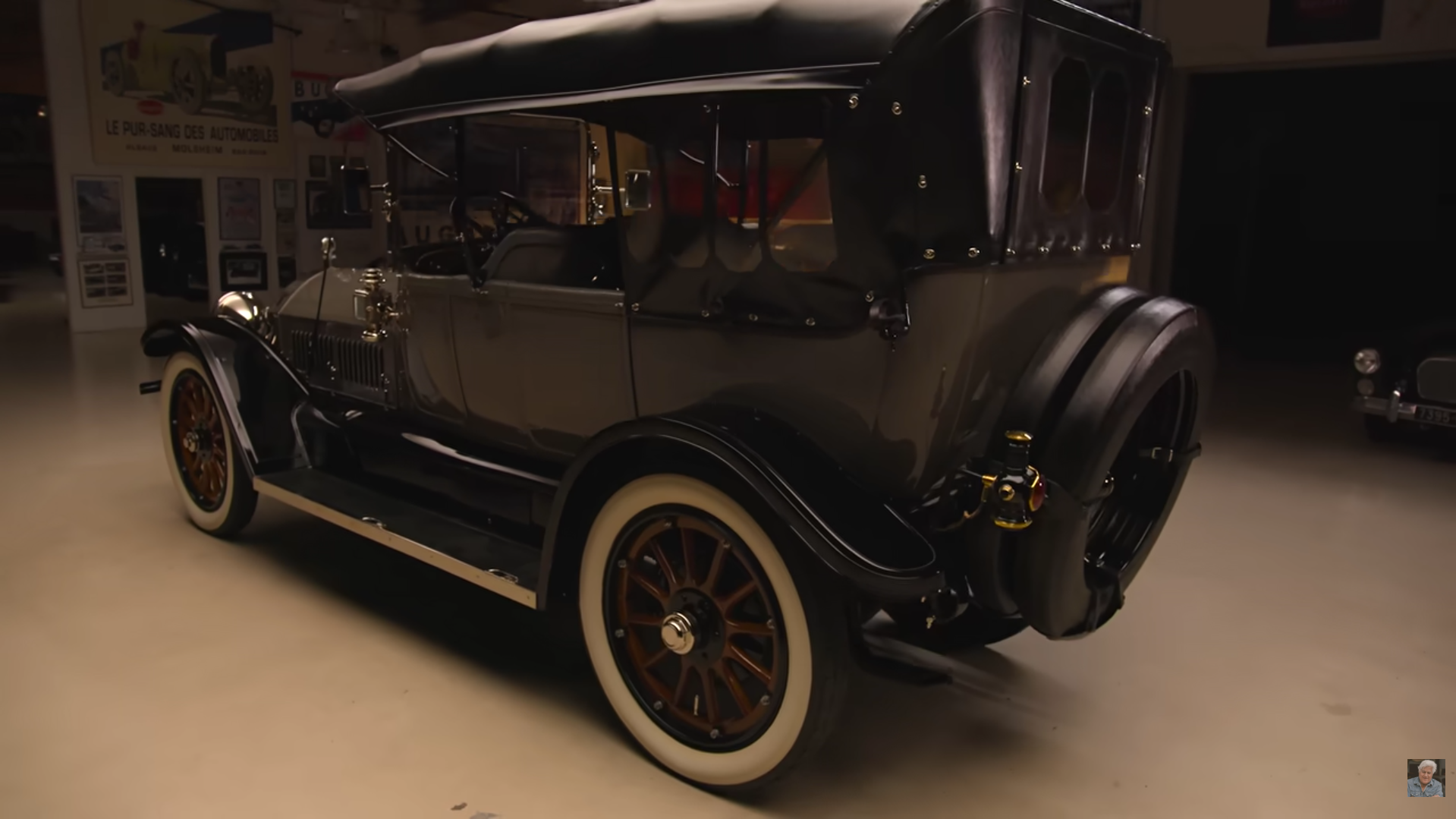
The Nethercutt Collection did not restore the Knox solely for static exhibition. Its team built the car to participate in tours and road events, preserving its appearance while making several discreet improvements.
Rear disc brakes are hidden from view and provide considerably better stopping performance than the original system. The car also received a modern driveshaft, an alternator, mirrors, electric turn signals, and other practical changes.
Those modifications allow the Knox to cruise at around 70 mph under suitable conditions. Richards compared the experience to driving a freight train, while Leno was impressed that the car could keep pace with modern traffic so easily.
Huge Torque Makes It Surprisingly Relaxed
The three-speed transmission does not require constant shifting because the engine can pull from extremely low speeds. Richards even advised Leno to skip first gear, describing the Knox as a stump puller.
Once moving, the car accelerates smoothly and can slow down in top gear before pulling away again without protest. Its suspension also absorbed rough pavement with far greater composure than Leno expected from such an early automobile.
Many antique touring cars require constant physical effort from the driver, especially through the steering and brakes. Leno said the Knox felt unusually easy and relaxing, claiming he could drive it all day without feeling as though he were fighting the machine.
A Rare Survivor Built to Be Driven
The Knox is not presented as a flawless concours showpiece. Its restoration was completed decades ago, and the Nethercutt Collection continues to use it for touring rather than protecting it from every mile.
That approach suits the car’s original purpose. It was engineered to cover long distances with seven passengers, massive reserves of torque, and the durability expected from an expensive American luxury vehicle.
Leno concluded that the Knox represents a fascinating period when manufacturers were still discovering what automobiles could become. Would you rather experience this 496-cubic-inch touring car or a modern supercar, and do you think rare vehicles like this should be driven regularly or preserved as museum pieces? Let us know in the comments.