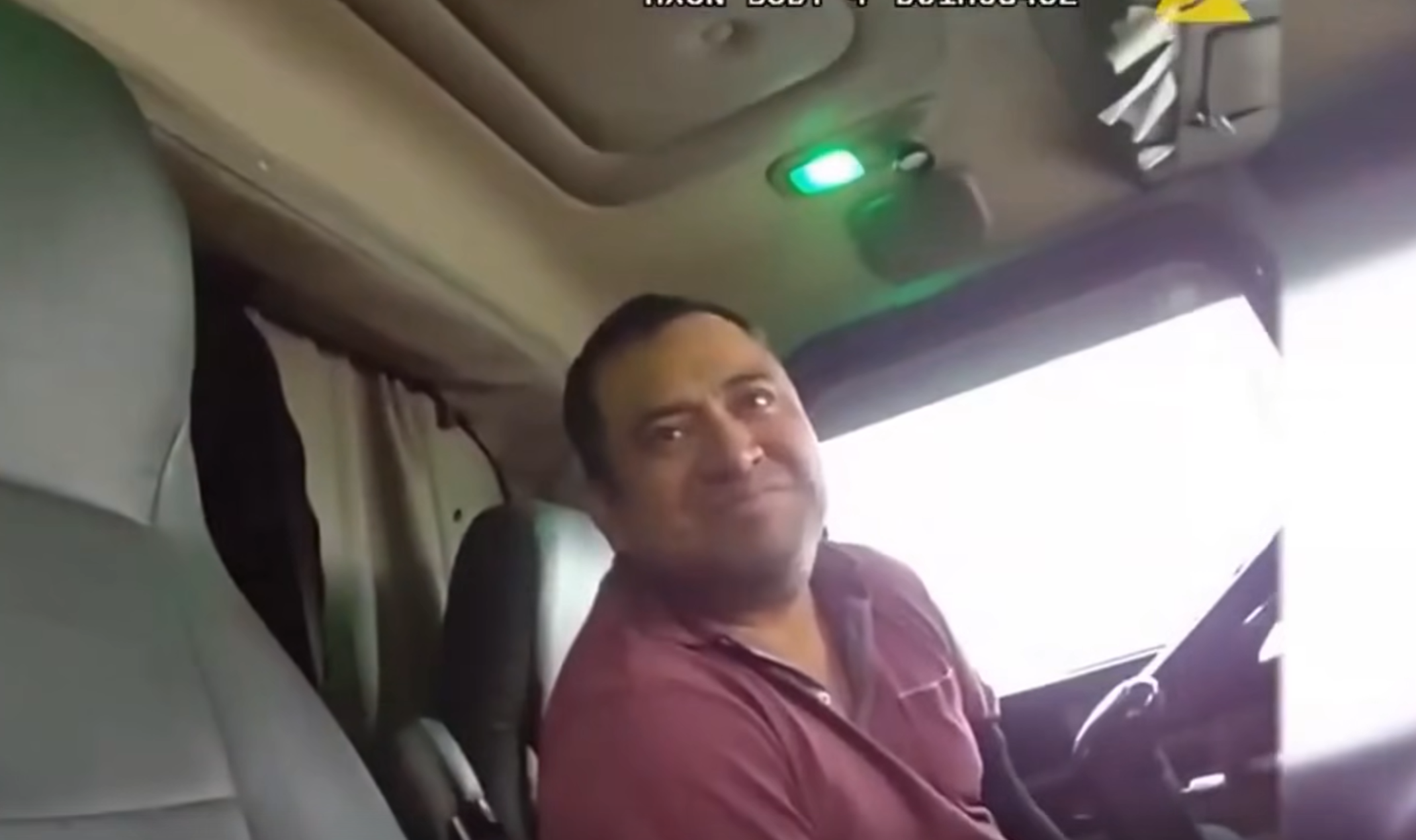
A Washington State Patrol trooper did everything short of impounding the truck. He pulled over a car-hauling semitruck, uncovered a laundry list of violations, issued citations totaling over $1,000, and looked the driver in the eye. “You can’t drive,” the trooper said plainly. “You don’t have a commercial driver’s license, you don’t have a medical card, you don’t have a logbook.” He even followed the driver to a nearby truck stop to make sure the rig was parked. That should have been the end of it.
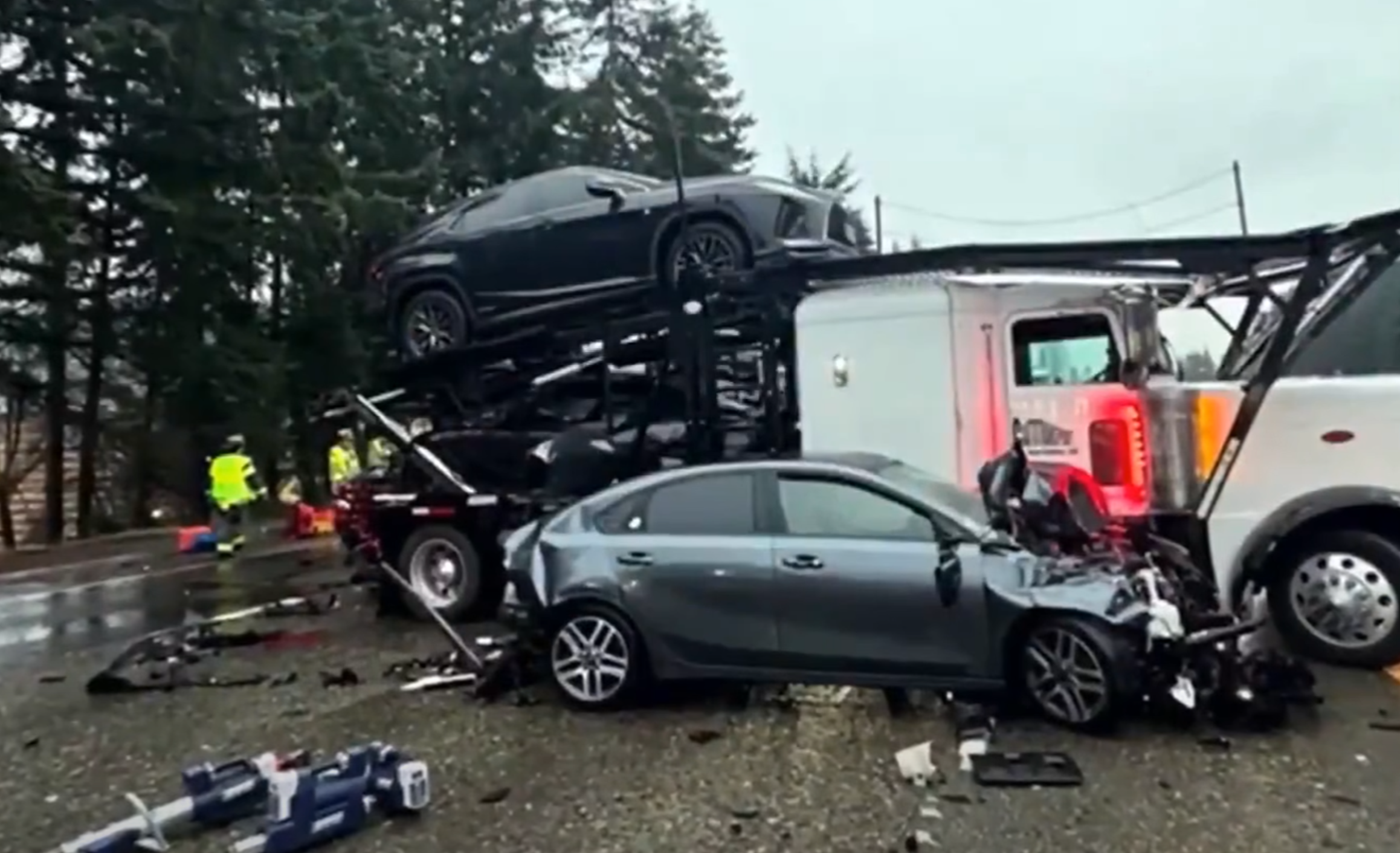
It wasn’t. Weeks later, in December 2025, that same driver, 40-year-old Juan Hernandez-Santos, was allegedly back behind the wheel of that same car-hauling semitruck on Interstate 5 near Lacey, Washington. According to the Washington State Patrol, he rear-ended a school bus during the morning commute and set off a pileup involving four other vehicles. The freeway shut down for hours. Four people were transported to the hospital.
The school bus, fortunately, had no students aboard at the time. That detail sits somewhere between a relief and a grim reminder of how differently this could have ended. Body camera footage from the November traffic stop has since been released, and the footage shows a trooper calmly but firmly trying to get through to a driver who struggled to understand English. The trooper’s frustration is palpable. So is the futility.
Court records paint a picture that goes well beyond a single bad stop. Hernandez-Santos had a documented history of prior DUI convictions and a hit-and-run on his record. He was working for G Auto Transport, a Sunland, California-based company, at the time of the crash. The U.S. Department of Homeland Security confirmed he was in the country illegally, had been previously deported in both 2005 and 2006, and that a detainer request placed after the crash was not honored before he was released from Thurston County Jail.
A CDL Is Not Optional Behind the Wheel of a Semi
A commercial driver’s license is not a technicality. It represents a minimum baseline of competency that every driver of a large commercial vehicle is legally required to meet before putting tens of thousands of pounds of steel in motion on a public highway. The CDL testing process covers vehicle inspection, basic control skills, and road driving, and it exists for good reason. A fully loaded car-hauling semitruck can weigh upward of 80,000 pounds. At highway speeds, that weight does not stop quickly, and it does not forgive mistakes.
Beyond the CDL itself, the missing medical card is its own red flag. Federal regulations require commercial drivers to pass a physical examination conducted by a certified medical examiner, and to carry proof of that certification at all times. The requirement exists because commercial driving demands sustained attention, adequate vision, and the physical stamina to manage a vehicle that most people will never operate. No medical card means no documented proof that any of those boxes were checked.
What Happens When a Trooper Can’t Impound a Truck
This is where the story gets uncomfortable, and where Tacoma-based attorney Mark Lindquist has directed pointed criticism at the system. He told KOMO News that the trooper’s decision to accept Hernandez-Santos’s word, rather than impounding the vehicle outright, represented a serious lapse in judgment from a public safety standpoint. “One of the more disturbing aspects of this case is that a Washington state trooper would accept the word of a rogue driver that he won’t get back on the road,” Lindquist said. “That makes no sense.”
Lindquist was clear about what he believes should have happened: arrest the driver, impound the truck. He noted that commercial vehicles represent a category of danger well above a standard passenger car. “All vehicles are potentially dangerous weapons, but a commercial vehicle is doubly dangerous to everyone on the road,” he said. “We need those drivers to be competent.” What troopers can legally compel in a roadside commercial inspection situation versus what they chose to do here may be an important distinction that the courts will eventually have to sort through.
The Commercial Trucking Industry Has a Compliance Problem
This case is not an isolated incident, even if the specifics are particularly troubling. The trucking industry has long grappled with questions about how well compliance is being enforced, particularly among smaller operators and independent contractors. The Federal Motor Carrier Safety Administration maintains a database of inspection results and safety ratings for commercial carriers, and repeated violations are supposed to trigger intervention. Whether G Auto Transport had a history of issues with that system is a thread worth pulling.
The driver shortage that has pressured the trucking industry for years has also created situations where the economic incentive to keep trucks moving can outpace the administrative diligence required to keep them legal. That is not an excuse. It is context for why enforcement on the road matters as much as it does. Troopers are often the last line of defense between a non-compliant vehicle and a highway full of commuters.
What This Crash Should Prompt
The I-5 corridor through Washington is one of the busiest freight routes on the West Coast. It sees a constant flow of commercial traffic, and the stakes of any individual breakdown in oversight are high. In the weeks following this crash, the Washington State Patrol announced it was increasing commercial vehicle enforcement focus in Thurston County specifically because of incidents like this one.
That is a reasonable response, but it raises the obvious question: what mechanism exists to keep a driver who has already been told to stop driving from simply climbing back into the cab? The answer, at the moment, appears to be a reliance on voluntary compliance. For a driver with multiple DUIs and a hit-and-run already on his record, that was never a realistic expectation. At minimum, this case makes a credible argument that vehicle impoundment should be the default outcome when a commercial driver is found operating without a CDL and without a valid medical card. The truck was the problem as much as the driver was, and leaving it accessible solved nothing.
Impound the vehicle, yes. But the vehicle didnt break the regs. THE DRIVER needs to be “impounded” . Straight to jail. And check with immigration and if they issue a detainer RESPECT IT.