
Determining whether a cellphone played a role in a crash isn’t as straightforward as spotting a damaged bumper or measuring skid marks. A driver may not admit to using one, witnesses might never see it, and many modern smartphone activities leave little obvious evidence at the scene.
That creates a potentially significant blind spot in official crash statistics. Researchers have now compared police reports with data collected directly from drivers’ phones, and the difference between the two paints a very different picture of how common cellphone use is immediately before crashes.
The Insurance Institute for Highway Safety published the study on August 27, using anonymized telematics data from Cambridge Mobile Telematics and matching it against police-reported crashes. Researchers examined nearly 17,000 incidents across four states between 2021 and 2024.
The findings don’t prove that a phone caused any individual crash, an important distinction acknowledged by IIHS. They do, however, suggest that official reports are missing a substantial amount of cellphone activity occurring shortly before vehicles collide.
Police Reports May Undercount Phone Use Sevenfold
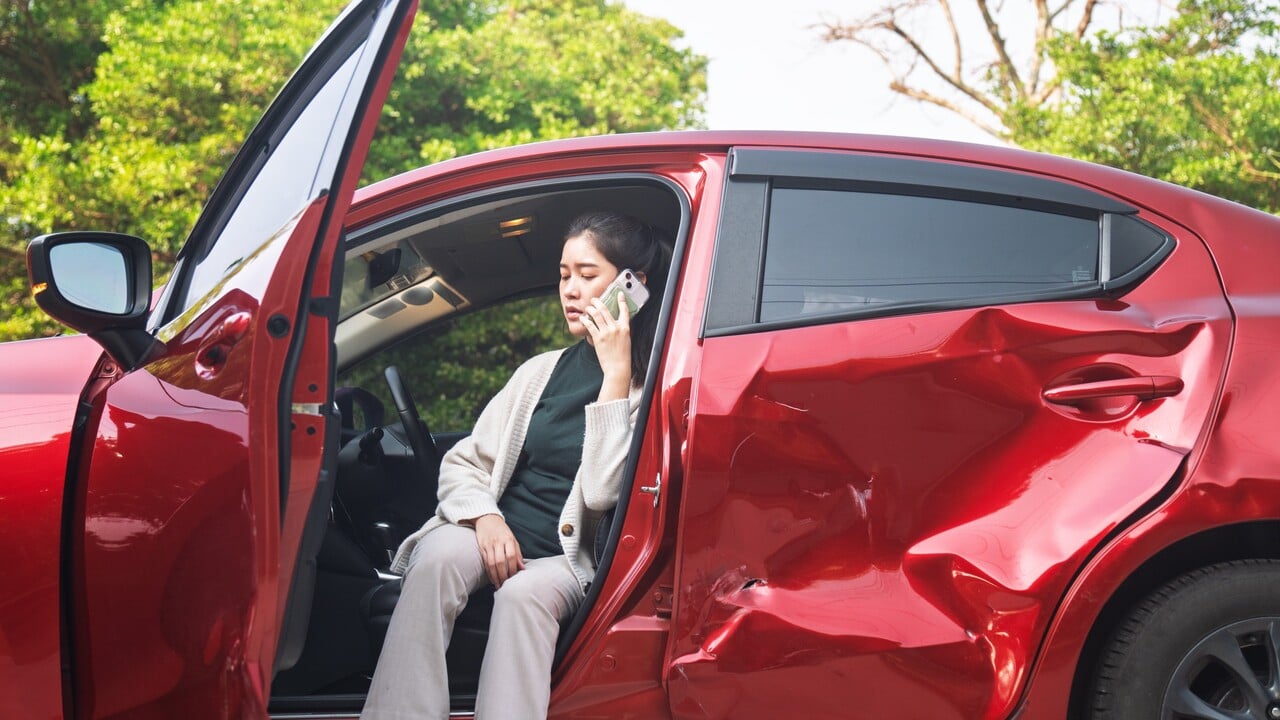
IIHS found that drivers using safe-driving programs based on Cambridge Mobile Telematics’ platform had their phones in use during the 30 seconds before 7% of single-vehicle crashes and 8% of two-vehicle crashes. Police reports for those same incidents recorded cellphone use in less than 1%.
According to IIHS, that means cellphone use before crashes is being undercounted in police reports by a factor of at least seven. IIHS President David Harkey said the discrepancy isn’t surprising because many smartphone activities are difficult for witnesses to notice and drivers may be reluctant to admit they were distracted.
The researchers matched telematics-recorded incidents with police crashes occurring within the same 15-minute period and one-mile radius. That process produced 15,301 two-vehicle crashes and 1,543 single-vehicle crashes for comparison.
Tapping And Swiping Were Particularly Hard To Catch
Cambridge Mobile Telematics can detect several types of phone activity, including hand-held calls, hands-free calls, and physical manipulation such as tapping or swiping. It can also record when a phone’s screen is unlocked even if the driver isn’t actively touching it.
Among the 15,301 two-vehicle crashes, telematics detected physical phone manipulation within 30 seconds of impact in 590 cases. Police reports identified that behavior in only 17.
For the 1,543 single-vehicle crashes, telematics recorded manipulation in 49 cases during the same 30-second window. Police reports captured it in just three, demonstrating how easily relatively subtle phone interactions can disappear from official crash records.
An Unlocked Screen Doesn’t Prove Distraction
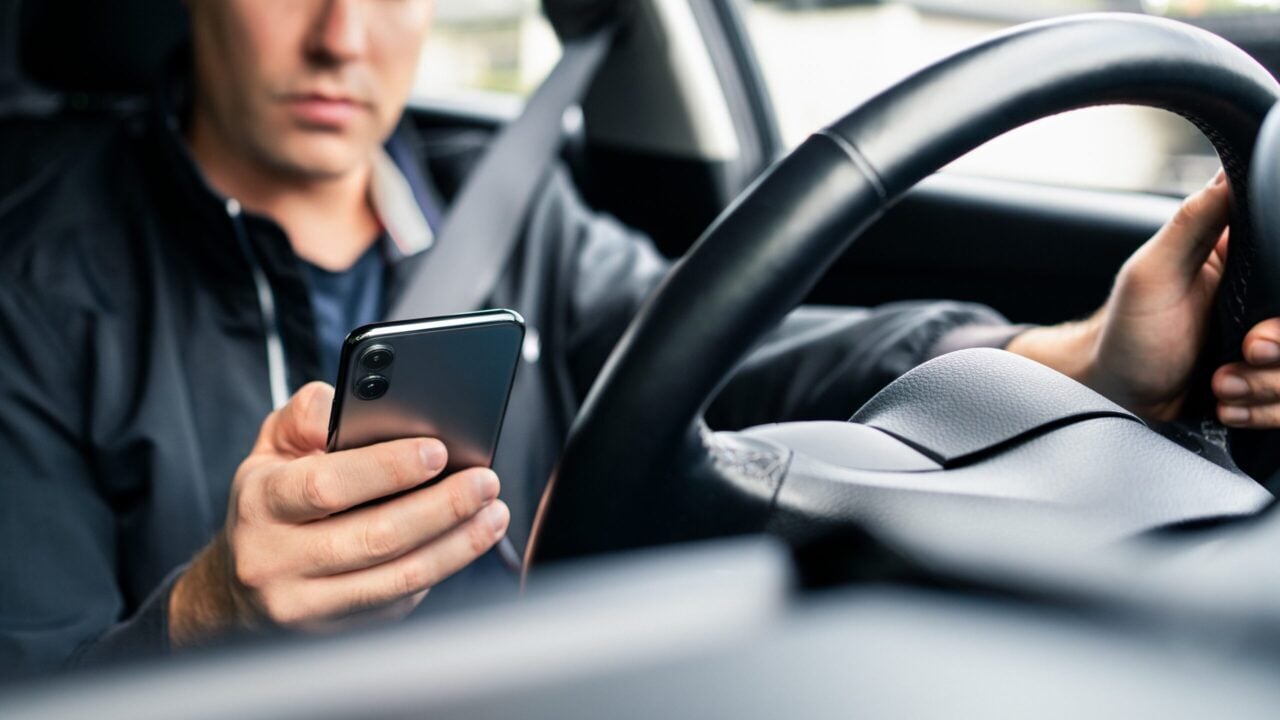
The study also counted passive phone use, defined by the telematics system as an unlocked screen without physical interaction. That could include something as ordinary as running Google Maps, so an active screen shouldn’t automatically be interpreted as evidence that someone was dangerously distracted.
IIHS also emphasizes that researchers couldn’t determine whether the detected phone user was responsible for a particular collision or whether phone use caused it. The data similarly don’t reveal whether drivers were actually looking at their unlocked screens during the moments before impact.
There are other gaps the technology can’t capture. Using smartphone applications through Apple CarPlay or Android Auto, for example, doesn’t necessarily require the handset’s screen to remain unlocked and therefore could escape this particular measurement.
Phone Distraction Is No Longer Just Calling And Texting
Modern smartphones have complicated the distracted-driving problem because drivers can now perform far more activities than making calls or sending texts. Social media, videos, and other screen-heavy applications can demand sustained visual attention at precisely the moment a driver’s eyes should remain on the road.
IIHS notes that looking away from the road for only two seconds can double the risk of a crash or near-crash event. A separate IIHS survey also found that nearly a quarter of participating drivers admitted watching a video on their phone while driving at least once during the previous 30 days.
Twenty-one states have responded by prohibiting drivers from holding phones rather than outlawing only specific activities. IIHS says its previous research indicates these broader rules are easier to enforce and more effective.
Telematics Could Reveal What Crash Reports Miss
Perhaps the most striking mismatch came when both police and telematics detected phone use. Across nearly 17,000 linked crashes, the two sources agreed on the specific type of cellphone activity in only three cases.
That doesn’t mean police officers are failing to document obvious evidence. Determining what someone was doing with a phone moments before a crash can be extremely difficult after the fact, particularly when the activity itself may be legal.
Telematics gives researchers another way to see behavior that might otherwise remain invisible. If IIHS’s findings are representative on a broader scale, distracted-driving statistics based primarily on police reports may be capturing only a small portion of how often phones are being used immediately before crashes.