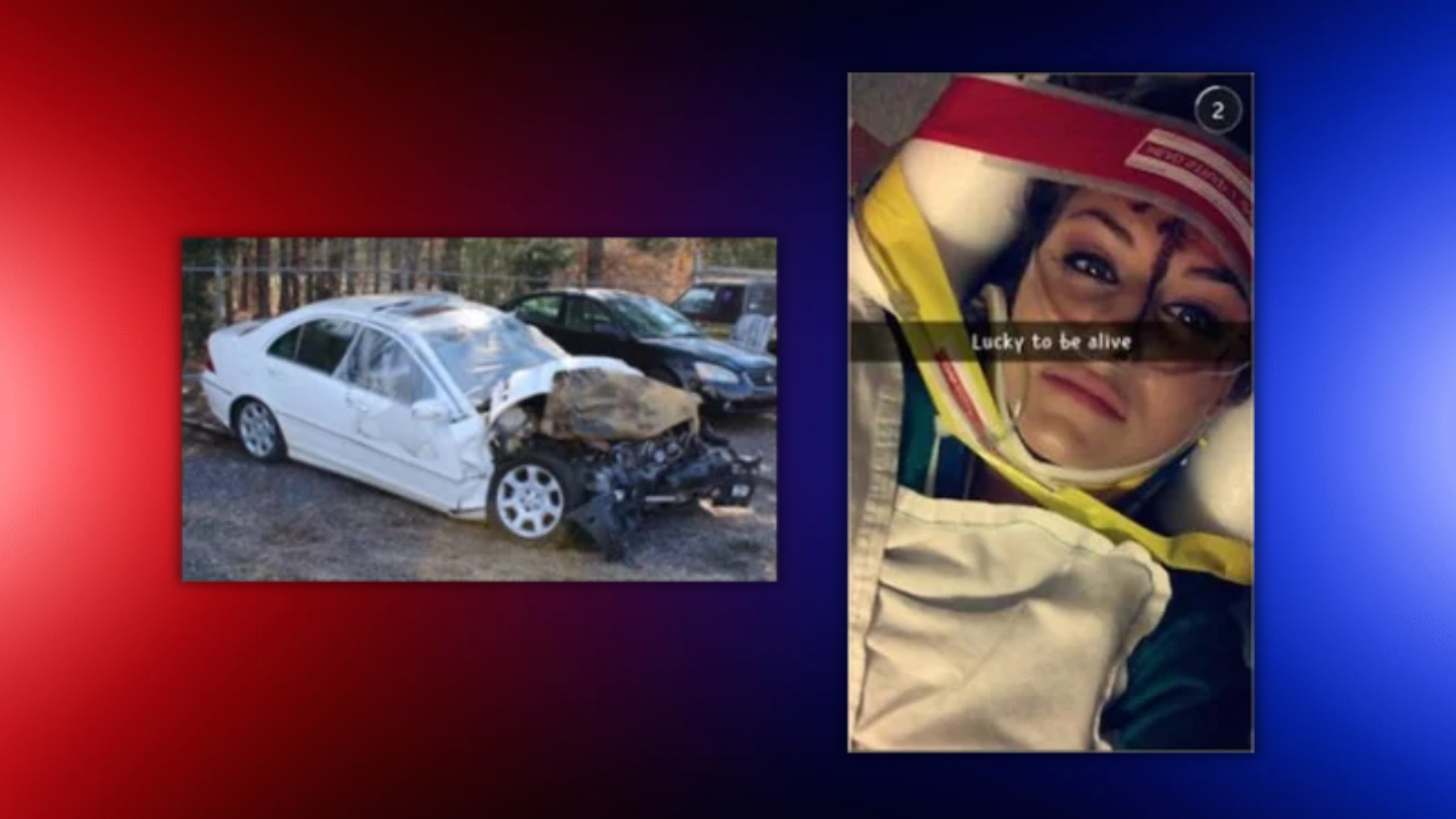
Snapchat reached a confidential settlement in an eleven-year legal battle over a Georgia crash involving a teenage driver who reportedly wanted to show off her speed online, her father’s Mercedes-Benz C230, and a social media feature that allowed users to share how fast they were traveling.
The October 20, 2026 agreement came less than two weeks before a scheduled jury trial. Wentworth Maynard, an Uber driver beginning his shift, suffered permanent brain damage when Christal McGee, then 18, rear-ended his Mitsubishi Outlander on Tara Boulevard in September 2015. He spent five weeks in intensive care, followed by six weeks of additional hospital treatment and rehabilitation.
The collision permanently changed Maynard’s ability to walk, communicate, remember information, and care for himself. His wife, Karen, became one of his caregivers. The couple sued McGee and Snapchat’s parent company, Snap Inc., arguing that its Speed Filter encouraged dangerous driving. The controversy reached automotive audiences in April 2016, when Jalopnik examined the lawsuit and obtained Snapchat’s response to allegations that the application rewarded users for recording high speeds.
Snap told The Atlanta Journal-Constitution that the parties had reached an amicable, confidential agreement without admitting liability. The settlement amount was not disclosed.
The Drive Home
On September 10, 2015, McGee finished a restaurant shift and offered three coworkers rides home in her father’s white 2005 Mercedes-Benz C230, according to an account published by the Maynards’ attorneys. They traveled along Tara Boulevard in Clayton County, Georgia, where the speed limit was 55 mph.
Passenger Heather McCarty, who was pregnant, noticed McGee accelerating while holding a phone displaying their speed. In a November 2015 sworn affidavit reproduced in a Georgia Court of Appeals opinion, McCarty recalled asking McGee to slow down and reminding her that she was pregnant.
McGee reportedly responded that she wanted to reach 100 mph so she could post the result on Snapchat. McCarty described watching the phone’s speed reading climb to 113 mph before spotting another vehicle entering the roadway and screaming.
That vehicle was Maynard’s Mitsubishi Outlander. He had turned right from his apartment complex onto Tara Boulevard, preparing to begin an Uber shift, when the Mercedes struck him from behind. According to the Maynards’ attorneys, the impact sent his Mitsubishi across the roadway and into an embankment.
Maynard required breathing and feeding tubes during his hospitalization. His severe traumatic brain injury left him with memory loss, communication difficulties, chronic pain, and mobility problems requiring a wheelchair or walker. His wife assumed responsibilities he had previously managed independently.
Karen recalled that before the crash, her husband would prepare breakfast, go to work, cook dinner, and spend evenings with her on the couch.
“We used to sit on the sofa and watch TV in the evening, and Wentworth would hug me. Now, he can’t do that anymore,” she said in an account published by the family’s attorneys.
More than eleven years later, attorney Michael Neff told the AJC that Maynard’s brain injuries continued to affect him and his family every day.
The Speed Dispute
McGee’s speed and cellphone activity became central disagreements. A reconstruction expert hired by the Maynards estimated the Mercedes was traveling between 91 and 107 mph at impact. ABC News reported in June 2016 that McGee acknowledged driving 90 mph in court records, although she later testified that she had been traveling 55 mph.
The passengers’ accounts also differed. Kaylan Henderson initially estimated 60 to 65 mph while reporting that McGee was using her phone. Front-seat passenger Henry Williams disputed Snapchat use in a television interview, although later sworn testimony acknowledged some phone activity during the drive.
McGee denied using Snapchat while driving, and Snap maintained that its application logs showed she was not using the service at or immediately before the collision.
The initial Lovejoy Police Department investigation reportedly attributed the crash to Maynard pulling onto the roadway in front of the Mercedes. In a May 2016 investigation, WSB-TV reported that the original police report did not address the alleged Snapchat use or speeds exceeding 100 mph, despite passenger statements mentioning excessive speed and cellphone activity.
Lovejoy Police Chief Mark Harris acknowledged that investigators could have asked additional questions. When shown how the Speed Filter worked, he told WSB-TV it was the first time he had heard of the feature.
Police pursued four criminal charges against McGee in June 2016: felony serious injury by vehicle, reckless driving, speeding at least 35 mph above the limit, and driving too fast for conditions. On May 17, 2018, she entered a no-contest plea to serious injury by vehicle, as documented in a Georgia Supreme Court opinion.
The Missing Phone
The conflicting accounts made McGee’s cellphone potentially valuable evidence. On September 29, 2015, just 19 days after the crash, attorneys for the Maynards sent McGee and her father a preservation demand specifically identifying phone records, application activity, and other electronic evidence.
McGee later testified that she continued using the device for approximately eight months. Her accounts of what happened to it afterward were inconsistent.
In January 2024, her attorney produced a phone represented as the device McGee had possessed on the night of the crash. Forensic examiner Jim Persinger examined it using Cellebrite software and a specialized chip-off procedure, determining that the device belonged to McGee’s sister. None of the parties’ experts disputed that conclusion.
McGee subsequently identified seven additional phones at her home, but none was established to be the missing device.
In an October 3, 2025 sanctions order, Spalding County State Court Judge Josh Thacker found that McGee had acted in bad faith by willfully failing to preserve and produce her phone. He ordered her personally to pay the Maynards $109,612.09 for expenses caused by the missing evidence.
Thacker also planned to instruct jurors that they could presume the phone contained information harmful to McGee’s defense, including evidence that she was using Snapchat around the time of the collision.
The order revealed another complication. Snap had opposed an effort to inspect the phone in 2016, arguing that concerns about losing its contents were implausible because the device was supposedly in McGee’s attorney’s custody. Thacker criticized Snap’s efforts to prevent the inspection while finding that the company had not directly participated in the loss of evidence.
The judge also noted that Snap still possessed its own data concerning McGee’s Snapchat activity.
Although the $109,612.09 sanction was imposed against McGee rather than Snapchat, the October 2026 settlement involved all three parties and expressly resolved that obligation. The agreement did not overturn the judge’s findings.
A Reward Not Worth Chasing
Snapchat introduced its Speed Filter in 2013, allowing users to overlay their traveling speed on photographs and videos shared with friends. Passengers, aircraft travelers, and recreational users could use it without operating a motor vehicle, but the same feature also made dangerous driving speeds easy to display to an audience.
The Maynards alleged that Snapchat’s design encouraged users to pursue increasingly high speeds, partly through the prospect of digital rewards.
Snapchat denied offering trophies or additional points specifically for using the Speed Filter, a position it communicated directly to Jalopnik and other news outlets in 2016.
The company did have a separate achievement system offering trophies and other recognition, sometimes without disclosing how users could earn them. Some former users later recalled a 100-mph achievement, although no contemporaneous technical evidence has established that such a reward existed.
Families suing Snap argued that users might pursue dangerous speeds because they believed a reward existed or wanted to discover whether one could be earned. Whether Snapchat actually offered a speed-specific trophy, whether users believed one existed, and whether that belief encouraged dangerous driving were distinct factual issues.
McCarty’s account of the Georgia crash described a simpler incentive: McGee reportedly wanted to reach 100 mph so she could show her friends.
Beyond Georgia
The Georgia collision was one of several crashes connected to Snapchat’s Speed Filter.
In May 2017, three young men died when their vehicle left Cranberry Road in Wisconsin and struck a tree. According to federal appellate records recounting the families’ allegations, the car reached 123 mph, and front-seat passenger Landen Brown opened Snapchat’s Speed Filter shortly before the collision.
The families of Brown and fellow passenger Hunter Morby sued Snap over the application’s design. In 2021, the Ninth Circuit ruled that Section 230 protections for online platforms did not automatically shield the company from claims involving its own product design. The lawsuit settled confidentially in 2023.
The behavior extended beyond the United States. In Wales, a driver involved in a fatal crash acknowledged that friends wanted him to reach 100 mph so they could photograph the speedometer for Snapchat. Police warned about similar 100-mph social media challenges in 2022, after Snapchat’s Speed Filter had been discontinued.
Those incidents involved different circumstances, including drivers who were not necessarily using the Speed Filter itself. The ability to photograph a conventional speedometer and share the result remained even after Snapchat removed its dedicated speed display.
The Final Turn
Snap defended the Speed Filter while changing its design over several years. The company introduced warnings against using it while driving, reduced its prominence by converting it from a filter to a sticker, and eventually restricted driving-speed posts to 35 mph.
In June 2021, NPR reported that Snap was removing the feature entirely. The company attributed the decision to declining usage.
The Georgia lawsuit continued. In March 2022, the Georgia Supreme Court ruled that manufacturers may have a duty to reduce foreseeable product risks even when someone intentionally misuses their products.
A subsequent appellate ruling determined that the Maynards had sufficiently alleged a connection between Snapchat’s design and the collision to proceed with their claims. Neither ruling established that Snapchat caused the crash.
In August 2026, Judge Thacker denied Snap’s request for summary judgment, leaving disputed questions for a jury scheduled to begin hearing the case November 2.
Instead, Snap, McGee, and the Maynards filed their joint settlement notice on October 20. The agreement resolved the claims and McGee’s outstanding sanctions, with the Maynards agreeing to dismiss the lawsuit with prejudice upon receiving the settlement funds.
The case ended after more than a decade without a jury determining whether Snapchat’s Speed Filter contributed to McGee’s driving or whether Snap bore legal responsibility for Maynard’s injuries.