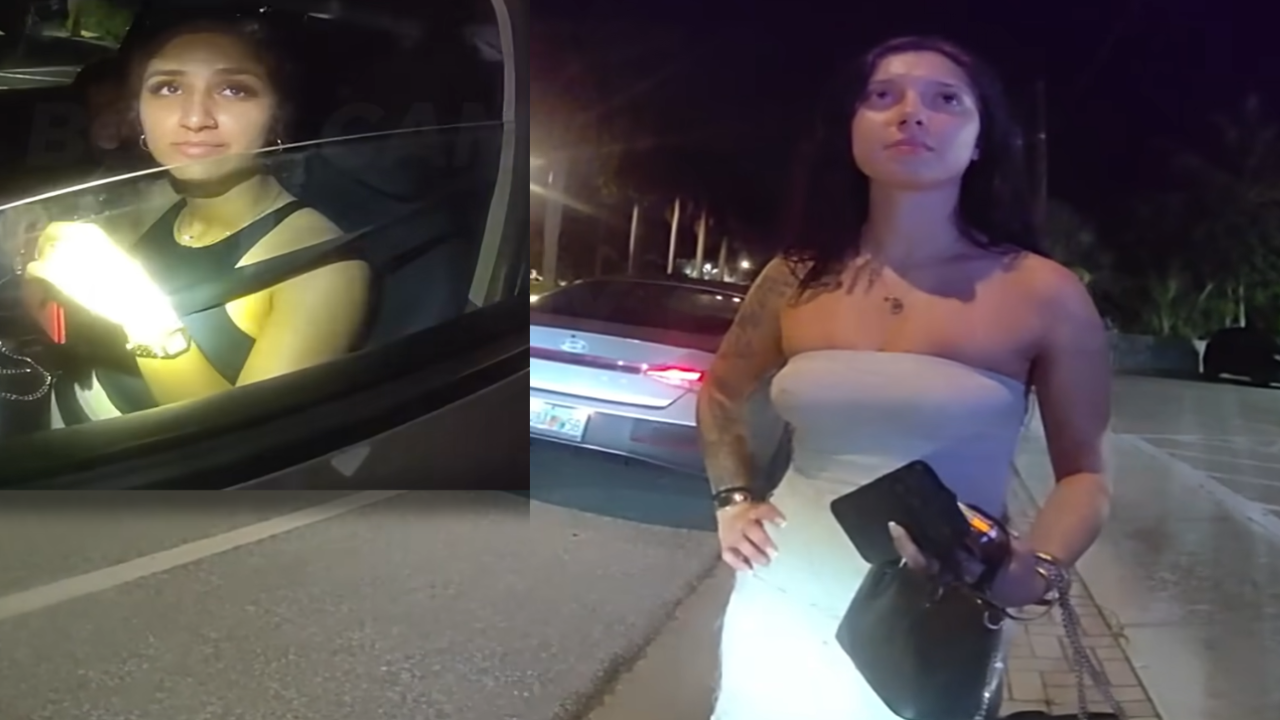
A Florida woman’s explanation for speeding was that her friend desperately needed a bathroom, and she didn’t want the passenger using her car seat. That excuse is now part of a widely viewed bodycam video involving a 2024 Hyundai Elantra, a DUI investigation, and a criminal case that recently took another turn.
Palm Beach County Sheriff’s Office Investigator Lester Escaran clocked the gray Hyundai at 67 mph in a 40 mph zone on July 26, 2026. The driver apologized, explaining that her friend’s house was just down the street. The traffic stop soon became a DUI investigation after the deputy reported smelling alcohol.
The driver, identified as 24-year-old Ashley Baluja of Boynton Beach, told the deputy she had consumed a cup of wine hours earlier. She refused roadside sobriety exercises, insisted she knew her rights because she worked for a law firm, and suggested the deputy follow her to her friend’s house instead. The encounter ended with her arrest.
The footage, published by Body Cam USA on September 29, has attracted more than 210,000 views. Palm Beach County court records reviewed by Guessing Headlights confirm the arrest, charges, and subsequent proceedings. On October 29, Baluja entered an agreement concerning eligibility for a DUI diversion program, potentially opening a path toward a negotiated resolution.
A Bathroom Emergency on Federal Highway
Embedded media follows; please allow a moment to load.
Escaran was monitoring traffic on North Federal Highway near Gulfstream Boulevard at approximately 2:37 a.m. when he spotted the Hyundai traveling northbound at high speed. His radar recorded the vehicle at 67 mph, prompting him to make a U-turn and initiate a traffic stop.
Baluja had two passengers in the car. When the deputy explained why he had stopped her, she offered an urgent explanation.
“I just don’t want her to pee in my seat,” she said.
Her friend lived less than two minutes away, the women explained. They had been celebrating a birthday, with Baluja describing dinner, time spent in Delray Beach, and a subsequent stop for pizza.
Escaran detected an odor of an alcoholic beverage coming from the Hyundai. With three people inside, he could not initially determine its source, so he instructed Baluja to step outside.
She questioned the order before eventually complying.
Once outside, Baluja said she had consumed a cup of wine hours earlier at Cooper’s Hawk and pointed out that she had a sealed bottle of wine in the back seat. She suggested that the alcohol odor might have come from one of her passengers.
In his sworn arrest affidavit, Escaran described Baluja as having red, glassy eyes and speech that was thick, mumbled, or slurred. Baluja maintained she was not impaired.
She Said She Knew Her Rights
When Escaran asked Baluja to perform roadside sobriety exercises, she declined.
“I know my rights,” she told him.
She said she worked for a law firm and argued that she did not have to participate. At one point, she offered to let the deputy follow her to her friend’s house, which she said was only a short distance away.
Escaran explained that declining the exercises would not end his investigation. He would instead decide whether to arrest her based on his existing observations.
Baluja continued insisting she was capable of driving and eventually announced she was returning to her car.
The deputy moved to detain her. As he attempted to handcuff Baluja, her passengers got out of the Hyundai and questioned what was happening. He repeatedly instructed them to return to the vehicle or move away.
Baluja then changed her position.
“I will do the test,” she said as the arrest unfolded.
Escaran continued taking her into custody, telling her he believed she was too impaired to drive safely. Baluja maintained that she had done nothing wrong.
Her friends subsequently arranged an Uber and attempted to contact her mother. The footage captures an extended exchange over her phone, her mother’s number, and whether she could speak with her family before being transported.
What Happened After the Arrest
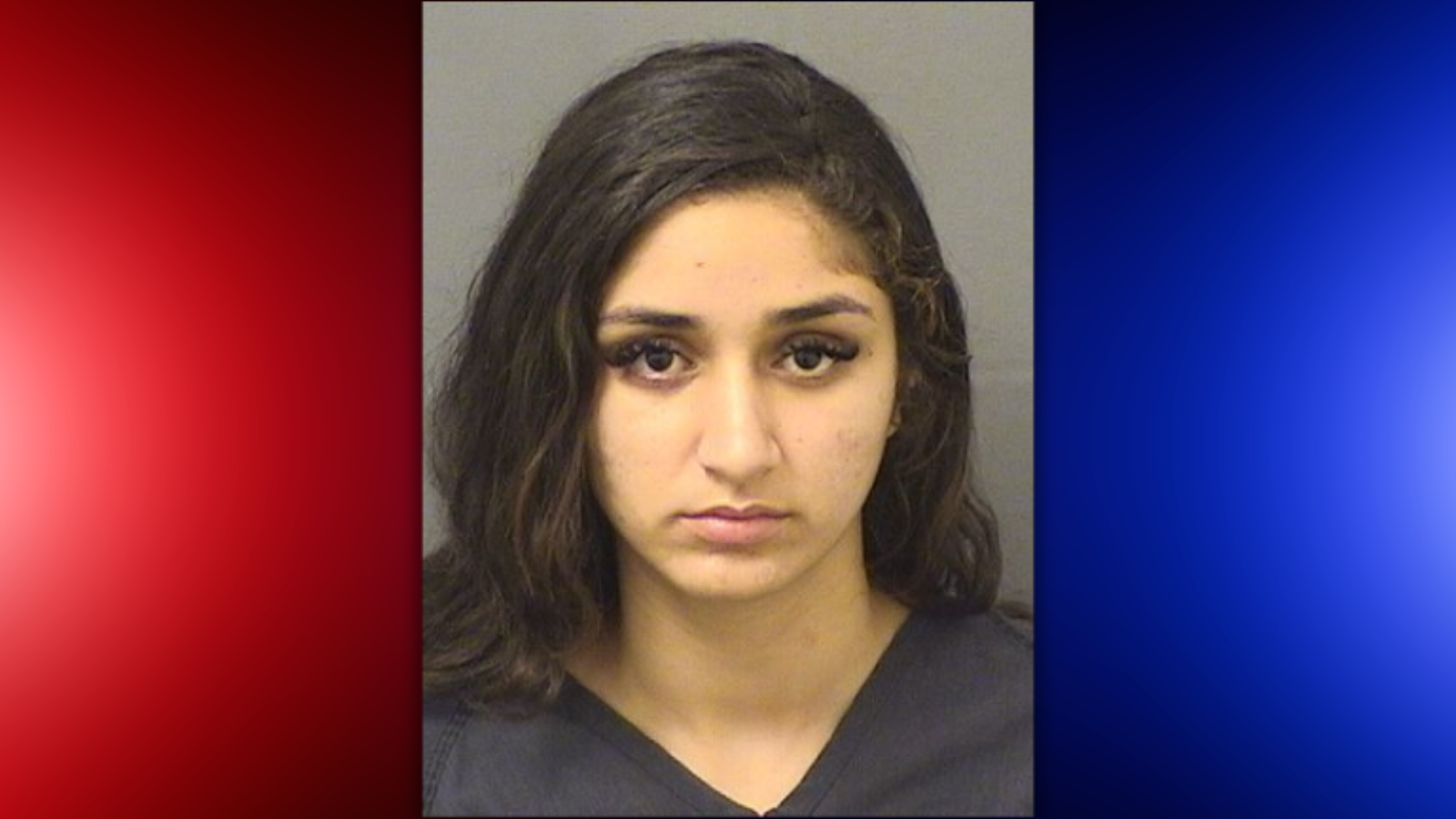
At the testing facility, Baluja was asked to submit to an approved breath test to measure her alcohol concentration.
That request was legally distinct from the earlier roadside exercises. Under Florida law, refusing a qualifying breath test after a lawful DUI arrest can carry separate criminal and driver’s license consequences.
Deputies read Baluja the state’s implied-consent warning and gave her another opportunity to submit. She again refused.
No breath sample was obtained, leaving the case without a measured blood-alcohol concentration.
Baluja was booked into the Palm Beach County Sheriff’s Office Main Detention Center on July 26, facing two charges: driving under the influence and refusal to submit to DUI testing.
Her bond totaled $1,250, consisting of $1,000 for the DUI charge and $250 for the refusal charge. She was released on surety bond at 1:21 p.m. that same day, approximately seven hours after entering custody.
The original traffic citation documented her speed of 67 mph in a 40 mph zone. On August 6, prosecutors added a reckless driving charge, expanding the case beyond the two criminal charges filed at booking. An unlawful-speed citation is also listed in the court record.
New Court Agreement Outlines Conditions for DUI Diversion
Baluja’s attorney, David Goudreau of Meltzer & Bell, filed a written plea of not guilty and demanded a jury trial on September 29. Her earlier arraignment dates had been postponed, and the case subsequently moved toward a potential negotiated resolution.
On October 29, prosecutors and the defense filed a signed agreement concerning Baluja’s eligibility for a DUI diversion program.
The agreement requires Baluja to complete 20 hours of community service, an approved DUI school, and a victim impact panel. She must also provide proof of ignition interlock installation and refrain from possessing or consuming alcohol or nonprescribed drugs while awaiting her next court date.
The ignition interlock provision includes an unusual limitation. Baluja will not receive probation credit for the installation, and the agreement instructs that it be scheduled no sooner than one week before her next court date.
If she successfully completes the requirements, avoids disqualifying new criminal charges or bond violations, and appears as required, prosecutors have agreed to offer a diversion-related plea at her next hearing. Failure to satisfy the conditions could result in the offer being withdrawn.
The agreement does not establish that Baluja has completed the requirements or that any charges have been dismissed. It also does not specify a final sentence or establish that she will receive a particular disposition.
Her next plea conference is scheduled for January 4, 2027, before Judge April Bristow.
All parties are presumed innocent unless and until proven guilty in a court of law.