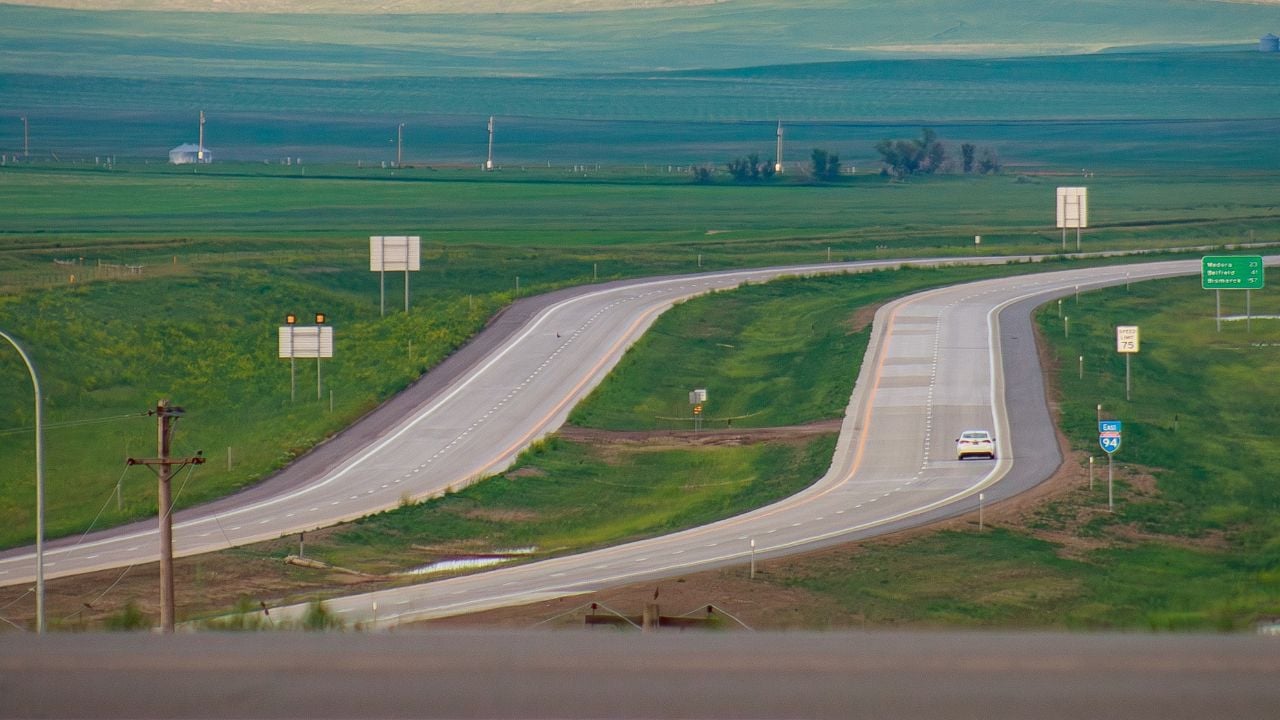
North Dakota is a strong spring road-trip state for travelers who want space, scenery, and routes that do not feel overbuilt. The landscape can shift from rugged Badlands to wooded hills, river valleys, prairie art, and quiet historic towns within a few well-planned drives.
The state tourism office highlights 10 recognized scenic byways and backways, along with Theodore Roosevelt National Park, state parks, and unofficial scenic routes. That gives travelers more variety than North Dakota’s empty-highway reputation suggests.
Spring trips still need a little caution. Weather can change quickly, rural services can be spread out, and some roads may be affected by work zones or lingering seasonal conditions. The North Dakota Department of Transportation’s road conditions page gives drivers access to current road conditions, work zones, weather cameras, load restrictions, height and width restrictions, and weather radar.
These five routes make a simple weekend drive feel much more complete. They cover Badlands overlooks, giant roadside sculptures, wooded hills, river valleys, Lewis and Clark history, and the kind of open North Dakota scenery that looks better when travelers leave enough time to stop.
1. Theodore Roosevelt National Park Scenic Drives

Theodore Roosevelt National Park delivers some of North Dakota’s most dramatic road-trip scenery. The South Unit sits beside Medora and Interstate 94, which makes it the easiest unit to add to a western North Dakota itinerary.
The National Park Service currently describes the South Unit route as a 36-mile scenic drive and recommends allowing at least two hours to complete it, not counting extra time for overlooks, trailheads, wildlife stops, or short walks. The road winds through the Little Missouri Badlands, with wide views, layered formations, prairie dog towns, and frequent wildlife sightings.
Spring can be a good time for this drive because temperatures are often more comfortable than midsummer and the park can feel less crowded than peak vacation season. Road status still matters, especially after weather events, so check current park conditions before making the drive.
Keep plenty of distance from bison, horses, and other wildlife, even if they are close to the road. Bring water, start with a full tank, and give the overlooks enough time. This is not just a route into the park; for many visitors, the drive is the main experience.
2. The Enchanted Highway
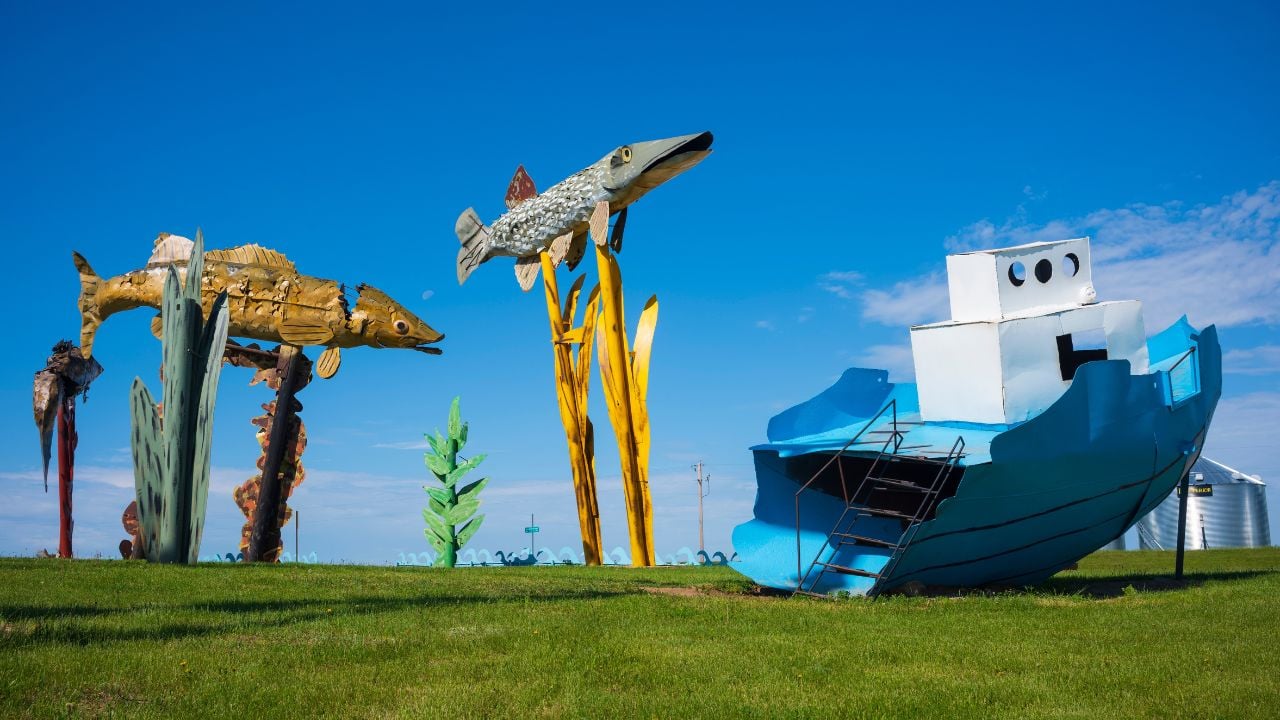
For a completely different kind of North Dakota drive, head to the Enchanted Highway in the southwestern part of the state. North Dakota Tourism says the route begins at Exit 72 on I-94 near Gladstone and runs 32 miles south to Regent.
The draw is giant scrap-metal art placed along the county road. Stops include “Geese in Flight,” “World’s Largest Tin Family,” “Teddy Rides Again,” “Pheasants on the Prairie,” “Fisherman’s Dream,” and other large sculptures with pull-offs for photos.
This route is useful in spring because it does not require a long hike or complicated schedule. Travelers can stay mostly in the car, stop at each sculpture, take photos, and continue south at their own pace.
The open prairie gives the sculptures more impact than they would have in a crowded setting. Wind, shifting clouds, and long views make the metal figures stand out clearly against the sky, especially when the weather changes throughout the day.
3. Sheyenne River Valley National Scenic Byway
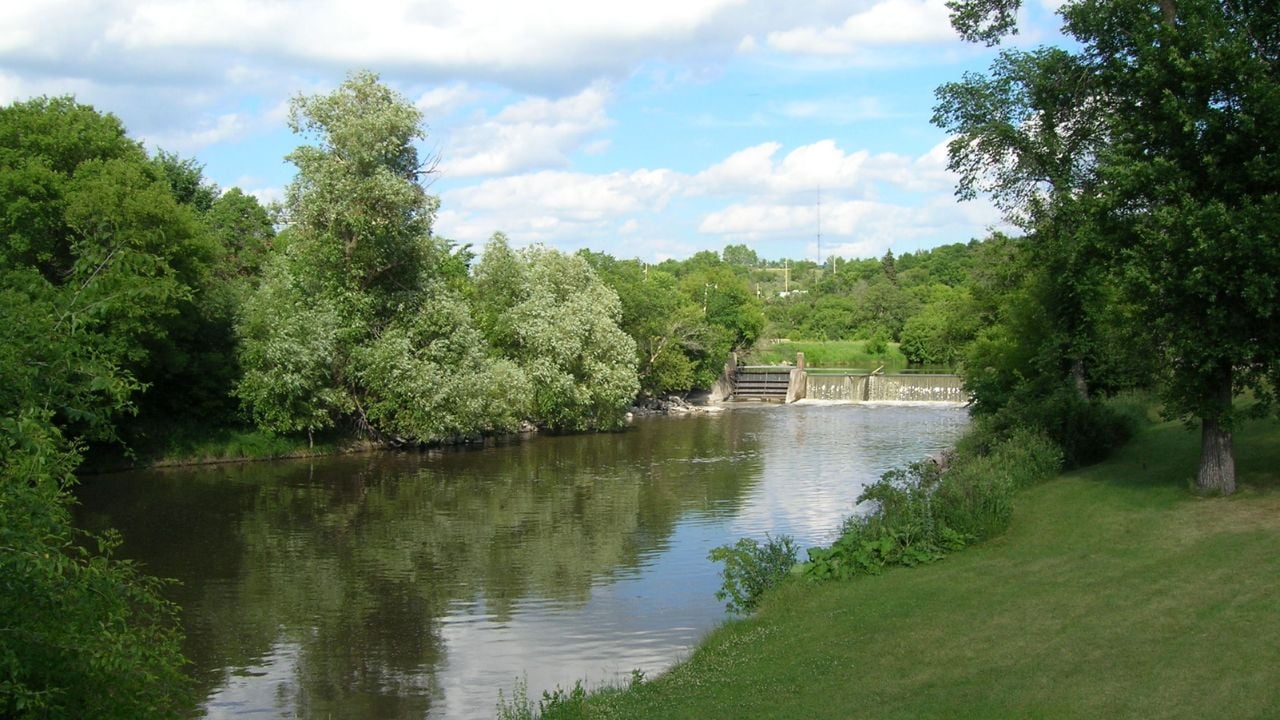
The Sheyenne River Valley National Scenic Byway shows a softer and greener side of southeastern North Dakota. North Dakota Tourism describes it as a 63-mile route through rolling hills, farmland, small towns, and historic sites.
The route begins near Getchell Township Hall north of Valley City, follows Highways 17 and 19, then curves back onto Highway 21 and continues toward Lisbon. That path gives travelers river scenery, bridges, rural views, and historic stops without the feeling of a high-speed interstate crossing.
Spring gives the valley more color after winter, though road and weather conditions can still shift. Travelers can shape the day around Valley City, Fort Ransom State Park, river views, old bridge sites, and small-town stops instead of rushing from one overlook to the next.
This is a good route for travelers who want an easy-paced drive with history and scenery mixed together. It is not as dramatic as the Badlands, but it adds a different texture to a North Dakota road trip.
4. Turtle Mountain Scenic Byway
The Turtle Mountain Scenic Byway changes the usual image of North Dakota. Instead of open prairie alone, this north-central route moves through marshes, pastures, clear lakes, and dense woodlands near the Canadian border.
North Dakota Tourism says the route begins three miles north of Rolla, runs to St. John, continues west on County Highway 43 to State Highway 281, then returns to State Highway 43 before ending at State Highway 14. A separate tourism guide describes the byway as a 53-mile route through forested hills.
Stops can include Mystical Horizons, Lake Metigoshe State Park, the International Peace Garden, Martineau House Information Center, and Coghlan Castle. The route works well for travelers who want trees, lake country, and a quieter northern setting.
Spring conditions can vary in this part of the state, so layers and a road check are smart. Travelers with extra time can build the drive around Lake Metigoshe or the International Peace Garden area instead of treating the byway as a quick pass-through.
5. Sakakawea Scenic Byway
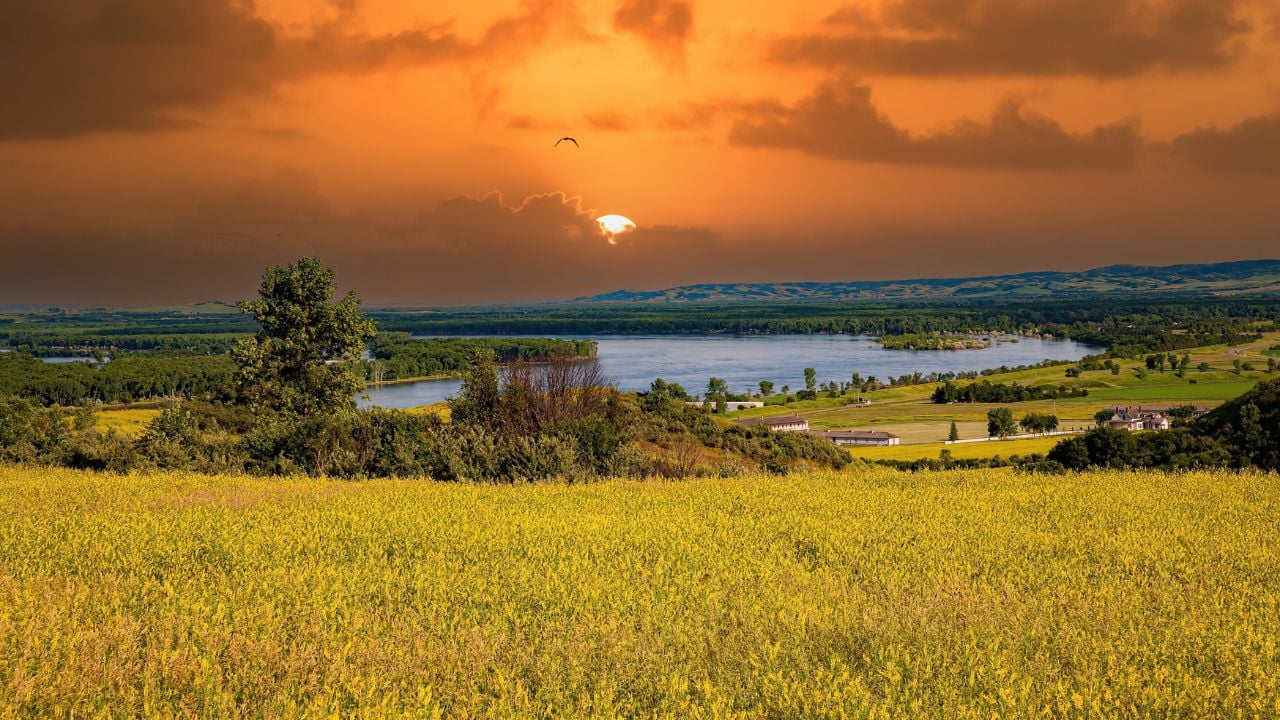
The Sakakawea Scenic Byway is a strong pick for travelers who want scenery and history on the same route. North Dakota Tourism says the byway begins at Highway 200A and curves from Washburn to Stanton.
The route follows part of the Missouri River Valley and connects travelers with important Lewis and Clark sites. North Dakota Tourism highlights the North Dakota Lewis & Clark Interpretive Center near the start of the byway, along with Fort Mandan State Historic Site nearby.
Other worthwhile stops in the area can include Cross Ranch State Park, Fort Clark State Historic Site, and Knife River Indian Villages National Historic Site. The route works best when travelers leave time for museums, short walks, and river views rather than driving through too quickly.
For a spring trip, start with a flexible plan and comfortable shoes. This drive is not only about scenery from the windshield. The strongest stops are the ones where travelers get out, read the history, and connect the river landscape to the people who lived and traveled through it.