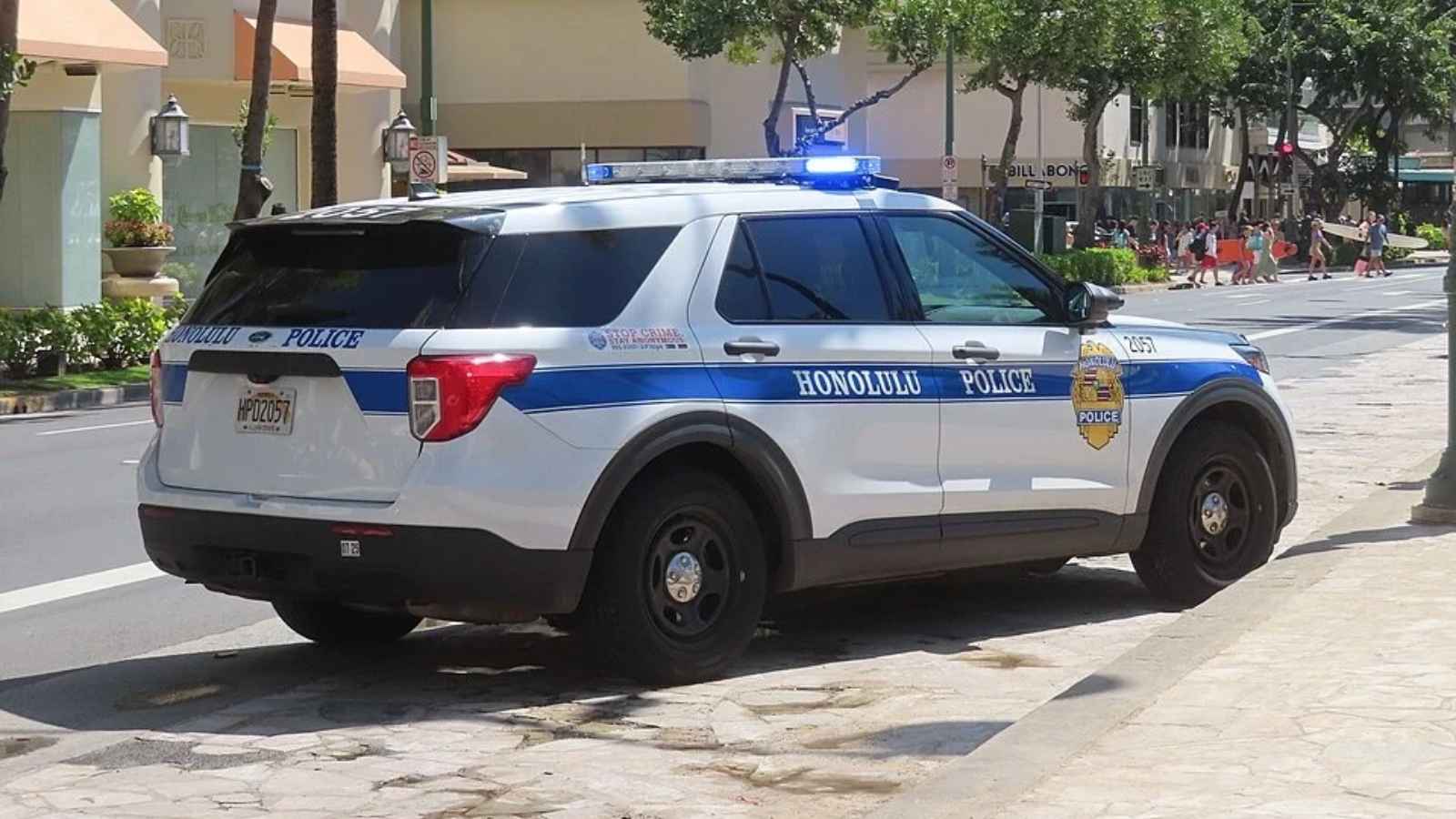
A road rage argument in Hawaii ended with a bullet striking an elementary school while classes were underway. Federal prosecutors say a driver opened fire at another man during the dispute, sending a shot into a nearby school building.
The shooting happened on September 21, 2026, near Aiea Elementary School on Oahu. Joseph Chester Brown, 51, of Honolulu, is accused of firing a weapon at another man as he drove away from their confrontation.
Students were attending classes when the bullet hit the building. The U.S. Department of Justice has not identified any injuries or explained which part of the school was struck.
Nearly a month later, federal prosecutors brought an ammunition charge against Brown. When officers arrested him, they reportedly found a loaded gun with its serial number removed.
One Shot Fired
According to the U.S. Department of Justice, the confrontation took place on September 21, when Brown became involved in a road rage dispute with another man. At some point during the argument, prosecutors say Brown fired his weapon toward the man while driving away. He was beside Aiea Elementary School when the shot was fired.
Instead of hitting the man, the bullet struck a school building. Classes were in session, though federal officials did not specify how many students or staff were inside.
The DOJ announcement also did not explain what caused the road rage argument or whether either driver had stopped before the shooting. Federal prosecutors did not include those details when they announced the case on October 22.
A Loaded Gun
Brown was indicted by a federal grand jury on October 15, several weeks after the shooting. The indictment accused him of illegally possessing ammunition, with his arrest following on October 22. Officers reportedly found him carrying a loaded firearm with an obliterated serial number.
A gun’s serial number is a unique marking that helps police identify and trace the weapon. An obliterated serial number means someone removed or altered those markings, making the gun harder to trace.
Although prosecutors described both the shooting and the firearm recovered during Brown’s arrest, the announced federal charge concerned ammunition possession.
Federal Charges
U.S. Attorney Ken Sorenson announced the indictment and arrest on October 22. Brown’s first appearance in federal court was scheduled for October 23 before U.S. Magistrate Judge Barry M. Kurren.
An indictment is a formal criminal accusation, not a finding of guilt. Prosecutors must still prove the ammunition charge in court. If convicted, Brown could face up to 15 years in federal prison and a $250,000 fine. He could also be placed under supervised release after serving any prison sentence.
If a sentence is imposed, a federal judge would decide it based on the facts of the case and federal sentencing rules. The case is part of Project Safe Neighborhoods, a nationwide Justice Department program that brings federal and local agencies together to address violent crime.
The FBI and the Honolulu Police Department are investigating, while Assistant U.S. Attorney Michael Nammar is handling the prosecution.