General Motors says its latest safety research shows advanced driver-assistance systems are delivering measurable real-world results, with some technologies reducing specific crash types by as much as 86 percent. The findings come from a large-scale study conducted in partnership with the University of Michigan Transportation Research Institute (UMTRI).
The research analyzed approximately 12 million GM vehicles from the 2020 to 2024 model years and matched them against more than 700,000 police-reported crashes across 18 states. According to GM, the data provides some of the strongest evidence yet that modern crash-avoidance systems can significantly reduce accidents and injuries during everyday driving.
As vehicles become increasingly packed with cameras, radar sensors, automated braking systems, and lane-monitoring technology, automakers have faced criticism from some drivers who view the growing list of electronic safety aids as intrusive or overly complicated. GM’s latest study is clearly intended to reinforce the argument that these systems are not simply convenience features, but tools that can actively prevent collisions.
Perhaps most importantly for consumers, GM says many of these technologies are already standard on several of its most affordable vehicles, including models priced below $30,000.
The Biggest Crash Reduction Came From Backing Maneuvers
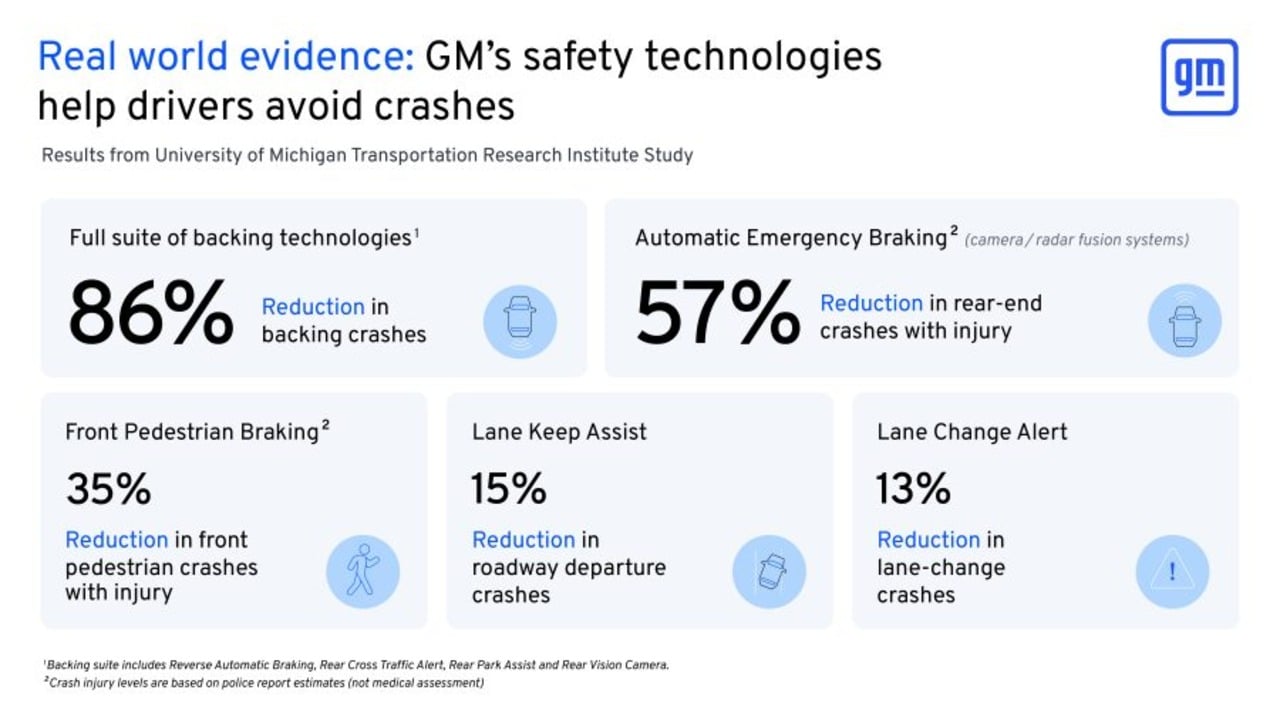
The most dramatic figure from the study involved backing crashes. GM found that vehicles equipped with its full suite of backing technologies experienced an 86 percent reduction in backing-related collisions.
That package includes systems such as Reverse Automatic Braking, Rear Cross Traffic Alert, Rear Park Assist, and rearview cameras. These features are designed to help drivers detect obstacles, pedestrians, or approaching traffic while reversing, particularly in crowded parking lots and tight urban environments.
The study also identified major reductions in several other crash categories. Vehicles equipped with Automatic Emergency Braking showed a 57 percent reduction in rear-end crashes involving injuries, while Front Pedestrian Braking systems were associated with a 35 percent drop in pedestrian injury crashes.
Lane-focused safety systems also showed measurable benefits. GM reported a 15 percent reduction in roadway departure crashes for vehicles equipped with Lane Keep Assist and Lane Departure Warning, along with a 13 percent reduction in lane-change crashes tied to Lane Change Alert systems.
Safety Tech Is No Longer Reserved For Luxury Vehicles
One of GM’s biggest talking points is accessibility. Many of the technologies included in the study are now standard equipment on relatively affordable models rather than being limited to expensive luxury vehicles.
Vehicles such as the Buick Encore GX, Buick Envista, Chevrolet Trax, Chevrolet Trailblazer, and Chevrolet Bolt EV all include core safety systems like Automatic Emergency Braking, Front Pedestrian Braking, Forward Collision Alert, and Lane Keep Assist as standard equipment.
That reflects an industry trend as regulators, safety organizations, and consumer demand continue pushing automakers toward wider adoption of crash-avoidance technologies. Features once marketed as premium upgrades are increasingly becoming baseline expectations.
GM executives framed the study as validation of the company’s long-term safety strategy. The automaker has repeatedly promoted its “zero crashes, zero emissions, zero congestion” vision as a central part of its future mobility plans.
The Study Focused On Real-World Crash Data
Unlike controlled testing environments, the GM-UMTRI research examined real-world crash reports involving actual drivers and traffic conditions. Researchers compared crash rates between vehicles equipped with certain safety systems and similar vehicles without them.
The analysis focused on crash categories directly relevant to each technology, including rear-end collisions, roadway departures, lane-change incidents, pedestrian impacts, and backing crashes. Researchers also accounted for variables such as road conditions, vehicle type, and driver behavior to reduce statistical distortion.
GM says the partnership with UMTRI has now produced eight separate studies focused on vehicle safety technology. Each new round of research is intended to help the company refine existing systems and identify where future improvements are needed.
The automaker also pointed toward the growing role of advanced driver-assistance systems like Super Cruise, although the latest study primarily focused on broader crash-avoidance technologies rather than hands-free highway driving features.
Advanced Safety Systems Are Becoming A Competitive Battleground
The automotive industry is rapidly moving toward smarter active safety systems as standards continue evolving. Organizations like the Insurance Institute for Highway Safety have already tightened crash-avoidance requirements for top safety awards, placing additional pressure on manufacturers to improve performance.
As a result, driver-assistance technology is increasingly becoming a major competitive differentiator across both mainstream and luxury segments. Automakers are now competing not just on horsepower and range, but on how effectively their vehicles can prevent accidents altogether.
GM’s latest findings strengthen the argument that these systems can provide meaningful real-world benefits beyond marketing claims or laboratory demonstrations. While no driver-assistance technology can eliminate accidents entirely, the data suggests modern safety systems are already having a measurable impact on reducing crashes and injuries on American roads.