There have been reports of talks between the U.S. government and American automakers like Ford and General Motors about leveraging their large-scale manufacturing capabilities to produce weapons amid the military conflict with Iran.
The government intends to ramp up arms and ammunition production, and considering the efficient supply chains and rapid production timelines followed by car manufacturers, this move could be crucial in preventing shortages in the nation’s weapons stockpiles.
Now, though, according to a report by the Wall Street Journal, GM seems to have taken a step forward as it is reported to be in talks with Lockheed Martin to produce commonly used parts that could support munitions production.
An agreement has not yet been finalized, and the terms are subject to change. However, a deal could solidify GM’s position in the munitions and weapons industry as an important supplier.
Discussions Have Advanced to the Next Level

The report further states that GM and Lockheed Martin are discussing which components GM could make. CEO Mary Barra held separate discussions with the Trump administration about expanding GM’s role in defense, leading to the shares rising by 3.15% the day the report was released.
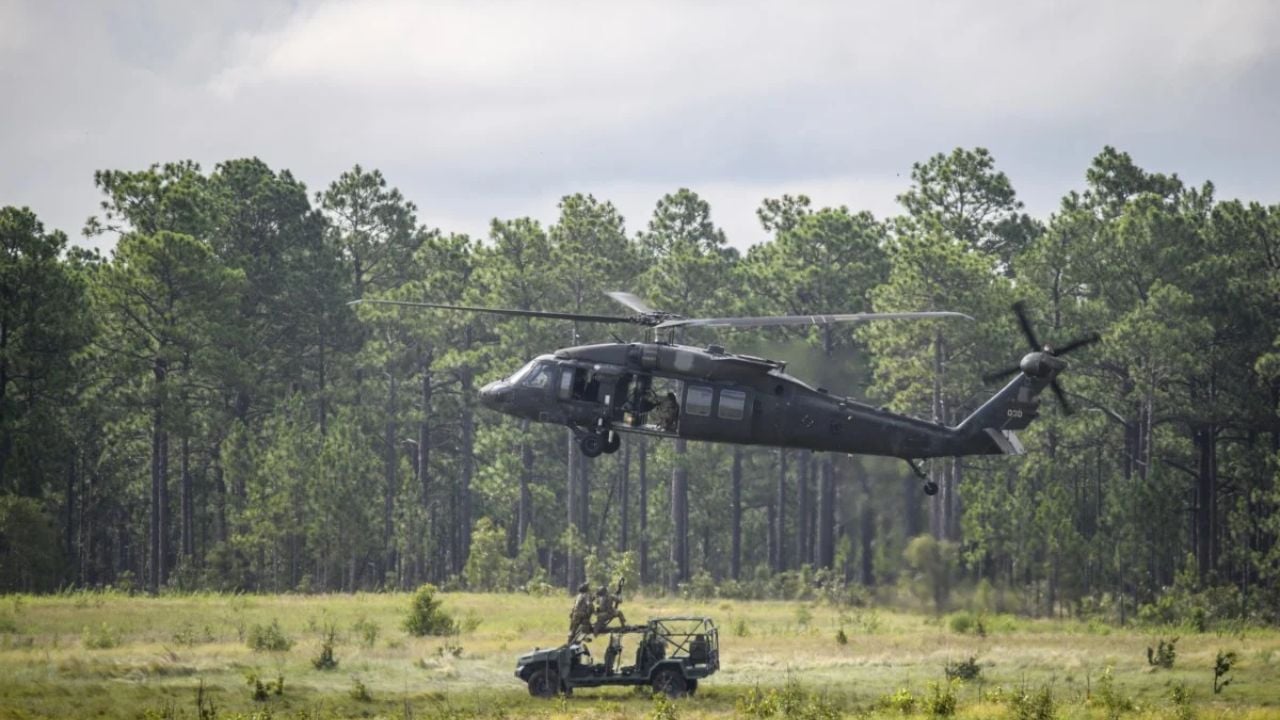
GM Defense, a subsidiary engaged in producing infantry squad vehicles derived from the Chevrolet Colorado platform, will swing into action if defense contracts are finalized.
The subsidiary has been functioning for almost ten years, and on June 11, it bagged a Department of Defense contract worth $143 million for more squad vehicles and winch kits.
A deal with Lockheed Martin would enable GM to expand beyond defense mobility solutions into munitions-adjacent components, something that could open up other avenues for the automaker in the future.
White House Pushes for Increased Weapons Production

Reuters reported on June 10 that the war with Iran, as well as weapons supplies to Ukraine, have reportedly reduced the country’s munitions reserves, although there remains sufficient stock to meet current operational requirements.
Despite that, President Trump called for a meeting with the chief executives of major defense firms such as Lockheed Martin, BAE Systems, Northrop Grumman, RTX Corporation, Boeing, Honeywell Aerospace, and L3Harris Technologies, along with Defense Secretary Pete Hegseth, to ramp up weapons production. White House spokeswoman Anna Kelly said:
“The United States military has more than enough munitions, ammo, and stockpiles to serve all of President Trump’s strategic goals and beyond, and Operation Epic Fury has exposed what happens when you mess with the United States. Even still, the President has urged our defense contractors to constantly produce more made-in-America weapons, which are the best in the world. Democrats destroyed our military, but President Trump rebuilt it.”
Ford CEO Confirms Discussions With U.S. Government
Guessing Headlights reported last month that the Pentagon was exploring ways to increase defense production to ensure the country always maintains a surplus of weapons.
The military intends to increase production of munitions and tactical hardware, including “missiles and counter-drone technology.”
Ford CEO Jim Farley acknowledged that his company is in talks with the U.S. government, but emphasized that the discussions remain in the early stages. Speaking during Ford’s Q1 2026 earnings call with investors, he said:
“What I’d be able to say at this point is two things. First of all, we are in early discussions, the U.S. government on some defense-related projects. We’re not going to go into details of those today. In addition, and I would say equally important is Ford’s role as an anchor customer on onshoring critical minerals and many other supply chain vulnerabilities we have in our country.”
Farley added that Ford’s supply chain was already catering to the government and revealed another way the company was aiding the country. He added:
“And I think you should expect Ford to play an outsized role in manufactured gray semiconductors, critical minerals like batteries and rare earths. And our supply chain is heavily engaged, not only with our government, but new companies that are starting to emerge in our country to onshore some of this capability. And I think maybe perhaps in the short term, that’s the biggest role Ford can play in helping our country.”