

General Motors’ chief executive Mary Barra sat before the automotive press this week in Detroit and delivered a surprisingly defiant message. At a time when Detroit’s legacy automakers are cutting their losses and retreating from electrification, Barra asserted that she has no regrets about GM’s decision to pursue electric vehicles aggressively even as the company writes off billions tied to EV investments.
We had earlier reported that GM has taken a $7 billion EV charge, becoming the latest automaker to do so after Ford conceded to an even bigger hit.
“Our destination is to get to the all-EV future we’ve been talking about,” Barra said. “Once we have a more robust charging infrastructure … we’re going to be pragmatic about it. It will take longer, without the incentives.”
Barra’s comments came at an Automotive Press Association event on the eve of the Detroit auto show, held in GM’s new Hudson’s Detroit headquarters. The choice of venue felt symbolic. It was meant to represent a fresh chapter for the 118-year-old company and its storied relationship with the city’s industrial heart. Yet, the numbers behind Barra’s bold words reveal an EV strategy at a crossroads.
A $7 Billion Bump on the Road to an “End Game”
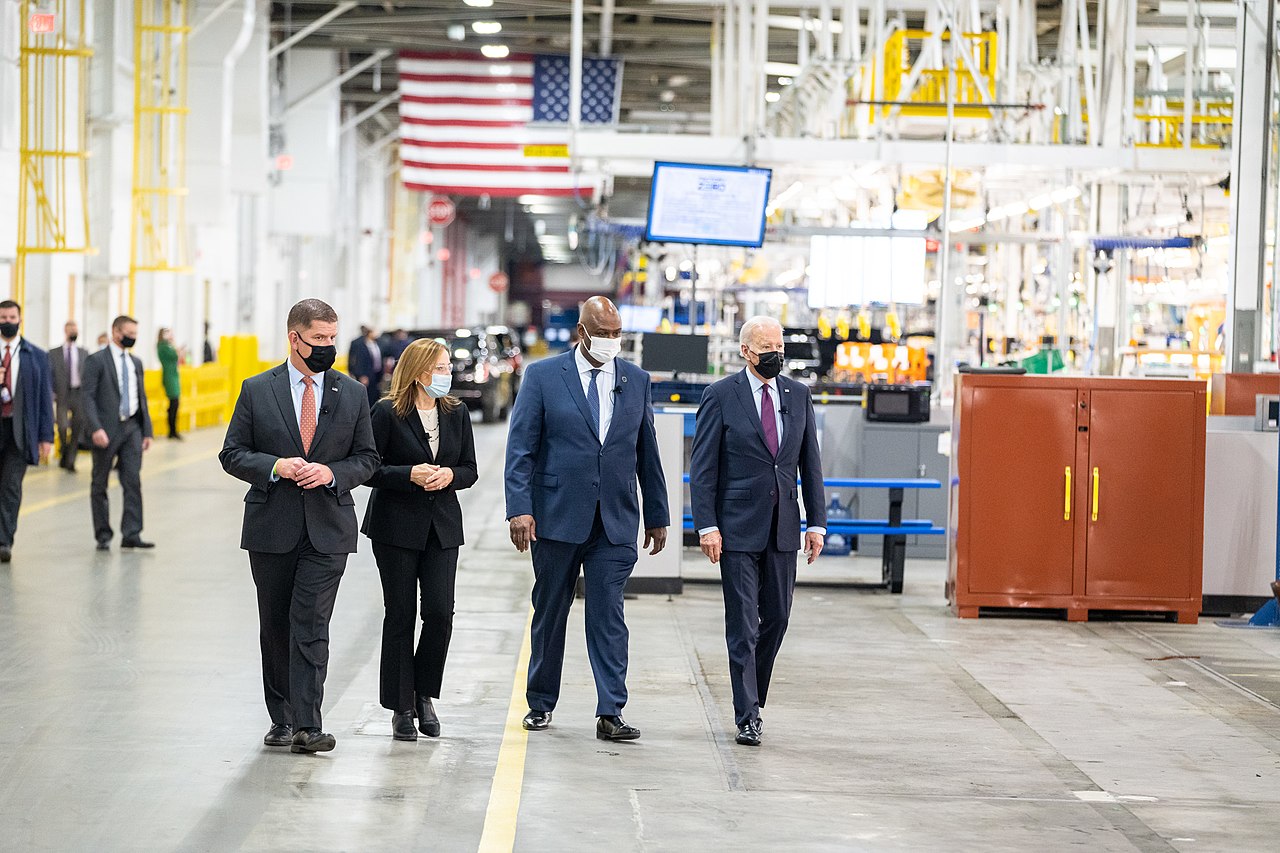
Over the past several months, GM has taken a $6 billion charge related to scaling back EV production plans in North America after weaker demand and the elimination of the federal $7,500 electric vehicle tax credit hammered sales in late 2025. Another $1.1 billion in restructuring costs tied to operations in China further underscored the cost of recalibrating what was supposed to be a decisive transition away from internal-combustion engines.
Despite those setbacks, Barra was unrepentant. She argued that everything the company knew at the time — when it laid out plans to phase out tailpipes from its light-duty lineup by 2035 — would have led to the same strategic choice today. She reiterated that battery-electric vehicles remain the “end game,” insisting that improved charging networks and battery costs will eventually unlock the market.
There is truth in her logic. EV adoption, globally, is not a fad. Battery technology continues to advance and consumer interest in electrified mobility remains strong where incentives persist and infrastructure improves. Yet in the U.S. the market has shifted faster than many expected.
As GM’s own filings show, EV sales in the final quarter of 2025 plummeted 43 percent after the tax credit expired, leaving the company with a lineup that was costlier to build than consumers were willing to buy.
The Nuance of “No Regrets”

This is where the nuance in Barra’s message matters most. Saying she has no regrets is not the same as saying everything GM did was flawless. It signals commitment, yes, but also strategic stubbornness.
Barra is steering GM through an industry terrain far different from the one she promised investors and employees just a few years ago. The shift in federal policy and regulatory rollback of fuel economy standards have undercut the very incentives that made EVs financially viable for buyers.
GM’s adjusted strategy now features a broader portfolio that includes hybrid and plug-in hybrid vehicles, which Barra said the company is still working to refine. Hybrids had been largely sidelined in GM’s earlier all-EV pivot. Some critics have pointed out that rivals like Toyota long leaned into hybrid technology, creating profitable, high-demand products while legacy automakers chased battery electrics. Whether GM can catch up in that space remains to be seen.
Barra’s stance also contrasts sharply with moves by other major automakers. Ford recently posted a $19.5 billion writedown tied to scrapping parts of its EV strategy, and Stellantis has scaled back its plug-in hybrid programs in North America. These maneuvers reflect a broader recalibration within the industry as companies reassess when and how electrification will truly become profitable.
No Regrets, But No Guarantees
GM CEO Mary Barra tells automotive press she has ‘no regrets’ over EVs https://t.co/R3ajMrFKez
— Detroit Free Press (@freep) January 12, 2026
For GM, the challenge now is twofold. It must continue to invest in the technology it believes will define the future of transportation while protecting shareholder value in the present. The $6 billion charge, plus another potential round of smaller adjustments in 2026, illustrates that this is not a short-term problem but a strategic inflection point.
Ultimately, Barra’s refusal to pander to regrets aligns with a CEO defending a long-term strategic vision. But it also raises a key question for the industry: can legacy automakers maintain credibility and momentum in electrification without the policy tailwinds that once propelled them? Barra’s answer is yes. The reality, as 2026 unfolds, may be far more complicated.