
Imagine easing onto the Autobahn and watching your speedometer climb past 130 mph. On more than 70 percent of this famous highway, there is no general speed limit, so every straightaway becomes a chance to push performance to its limits.
This guide takes you through six German cars that made the Autobahn their personal proving ground. Each one combined daring engineering with head-turning design to earn a place in motoring history.
Mercedes-Benz 300SL Gullwing

When the 300SL Gullwing debuted in 1954, it stood out as the world’s fastest production car, according to RM Sotheby’s. Its 215-horsepower fuel-injected straight-six propelled it to over 160 miles per hour.
Those iconic upward-opening doors and aerodynamic body made it a star on unrestricted Autobahn stretches and set a benchmark for style and speed that still resonates today.
Porsche 911 Carrera

Introduced in 1963, the first Porsche 911 combined a rear-mounted flat-six with a lightweight chassis for strong high-speed stability, and later 911 Carrera models became capable of sustained Autobahn cruising above 130 mph.
Its instantly recognizable silhouette and racing pedigree have kept it at the top of Germany’s performance car roster for six decades.
BMW E30 M3

Built for Group A racing rules but engineered for the road, the BMW E30 M3 arrived in 1986 with a high-revving four-cylinder engine and widened fenders. It could reach 146 miles per hour on the Autobahn and delivered the balanced handling that earned BMW the motto “Ultimate Driving Machine.”
Its combination of track-tested technology and everyday usability made it the benchmark for performance sedans and a legend among drivers who demanded both speed and agility.
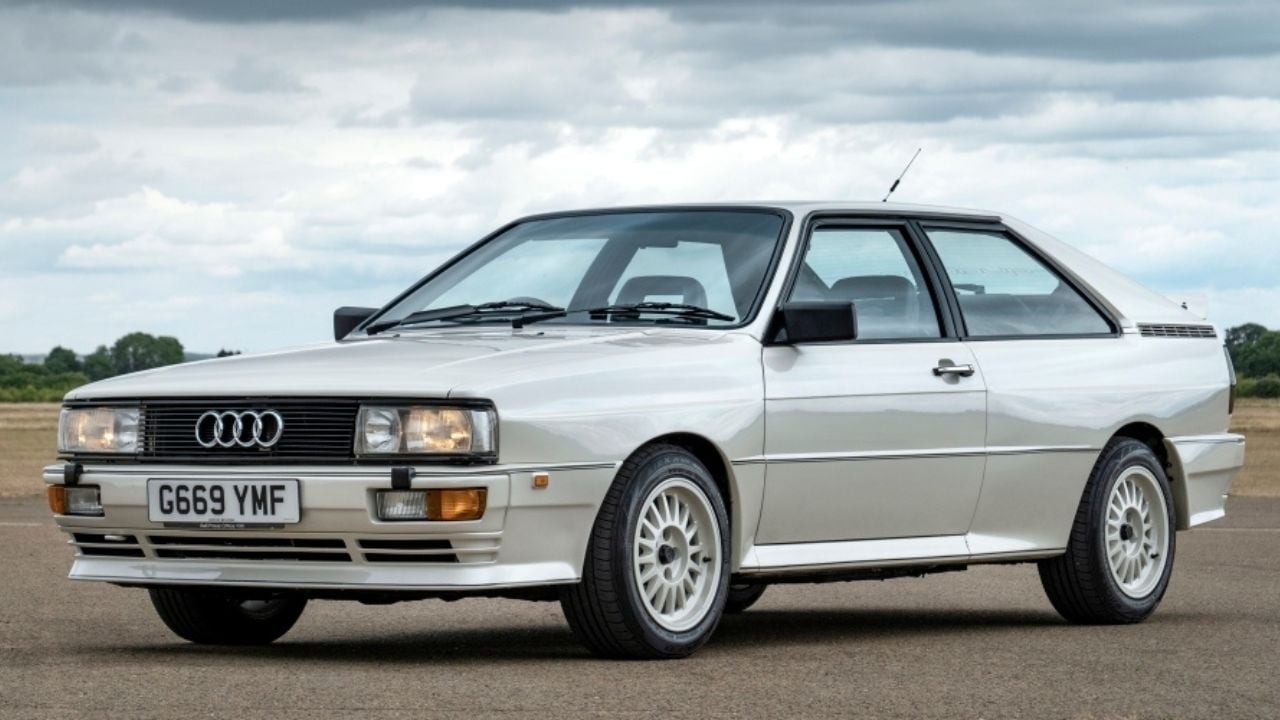
Audi Quattro Coupé

In 1980, Audi shocked the world by fitting permanent all-wheel drive into the Quattro Coupé. With around 200 horsepower and unbeatable traction, it gave drivers confidence on both wet and icy Autobahn sections, as well as dry ones.
Its rally-inspired chassis and turbocharged powerplant proved that four-wheel drive could be fun and fast on Germany’s fastest roads. The Quattro name still stands for grip and performance in every Audi that followed.
Volkswagen Golf GTI

When Volkswagen launched the Golf GTI in 1976, it created the hot hatch segment. Its punchy 110-horsepower engine made 110 miles per hour feel like a track day on the Autobahn without sacrificing practicality. Packed into a compact, affordable package, the GTI offered everyday usability and enough performance to thrill aspiring drivers.
It taught a generation that excitement does not require a supercar price tag and remains a beloved legend on unrestricted roads.
Mercedes-Benz S-Class W126

Launched in 1979, the W126 S-Class redefined luxury travel at high speed. With a smooth V8 engine producing up to 300 horsepower, it could cruise at over 140 miles per hour while insulating passengers from road noise and bumps.
The W126’s advanced aerodynamics and build quality made it the ultimate luxury express on the Autobahn. It demonstrated that comfort and performance could coexist, setting new standards for executive cars worldwide.
The Enduring Legacy of Autobahn Legends
Germany’s Autobahn legends earned their reputations by mastering the world’s fastest public roads. From the 300SL Gullwing’s record-shattering speed to the Golf GTI’s everyday thrills, each car demonstrated how unrestricted lanes inspired engineers to push the boundaries of design and performance.
As electric drivetrains and autonomous systems take center stage, these classic models remind us why the Autobahn remains a benchmark for speed and style. Their legacy lives on in every car that dares to chase performance without compromise.