Despite the headlines, Ford is not walking away from EVs. If anything, its next move looks like a reset toward efficiency-first engineering. For years, the EV playbook was simple: more range equals a bigger battery. The problem is that bigger batteries also mean higher costs, more weight, lower efficiency, and slimmer margins.
In recent technical explainers and briefings, Ford laid out a different approach for its next-generation EVs, including its upcoming midsize electric truck. The new priority is not battery size. It is aerodynamics, weight reduction, and system-level efficiency. In simpler terms, the battery is meant to work smarter, not harder.
The Big Range Secret Is Not the Battery

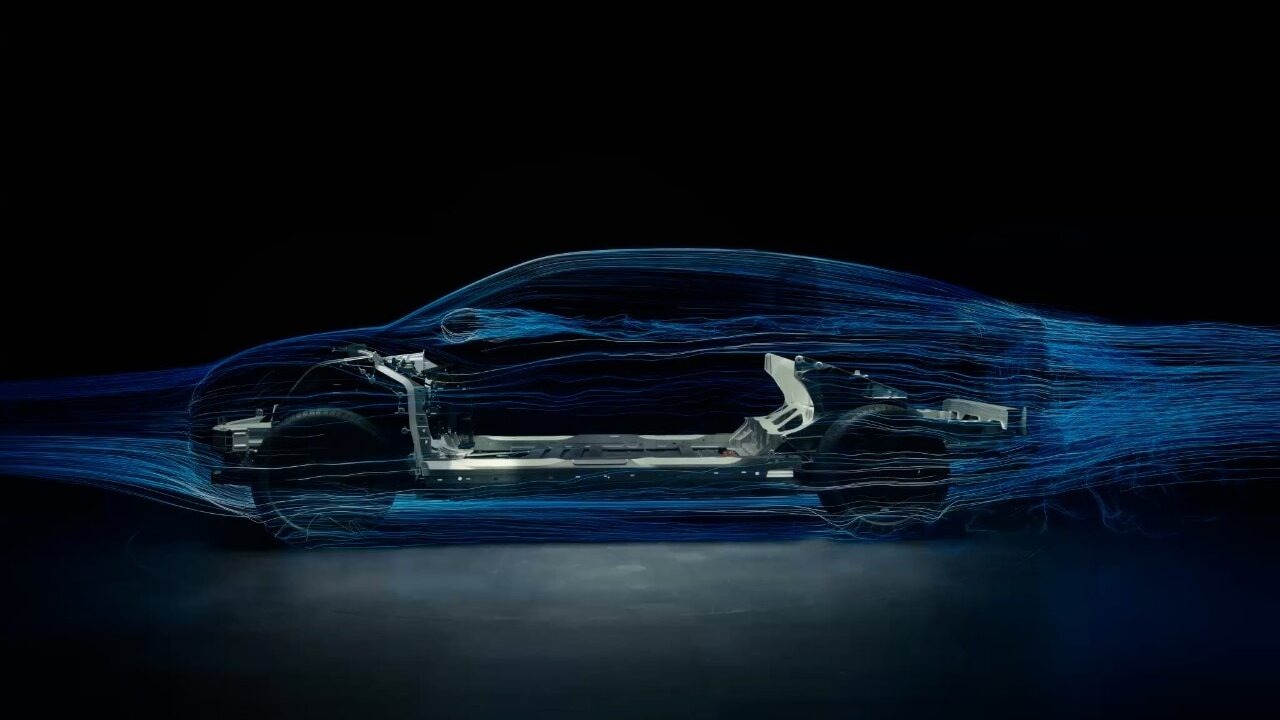
Ford says its new midsize electric truck is being developed with aerodynamic efficiency that’s more than 15 percent better than that of current pickups. It also projects a near-50-mile range advantage in internal comparisons using the same battery, plus roughly a 30 percent efficiency improvement at highway speeds. Those numbers are Ford’s own projections, so real-world validation will matter, but the direction is clear.
For EV trucks, this is a big deal. At highway speeds, drag becomes a major energy tax. Improve the airflow, and you improve range without adding a single battery cell.
“F1 Thinking” Means Stacking Small Wins
The interesting part is how Ford is getting there. It is not one magical aero trick. It is a pile of small improvements that add up.
Ford describes a roofline designed to create a “virtual surface” over the bed so airflow behaves as if it is passing over a more continuous shape. It also points to mirror housings reduced by more than 20 percent, which Ford claims can add about 1.5 miles of range. Underbody and front-wheel airflow work, including tire-wake management, is claimed to add another 4.5 miles.
None of these changes is revolutionary on its own. Together, they show a methodical, race-inspired approach to efficiency. The takeaway is not one big breakthrough. It is an engineering discipline.
The “Bounty” System Turns Design Into Math
One of the most interesting ideas Ford mentioned is its internal “bounty” system. It forces teams to quantify, in real time, how a design change affects range and battery cost. Ford’s example shows that adding 1 millimeter to roof height could cost about $1.30 more in battery costs and reduce range by roughly 0.055 miles.
Whether those exact figures hold in production is less important than the framework. Ford is pushing every team to treat aero, packaging, and cost as one connected equation. That is how you stop EVs from getting heavier and more expensive with every redesign.
Less Wiring, Less Weight, Less Mess

Ford is also chasing efficiency through electronics, not just body shape. It says its Universal EV Platform shifts to a zonal architecture with five major modules, rather than a traditional setup that can use 30+ ECUs. The company also points to a move from 12V to 48V and faster Ethernet-based communication.
Ford claims this approach enabled a wiring harness that is 4,000 feet shorter and 22 pounds lighter than one of its first-generation EVs. In EV terms, that is meaningful. Less copper means less weight, fewer parts, and potentially lower cost and easier manufacturing.
The Cabin Claim That Got Everyone’s Attention
Ford has also said the new truck will have more passenger volume than a 2025 Toyota RAV4. That is a smart benchmark because it speaks the language of mainstream buyers. It signals daily usability, not just truck utility.
LFP Batteries and More In-House Control
On the battery side, Ford says it plans to use LFP cells on the first vehicle from this platform, and it has also brought key high-voltage power electronics work in-house. The goal is to pair lower-cost chemistry with tighter control over efficiency and energy conversion.
Again, the theme is consistent. Ford is not trying to win by brute-force battery size. It is trying to win by reducing waste across the entire vehicle.
Why This Matters for the EV Truck Market

If Ford executes, this could be the blueprint for making EV trucks more affordable without compromising real-world range. The market has already shown that buyers like EV performance, but price sensitivity remains high, especially for truck shoppers who care about utility and highway range.
The next competitive phase might not be “who has the biggest battery pack.” It might be “who delivers the best real-world efficiency per dollar.” Ford is clearly aiming at that target.
It is still early, and much of this is based on Ford’s own projections. But the strategy itself is credible: better aerodynamics, lighter systems, smarter architecture, and right-sized batteries. In other words, better physics.