
The Ford RS200 burst onto the Group B scene as Ford’s boldest engineering gamble, a mid-engine, all-wheel-drive car born from homologation rules rather than boardroom safe bets. With its lightweight composite tub, punchy turbocharged engine, and rally-ready stance, it rewrote what a factory rally car could be. This wasn’t just another badge-engineered model; it was a purpose-built machine that dared to challenge the giants of Audi and Lancia on their own turf.
In this article, you’ll dive into the RS200’s revolutionary chassis design, FIA-driven production saga, and the on-track moments that cemented its mythic status. We’ll explore the car’s lasting influence on modern performance Fords and why collectors still chase down the few surviving road-legal examples. Whether you’re a motorsport aficionado or simply curious about automotive engineering at its most daring, you’ll walk away with a new appreciation for Ford’s Group B masterpiece.
Born for Group B Homologation

The RS200 was engineered from its inception to satisfy FIA Group B rules, which required manufacturers to build at least 200 identical units for homologation. As Group B escalated, Ford abandoned the Escort RS1700T program and moved to a clean-sheet RS200 design in favor of a clean-sheet design rather than a badge-engineered derivative.
Mid-Engine Cosworth AWD: Purpose-Built Performance

Under its composite body lies a mid-mounted 1.8 L Cosworth BDT turbocharged inline-four, sending power to all four wheels through a front-mounted five-speed gearbox to improve weight distribution (often cited as roughly 50:50). According to the Ford Heritage Vault’s RS200 spec sheet, this layout maximized traction and balance on loose gravel, snow, and tarmac alike.
Featherweight Fortress: Composite Tub & Honeycomb Chassis

The RS200 used a composite body over an aluminium honeycomb-based chassis structure with subframes, combining low weight with high stiffness, borrowing aerospace construction methods to minimize weight and maximize stiffness. This featherweight fortress kept curb weight around 2,600 lb (about 1,180 kg) while delivering razor-sharp responsiveness.
Tony Southgate’s Ground-up Rally Engineering

Formula 1 veteran and designer Tony Southgate, working with Ford engineer John Wheeler, led the RS200’s chassis development, integrating bespoke double-wishbone suspension with twin dampers and adjustable sway bars at each corner. Southgate’s F1-grade geometry and tuning provided exceptional cornering precision across gravel, snow, or tarmac.
Quattro vs. 037 Rivalry: A Direct Challenge

Ford designed the RS200 explicitly to go head-to-head with the Audi Quattro and Lancia 037, mandating all-wheel drive to match the Audi Quattro’s traction advantage while taking on rivals like the Lancia 037 and crafting rally-specific aero. This direct approach proved Ford’s commitment to dominating Group B competition.
Limited to 200 Road-Legal Units: Collector’s Holy Grail
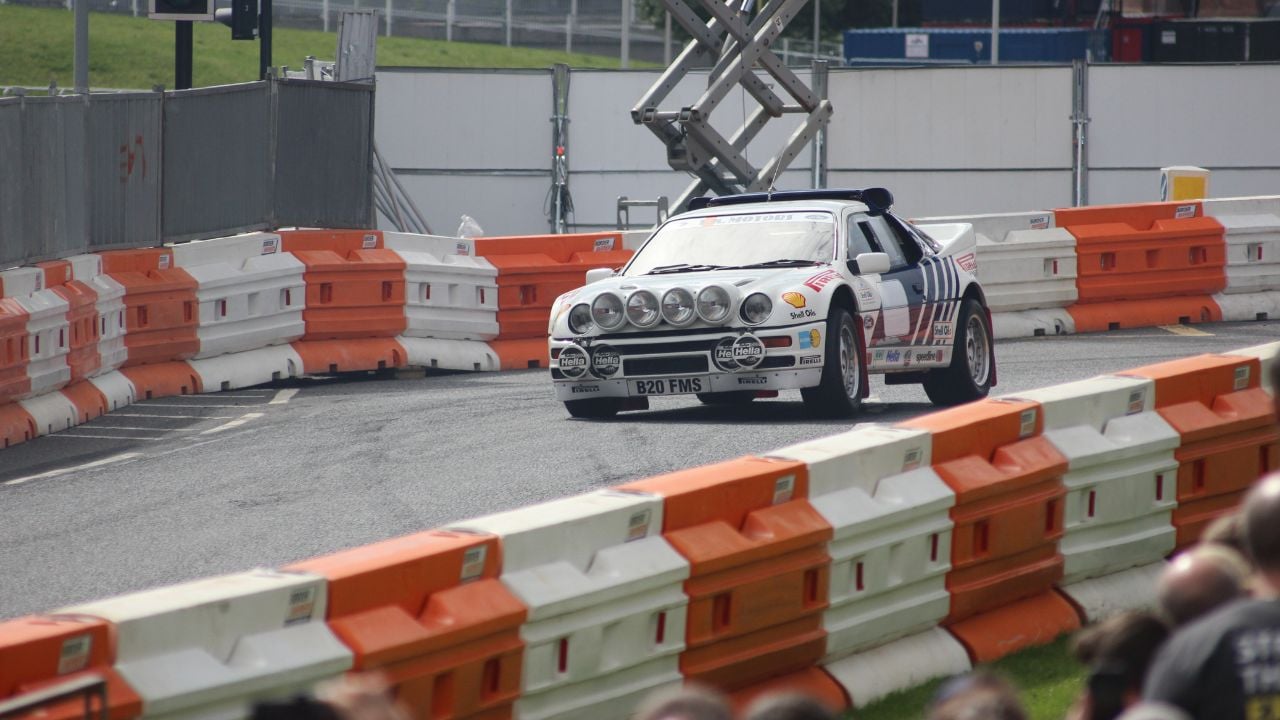
Between 1984 and 1986, Reliant in Staffordshire assembled around 200 road cars for homologation (plus prototypes and later Evolution variants), each carrying a unique serial number and minimal Ford parts carryover, items like the windscreen and rear lights were shared, to speed homologation. Surviving examples now command six-figure sums at auction due to their rarity and purity.
Iconic Rally Triumphs: Defining Group B Moments

Although the factory RS200 campaign was brief, the car earned a memorable podium at the 1986 Rally Sweden, where Kalle Grundel finished third overall. This performance showcased the RS200’s potential against more established rivals.
Enduring Legacy: The RS200’s Impact on Modern Fords

The RS200’s AWD, turbocharged performance ethos and lightweight, purpose-built approach helped shape Ford’s later RS halo mindset. According to Car and Driver’s feature on the RS200 legacy, its daring engineering continues to inspire Ford’s high-performance lineage.
The RS200’s Unrivaled Rally Legacy

From its clean-sheet Group B homologation to the aerospace-inspired chassis, the RS200 was pure rally innovation wrapped in a road-legal package. Its mid-engine Cosworth powerplant, advanced all-wheel-drive system, and featherlight composite tub set new benchmarks for traction, handling, and driver engagement.
Though only 200 ever made it to the road, its podium-worthy performance at Rally Sweden and direct challenge to Audi and Lancia cemented its place in motorsport history. Today, the RS200’s spirit lives on in Ford’s high-performance models, reminding enthusiasts that when regulations demand the extraordinary, true engineering brilliance can still steal the show.