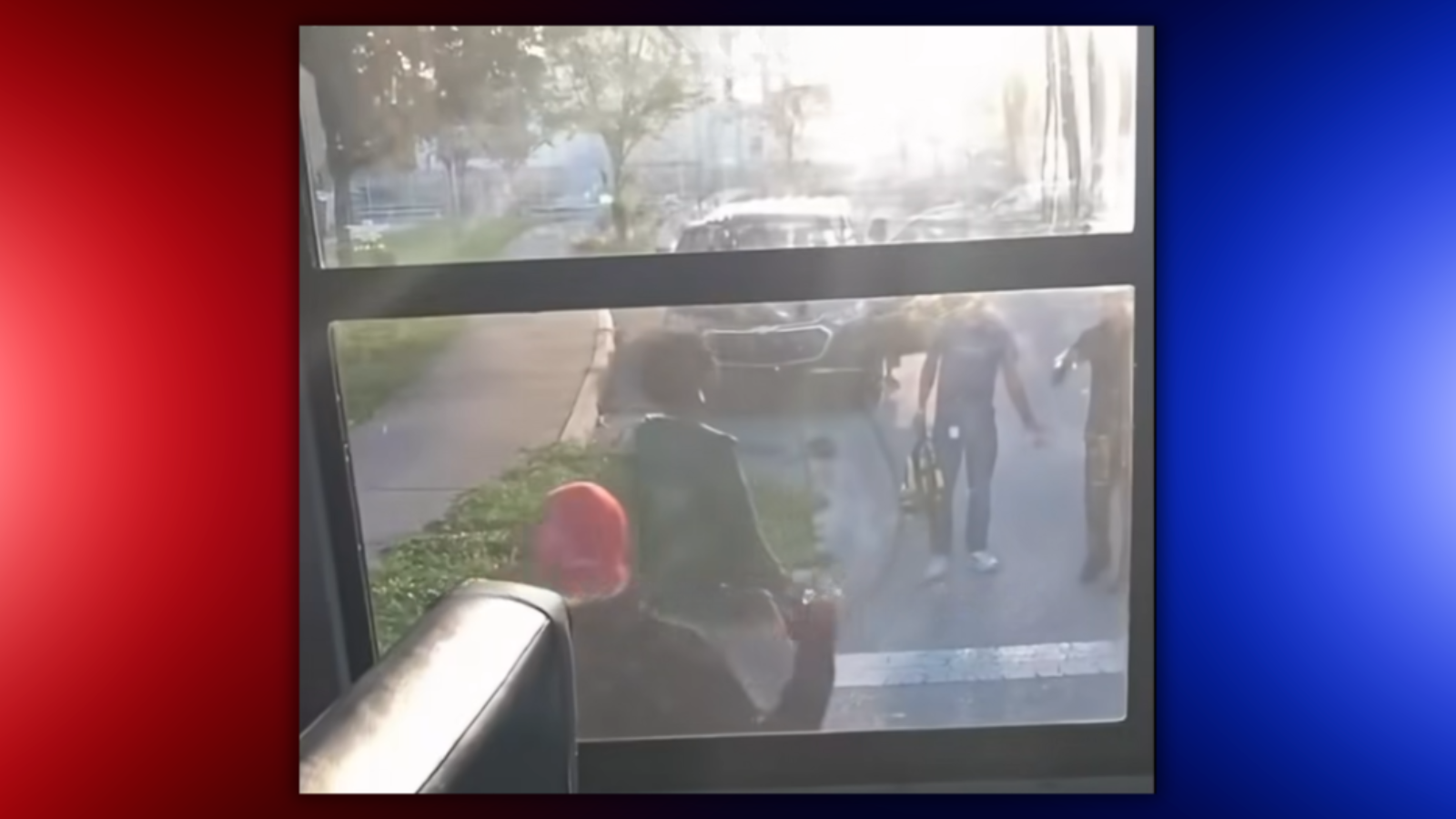
A Florida father pulled a handgun as two teenagers approached him at an Indiantown school bus stop. After interviewing students and others involved, the Martin County Sheriff’s Office concluded that he had acted legally and described him as the victim.
More than a week later, residents packed a community meeting to challenge Sheriff Jon Budensiek over why the father had not been charged.
Budensiek stood by the investigation, saying the father had backed away, warned the teenagers to stay back, and displayed the gun only after they continued toward him.
The meeting eventually moved beyond who started the confrontation and into a less obvious question about Florida law, one that left residents and the sheriff arguing over whether the gun created a separate legal problem before it was ever displayed.
The Stop
Embedded media follows; please allow a moment for it to load.
The confrontation grew out of a Sept. 17 dispute aboard a Martin County school bus. Budensiek said a 16-year-old student boarded with pizza, a 14-year-old repeatedly asked him for some, then threatened and struck him after being refused.
The 16-year-old told his father, who went to the bus stop later that day and spoke with the driver, Treasure Coast Newspapers reported.
When the father returned with his son the next morning, the 14-year-old was already aboard. Budensiek said the teenager got off while the father was speaking with the driver; students began yelling and making calls, and one of those calls brought another 16-year-old who had already been suspended from school and was not riding the bus.
The sheriff said both teenagers approached the father while yelling. He raised a hand, backed away, and repeatedly told them to stay back, but they continued closing the distance.
“They got all the way up on him before he pulled out a concealed weapon and told them to get back,” Budensiek said.
Both teenagers retreated. The father put the gun away, drove around the corner, flagged down a deputy and reported what happened.
Detectives interviewed witnesses, and Budensiek said their accounts of the critical sequence were consistent. Investigators would have sought warrants for the two teenagers if the father had wanted charges, he said, but the man declined.
The Teens
The teenagers later disputed parts of the sheriff’s account in interviews with WPBF 25 News, although their version also established that a fight was imminent.
RJ McIntyre said he and the father’s son dropped their backpacks because they were “about to fight.” Trevor Ivory said he came after receiving a call from his younger brother and later told the father to let the two teenagers fight.
Ivory said the father put his son behind him and drew the gun, prompting both teens to back away with their hands raised.
Budensiek nevertheless concluded that the father acted lawfully. He said the man worked as a security guard, was legally carrying the handgun, and had kept it concealed before the confrontation.
The Meeting
At the Sept. 28 meeting, residents shifted the debate from whether the father could defend himself to whether he could legally possess the gun there at all.
Florida Statute 790.115 regulates firearms at schools, school buses, and school bus stops. It prohibits threateningly displaying a firearm there unless the act is lawful self-defense, while a separate provision restricts possession at a school bus stop. For someone otherwise authorized to carry concealed, that possession violation is a second-degree misdemeanor.
That matters because Florida’s self-defense law says a person threatening deadly force has no duty to retreat when he reasonably believes it is necessary to prevent imminent death, great bodily harm or a forcible felony, provided he is not engaged in criminal activity and is somewhere he has a right to be.
Residents argued that an unlawful possession offense could complicate that protection. It would not automatically make drawing the gun unlawful, however, because the school-firearm statute separately preserves lawful self-defense as an exception to its exhibition provision.
Budensiek’s answer turned on geography. Florida law uses the term “school bus stop,” but §790.115 does not establish a distance, perimeter or other obvious boundary around one. He said that uncertainty prevented his office from determining that the father had been standing within the prohibited area and pursuing the separate possession charge.
Florida courts have handled prosecutions under the same provision. In A.H. v. State, the Fourth District Court of Appeal reversed a juvenile adjudication because prosecutors had not established that an unloaded BB gun qualified as a weapon. The opinion did not decide where a school bus stop begins or ends.
Budensiek stood by his self-defense finding.
“In the state of Florida, you’re allowed to defend yourself against somebody that’s coming after you,” he said.
Agreement
Martin County NAACP President Jimmy Smith said the meeting was intended to explain the laws behind the sheriff’s decision and encouraged residents unhappy with them to contact legislators.
For Smith, the most important result was simpler. Two teenagers approached an armed adult, a firearm came out in front of students waiting for school, and nobody was shot.
“Thank God nobody went home hurt or in a casket,” Smith said.
The meeting did not produce agreement over the sheriff’s decision, but Smith said it left the room with one point of common ground.
“We can agree that this should have never happened.”
Editor’s Note: This story has been updated with new reporting from a Sept. 28 community meeting, additional details about the sheriff’s decision not to file charges, and further context on the Florida laws governing firearms at school bus stops and self-defense.