Speed has become expensive, but it has also become strangely accessible. Not long ago, a 3-second 0-60 mph time belonged to exotic cars, limited-production machines, and garage posters most buyers could only admire from a distance.
Today, the right new car can get close to that world without crossing into six-figure territory. That does not make these cars cheap, but it changes the performance conversation. A buyer can now find serious acceleration in an electric sedan, a mid-engine V8 sports car, an electric muscle car, a high-performance EV crossover, or a compact all-wheel-drive performance sedan without shopping in supercar money.
The speed comes from different places. Some use instant electric torque. Some use launch control and all-wheel-drive traction. One still does it the old-fashioned American way, with a naturally aspirated V8 mounted behind the seats.
These five new cars prove that sub-$100,000 performance is no longer a consolation prize. The supercars may still own the drama, rarity, and posters, but breathtaking acceleration has moved much closer to ordinary showroom money.
Tesla Model 3 Performance
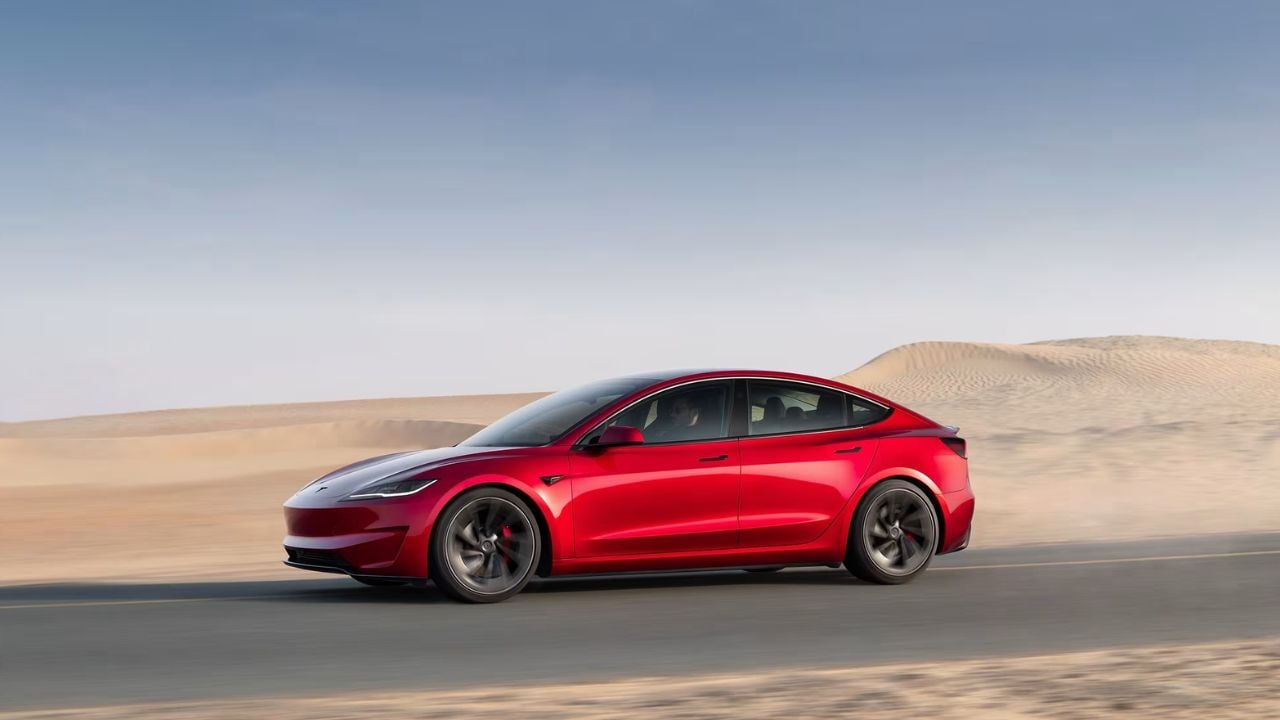
The Tesla Model 3 Performance is the quickest shortcut to shocking acceleration in this group. Tesla lists the Model 3 Performance from $56,630 including destination and order fees, with dual-motor all-wheel drive, an EPA-estimated 309 miles of range, and a 2.9-second 0-60 mph time with rollout subtracted.
That number still looks absurd beside the price. The Model 3 Performance is a compact electric sedan with a usable trunk, rear seats, quiet commuting manners, and access to Tesla’s charging network. It does not need a special starting ritual or a dramatic engine note to feel fast. The car simply leaves hard the moment the driver asks for full power.
The appeal is direct and almost brutally simple. Buyers looking for the shortest new-car path to sub-3-second acceleration do not need a supercar dealership. They can get it in a sedan that still works for daily driving.
Chevrolet Corvette Stingray
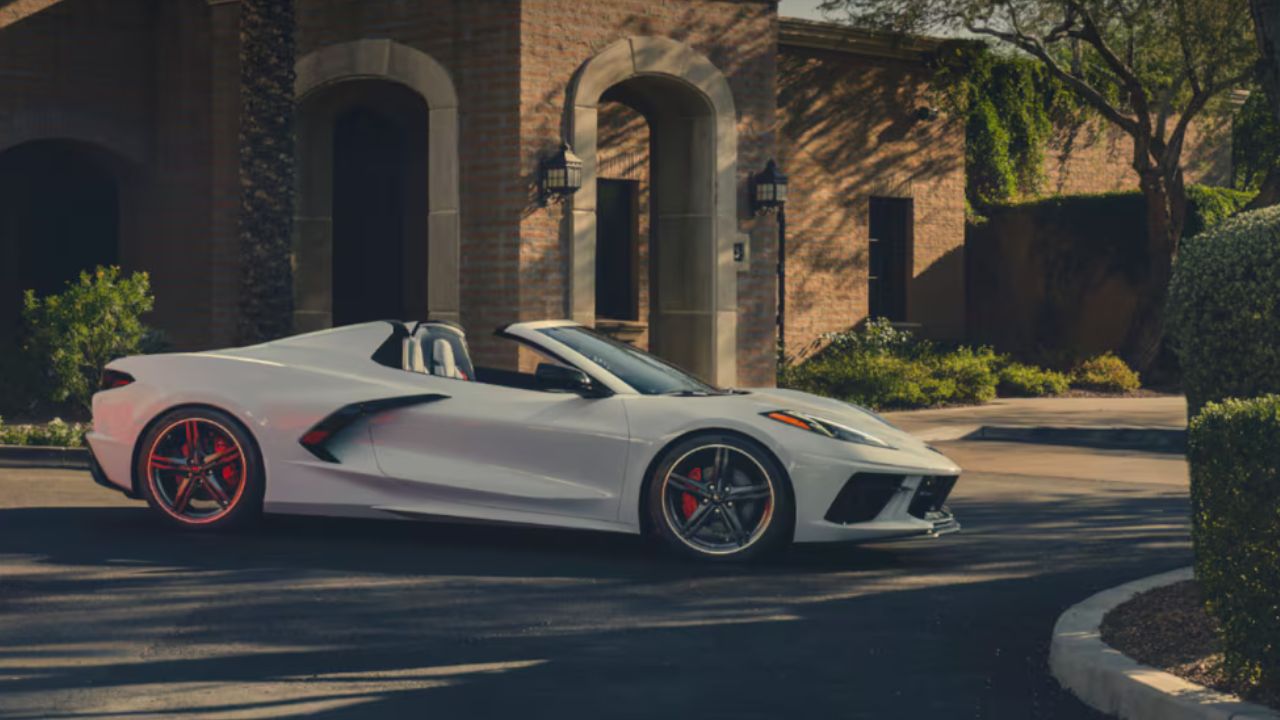
The 2026 Chevrolet Corvette Stingray is still America’s great performance cheat code. Chevrolet lists the Stingray from $70,000, with up to 495 hp, an available 2.9-second 0-60 mph time, and a 194 mph top track speed.
The Corvette earns its place because it brings real sports-car hardware, not only a big acceleration number. The 6.2L V8 sits behind the driver, the proportions look properly exotic, and the chassis gives buyers a mid-engine experience that still starts well under $100,000 before heavy options.
Plenty of cars are quick now. Fewer give the driver this much theater for the money. The Stingray has V8 sound, low-slung bodywork, track-day credibility, and the kind of straight-line performance that still feels wild every time the launch control screen comes up.
Dodge Charger Daytona Scat Pack
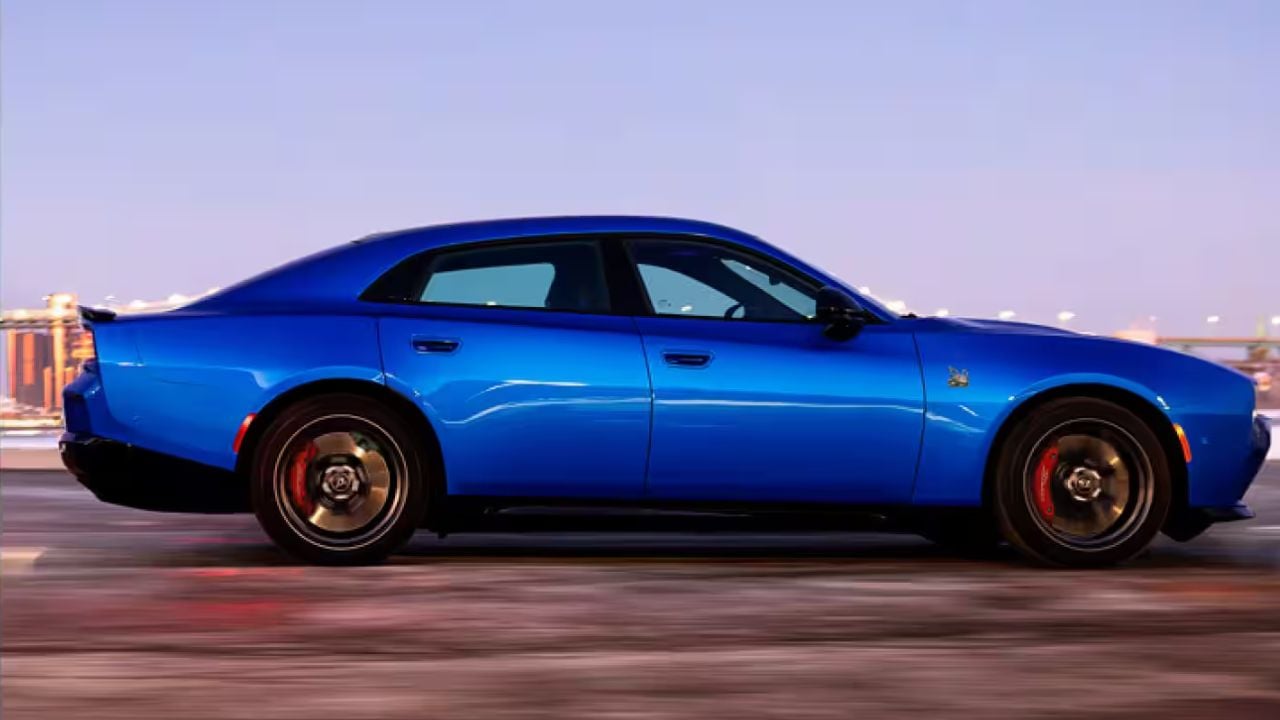
The 2026 Dodge Charger Daytona Scat Pack brings muscle-car acceleration into the electric era. Dodge lists the Charger Daytona Scat Pack at 670 hp and 627 lb-ft of torque, with a targeted 3.3-second 0-60 mph time and an 11.5-second quarter mile. Dodge’s trim page lists the two-door Daytona Scat Pack from $59,995 before destination, taxes, title, and registration fees.
This is not a lightweight sports car, and it should not be described like one. The Charger Daytona is large, heavy, dramatic, and built around the idea that American muscle can survive without a Hemi V8. Its speed comes from all-wheel-drive traction and instant electric torque instead of displacement and exhaust noise.
That will make it controversial, which is part of the story. The Daytona Scat Pack gives buyers big straight-line force, everyday cabin space, and a familiar muscle-car badge at a price that stays far below exotic territory.
Hyundai Ioniq 5 N

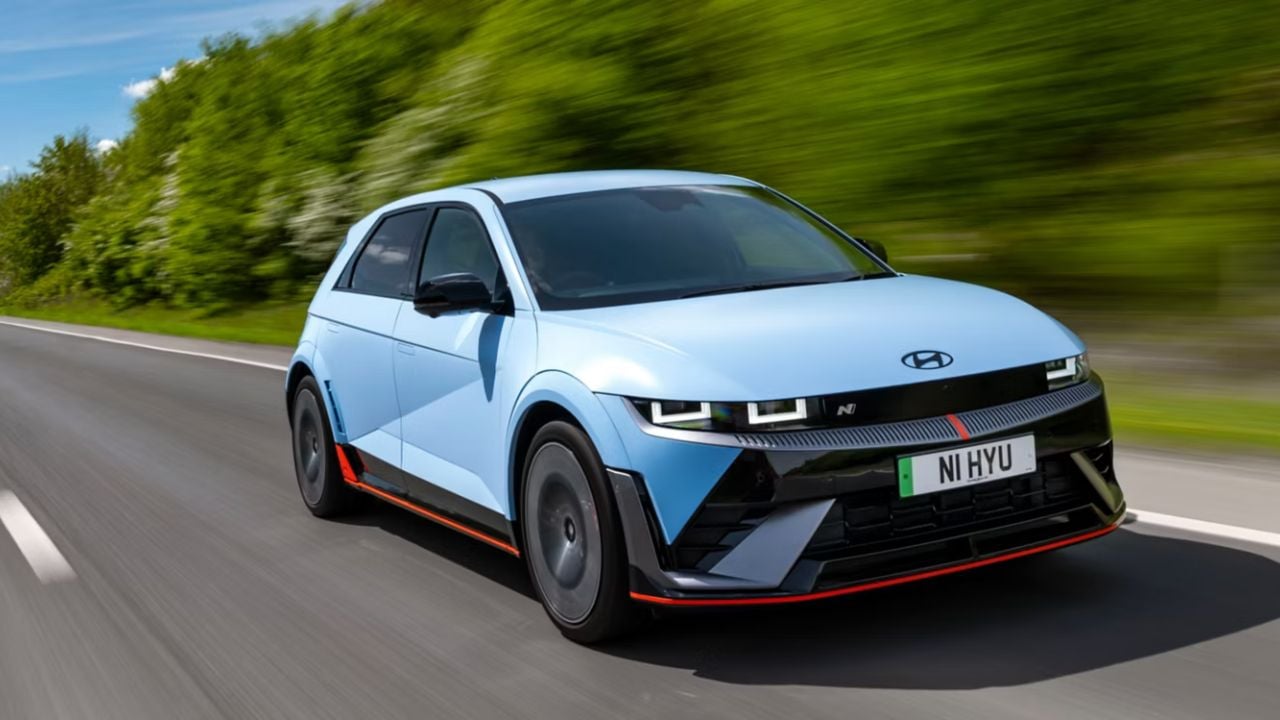
The Hyundai Ioniq 5 N is the car that belongs here instead of a merely quick enthusiast coupe. Hyundai’s own 2026 specifications list the Ioniq 5 N at 601 hp in normal maximum output and 641 hp with N Grin Boost, with up to 568 lb-ft of torque. MotorTrend lists the 2026 Ioniq 5 N at 2.8 seconds from 0-60 mph in testing.
Those numbers put the Hyundai squarely in the argument. It is not a traditional sports car, and it is not trying to be one. It is a high-performance electric hatchback/crossover with all-wheel drive, a usable cabin, and enough weird N hardware to make it feel more playful than most fast EVs.
The clever part is that Hyundai did not stop at acceleration. The Ioniq 5 N uses features such as N Grin Boost, N e-Shift, performance drive modes, and aggressive chassis tuning to give the car a personality beyond silent speed. It is one of the strongest proof points that near-supercar acceleration under $100,000 no longer has to come from a traditional coupe or sedan.
Audi RS3

The 2026 Audi RS3 is the smallest car here, but it has one of the most distinctive engines in the group. Audi lists the RS3 from $66,100, with a 2.5L turbocharged five-cylinder engine producing 394 hp and 369 lb-ft of torque. Audi also lists a factory 0-60 mph time of 3.6 seconds.
The factory number is already strong, but instrumented testing has shown the RS3 can feel even quicker than Audi’s claim suggests. The real reason it belongs here is the way it delivers the speed. Quattro all-wheel drive gives it a hard launch, while the five-cylinder engine gives it a sound and personality that no normal compact sedan can copy.
The RS3 does not have the raw acceleration shock of the Tesla or Hyundai, and it does not have the Corvette’s mid-engine drama. It wins by being small, premium, quick, usable, and mechanically unusual. In a market full of turbo four-cylinder performance cars, the RS3 still feels like a compact sedan with a rare engine hiding under the hood.
Why Speed Under $100,000 Still Feels Exciting
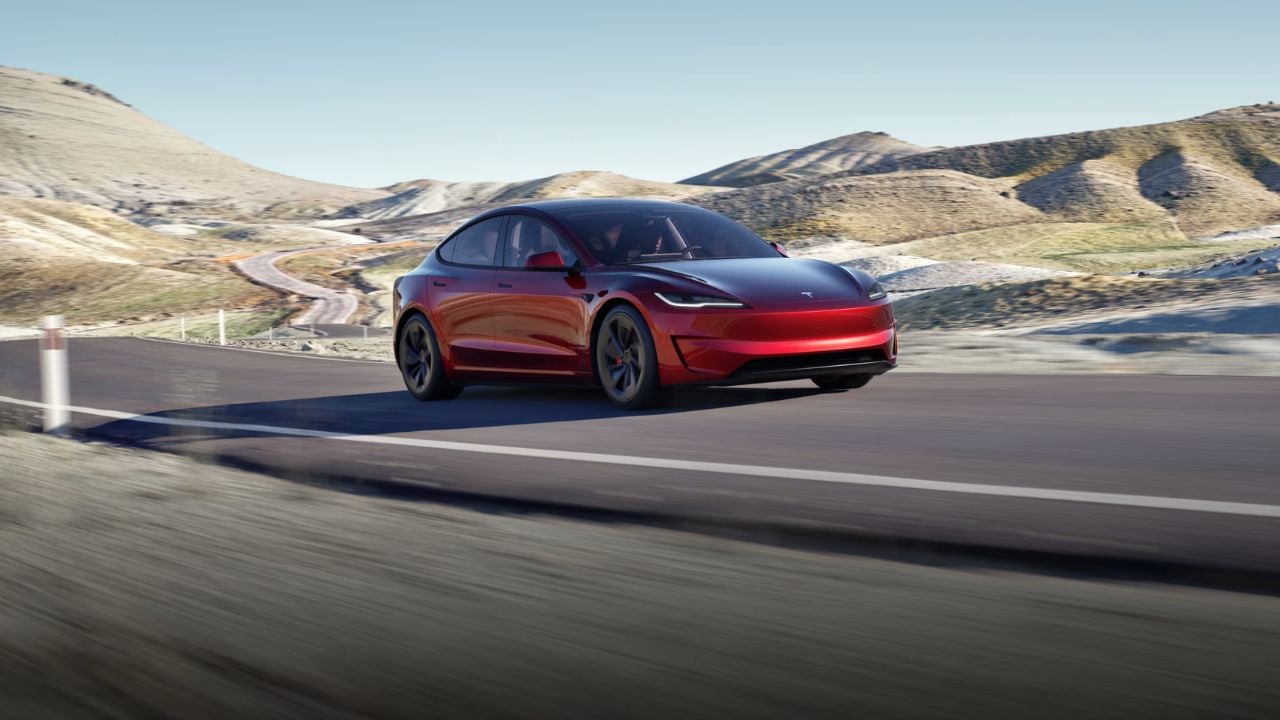
The best part of this group is that the cars do not chase speed the same way. The Model 3 Performance uses electric torque to make sub-3-second acceleration feel almost casual. The Corvette Stingray delivers mid-engine V8 theater at a price that still looks aggressive. The Charger Daytona Scat Pack turns electric power into a new kind of American muscle.
The Ioniq 5 N adds another twist by putting 641-hp EV performance into a usable Hyundai body with serious N division attitude. The Audi RS3 keeps gasoline character alive with all-wheel-drive traction and one of the most memorable engines still available in a small performance sedan.
None of this makes supercars irrelevant. They still bring rarity, beauty, drama, and a sense of occasion these cars cannot fully copy. The point is that the acceleration gap has collapsed. A buyer with less than $100,000 can now shop for new cars that hit 60 mph in the high-2- or low-3-second range, and that would have sounded ridiculous not long ago.
Speed is still expensive. It just is not as unreachable as it used to be.