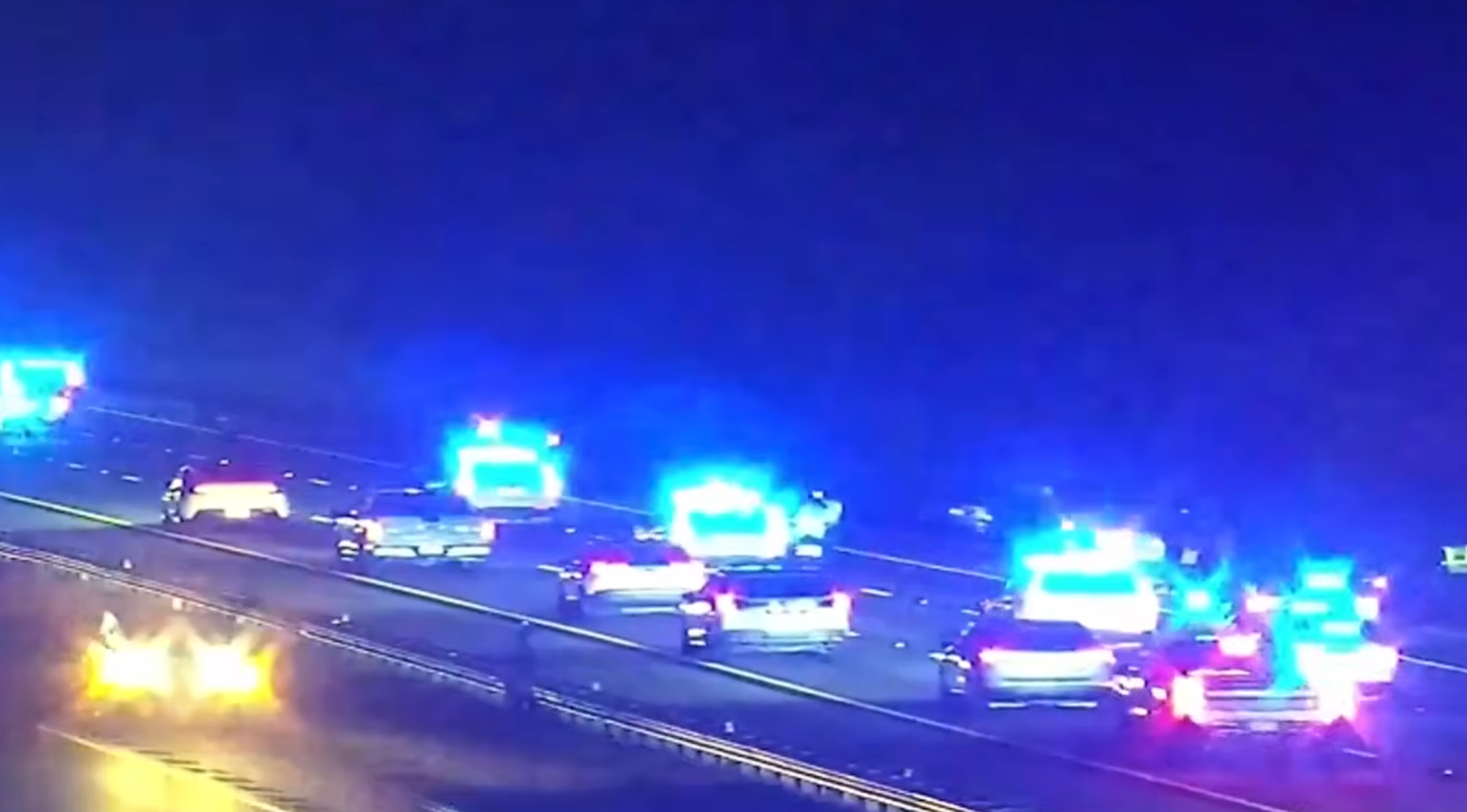
Florida Highway Patrol troopers made an arrest in a deadly hit-and-run crash in Volusia County that left three people dead. There was just one problem: they got the wrong person. Now, weeks later, a second suspect is behind bars, a first suspect had charges quietly dropped, and a lot of very uncomfortable questions are being asked about how investigators missed key evidence that may have been sitting right there from the start.
The crash happened on the night of October 4th on Interstate 4 near Daytona Beach. Just before 10 p.m., a hit-and-run collision touched off a chain reaction that killed three people and left a fourth critically injured. FHP troopers quickly moved to identify who was behind it, relying on witness accounts from the scene. One witness reported seeing a black Dodge Durango causing the crash. Using license plate readers, investigators traced that vehicle to Flagler County and arrested a woman named Lindsay Isaacs. Case closed, or so it seemed.
Except it was not. The state attorney’s office requested a second review. A specialist team went back to the beginning, tracked down more witnesses, and discovered something that raised immediate red flags: there had been a maroon Dodge Durango also in the area that night. Investigators also reviewed a 911 call from that same evening, one that reportedly included a caller describing a maroon Dodge Durango driving erratically and even providing the first three digits of its license plate. That information led investigators to Alyssa Montalvo. Troopers say her vehicle also showed signs of recent body work done shortly after the crash. Montalvo is now in Volusia County Jail without bond.
Meanwhile, local News 6 reporter Molly Breed has been pushing for answers and doing the work that deserves credit here. She obtained a partial transcript of that 911 call, which reportedly describes a maroon Dodge Durango “driving like a mad person” and mentions license plate numbers beginning with 458. The call came in on the very night of the crash. Which naturally raises the question everyone is now asking: how did that information not end up at the center of the original investigation?
A 911 Call That Apparently Described the Real Suspect
This is perhaps the most striking detail in the whole story. A caller reportedly gave dispatchers a vehicle color, a make and model, and a partial license plate number on the night of the crash. That is essentially a roadmap. Investigators in the original case, however, appear to have focused on a single eyewitness account at the scene pointing to a black Durango, while not initially connecting that 911 call to their investigation.
News 6 requested the full 911 audio from FHP. The agency declined to release it. A partial transcript was all that became available, but even that fragment is striking in its specificity. The question of whether troopers are trained to routinely cross-reference 911 calls during active crash investigations is one Molly Breed specifically put to FHP. As of the time of reporting, the agency has not responded to that question or to requests for an interview.
Two Dodge Durangos, One Very Complicated Night
If this case sounds confusing, that is partly because it genuinely is. Two Dodge Durangos, different colors, same general area, same night. That kind of coincidence is the stuff of detective fiction, but it played out in real life on a dark Florida interstate.
Former Orlando Police Chief Orlando Rolón, who weighed in as a law enforcement expert for News 6, offered some important context. He noted that investigations of this kind, especially those involving multiple vehicles, multiple fatalities, and conditions at night, come with layers of complexity. Information comes in fast, some of it contradictory, and not all of it gets verified in the first pass. That is not an excuse, but it is an explanation for how two vehicles that share a make and general appearance can send an investigation down the wrong road, at least initially. The system is built to self-correct, and in this case it did, but only after a second review had to be requested.
What This Case Can Teach Law Enforcement and the Public
Wrongful arrests in the aftermath of violent crimes are not unheard of, and cases like this one serve as a reminder that the early hours of a major investigation are often the most chaotic and mistake-prone. The pressure to make an arrest quickly after a fatal crash is real, but the cost of moving too fast can be enormous. In this case, Lindsay Isaacs was arrested, faced public scrutiny, and had her life upended over a crime she apparently did not commit.
Former Chief Rolón made a point worth sitting with: this kind of case creates an opportunity for other agencies to step back and honestly evaluate whether their own investigative processes hold up. Are 911 calls being reviewed as a standard part of crash investigations? Are investigators casting a wide enough net when eyewitness accounts conflict with other available data? Those are institutional questions that go well beyond Florida.
There is also the issue of transparency. FHP has so far declined to say whether an internal investigation has been opened. That silence is going to be hard to sustain as public attention on this case grows. Accountability in law enforcement is not just about individual cases. It is about whether the public can trust the process that produced the outcome.
What Happens Next for Both Suspects
Alyssa Montalvo is currently being held in Volusia County Jail without bond as the investigation into her alleged role in the crash continues. The case against her appears to rest on witness accounts describing the maroon Durango, the 911 call transcript, and the evidence of post-crash vehicle repairs.
As for Lindsay Isaacs, the state attorney declined to file charges after the second review, which is the correct outcome given what investigators now believe. But the experience of being wrongly identified in connection with a crash that killed three people is not something that simply disappears when prosecutors close a file. This is an area where the legal system largely leaves people to navigate on their own.
Molly Breed of News 6 has said she is continuing to press FHP for answers and will report updates as they come in. Given how many open questions remain about the original investigation, those updates will be worth watching.
Sources: News 6 / Spectrum News 6 (Molly Breed reporting, Volusia County); former Orlando Police Chief Orlando Rolón, law enforcement analyst