
Electric vehicles have come a long way from the days when “silent running” was their main selling point. While purists might miss the rumble of a combustion engine, a new generation of EVs is proving that great sound design doesn’t require eight cylinders and a tailpipe.
These vehicles have found creative ways to make their presence known, whether through carefully crafted artificial sounds, natural mechanical symphonies, or pure auditory craftsmanship.
BMW iX

The BMW iX takes a surprisingly sophisticated approach to EV acoustics with its collaboration with film composer Hans Zimmer. Instead of trying to mimic a traditional engine, BMW created what they call “IconicSounds Electric“—a futuristic soundscape that actually responds to how you drive.
The system generates different tones for acceleration, deceleration, and cruising that feel purposeful rather than gimmicky. It’s like having a movie soundtrack that adapts to your driving style, making even a grocery store run feel cinematic.
Audi e-tron GT

Audi didn’t just phone it in with the e-tron GT’s sound design; the optional “e-tron sport sound” is a deliberately crafted, synthesized soundtrack that’s played through the car’s speakers to add emotion and presence. It rises with speed and load and can be toned down or switched off, so you can choose “jet-like” drama or near-silence.
It’s not marketed as a direct Formula E recording; it’s a purpose-built soundscape designed to suit the GT’s character. The e-tron GT proves that electric doesn’t have to be boring.
Porsche Taycan

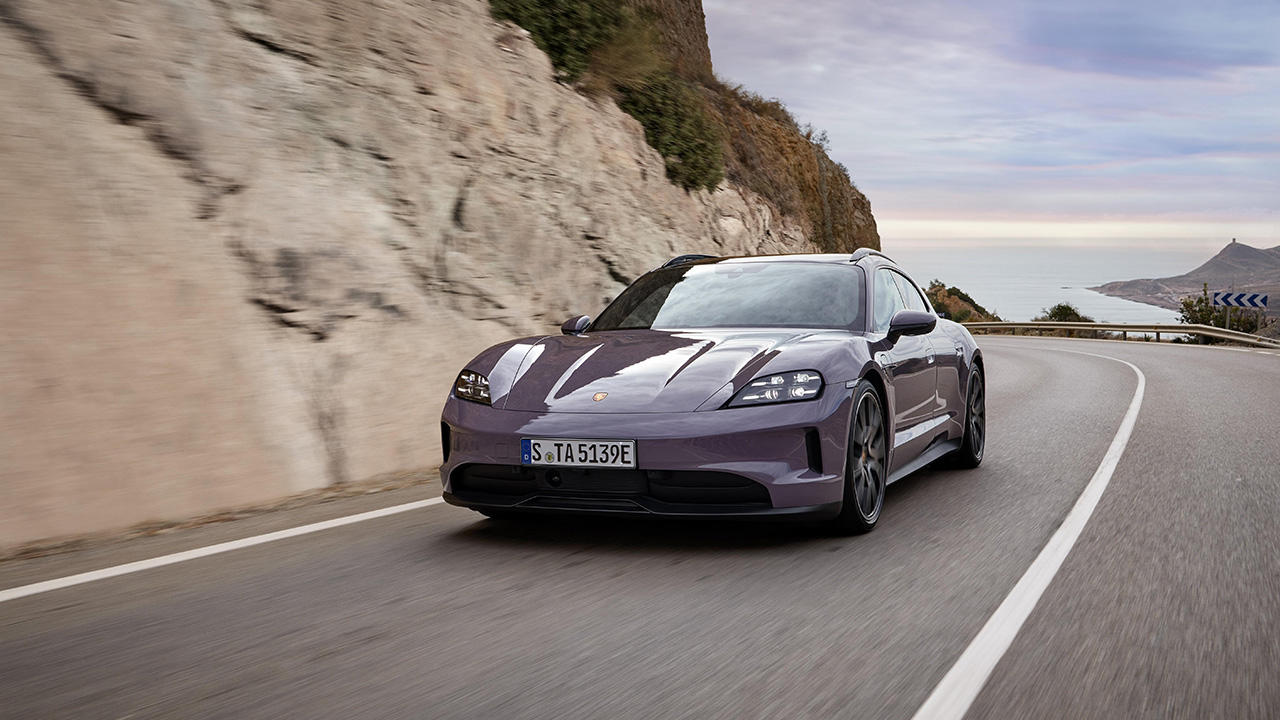
Leave it to Porsche to make an EV that sounds distinctly like a Porsche without copying their flat-six playbook. The Taycan’s available “Electric Sport Sound” adds a futuristic, rising whine that tracks acceleration and speed, giving the car an unmistakable audio signature.
Rather than trying to mimic an ICE engine note, Porsche leans into an intentionally “electric” soundtrack you can enable or disable depending on mood. It’s proof that sound design can be part of the driving experience, even without combustion.
Hyundai IONIQ 5

Hyundai’s most interesting sound work isn’t on the standard IONIQ 5; it’s on the IONIQ 5 N performance model. It offers selectable in-cabin sound themes via Hyundai’s N Active Sound+ system, ranging from subtle futuristic tones to more aggressive, motorsport-style audio.
Just as importantly, you can dial it back or turn it off entirely. Hyundai’s approach is smart because it treats sound as optional driver feedback, not mandatory theater.
Ford Mustang Mach-E

Ford faced the unique challenge of making an electric SUV that could still claim Mustang heritage, and the Mach-E answers with an optional in-cabin “propulsion sound” that changes with throttle input and drive mode.
It doesn’t try to impersonate a V8, but it does add drama and feedback when you want it, and you can turn it down or off. It’s EV sound design that nods to Mustang attitude without pretending to be a gasoline car.
Lucid Air

Lucid took perhaps the most minimalist approach to EV sound design, and it works beautifully. Rather than adding artificial engine sounds, they focused on eliminating unwanted noise while preserving the subtle, natural sounds of the electric drivetrain.
The Air’s cabin is incredibly quiet, but you can still hear the gentle whir of the motors and the whisper of air moving through the vehicle. It’s like the difference between silence and stillness—there’s still acoustic character; it’s just more refined and intentional.
Shh, listen up!
The best-sounding EVs aren’t necessarily the loudest or most dramatic: they’re the ones that found their own authentic voice. Whether that’s through sophisticated artificial soundscapes, amplified mechanical poetry, or carefully curated quiet, these vehicles prove that electric doesn’t have to mean boring.
As more manufacturers figure out that sound design is just another form of engineering, we’re likely to see even more creative solutions that make EVs appealing to our ears as well as our environmental consciousness.