
There was a time when drivers had to choose between soul and style or saving the planet: there were no in-between options on the market. However, the electric revolution has officially crashed the supercar party, and let me tell you, these battery-powered beasts are making V12 engines look like steam locomotives. It’s about time that going green wasn’t a compromise; instead, it became the next evolution of what a supercar could be. Enter the hypercar.
We’re not talking about your neighbor’s sensible Tesla Model 3 here. These are the cars that’ll pin you to your seat, empty your bank account, and somehow make you feel good about saving polar bears while doing it.
Rimac Nevera (and the New Nevera R)
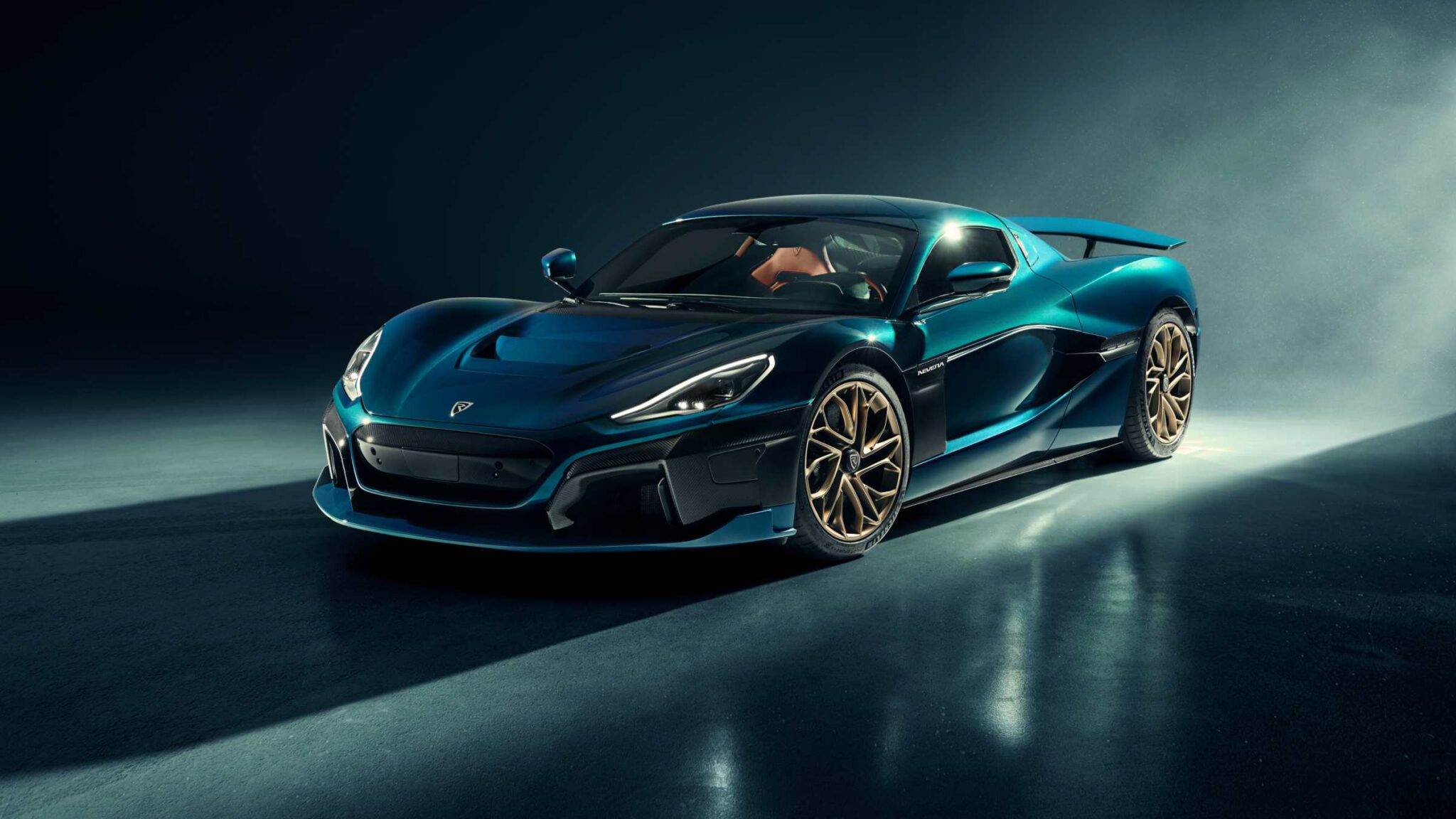
If you want to experience what it feels like to be shot out of a cannon while sitting in a Croatian work of art, the Rimac Nevera is your ticket to enlightenment. Named after the quick, sudden storms that race across Croatia, this hypercar packs a 120kWh battery and four electric motors that collectively laugh at the laws of physics. According to Car and Driver, it sprints to 60 mph in 1.74 seconds and can hit 258 mph, which means it’s faster than your ability to comprehend what just happened to you.
But wait, there’s more! Rimac just unleashed the Nevera R, described as “the lighter, grippier, angrier and even more powerful version” that’s been reimagined as a track-focused sports car. If the regular Nevera was already making Ferrari owners question their life choices, the R is here to make them consider therapy. With only 150 total Neveras being produced, owning one puts you in more exclusive company than people who’ve been to space.
Pininfarina Battista

When Italian design house Pininfarina, the folks who made Ferraris beautiful for decades, decides to build their own hypercar, you pay attention. The Battista delivers 1,900 horsepower through a powertrain developed with Rimac and accelerates from 0 to 60 mph in less than 2 seconds. That’s enough power to run a small town, channeled through four wheels and wrapped in bodywork so gorgeous it should probably be in a museum.
The Battista represents something special: it’s proof that going electric doesn’t mean sacrificing soul or style. With a limited production run, seeing one in the wild will be rarer than finding a parking spot in Manhattan. And unlike traditional supercars that sound like angry dragons, the Battista’s near-silent acceleration is somehow even more terrifying.
Lotus Evija

Lotus has always been about one thing: making cars so light and nimble they could probably qualify as professional dancers. The Evija takes this philosophy and adds enough electricity to power a small city. With nearly 2,000 horsepower from four electric motors, this isn’t just a Lotus, it’s what happens when Lotus gets very, very serious about making other hypercars look slow.
The Evija represents Lotus’s “we’re not messing around anymore” moment. After decades of building cars that were fast because they weighed less than a Miata, they’ve created something that’s still relatively light but now has the power output of a small nuclear plant. With a design meant to literally eat air, the Evija has beautifully blended true power with aerodynamic engineering. My own Elise doesn’t even hit 200 horsepower, so a Lotus hitting the thousands? There must be nothing else quite like that driving experience.
Aspark Owl

The Aspark Owl aims for electric vehicle supremacy with around 2,000 horsepower (Aspark quotes about 1,953 hp), a 0–60 mph time of 1.72 seconds according to the company, and a claimed top speed of roughly 257 mph.
The Owl represents Japan’s uninhibited innovation in the hypercar world. Aspark promises a carbon fiber version that will be even more extreme because apparently, 1,980 horsepower wasn’t quite enough. With production numbers so limited that they make the Apollo Project Evo seem common, the Owl exists primarily to prove that electric hypercars haven’t even begun to reach their potential. It’s less a car you drive and more a natural disaster you direct.
Dendrobium D-1

Sometimes you need a hypercar that looks like it was designed by someone who watched too much sci-fi and had access to unlimited funding. Enter the Dendrobium D-1, a vehicle from Singapore that looks more at home on Mars than a car show. The D-1 turned heads with its bold design, inspired by Singapore’s national flower, proving that even botany can inspire automotive insanity.
The D-1 represents the “why not?” school of hypercar design, where conventional thinking goes to die and doors open in ways that would make a DeLorean jealous. While specific performance figures are closely guarded secrets, the car’s very existence is a statement: the electric supercar revolution isn’t just about speed and power — it’s about reimagining what cars can look like when you’re not constrained by the need to stuff a massive engine somewhere in the middle. It’s automotive origami powered by electrons.
The Future Is Here (And It’s Shockingly Quick)

So there you have it—five electric hypercars that make traditional gas-powered exotics look like they’re powered by hamster wheels. Electric hypercars aren’t just raising the performance bar — they’re reshaping the very definition of what a hypercar can be. We’re living in an era where the fastest cars on the planet run on electricity, make virtually no noise, and somehow manage to be environmentally responsible while inducing mild panic attacks.
The best part? This is just the beginning. While traditional supercar manufacturers are still figuring out how to make their engines sound angrier, electric hypercar makers are busy rewriting the laws of physics. And if you’re still not convinced, just remember: these cars can do things that would make a Formula 1 car nervous, and they’ll do it while being quieter than your refrigerator. The future really is electric. And for once, we’re not upset about it.