
The electric vehicle market has hit some unexpected turbulence lately, with sales dropping significantly and automakers pumping the brakes on their ambitious EV plans. Between policy shifts and affordability challenges, the road to an all-electric future just got a lot longer.
But here’s the thing: you don’t need to go full electric to save serious cash at the pump. Hybrids and efficient gas vehicles have quietly become the smart money move, offering real-world savings without the range anxiety or hefty price tags.
Let’s talk about the cars that are actually helping drivers keep more money in their wallets right now.
Toyota Prius (50+ MPG Combined)

The Prius might not win any beauty contests, but it’s basically a “back off” to high gas prices. This hybrid legend delivers over 50 MPG combined, which means you’re looking at around 600 miles per tank in real-world driving. Toyota recently gave it a design refresh that makes it look less like a melted soap bar and more like an actual car people want to be seen in.
The best part? While everyone’s arguing about charging infrastructure, you’re just filling up once a month and calling it a day. It’s reliable, practical, and proven technology that actually works everywhere, not just where there’s a charger nearby.
Hyundai Elantra Hybrid (54 MPG Combined)

Hyundai snuck in and built one of the most efficient cars on the road without anyone really noticing. The Elantra Hybrid delivers 54 MPG combined while looking like a normal sedan that won’t make your neighbors ask weird questions.
It’s got a spacious interior, a solid warranty, and enough tech features to keep you entertained without the complexity of a spaceship. At around $28,000 starting price, you’re getting incredible fuel economy without the premium price tag that comes with most hybrids.
Plus, you can actually buy one without waiting six months or dealing with dealer markups, which is refreshing these days.
Honda Accord Hybrid (48 MPG Combined)

Honda took everything people love about the Accord and made it sip fuel like it’s on a diet. At 48 MPG combined, this hybrid delivers midsize sedan comfort with compact car fuel bills.
The powertrain is smooth enough that passengers won’t even realize it’s a hybrid until you mention your last fill-up was three weeks ago. It’s got actual trunk space, comfortable seats for road trips, and Honda’s reputation for bulletproof reliability.
This is the car for people who want to save money without compromising on the driving experience or explaining their vehicle choice to everyone they meet.
Toyota Camry Hybrid (51 MPG Combined)

America’s favorite sedan went hybrid and nobody seemed to make a big deal about it, which is exactly how it should be. The Camry Hybrid gets 51 MPG combined while maintaining all the boring reliability that made the Camry a legend in the first place.
It’s spacious enough for families, comfortable enough for commuters, and efficient enough to make you wonder why anyone still buys the gas-only version. Toyota’s hybrid system is proven across millions of vehicles, so you’re not beta testing anything here.
It’s just a normal car that happens to save you thousands of dollars a year in gas, no drama required.
Kia Niro Hybrid (53 MPG Combined)

The Niro is Kia’s answer to the Prius, except it looks like a small crossover instead of a science experiment. With 53 MPG combined, it delivers excellent efficiency while giving you the higher seating position everyone seems to want these days.
The interior is surprisingly nice with plenty of standard features, and Kia’s warranty is still one of the best in the business. It’s the perfect size for city parking but capable enough for weekend adventures with actual cargo space.
If you want hybrid efficiency without driving something that screams “I’m saving the planet,” this is your ride.
Honda CR-V Hybrid (40 MPG Combined)

Honda figured out how to make a compact SUV that doesn’t guzzle gas like it’s going out of style. The CR-V Hybrid delivers 40 MPG combined, which is borderline witchcraft for a vehicle this practical. You get all the space and versatility of a regular CR-V, but your wallet doesn’t cry every time you pass a gas station.
The hybrid system adds barely any weight and the performance actually feels peppier than the regular version. It’s proof that you don’t have to choose between practicality and efficiency… Though you will have to choose between this and the RAV4 Hybrid at your next family gathering.
Toyota RAV4 Hybrid (41 MPG Combined)

Speaking of the RAV4, Toyota’s compact SUV in hybrid form is a fuel-sipping beast that America can’t get enough of. At 41 MPG combined, it’s one of the most efficient non-plug-in SUVs you can buy while still offering standard all-wheel drive.
The powertrain produces a healthy 219 horsepower, so it’s not some gutless economy box pretending to be an SUV. Toyota can barely keep these on dealer lots, which tells you everything you need to know about how well they work in the real world.
It’s the Swiss Army knife of vehicles that happens to save you a fortune on gas.
Hyundai Tucson Hybrid (38 MPG Combined)

Hyundai brought their A-game with the Tucson Hybrid, delivering 38 MPG combined in a stylish package that doesn’t look like it’s trying too hard. The interior feels more upscale than the price suggests, and the infotainment system actually makes sense without requiring a engineering degree.
It’s slightly more affordable than the Honda and Toyota competition while still delivering impressive efficiency and Hyundai’s excellent warranty coverage. The turbocharged hybrid powertrain provides enough punch to merge confidently while sipping fuel like it’s expensive whiskey.
It’s a smart choice for anyone who wants to save money without sacrificing style or features.
Mazda CX-50 Hybrid (38 MPG Combined)

Mazda finally jumped into the hybrid game and brought their signature driving dynamics along for the ride. The CX-50 Hybrid delivers 38 MPG combined while maintaining the fun-to-drive character that makes Mazdas special. I
t’s built in the same Alabama plant as the Toyota RAV4 Hybrid and shares some components, but with Mazda’s more engaging steering and suspension tuning. You get legitimate SUV capability with fuel economy that makes daily commutes less painful on the wallet.
If you refuse to drive something boring just because it’s efficient, Mazda heard you and built this.
Ford Maverick Hybrid (37 MPG City)

Ford created something genuinely clever with the Maverick: a compact pickup that gets better fuel economy than most sedans. The hybrid model delivers 42 MPG city and 33 highway, which is absurd for a truck with an actual bed.
You can haul your weekend projects, tow 2,000 pounds, and still laugh at everyone filling up their full-size trucks twice as often. The starting price is incredibly reasonable for what you’re getting, though good luck finding one without a markup or a wait list.
Hey, trucks don’t have to be gas-guzzling monsters, and it’s probably making traditional truck guys rethink their choices.
Lexus ES 300h (44 MPG Combined)

If you want luxury without the premium gas station bills, the ES 300h is your answer. This hybrid sedan delivers 44 MPG combined while wrapping you in leather and treating you to that famous Lexus quiet ride.
It’s essentially a dressed-up Camry Hybrid with better materials and more features, which is a compliment considering the Camry’s reliability. The hybrid powertrain is smooth and refined, perfectly matching the car’s upscale personality.
You’re saving money on gas while looking successful, which is a pretty nice combination when you think about it.
Toyota Corolla Hybrid (50 MPG Combined)
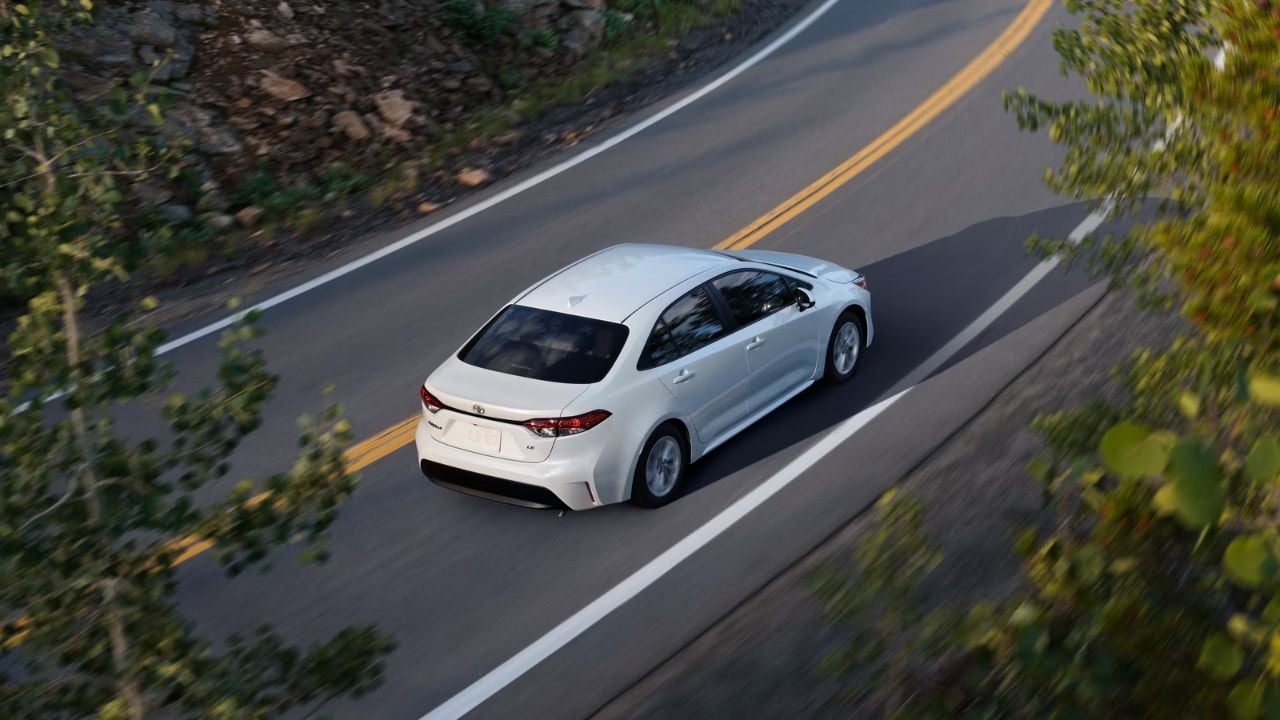
Toyota’s compact sedan in hybrid form is the affordable efficiency champion that doesn’t get enough credit. At 50 MPG combined and a starting price under $25,000, it’s one of the cheapest ways to dramatically cut your fuel costs.
The Corolla has been boring people reliably for decades, and the hybrid version continues that tradition while barely using any gas. It’s perfect for commuters who see their car as transportation rather than a personality statement.
Plus, with Toyota’s hybrid reliability, you’ll probably be driving this thing for 200,000 miles while everyone else is on their third car payment cycle.
Conclusion

The electric vehicle revolution might be taking a detour, but that doesn’t mean you’re stuck burning through expensive gas like it’s 2005. These hybrids and efficient vehicles prove you can save serious money without dealing with range anxiety, charging wait times, or the premium prices that come with cutting-edge technology.
They’re available now, work everywhere, and most importantly, they just work without requiring you to change your entire lifestyle. Whether you need a truck, SUV, or sedan, there’s a fuel-efficient option that’ll keep more money in your pocket for the things that actually matter.
The future might not be all-electric yet, but it’s definitely getting a whole lot cheaper to drive.