The Tesla Cybertruck arrived with the kind of fanfare usually reserved for moon landings. It was going to be indestructible, do 0–60 in under 3 seconds in its top trim, tow everything you’ve ever owned, and look like it drove off a Blade Runner set. What actually showed up was a polarizing stainless steel wedge that has already seen multiple recalls, and real-world range and towing numbers that caused more than a few raised eyebrows among buyers.
That’s not to say it’s a bad vehicle at its core, but when something gets hyped as the future of transportation and then spends its early life in service centers, the enthusiasm tends to thin out. The good news? The automotive world is full of genuinely interesting, weird, capable, and dare we say fun vehicles that quietly deliver on their promises without demanding your undying devotion to a brand’s mythology.
Whether you’re into trucks, EVs, sports cars, or something you genuinely can’t categorize, this list has something that’ll make you forget all about that angular Texan. Buckle up.
Rivian R1T

Before the Cybertruck was even delivered to its first owner, the Rivian R1T had already been winning awards and earning loyal fans among people who actually wanted to, you know, go camping.
What makes the R1T special isn’t just that it’s electric, it’s the gear tunnel running behind the cab, a lockable pass-through storage compartment that’s become one of those features you didn’t know you needed until you try living without it. In Quad Motor form, the R1T uses four motors, one at each wheel, for true four corner torque vectoring, and Rivian canceled the Tank Turn feature before production trucks reached customers.
Real owners have hauled boats, done overlanding trips, and driven through conditions that would give other trucks pause. It looks different enough to turn heads without trying to start an argument every time you pull into a parking lot.
For a truck that actually delivers a genuine outdoor adventure experience, the R1T has set a bar that’s hard to ignore.
Porsche 911 Dakar
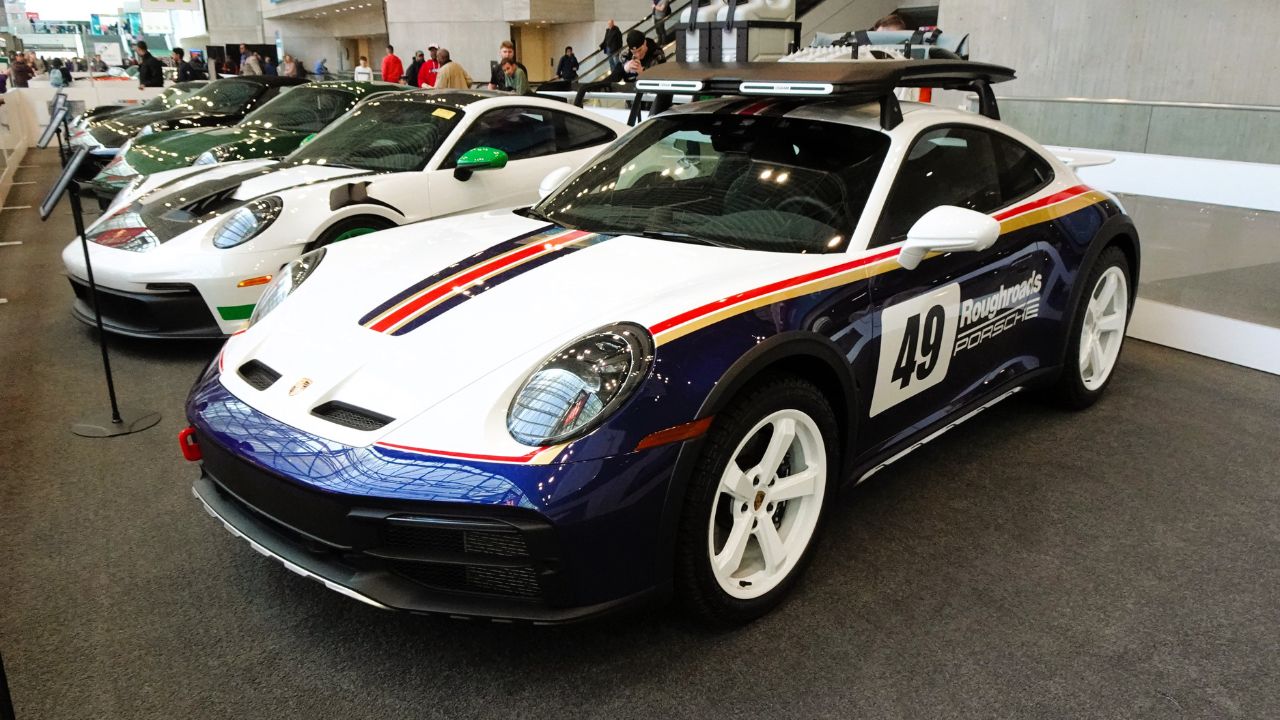
The premise sounds like a dare: take one of the most revered sports cars ever built, raise its suspension by two inches, add all-terrain tires, and send it into the dirt. Somehow, Porsche made it work beautifully.
The 911 Dakar is named after the legendary Dakar Rally, where Porsche competed in the 1980s, and it channels that spirit into a production vehicle that can genuinely handle rough terrain without sacrificing any of the sports car magic that makes a 911 a 911. It produces around 473 horsepower from its twin-turbocharged flat-six, hits 60 mph in about 3.2 seconds, and comes equipped with a roof rack and optional rally-style liveries for the maximalists among us. It’s the kind of car that makes you wonder why nobody did this sooner, and then remember that it takes the confidence of Porsche to pull it off without it looking ridiculous.
If your idea of a great Saturday involves carving canyon roads in the morning and taking a forest road you spotted on a map in the afternoon, this might just be your vehicle.
Toyota GR86

In an era of turbochargers, hybrids, and horsepower wars, the Toyota GR86 arrives with a naturally aspirated 2.4-liter flat-four engine making 228 horsepower and exactly zero apologies.
What it lacks in straight-line muscle, it makes up for in one of the most engaging, talkative, and rewarding driving experiences you can have under $35,000. This is a car that communicates, through the steering wheel, through the seat, through the pedals, in a language that modern performance cars sometimes forget to speak. It’s rear-wheel drive, it has a proper manual transmission option, and its low center of gravity means it rotates through corners with a playfulness that’s become genuinely rare. The GR86 isn’t trying to be the fastest car on the road; it’s trying to be the most fun, and on that front it succeeds convincingly.
Motorsport enthusiasts and first-time track day participants alike have embraced it as one of the modern greats, proof that raw numbers on a spec sheet don’t always tell the real story.
Land Rover Defender 90

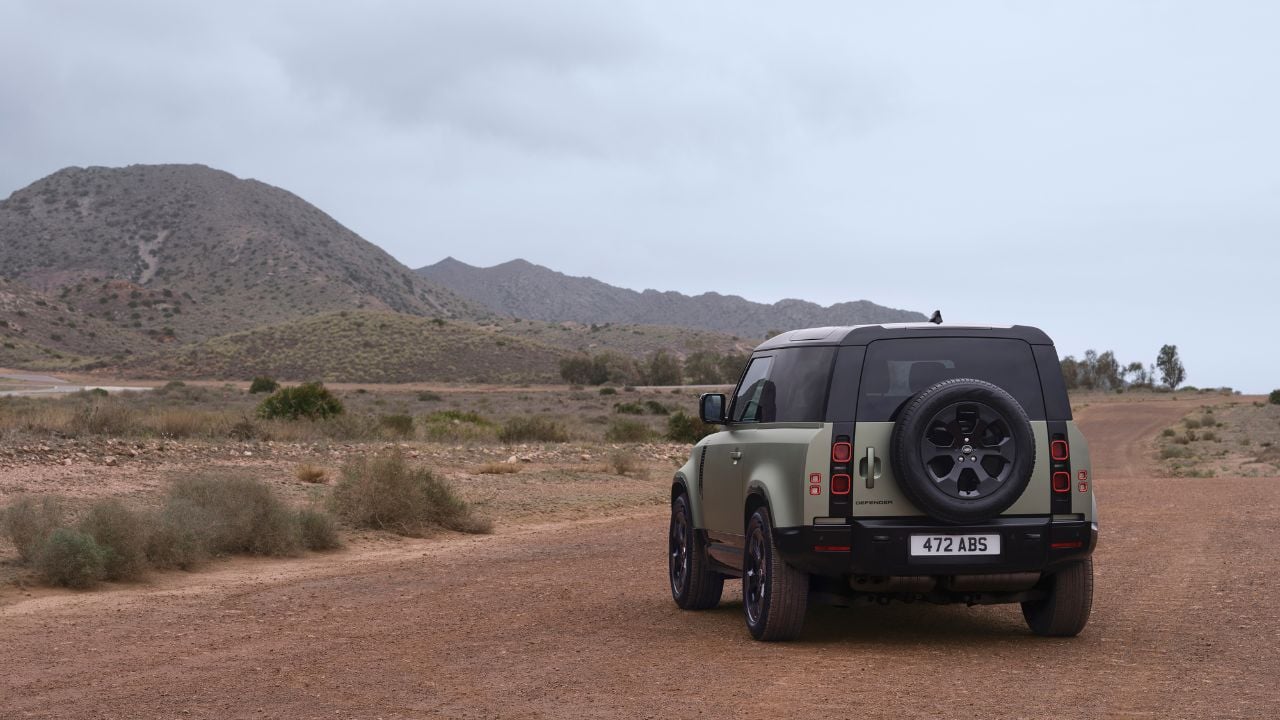
The Defender is one of those vehicles with such a strong cultural and mechanical legacy that any reboot risked being a disappointment, and yet Land Rover pulled it off.
The new Defender 90 (the short-wheelbase two-door version) is the one to talk about, because it captures that boxy, purposeful aesthetic in a way that the longer 110 can’t quite replicate. It looks like it should be parked outside a sheep station in the Scottish Highlands or a base camp in Namibia, and it genuinely performs in those environments thanks to its Terrain Response system and impressive wading depth.
The shorter wheelbase also gives it an approach angle that makes serious off-roading more accessible, and driving it around a city feels like a deliberate, slightly rebellious choice. It has its quirks, the door-mounted spare tire makes rear visibility an adventure, but those quirks are part of the character.
When a vehicle makes you excited to park it somewhere inconvenient just to say you got there, it’s doing something right.
Hyundai Ioniq 5

There’s retro-futurism, and then there’s whatever Hyundai achieved with the Ioniq 5’s exterior design.
Those pixelated LED lights, the squared-off body lines lifted straight from Hyundai’s 1970s Pony concept, the flush door handles, it’s a car that looks like someone in the design department said “what if the future looked like the past’s idea of the future?” and everyone in the room said yes. Fortunately, the substance matches the style.
The Ioniq 5 was one of the first mainstream EVs to feature 800 volt charging architecture, and Hyundai says it can charge from 10% to 80% in about 18 minutes on a 350 kW DC fast charger. The interior is notably spacious thanks to a flat floor, and the sliding center console is the kind of clever detail that makes you smile every time you use it. It won World Car of the Year at the 2022 World Car Awards, and the acclaim wasn’t just about the looks.
If you want an electric vehicle that makes a genuine design statement while actually working well as daily transportation, the Ioniq 5 is hard to argue with.
Ford Bronco Raptor
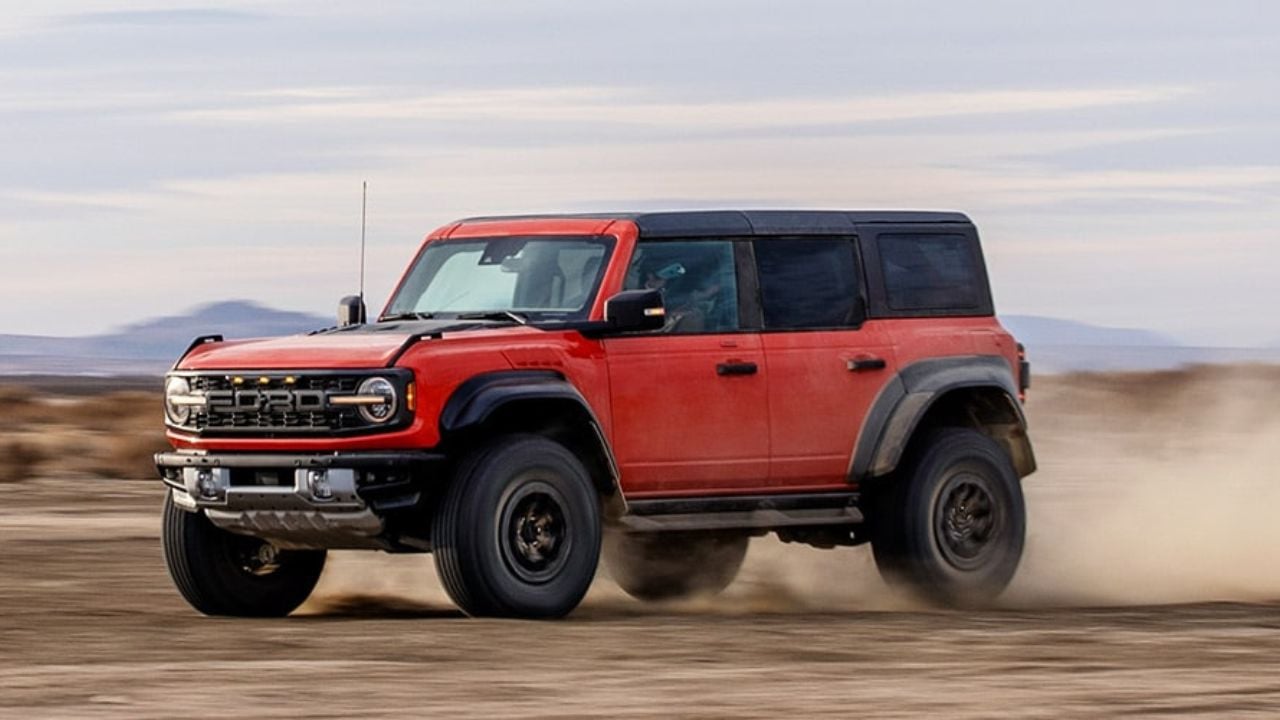
Ford already had a hit on its hands with the standard Bronco’s return, but then someone asked the obvious question: what if we made it faster off-road?
Enter the Bronco Raptor, which takes the already capable Bronco formula and gives it a 418 horsepower twin turbo V6, 13.1 inches of ground clearance, 13.0 inches of front wheel travel and 14.0 inches of rear wheel travel, and 37 inch tires from the factory. It’s wide, noticeably so, and it approaches graded desert terrain the way a golden retriever approaches a muddy creek.
The Raptor treatment means this thing is genuinely engineered to go faster over rough ground, not just look like it could. It has eight off-road drive modes, including one called “Baja” mode that lets the stability control relax just enough to have some sideways fun on loose surfaces. Around town it’s a big, attention-grabbing truck, but take it somewhere it was designed to go and suddenly all that width and suspension travel makes perfect sense.
This is the off-road truck for people who take off-roading as seriously as some people take lap times.
Mazda MX-5 Miata RF

Every few years, someone rediscovers the Miata and writes a passionate piece about why it’s the perfect sports car, and every few years, they’re right.
The RF (Retractable Fastback) takes the Miata formula and adds a hardtop that folds away with a satisfying mechanical ballet, leaving a targa-style open-air experience and a roofline that’s genuinely prettier than the standard soft-top. In RF form it weighs about 2,515 pounds, still light by modern standards, and that lightness is the whole point.
The 181-horsepower naturally aspirated engine doesn’t sound like much on paper, but when the car weighs almost nothing and the six-speed manual is clicking into gears with surgical precision, the experience adds up to something genuinely special. The Miata has been in production since 1989 for a reason, it’s not chasing trends, it’s setting a standard for driver involvement that most cars in any price bracket can’t match.
Sometimes the answer to complicated is simple, and the MX-5 RF makes that case effortlessly.
Subaru Outback Wilderness

The Outback has always occupied an interesting middle ground, more car than SUV, more capable than most people give it credit for, and driven by a demographic that tends to have strong opinions about coffee and regional hiking trails.
The Wilderness edition takes that formula and genuinely toughens it up rather than just slapping on a badge and calling it done. Subaru raised the ground clearance to 9.5 inches, added more aggressive all terrain tires, tuned the suspension for off road use, and used revised transmission gearing and a shorter final drive ratio for improved low speed climbing.
It can cross shallow streams, navigate forest roads, and haul camping gear for a family of four without requiring you to also own a truck for daily use. The Wilderness badge on Outbacks and Foresters represents a genuine engineering effort, owners report taking them places that genuinely surprise other trail users.
It’s a wagon that goes off-roading, which sounds like a contradiction until you actually try one.
Kia EV6 GT
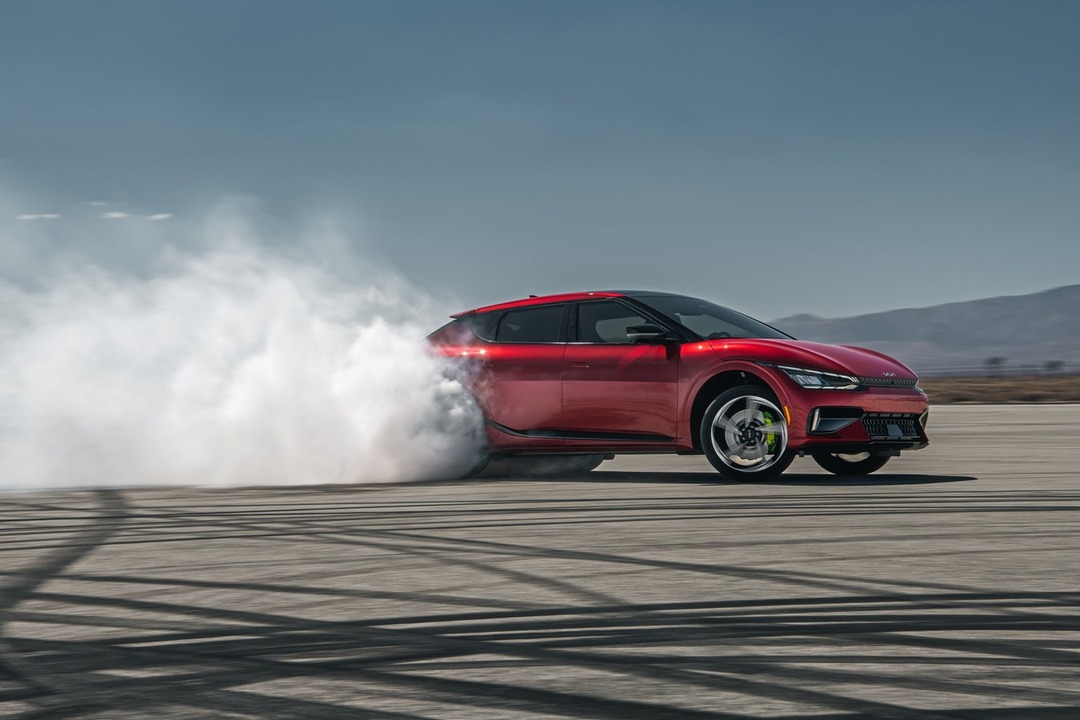
The EV6 GT is the vehicle that makes you check the spec sheet twice.
A dual-motor Kia producing 576 horsepower, hitting 60 mph in 3.4 seconds, with a drag-racing-style launch control system and a drift mode? From Kia? The same company that spent years trying to overcome a reliability stigma has quietly built one of the most exhilarating performance EVs on the market.
The exterior design is aggressive and athletic in a way that doesn’t feel forced, and the interior is well-sorted with enough technology to satisfy enthusiasts without overwhelming the experience. Range takes a hit in GT trim compared to the standard EV6, that’s the reality of having 576 horsepower available at all times, but as a second vehicle or for a driver who genuinely wants electric performance without paying supercar prices, the EV6 GT is a compelling case for taking Kia’s ambitions seriously.
Every time someone dismisses it on brand name alone, they’re leaving one of the better performance bargains on the table.
Mercedes-Benz G-Class

The G-Wagen has been in continuous production since 1979, which means it was designed before most of the engineers working on cars today were born. And yet here it is, still selling, still commanding a premium, and still making an unmistakable impression wherever it goes.
The boxy, upright shape was never aerodynamic and was never trying to be, it was designed to go up mountains and through rivers, and underneath that luxury interior that’s been layered on over the decades, it still does exactly that. Three locking differentials, a feature most off-road trucks only offer one or two of, give the G-Class a mechanical capability that its competitors, regardless of their modern electronics, often can’t match on serious terrain. It’s heavy, thirsty, and requires a certain level of confidence to parallel park. But it’s also one of those vehicles that has achieved genuine cultural status through longevity and capability rather than marketing.
When something survives decades without fundamental redesign, the market is telling you something.
Alfa Romeo Stelvio Quadrifoglio

Italian car brands have a reputation for building beautiful, occasionally temperamental vehicles that ask for patience in exchange for passion, and the Stelvio Quadrifoglio fits that archetype while also just being a very, very good sports SUV.
The 505 horsepower twin turbocharged 2.9 liter V6 is an Alfa Romeo designed engine used in the Giulia and Stelvio Quadrifoglio, and in the context of a midsize SUV it delivers a driving experience that’s genuinely surprising. In 2017 Alfa Romeo said the Stelvio Quadrifoglio lapped the Nürburgring Nordschleife in 7:51.7 to claim a production SUV record at the time.
The chassis communicates in that Italian way, involved, slightly dramatic, never numb, and the exhaust note is the kind of sound that reminds you why internal combustion engines developed such devoted fans. Modern reliability improvements have addressed earlier concerns, and the current generation is a more sorted ownership proposition.
For someone who wants their family hauler to feel like a driver’s car rather than an appliance, the Stelvio QF is the most entertaining argument available.
Ineos Grenadier

The Ineos Grenadier exists because its founder, Sir Jim Ratcliffe, was reportedly frustrated that nobody was making a proper, no-nonsense off-road utility vehicle in the tradition of the original Land Rover Defender. So he built one himself.
The Grenadier is purpose-designed for people who genuinely need their vehicle to work in difficult conditions, farmers, expedition drivers, search and rescue operators, rather than people who want their school-run vehicle to look capable. It’s built around a ladder frame chassis with live axles at both ends, and globally it uses BMW inline six engines in gasoline and diesel forms, though the U.S. market is gasoline only, and it has been engineered with serviceability in mind so it can be maintained in remote places without specialist equipment. It doesn’t try to be a luxury vehicle or a performance vehicle; it tries to be a reliable, capable work tool, and by most accounts from early owners, that’s exactly what it is.
In a market where everything is trying to be everything, there’s something genuinely refreshing about a vehicle that knows exactly what it is and does that one thing exceptionally well.
Conclusion

The automotive world has always rewarded the vehicles that deliver on their promises over the ones that arrive with the loudest proclamations. Whether it’s Rivian quietly nailing the adventure truck brief, Mazda proving that lightness is a performance spec, or Ineos building something purely because it needed to exist, there’s a throughline here: the best vehicles are honest about what they are. That honesty tends to produce owners who genuinely love their cars rather than defend them on the internet.
The twelve vehicles on this list represent twelve different ideas about what a vehicle can be, fast, rugged, efficient, emotional, practical, and all of them are doing their respective jobs with a conviction that’s hard to fake. Shopping for a new vehicle is one of the more significant purchases most people make, and the good news is that the options for something distinctive and capable have rarely been better.
The next great driving experience might be a naturally aspirated sports car for under $35,000, or a boxy British utility vehicle running a BMW engine, or a Korean performance EV that hits 60 mph faster than most sports cars. The range is there, you just have to look past the hype.