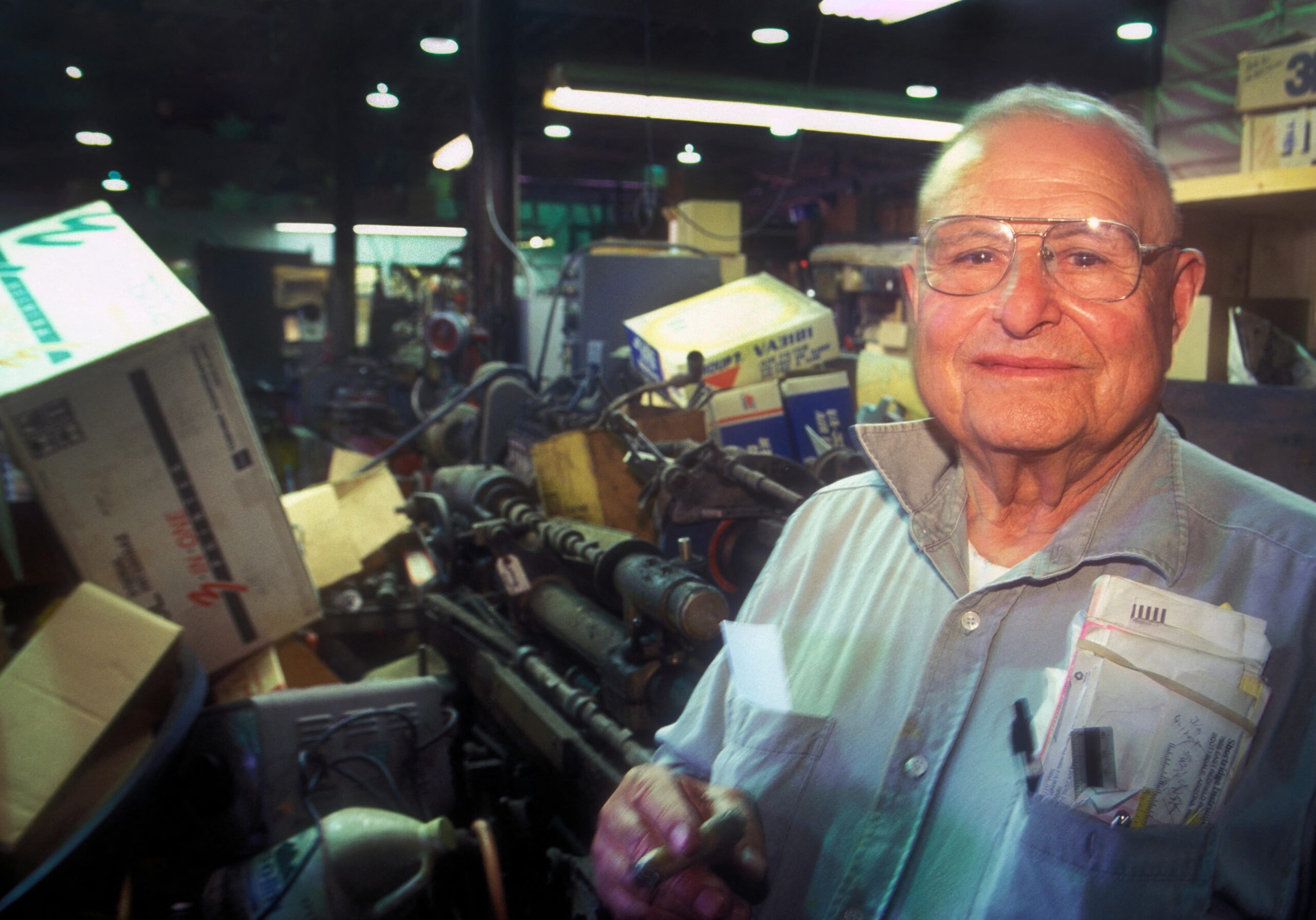
Ed Iskenderian was born on July 10, 1921, in Los Angeles, California, the son of Armenian immigrants who had survived the upheaval and violence of the Ottoman Empire. His parents arrived in America with little more than determination and the belief that honest work could build a better future. They instilled in their son a deep respect for craftsmanship, perseverance, and the idea that a person’s reputation is forged through the quality of their labor.
Growing up in a modest household during the Great Depression, Ed learned early that resourcefulness was not a luxury but a necessity. He spent his childhood taking apart bicycles, tools, and household items, driven by an instinctive curiosity about how things worked. Long before he understood engineering principles, he understood mechanical logic, and that intuition would guide him for the rest of his life.
His early milestones were small but telling. He built makeshift machines from scrap metal, repaired neighbors’ equipment, and developed a fascination with speed that seemed to grow with him. Southern California in the 1920s and 1930s was a unique environment, a place where car culture was beginning to take shape in the dry lake beds and open roads.
Young Ed absorbed it all. By the time he entered school, he had already earned a reputation as the kid who could fix anything. Shop class became his sanctuary, and the garage became his workshop. He was drawn to the early hot‑rodders who were experimenting with speed in ways that had never been done before. Their ingenuity, their willingness to try the untested, and their belief that performance could always be improved left a lasting impression on him.
School Years, World War II, and the Formation of a Mechanic
After high school, Ed’s life took a turn familiar to many young men of his generation. He served during World War II, gaining discipline, technical exposure, and a sharpened sense of purpose. When he returned home, he found a country eager to build, innovate, and race. The postwar boom in hot rodding was the perfect environment for someone with his mechanical instincts and entrepreneurial spirit.
He bought a Model T and began modifying it, quickly discovering that the camshaft was the true key to unlocking horsepower. The problem was that the camshafts available at the time were inconsistent, limited, and often poorly engineered. Ed believed he could do better, and that belief became the foundation of his life’s work.
The Birth of Isky Racing Cams
He built his first cam‑grinding machine from war‑surplus equipment, guided by intuition, determination, and a willingness to experiment. In 1946, he founded Isky Racing Cams, a company that would become one of the most influential names in motorsports. His early innovations, including the famous “5‑Cycle” cam and the introduction of hard‑facing techniques, transformed the industry.
Racers who had struggled with durability suddenly found themselves able to push harder, rev higher, and win more consistently. Ed’s reputation grew not because he sought attention, but because his products delivered results. Word spread quickly through the racing community, and soon Isky Racing Cams became synonymous with performance, reliability, and innovation.
The Golden Era of Hot Rodding and Ed’s Rise To Legend
Throughout the 1950s and 1960s, Ed’s influence expanded across every major form of American motorsport. His camshafts powered dragsters, Indy cars, Bonneville land‑speed machines, and countless hot rods built in garages across the country. He was more than a manufacturer; he was a collaborator, a mentor, and a visionary who understood that racing was both science and art.
His shop became a gathering place for legends, innovators, and dreamers. He embraced new technologies, championed the use of computers in cam design long before it was common, and never stopped experimenting. His advertisements, often humorous and always memorable, helped define the culture of hot rodding itself. They reflected his personality: bold, clever, and unafraid to stand out.
Leadership, Innovation, and a Lifetime of Contribution
As the decades passed, Ed continued to guide Isky Racing Cams through industry shifts, economic cycles, and technological revolutions. He navigated the rise of professional drag racing, the evolution of NASCAR, and the increasing sophistication of engine design. Through it all, he remained committed to the principles that had defined his company from the beginning: innovation, integrity, and the relentless pursuit of performance.
His leadership style was humble and hands‑on. He believed that a company’s reputation was its most valuable asset, and he protected that reputation with the same care he applied to every camshaft that left his shop.
Even as he grew older, Ed remained deeply involved in the industry. He attended events, answered technical questions, and shared stories from the early days of hot rodding. To generations of racers and builders, he was “Isky,” the Camfather, the man whose fingerprints were on thousands of engines and countless victories. His presence at trade shows and racing events was always met with admiration and gratitude. He represented a living link to the origins of American performance culture, and he carried that history with humility and pride.
Retirement Years and Continued Influence
Eventually, Ed stepped back from daily operations, entering a retirement that was anything but quiet. He dedicated his later years to preserving the history of hot rodding, supporting museums, participating in interviews, and remaining a beloved figure at car shows and industry gatherings. He continued to advise younger builders, offering insights drawn from decades of experience.
His curiosity never faded, and his enthusiasm for innovation remained intact. Retirement did not slow him; it simply gave him more time to share his knowledge and reflect on the extraordinary journey that had defined his life.
His Passing and the End of an Era
On February 4, 2026, Ed Iskenderian passed away, closing a chapter in automotive history that will never be repeated. His death marked the end of a life that shaped an entire industry, but his legacy lives on in every camshaft that bears his name and every engine that has ever roared to life because of his innovations.
The hot‑rodding world mourned not just a pioneer, but a patriarch whose contributions became part of American mechanical identity. His passing was felt across the racing community, from grassroots builders to professional teams, all of whom recognized the profound impact he had on their craft.
The Future of Isky Racing Cams
The future of Isky Racing Cams now rests with the next generation, guided by the standards Ed established and the culture he built. The company stands on a foundation of innovation, integrity, and relentless pursuit of performance.
His successors inherit not just a brand, but a responsibility: to honor the Camfather’s legacy by continuing to push boundaries, support racers, and uphold the craftsmanship that made Isky Racing Cams a global icon. The company remains strong, respected, and poised to carry his vision forward, ensuring that the principles he championed will continue to shape the industry for decades to come.
A Farewell to the Camfather
As the story of Ed Iskenderian’s life comes to its close, it is impossible not to pause and reflect on the magnitude of his influence. Few individuals leave a mark so deep that an entire industry can trace its lineage back to their hands, their ideas, and their unshakable belief in what is possible. Ed was one of those rare figures. He did not simply participate in the rise of American hot rodding; he helped define it. He gave shape to its language, its culture, and its technical foundation. His work elevated the camshaft from a simple mechanical component to a symbol of ingenuity, precision, and the relentless pursuit of speed.
For generations of racers, builders, machinists, and dreamers, Ed was more than a name on a box or a signature on a catalog. He was a mentor from afar, a pioneer whose innovations made their ambitions achievable. His camshafts powered victories, broke records, and turned ordinary engines into extraordinary machines. His humor, his humility, and his unmistakable presence at events made him a beloved figure long after he had earned every accolade the industry could offer. He carried the history of hot rodding with him and shared it freely, ensuring that the next generation understood not only how things were built but why they mattered.
The next generation of hot rodders will forever look to Ed Iskenderian as both a leader and a pioneer, a man whose imagination and determination opened the doors they now walk through. Every young builder who picks up a wrench, every racer who dreams of going faster, and every machinist who strives for precision is participating in a world that Ed helped create. The culture of hot rodding that thrives today exists because he laid its foundation with his own hands, his own ideas, and his own relentless pursuit of improvement.
The innovations he introduced, the standards he set, and the spirit he embodied continue to guide those who follow in his footsteps. For countless enthusiasts, the joy of building, tuning, and racing is possible because Ed showed the world what hot rodding could become. His influence is not confined to history; it lives on in every new generation that discovers the thrill of speed and the satisfaction of craftsmanship.
The loss of Ed Iskenderian is felt across every corner of the automotive world. It is felt in the shops where engines are assembled late into the night, in the pits where racers chase the next tenth of a second, and in the garages where young builders take their first steps into a craft he helped shape. His legacy is not confined to the past; it lives in every innovation inspired by his work, every engine that roars to life with an Isky cam, and every builder who believes that excellence is worth pursuing no matter the obstacles.
As we say goodbye, we honor not only the man but the spirit he embodied. Ed showed us that greatness is built through dedication, curiosity, and the courage to try what has never been done before. He leaves behind a legacy that will endure as long as engines turn and people continue to chase speed with passion and purpose. May he rest in eternal peace, knowing that his contributions will continue to guide and inspire the industry he helped create. His story will be told for generations, and his name will forever stand among the giants of American motorsports.
Thank you, Ed. You are forever in our hearts. Godspeed.