The idea of the supercar didn’t appear fully formed. It evolved.
While the term itself dates back to the 1920s, it wasn’t until the 1950s that road-going cars with truly extraordinary performance reached the public. Machines like the Mercedes-Benz 300SL and Ferrari’s 250-series sports racers showed that exotic engineering, speed, and visual drama didn’t have to be limited to the racetrack.
By the mid-1960s, the formula began to take shape. Extreme performance, striking design, and exclusivity started to converge into a recognizable category. These were no longer just fast cars—they were statements of intent, built to push boundaries rather than satisfy mass-market demands.
The 1970s nearly brought that progress to a halt. Emissions regulations and the fuel crisis forced manufacturers to rethink what performance cars could be. Instead of disappearing, the supercar adapted. Technologies like turbocharging moved from racing into road cars, preserving speed and drama in a more restricted world.
The cars featured here are the ones that established the framework. They defined the layouts, performance expectations, design language, and sense of occasion we still associate with supercars today—long before the term became a marketing label or a social media obsession.
Defining the DNA of “Super”
Few automotive topics spark more debate than what actually qualifies as a supercar.
Some enthusiasts draw hard lines. If a car is an extreme version of a more common model, they argue it doesn’t count. That logic often excludes cars like the Corvette Z06 or ZR1, and sometimes even the Porsche 911 Turbo. Others view the 911 Turbo as the everyday supercar—a car that delivers extreme performance without giving up usability.
We fall into the latter camp and consider both the 911 Turbo and ZR1 legitimate supercars. We also tend to stretch definitions to be more inclusive and to celebrate as many cool cars as we can. This isn’t an exhaustive list of every vehicle that helped shape the modern supercar blueprint, but a cross-section of standout machines that each played a role in developing the recipe we recognize today.
Lamborghini Miura (1966-1973)

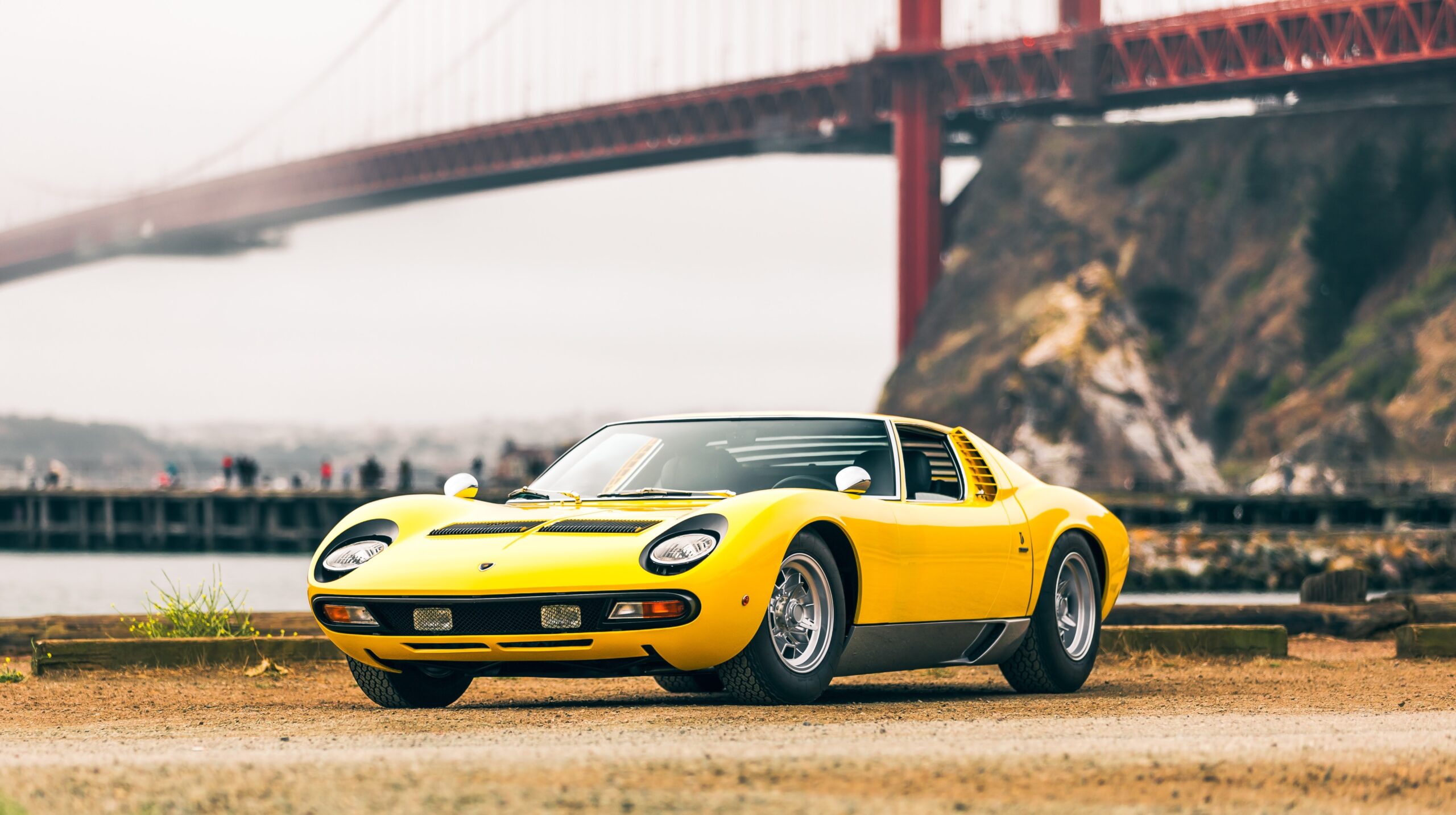
The Miura announced Lamborghini’s arrival on the supercar scene, then rewrote the script with the subtlety of a volcanic eruption. When Ferruccio Lamborghini’s young engineers Gian Paolo Dallara, Paolo Stanzani, and Bob Wallace unveiled their mid-engine masterpiece, they weren’t just creating a car; they were establishing the architectural DNA that every supercar would follow.
The transverse-mounted V12 behind the driver’s seat was revolutionary, centralizing mass with a transverse mid-mounted V12 and a very low center of gravity and a center of gravity so low it seemed to defy physics. Lamborghini quotes the Miura at up to 280 km/h top speed at launch. Early P400 cars are commonly listed around 350 PS, with published weights varying by version and measurement (dry vs curb) at a time when most sports cars topped out around 130.
But raw numbers only tell half the Miura’s story. Marcello Gandini’s design for Bertone created automotive sculpture so stunning that it still looks futuristic today, more than 50 years later. Those iconic eyelash headlights, the dramatic side intakes, and the flowing lines that seemed to suggest motion even when parked—this was automotive art that happened to have an engine.
The Miura proved that a supercar wasn’t just about being fast; it was about being an object of desire so intense that rational thought became irrelevant. It established the template: mid-engine layout for ultimate performance, exotic styling that turned heads at 100 yards, and a price tag that made it attainable only to those who viewed money as no object.
Ferrari 365 GTB/4 “Daytona” (1968-1973)
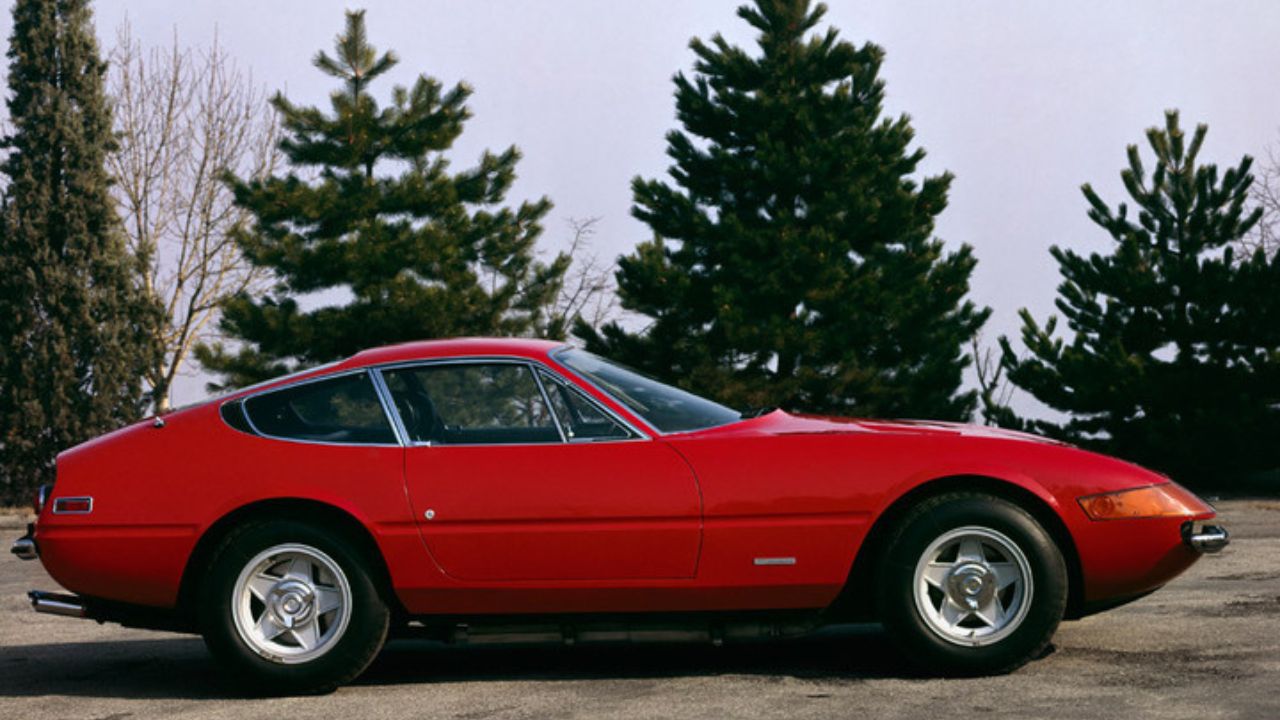
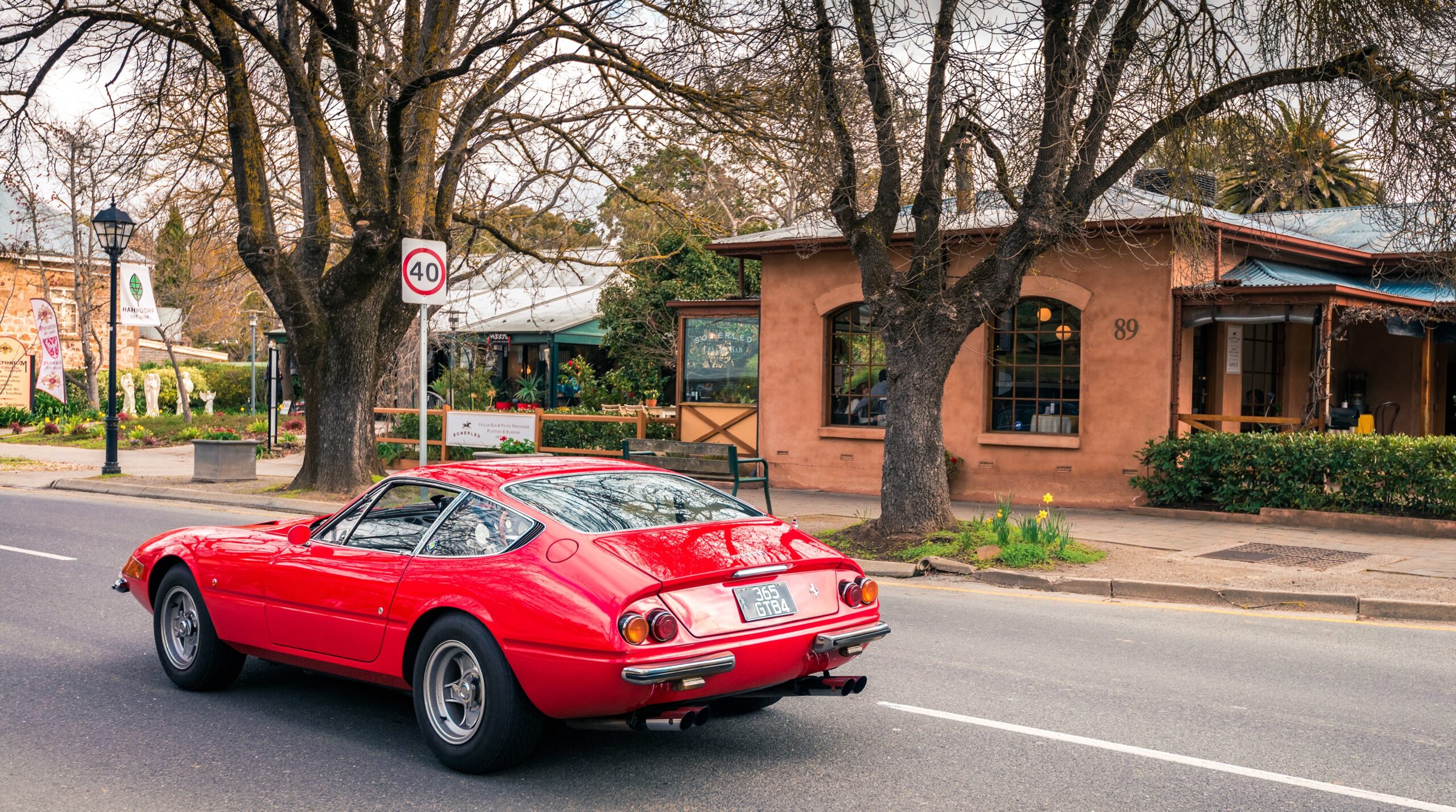
Ferrari’s response to the Miura came in the form of the 365 GTB/4, quickly became known by the unofficial media nickname ‘Daytona,’ referring to Ferrari’s 1-2-3 finish at the 1967 24 Hours of Daytona after Ferrari’s 1-2-3 finish at the 1967 24 Hours of Daytona. While Lamborghini had gone mid-engine, Ferrari doubled down on the front-engine grand touring formula and created something approaching automotive perfection. According to Car and Driver, the 4.4-liter Colombo V12 produced 352 horsepower. It could propel the Daytona to 174 mph, and it was widely described as among the fastest (often cited as the fastest) production cars at its introduction.
But speed was just one weapon in the Daytona’s arsenal. This was a car that could cruise comfortably at 100 mph all day, then transform into a track weapon when the road opened up.
Pininfarina’s design struck the perfect balance between aggression and elegance, with that iconic long hood and abbreviated deck proportion that screamed “serious performance machine.” The Daytona represented the evolution of the traditional grand tourer into something more focused, more intense, more uncompromisingly dedicated to the driving experience. It proved that supercars didn’t need to abandon comfort entirely: they could be civilized when required but savage when unleashed.
The Daytona’s influence echoes through every front-engine Ferrari that followed, establishing the brand’s reputation for building cars that were equally at home on the Autobahn or at Le Mans.
Porsche 911 Turbo (1975-1989)

The original 911 Turbo didn’t just add forced induction to Porsche’s sports car: it created automotive legend and probably shortened more lifespans than any other supercar in history. When Porsche decided to adapt their 917 Can-Am racing technology for the street, it created a machine that demanded respect, skill, and perhaps a small prayer before every drive.
The single turbocharger bolted to the 3.0-liter flat-six was rated at 260 PS (about 256 hp) in period European specs (ratings varied by market/year), but more importantly, it created a powerband so violent and sudden that it earned the nickname “widowmaker” among those brave enough to explore its limits.
What made the 930 Turbo truly special wasn’t just its straight-line performance — though 0–60 mph figures varied by test, and Porsche quotes 0–100 km/h in about 5.4 seconds for the early 3.0 Turbo was genuinely shocking in 1975 — but the way it redefined what a supercar could be. This wasn’t an exotic Italian sculpture; it was a Porsche 911 that had been fed performance steroids and attitude pills. The whale tail spoiler, flared fenders, and distinctive turbo script announced its intentions from blocks away.
The Turbo proved that supercars could be daily drivers (for the very brave), that German engineering could create drama to match Italian passion, and that sometimes the most terrifying cars were also the most addictive. It established the template for the modern performance car: take a proven platform, add ridiculous amounts of power, and let the driver sort out the consequences.
De Tomaso Pantera (1971-1992)
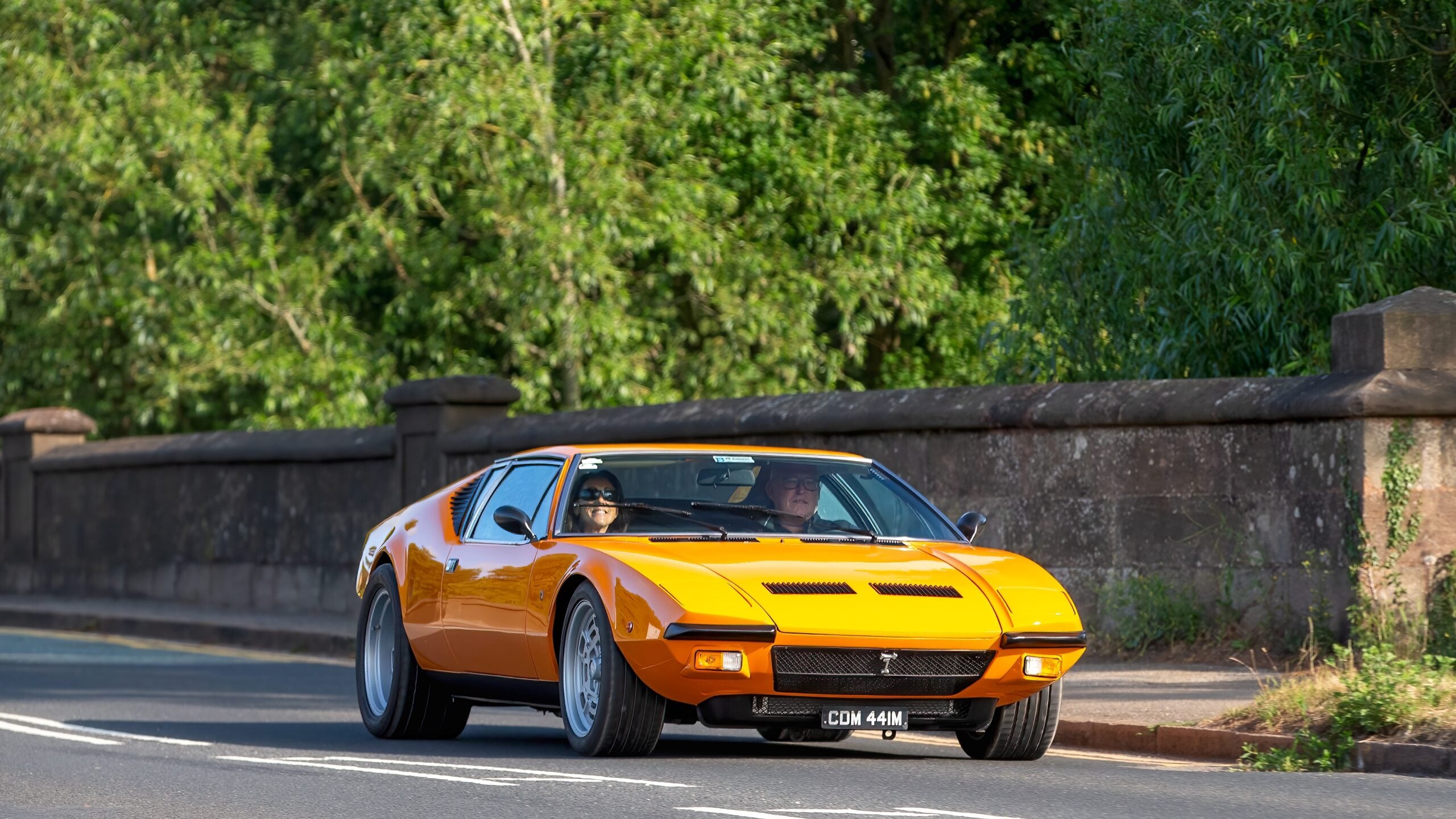
Styled by Ghia and powered by Ford’s 351 Cleveland V8, the Pantera delivered supercar looks with muscle-car durability. Early examples are often quoted at around 330–335 PS, offering serious straight-line performance wrapped in a dramatic mid-engine wedge that looked every bit as exotic as its Italian rivals.
What truly set the Pantera apart was accessibility. Unlike many European exotics of the era, the Pantera’s American V8 made ownership less intimidating, with parts availability and service requirements that were far more approachable. It delivered the soundtrack, performance, and presence of a supercar without demanding the same level of mechanical devotion.
Ford ended U.S. imports of the Pantera in 1975 as emissions and safety regulations tightened, making continued federalization increasingly difficult. Production continued for non-U.S. markets for years afterward, and the Pantera’s reputation has only grown with time.
The Pantera proved that supercars didn’t have to be fragile or precious. They could be loud, fast, usable, and still stop traffic everywhere they went—helping broaden the idea of what a supercar could be.
Maserati Bora (1971-1978)

The Bora represented Maserati’s entry into the mid-engine supercar wars, and like everything the Trident brand touched, it oozed sophistication and mechanical refinement that its competitors couldn’t match. When Giorgetto Giugiaro penned the Bora’s lines for ItalDesign, he created automotive elegance that managed to be both purposeful and beautiful—no mean feat in an era when most supercars looked like they’d been designed by someone with a ruler and a lot of cocaine.
The 4.7-liter V8, developed from Maserati’s racing engines, produced 310 horsepower and a sound that was pure mechanical poetry, a deep, cultured rumble that spoke of engineering precision and Italian passion.
What set the Bora apart was its commitment to grand touring refinement without sacrificing supercar performance. While the Miura was raw and the Daytona was focused, the Bora was sophisticated: it featured power steering, air conditioning, and a level of interior luxury that made 150-mph cruising feel civilized rather than terrifying. The hydraulic pedal adjustment system was pure Citroën technology, adding a touch of French innovation to the Italian exotic car formula.
The Bora was a grown-up machine that is commonly quoted around ~167–174 mph depending on engine/spec and source while still feeling comfortable and supportive. With the Bora, the car community learned that Maserati could build cars that were every bit as capable as their more famous Italian rivals. It represented the mature approach to supercar design: less dramatic perhaps, but no less effective.
The Legacy Lives On

These six automotive pioneers established the philosophical foundation of what we now call the supercar. Every McLaren, Koenigsegg, and Pagani that graces today’s roads can trace its conceptual DNA back to these groundbreaking machines. They proved that cars could be more than transportation, more than status symbols, more than even high-performance tools. They could be rolling expressions of human ambition, mechanical art that happened to move at impossible speeds.
Looking back, it’s remarkable how quickly these early supercars established principles that remain unchanged today: mid-engine layouts for ultimate performance, exotic materials and construction techniques, styling that prioritizes drama over practicality, and production numbers low enough to guarantee exclusivity. Modern supercars may be faster, more sophisticated, and stuffed with electronic aids that would seem like magic to a 1960s engineer, but they’re still chasing the same fundamental goal these pioneers achieved — creating machines that exist purely to push the boundaries of what’s possible.
In an age of increasing automotive homogenization, these early supercars remind us that sometimes the most important automotive innovations come from asking not “what should we build?” but rather “what would happen if we built something absolutely mental?” The answers, as these six legends prove, are usually spectacular.