
Marcello Gandini, one of the most visionary automotive designers of the 20th century, passed away on March 13, 2024. In the year after his death, the automotive world continues to feel the impact of his work. Gandini wasn’t just a stylist; he was an innovator who transformed how we think about cars, speed, and design.
Working first under Nuccio Bertone and later as a freelancer, Gandini had a hand in some of the most iconic vehicles ever built. He defined the wedge-shaped supercar, helped democratize Italian design through affordable sports cars, and even lent his eye to mass-market vehicles that millions of people drove every day.
To honor his legacy, here are what we believe are some of his most influential and iconic car designs, each representing a different facet of his genius.
Why These Cars Made the Cut
Marcello Gandini designed far more than just the cars we’re highlighting, but these are the ones that tell the full story. From the bedroom-poster icons to the rally monsters, the misunderstood Ferraris to the everyday city cars, this list reflects the full range of his genius. Some were bestsellers. Others were low-volume oddities that still managed to shape the future.
To narrow it down, we looked at the cars that made a lasting impact on the industry, on culture, or on the millions of people who drove them. Each car here represents a milestone: a bold risk, a breakthrough in design, or a moment when Gandini redefined what a car could be. Whether they won trophies or just won hearts, these vehicles earned their spot not just through specs, but through significance.
Lamborghini Miura

When Lamborghini unveiled the first Miura, the sports car game changed forever. It was the first road-going car with a transversely mid-mounted V12 engine; some say it’s the first supercar.
It’s still one of the most beautiful cars ever made, but it’s not just its beauty that makes the Miura highly desirable; it’s also rare. Lamborghini only built 762 units from 1966 to 1973.
Lamborghini Countach

Lamborghini’s flagship Miura was followed by another iconic supercar — the Countach. It may not be as breathtakingly gorgeous as the Miura, but the Countach certainly adorned more children’s bedroom walls than its predecessor. Unfortunately, it was nicer to look at than it was to drive, and reversing was a whole chapter of its own.
Judging by how often it appeared in movies and TV shows, you’d think Lamborghini built a gazillion cars, but in reality, fewer than 2,000 were built by the time production ended.
Lamborghini Diablo

Gandini designed the original Diablo as the successor to the Countach. However, when Chrysler acquired Lamborghini, the design was softened internally before production.
Still, Gandini’s fingerprints remain in the low-slung, angular profile, especially in the earliest models. His original, more aggressive design would later emerge in the Cizeta-Moroder V16T.
Cizeta-Moroder V16T

Gandini was hired to design the Diablo following the Miura and the Countach. However, Chrysler, which owned Lamborghini at the time, wasn’t satisfied with Gandini’s design and had its own design team soften it up a bit.
Gandini wasn’t too happy about that, but his original design did come to life as another mid-engined supercar—the Cizeta-Moroder V16T. It was never a big hit, but we think it actually looks better than the early Diablos.
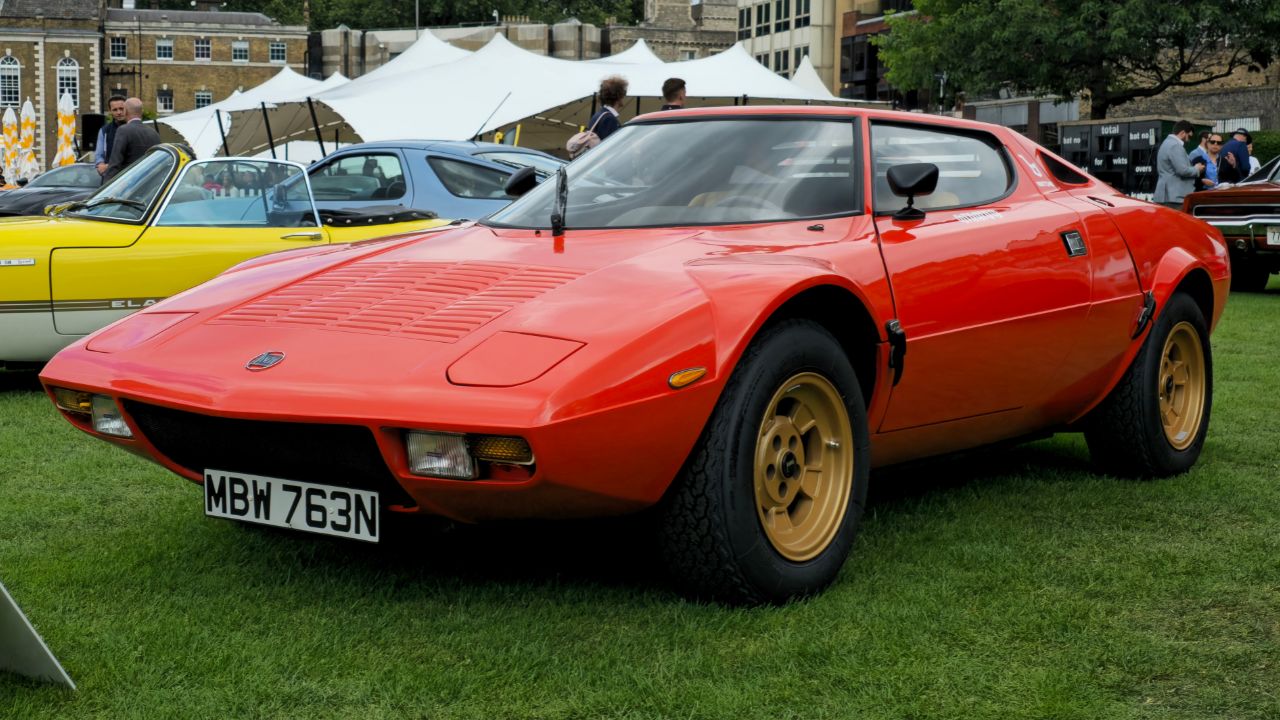
Lancia Stratos

In 1973, Lancia built the mid-engined Stratos HF to go rallying, and it went on to win the World Rally Championship in 1974, 1975, and 1976, as well as a plethora of races.
Lancia’s cars were usually designed by Pininfarina, and the Stratos was the first time they hired Bertone and Gandini. The car evolved from an earlier Gandini concept, known as the Stratos Zero, and it had a 2.4-liter Ferrari V6 mounted behind the driver.
Lamborghini Marzal

Granted, the Lamborghini Marzal never made it into production, but it still belongs on this list, as this concept car has stood the test of time and looks as good today as it did in 1968.
Later, the Marzal would inspire the Lambo Espada, as you can see from its silhouette. The Espada didn’t inherit the Marzal’s straight-six engine, though, which was really half a Miura V12 unit.
Alfa Romeo Montreal

Gandini also worked with Alfa Romeo a few times, although he was primarily involved with their concept cars. One Alfa model that did make it into production was the stunning Montreal.
Alfa Romeo unveiled the Montreal coupé as a concept at the ’67 Expo in Montreal, and the production version was first shown at the 1970 Geneva Motor Show. It featured a 2.6-liter V8 engine and rear-wheel drive, and by 1977, Alfa Romeo had produced over 3,900 Montreals.
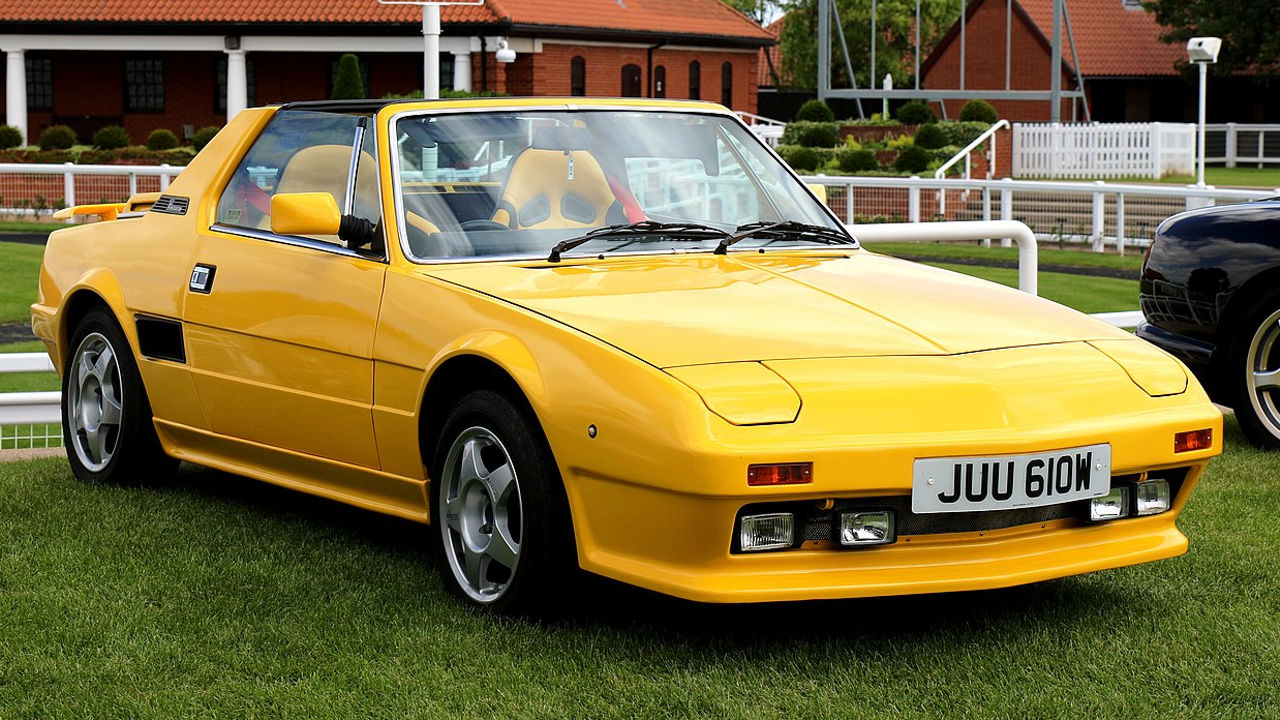
Fiat X1/9

While its build quality is questionable, Gandini really hit a home run when he penned the Fiat X1/9. This little sports car from 1972 is still considered one of Fiat’s greatest hits.
Powered by a tiny 1.3-liter engine, it was never about going fast in a straight line. Even later models with the 1.5-liter unit only offered 84 horsepower, but thanks to its low weight, the X1/9 was a little rocket ship in the corners.
Audi 50

Marcello Gandini may be best known for his work with Italian brands, but he also collaborated with foreign carmakers. The Audi 50 is one successful example of such a collaboration.
The entry-level Audi was the exact opposite of the Italian sports cars Gandini is famous for. Still, it’s also among the best-selling Gandini designs, as it was also sold as the Mk1 VW Polo.
Ferrari 308 GT4
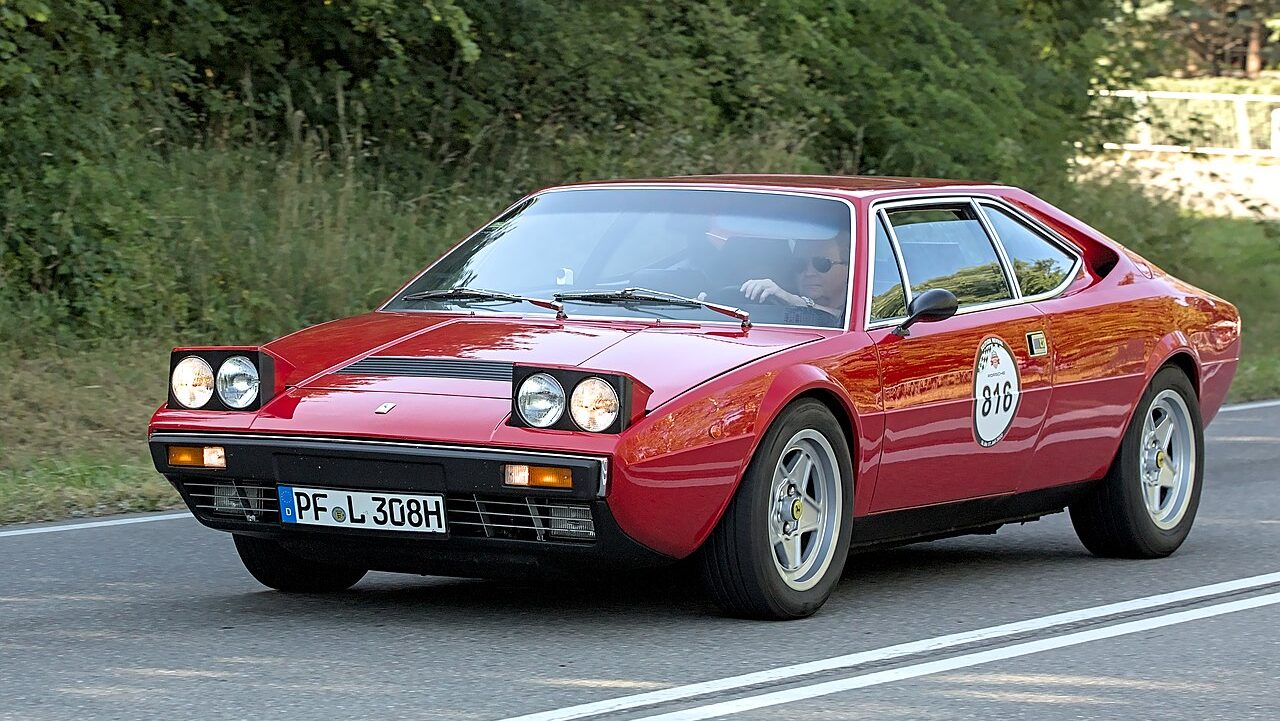
Throughout its history, Ferrari’s cars were designed mainly by Pininfarina, but Bertone and Gandini eventually got a foot in the door with Maranello’s finest, too.
Gandini didn’t just design any Ferrari, either; he was behind the first mid-engined 2+2 V8 model, the Dino GT4. This wedge-shaped icon was in production from 1973 to the end of 1980, a solid run for a sports car. At first, Ferrari purists didn’t like the 308’s design, but it has aged well and is now very desirable.
Lamborghini Espada

When it first emerged, the Espada was a groundbreaking GT car. Drawing inspiration from the Marzal, it looks almost like a spaceship. Gandini’s design also meant four adults could fit inside the Espada.
Introduced in 1968, the remarkable grand tourer remained in production for an entire decade. During that period, Lamborghini built 1,226 Espadas, all powered by the 3.9-liter V12 engine.
Maserati Khamsin

The Maserati Khamsin had the honor of being the first Maserati designed by Bertone/Gandini, and it was unveiled at the Turin Auto Show in 1972.
It’s another wedge-shaped 2+2 GT car featuring elegant styling, a transparent glass Kamm tail, and asymmetric hood louvers. Over the next ten years, Maserati sold 435 Khamsins.
Maserati Shamal

Maserati was practically broke by the late 1980s, and in a desperate attempt to remain relevant, they hired Gandini to help restyle the old Biturbo coupe.
Gandini worked alongside Maserati’s own design team to create the Shamal. The result was a gorgeous Italian car with very questionable build quality.
Lamborghini Urraco
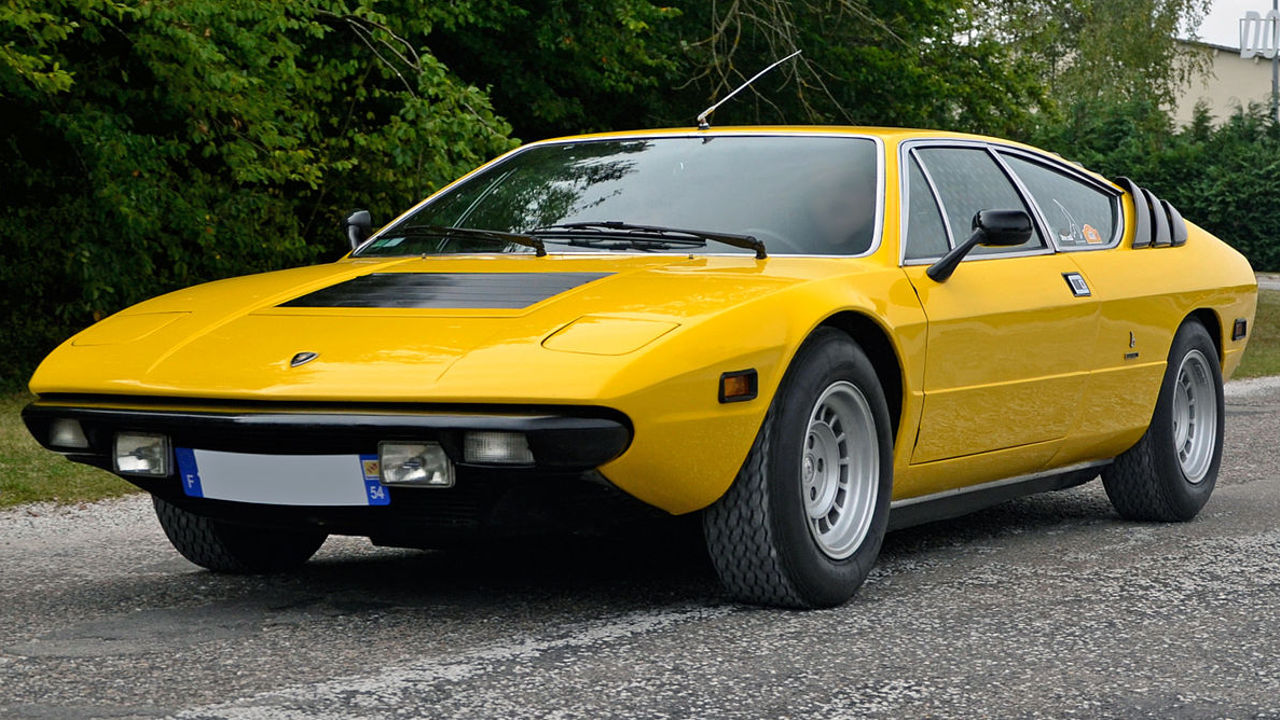
One year before Lamborghini introduced the Countach, the Italian supercar manufacturer unveiled another Gandini-designed sports car, the Urraco.
Unlike the Miura and Countach, the Urraco was a 2+2 GT car. It was a more affordable model meant to compete with the Ferrari Dino, so it didn’t have the flagship model’s V12 engine either. Instead, the Urraco was available with V8 engines, ranging from a 2.0-liter to a 2.5-liter unit, and a 3.0-liter was found in the top-spec version.
Citroën BX

While best known for exotic Italian cars, Gandini also designed the Citroën BX—a front-wheel-drive hatchback with hydropneumatic suspension and bold angular styling.
Over 2.3 million units were sold, making it one of his most commercially successful designs. The BX demonstrated Gandini’s versatility and ability to bring innovation to the everyday driver.
Innocenti Mini and Other Small Cars

Gandini also contributed to designs like the Innocenti Mini and early iterations of the Volkswagen Polo, offering clean lines and practicality to city car buyers.
While these cars rarely make headline retrospectives, they serve as a reminder that Gandini’s brilliance wasn’t confined to supercars: he also knew how to make small, sensible cars beautiful and efficient.
Reflecting on Gandini’s Legacy
Marcello Gandini’s work continues to shape the way we think about cars. From boundary-pushing concepts to timeless production icons, his designs embody creativity, courage, and clarity of vision. Whether he was sketching a Lamborghini or a commuter hatchback, Gandini approached every car with the same question: How can this be better?
His influence lives on not only in the cars themselves but in the countless designers who followed in his footsteps. The automotive world may have lost a master, but his work ensures he’ll never be forgotten.