A Thursday evening traffic stop in Denver turned fatal after an e-bike rider chose to escape onto one of the busiest corridors in the country, only to be struck by a passing motorist and killed. What began as an attempt to evade a routine police stop for hazardous riding behavior ended as a sobering reminder that split-second decisions on the road carry weight that no amount of pedal-assist can outrun.
Denver Police confirmed the incident and opened an internal review, as is standard practice when a pursuit of any kind ends in death.
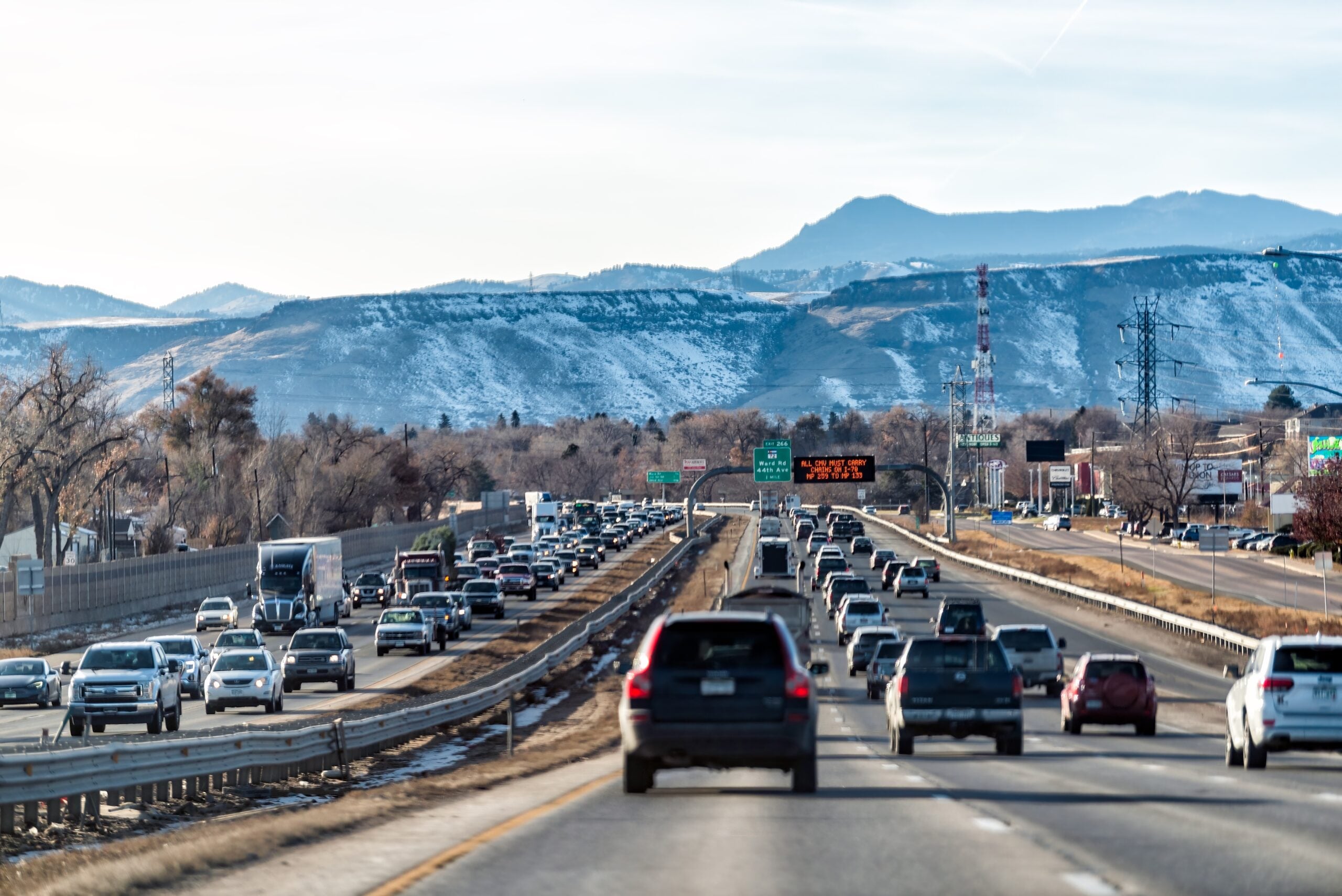
The crash occurred just before 7:30 p.m. on Thursday, June 12, on eastbound Interstate 70 near Steele Street in Denver. Officers had been attempting to stop the rider for what police described as hazardous traffic violations when the cyclist instead made for the on-ramp and merged directly into highway traffic.
A motorist traveling the corridor struck the e-bike rider, who was transported to a local hospital and later pronounced dead. Scene photos from KDVR showed damage to the passenger side of a small SUV, including the front quarter panel and windshield, along with a badly damaged e-bike with its front wheel separated from the frame.
Denver Police spokesman Sean Towle confirmed that officers were trying to stop the e-bike rider for hazardous traffic violations when the cyclist rode onto the highway in what appeared to be a deliberate attempt to flee. The specifics of those original violations were not disclosed, and it remains unclear what charges, if any, will result from the incident.
Whether standard police pursuit protocols apply to e-bikes is also a question Denver7 has been pursuing with the department, as the guidelines governing foot or vehicle pursuits don’t always translate cleanly to two-wheeled scenarios.
The crash drew enough disruption to shut down multiple lanes on eastbound I-70 for an extended investigation, a significant blow to a stretch of highway that already has a reputation for bottlenecking Denver traffic at nearly any hour. The driver of the SUV was not identified, and no indication has emerged that the motorist faces any liability. The DPD’s internal review is proceeding as protocol dictates.
E-Bikes on the Interstate: A Dangerous and Illegal Combination
Riding any bicycle on an interstate is prohibited in most urban areas across the country, and e-bikes are no exception. Riding on the shoulder of an interstate is illegal in all 50 states and is profoundly unsafe due to high-speed traffic, road debris, and the risk of drivers drifting from their lanes.
E-bikes, regardless of class or motor output, are not legal on controlled-access highways, and no amount of wattage changes the physics of a 70-mile-per-hour traffic environment. As of 2026, 36 states and the District of Columbia have adopted a three-class system to define and regulate electric bicycles, but none of those classifications grant access to freeways or interstates.
In Colorado specifically, the regulatory framework treats e-bikes largely as bicycles for purposes of roadway access, which means they belong in bike lanes, on streets, and on designated paths, not merging into 70-mph highway traffic. The bike recovered at the scene, notably, appeared to have standard pedals, consistent with a pedal-assist model rather than a full-throttle electric unit, but that distinction matters little when the vehicle it collides with weighs several thousand pounds.
What “Hazardous Traffic Violations” on an E-Bike Actually Looks Like
E-bike enforcement has become an increasingly visible issue in urban areas, and Denver is no exception. Riders blowing through red lights, traveling the wrong way on one-way streets, weaving between lanes of moving traffic, and riding on sidewalks in prohibited zones are all common scenarios that draw police attention. The category is broad, and “hazardous” can range from aggressive swerving to outright wrong-way riding.
What makes e-bikes a particular challenge for traffic enforcement is their in-between legal status. They move faster than traditional bicycles, especially Class 3 models that can assist riders up to 28 mph, but they don’t carry license plates, don’t require registration, and their riders are often not required to carry identification.
That makes fleeing a stop feel low-risk to some riders and makes it frustratingly difficult for officers to identify anyone who does manage to get away. In this case, the rider did not get away.
The Police Pursuit Question Nobody Has Fully Answered
Whether officers should pursue an e-bike for traffic violations is the kind of policy question that only surfaces after something goes wrong. Denver7 has been looking into whether it is standard protocol for officers to pursue an e-bike for traffic violations, and that is genuinely worth knowing.
Most departments have formalized pursuit policies for vehicle chases that weigh the danger of the pursuit against the severity of the original offense. E-bikes exist in a gray zone: they’re not cars, but they’re fast enough to create real hazards and attract enforcement attention.
The DPD’s internal review will likely examine whether the officers’ response to a rider fleeing on an e-bike was appropriate given the circumstances. It’s a legitimate institutional question. At the same time, it’s worth noting that the fatal outcome here was not the product of officers cornering the rider or causing a collision; the rider chose to enter a freeway on a vehicle that had no business being there.
A Broader Pattern Worth Watching

This incident fits into a wider pattern of e-bike-related fatalities that traffic safety researchers and law enforcement agencies have been tracking closely. In New York City, more than three times as many people died while riding e-bikes in 2023 than died on traditional, pedal-powered bicycles.
The trend has continued nationally as e-bike sales have surged and the vehicles have migrated from recreational paths into busy urban commuting corridors. Their speed advantage over regular bicycles is also a liability when riders push into environments their machines weren’t designed to handle.
For the car-driving public, incidents like this one are a reminder that freeway ramps and on-ramps are not sterile environments. Any vehicle or rider can appear with little warning, and a cyclist moving at e-bike speeds on a highway is nearly invisible to a driver approaching at 65 or 70 mph.
The motorist involved in this crash faces no apparent legal exposure, but the lasting psychological impact of a collision like that is a different matter entirely. It is a consequence of someone else’s decision that the driver in this case will carry indefinitely.