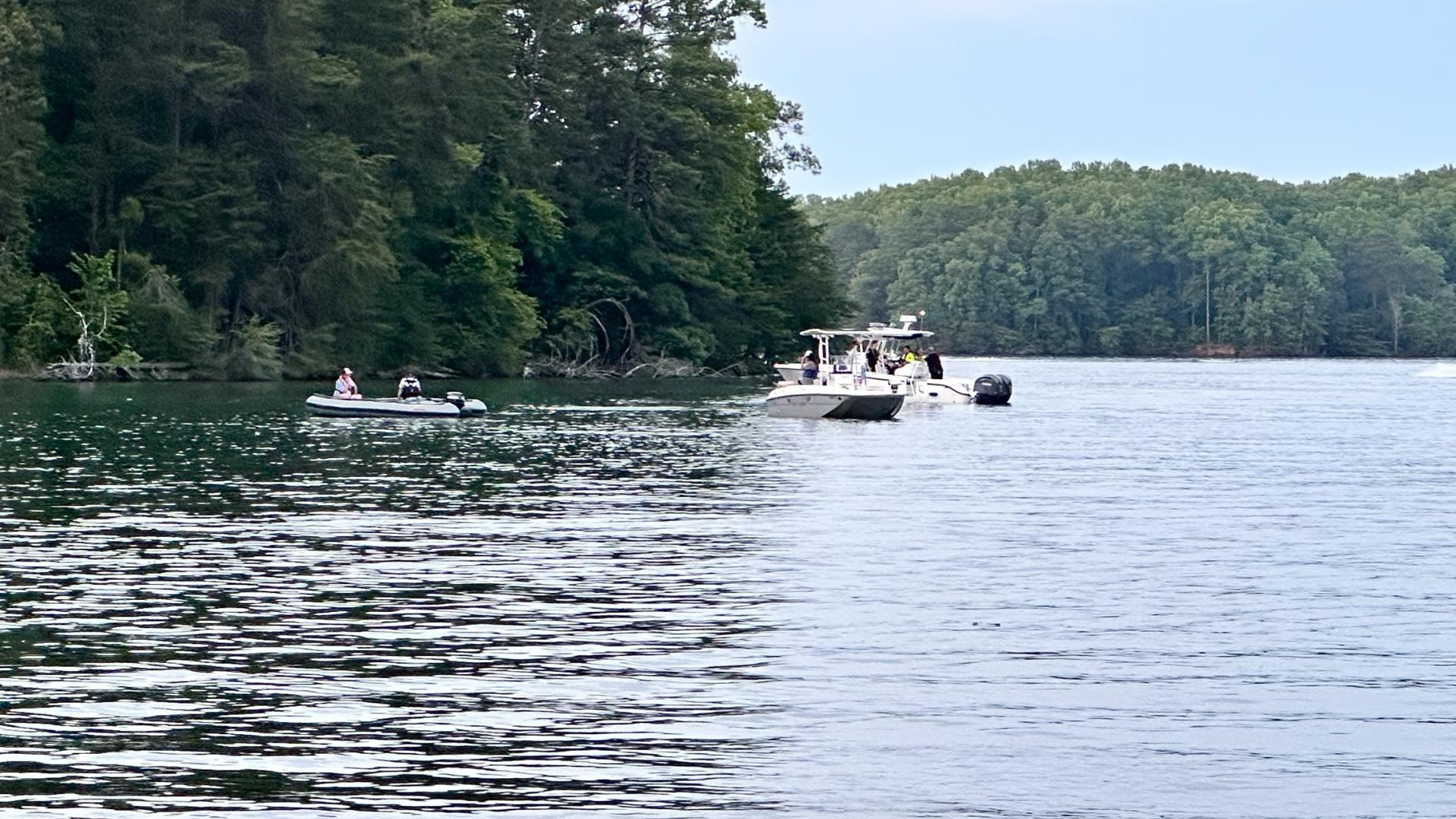
Lake Lanier has seen its share of summers go sideways, but the incident that unfolded on its waters this past Sunday afternoon added a new wrinkle to the usual roster of bad decisions. According to the Georgia Department of Natural Resources, officers responded to a distress situation near Mary Alice Park in Forsyth County after a man was found in the water, intoxicated and trying to tread water. The rescue itself was textbook. What followed was not.
Once pulled from the lake and brought to safety, the man apparently decided that the best way to express his gratitude was to bite one of the officers who had just fished him out. He then reportedly attempted to swim away. That part, presumably, did not go as planned, given that he had just needed to be rescued from the water in the first place. The Georgia DNR did not elaborate on the logistics of the attempted escape, but the outcome was straightforward: the man was arrested.
The charges have not been fully detailed in initial reports, but boating under the influence is the obvious starting point. Assaulting an officer tends to complicate one’s situation considerably. What began as a water rescue call near one of Georgia’s most visited recreational lakes ended with a DNR officer nursing a bite wound and a man in handcuffs, which is not the typical arc of a Sunday afternoon on the water.
This incident is worth paying attention to beyond the obvious absurdity. Lake Lanier draws somewhere in the neighborhood of 11 million visitors per year, and the combination of alcohol, inexperience, and open water has produced a grim record on those shores. The fact that Georgia does not require a boating license, that BUI arrests have been trending upward for years, and that fatalities on the lake remain stubbornly consistent makes incidents like this one part of a much larger pattern that law enforcement agencies are actively trying to break.
What Actually Happened Near Mary Alice Park
Mary Alice Park sits along the Forsyth County side of Lake Lanier and is one of the more popular access points on the lake, particularly during summer weekends. Georgia DNR officers were called to the area Sunday afternoon after the man was spotted in the water in apparent distress. He was not aboard a vessel at the time of rescue, which suggests things had already gone fairly wrong before officers arrived.
After officers pulled him to safety, the situation turned confrontational. Rather than cooperating, the man bit an officer and then made what can only be described as an optimistic attempt to re-enter the lake and swim away. He was taken into custody at the scene. The DNR confirmed the arrest and the bite, though charges were still being processed at the time of early reports.
Lake Lanier’s BUI Problem Is Not New, and It Is Getting Worse
Georgia recorded 259 boating under the influence arrests statewide in 2024, along with 20 boating-related fatalities and 57 drownings. For context, just ten people died in Georgia boating incidents in 2020, meaning the fatality count has doubled in four years. Lake Lanier sits at the center of that trend.
The Georgia DNR made 30 BUI arrests on Memorial Day 2021 alone. By 2023, that same single-day figure had climbed to 40. The trajectory is not subtle. Studies suggest that up to 80 percent of all boating accidents across the United States involve alcohol or drugs, which puts the lake’s recurring incidents in uncomfortable statistical company.
The Georgia DNR reported 75 boating under the influence citations on Lake Lanier in a single recent season, along with 17 boating incidents resulting in 18 injuries and six drownings. Law enforcement agencies from multiple counties have responded with increased patrols, high-tech vessels, and coordinated holiday deployments. Officers have stated that their primary mission is education, not citations, though they are actively watching for reckless operation and intoxicated boat operators.
No License Required, and That Is Part of the Issue
One factor that distinguishes boating from driving on Georgia roads is the absence of any licensing requirement for boat operators. Unlike automobile drivers, Georgia boat operators are not required to obtain a license or pass a skills test, meaning many people head onto the water without a complete understanding of how to safely operate a vessel. When an unexpected situation arises, the gap in training becomes dangerous quickly. Add alcohol to that equation and the results tend to end up in incident reports.
Georgia lawmakers have considered a range of measures to improve safety on Lake Lanier, including speed limits in certain areas, additional no-wake zones, mandatory headlights on boats, and reducing the legal BUI threshold from 0.10 to 0.08, which would bring it in line with the standard for driving under the influence on public roads. None of those measures have been universally adopted, and the lake’s accident record continues to reflect the gap.
Lake Lanier’s Reputation Is Statistical, Not Superstition
Lake Lanier carries a well-worn reputation as one of the more dangerous recreational lakes in the country. Public safety officials point to practical explanations: millions of visitors annually, underwater debris, sudden depth changes, low visibility, and heavy recreational traffic all create conditions that are hazardous for swimmers and boaters alike. The lake has recorded more than 700 drownings over the past 70 years, which works out to roughly 10 per year.
That context matters when evaluating Sunday’s incident. A man intoxicated to the point of being unable to stay afloat, in a lake where drownings are a near-annual certainty, was brought back to dry land by officers doing their jobs. His response was to bite one of them and attempt to re-enter the water. The DNR handled it. The officer received a bite wound. The man received handcuffs.
Whether this particular case ends in a BUI charge, an assault on an officer charge, or something else will be determined as the arrest processes through the system. What it already illustrates, without any legal outcome required, is that the enforcement challenge on Lake Lanier is not purely about speed or navigation. Sometimes the problem swims directly at the people trying to solve it.