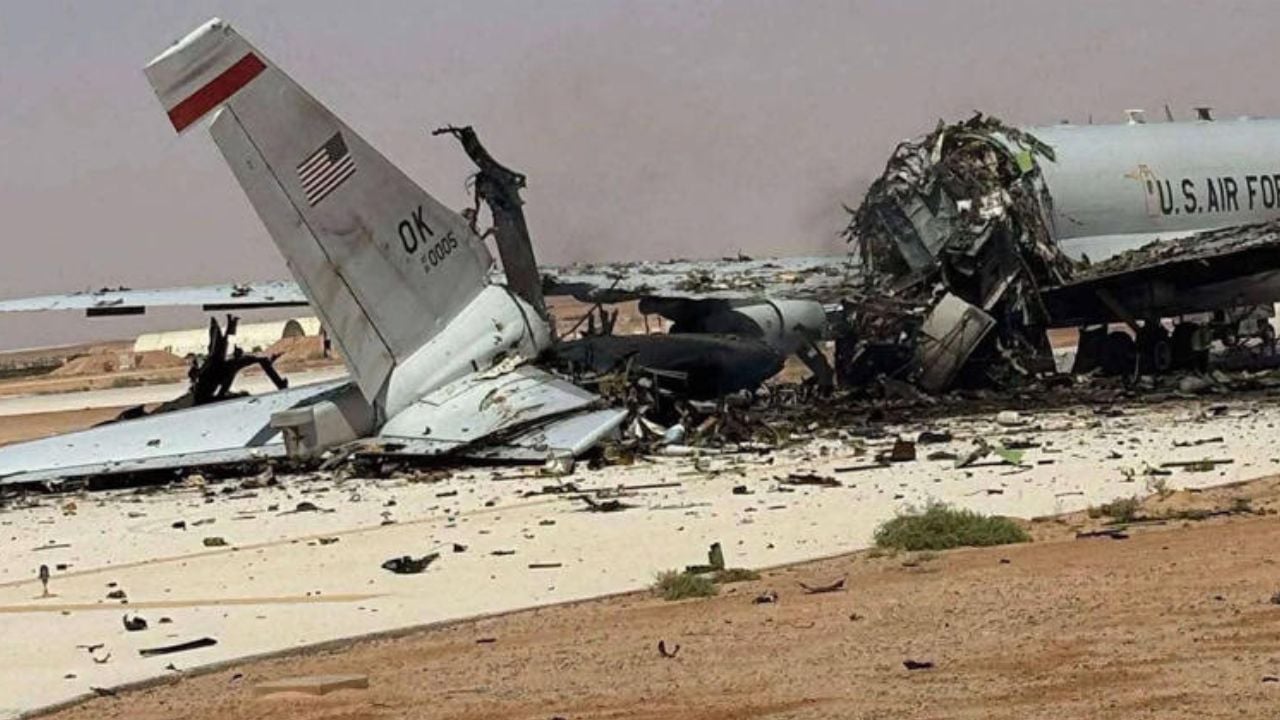

Reports emerging from multiple international outlets suggest that a U.S. Air Force E-3 Sentry Airborne Warning and Control System aircraft was destroyed during an Iranian attack on Prince Sultan Air Base in Saudi Arabia.
If confirmed, this would mark the first combat loss of one of the most critical airborne surveillance platforms in modern warfare, with far-reaching operational and geopolitical implications.
The E-3 Sentry, commonly referred to as AWACS, functions as an airborne command and control center. Its defining feature is the large rotating radar dome mounted above the fuselage, capable of detecting hundreds of targets across vast distances.
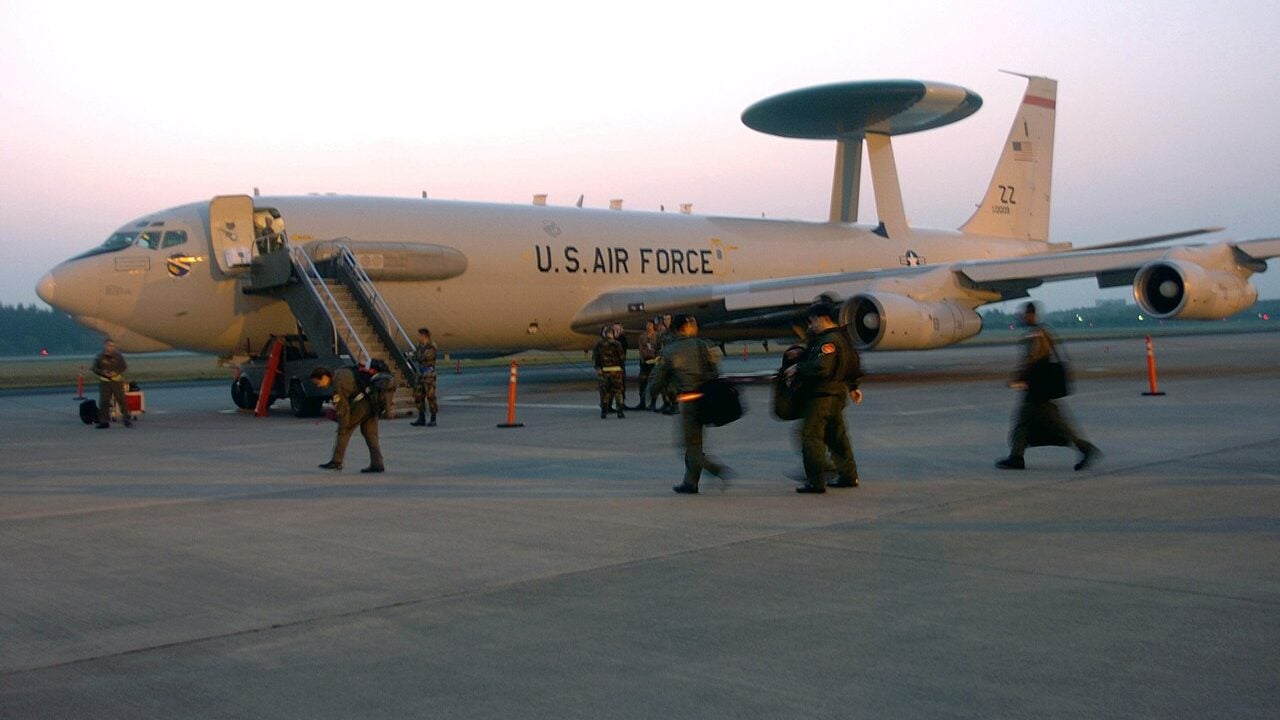
Developed during the Cold War and introduced in the 1970s, the aircraft has played a central role in U.S. and allied operations in Iraq, Afghanistan, and beyond. Its ability to coordinate fighter aircraft, track incoming threats, and manage battlefield awareness makes it indispensable in contested environments.
Initial Reports and Strategic Impact
According to reports cited by CNN, NBC News, and the BBC, the strike on Prince Sultan Air Base involved a combination of missiles and drones.
The CNN report went as far as confirming the plane’s destruction while parked at the Prince Sultan Air Base, claiming to have geolocated “dramatic images of the wrecked aircraft.” CNN military analyst Cedric Leighton reportedly described the AWAC’s destruction as “a serious blow to US surveillance capabilities.”
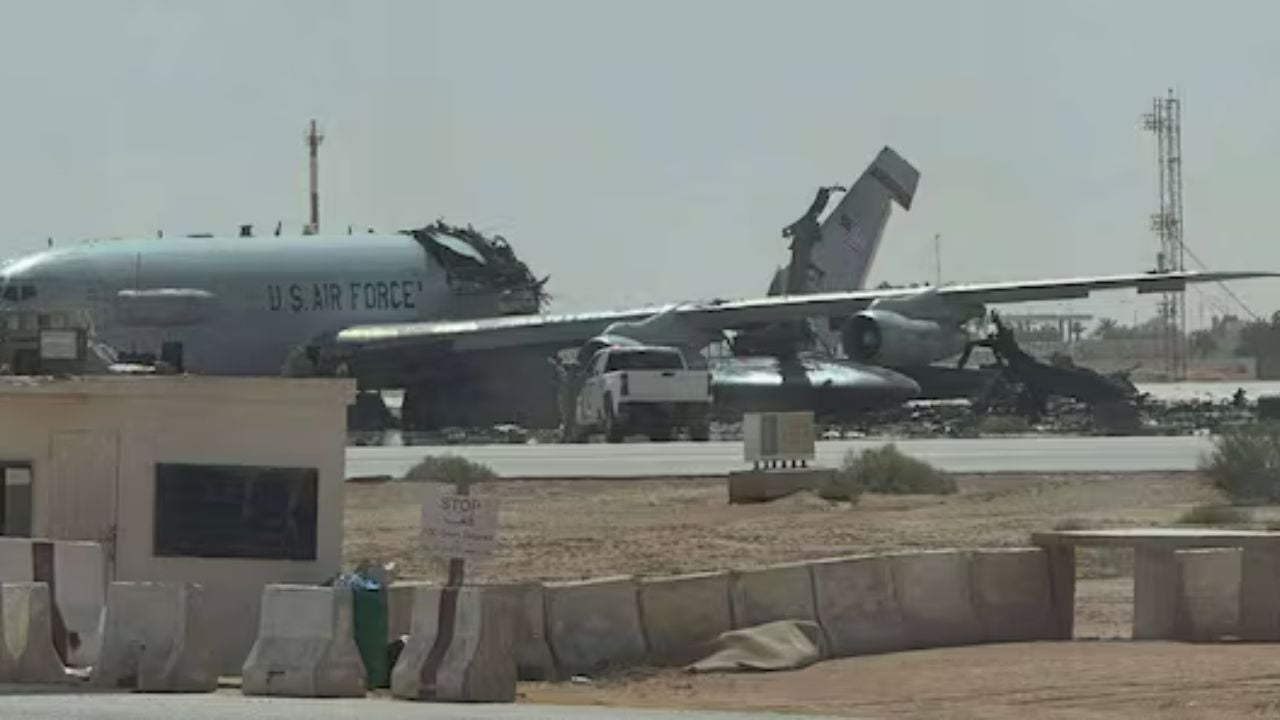
The attack reportedly injured around ten U.S. personnel and damaged additional assets, including a KC-135 aerial refueling tanker. The destruction of the E-3, valued at over $300 million, stands out as the most strategically significant loss.
Verification remains incomplete. While satellite imagery and social media photos have been referenced to confirm damage at the base, independent confirmation of the AWACS destruction is still limited.
Analysts caution that early battlefield reports are often fragmentary and susceptible to misinformation, especially in a conflict environment involving multiple state actors with competing narratives.
A particularly contentious dimension of the incident is the allegation of Russian involvement. Ukrainian officials, including President Volodymyr Zelenskyy, have claimed that Russian intelligence contributed to the targeting of U.S. assets.
The claim centers on reports that Russian satellites conducted repeated imaging of Prince Sultan Air Base in the days leading up to the attack. Chatting with NBC News, the Ukrainian President said:
“I think that it’s in Russia’s interest to help Iranians. And I don’t believe — I know — that they share information… Do they help Iranians? Of course. How many percent? One-hundred percent.”
He said his country’s intelligence assessments has identified a pattern in which repeated surveillance precedes operational strikes.
“We know that if they make images once, they are preparing. If they make images a second time, it’s like a simulation. The third time it means that in one or two days, they will attack,” Zelensky said.
The Russian Involvement Allegation and Its Implications
However, these claims remain unverified. NBC News noted that the Ukrainian briefing did not include concrete evidence of the satellite activity or how such intelligence was obtained.
Russia has denied providing targeting data to Iran, although it has openly acknowledged military cooperation with Tehran. This ambiguity reflects the broader strategic alignment between Russia and Iran, which has deepened amid shared opposition to U.S. influence and ongoing tensions tied to the war in Ukraine.
If Russian intelligence support were confirmed, it would represent a significant escalation in indirect confrontation between Russia and the United States.
Providing actionable targeting data that leads to the destruction of high-value U.S. assets would move beyond diplomatic or logistical support into a more direct form of military involvement. Such a development could alter the strategic calculus in both the Middle East and Eastern Europe.
From a military perspective, the loss of an AWACS platform carries immediate operational consequences. The U.S. maintains a limited fleet of these aircraft, and they are not easily replaced.
Their absence reduces situational awareness in the airspace, complicates coordination of defensive and offensive operations, and increases vulnerability to further attacks. In high-threat environments, the loss of airborne early warning capability can significantly degrade the effectiveness of air campaigns.
Evolving Warfare Tactics and a Parallel Incident

At the same time, the reported strike highlights evolving warfare tactics. Using relatively low-cost drones and precision missiles to target high-value assets reflects a broader shift toward asymmetric capabilities. This trend challenges traditional assumptions about air superiority and raises questions about the survivability of large, high-visibility platforms like the E-3 in contested regions.
Iran’s Tasnim News Agency reported that the IRGC (Islamic Revolutionary Guard Corps) had, on the 27th March 2026, simultaneously targeted American soldiers in Dubai and a facility related to Ukraine’s drone defense system in the city. The report said all 21 Ukrainian experts at the site may have been killed in the attack.
Tasnim wrote:
“The spokesperson for the Khatam al-Anbia Central Headquarters of Iran said on Saturday that, simultaneously with targeting the hideouts of American commanders and soldiers in Dubai, which inflicted heavy casualties on them, a warehouse in Dubai storing anti-drone systems related to Ukraine, intended to assist the US military, was targeted by a hybrid operation of the IRGC Aerospace Force and Navy and was destroyed. He noted that 21 Ukrainians were also present at that location.”
However, the Ukrainian government responded that, “It is not true.” The claimed March 27 attack would have coincided with Ukrainian President Volodymyr Zelenskyy’s visit to the UAE to discuss defense cooperation centered on drones with President Mohamed bin Zayed Al Nahyan.
Iran had frowned on Ukraine’s intention to drone technology support to Gulf states, including Saudi Arabia, Qatar, and the UAE. Analysis would interpret the claimed attack as a “warning strike.”
Ultimately, the AWACS’s reported loss sits at the intersection of regional conflict, great power competition, and technological change. Whether fully verified or not, the reports underscore the increasing complexity of modern warfare, with intelligence, alliances, and emerging tactics converging to reshape the battlefield in unpredictable ways.