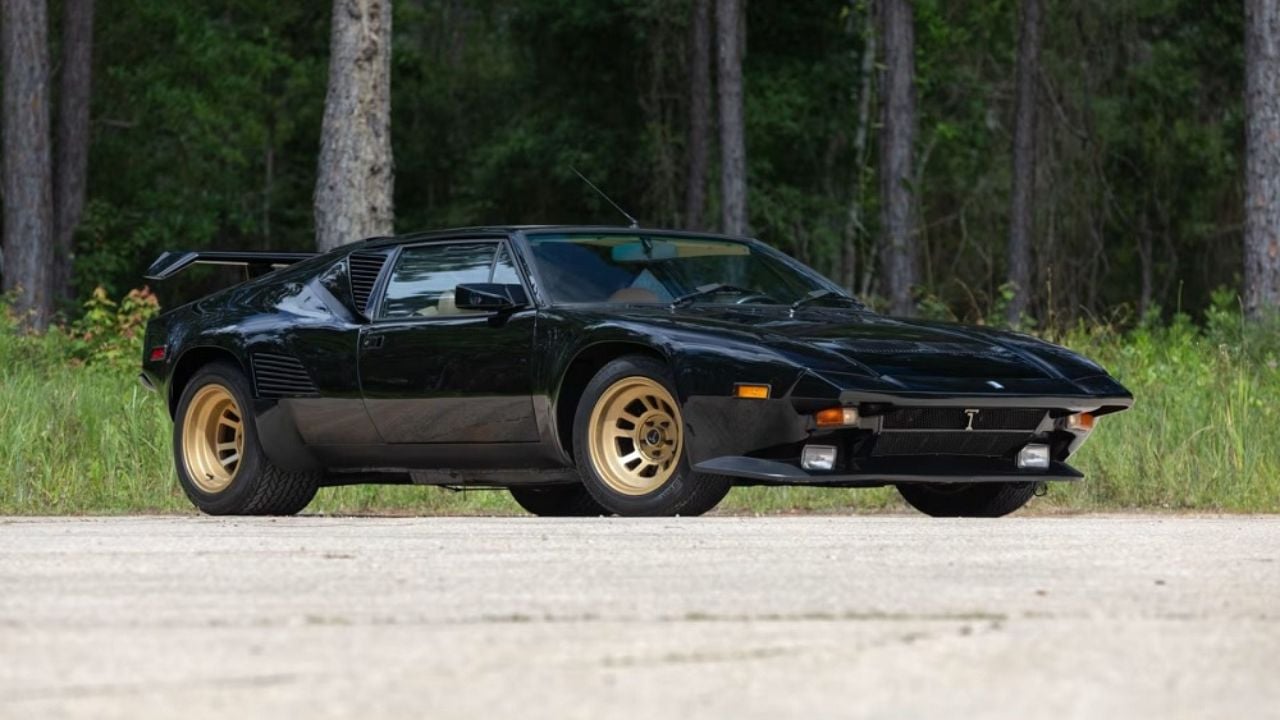
The De Tomaso Pantera had a life strange enough to feel fictional. It began as a sharp Italian-American answer to Ferrari and Lamborghini, then kept changing for more than two decades as regulations, markets, engines, and supercar fashion moved around it.
By the time production ended in the early 1990s, about 7,260 Panteras had been built. For a small manufacturer selling a mid-engine exotic with an outsider’s attitude, that was a serious achievement.
The idea made sense for both sides. Ford had already been burned by its failed Ferrari deal and still wanted a stronger connection to Italian performance. De Tomaso offered a different route: Italian design, a mid-engine layout, and a Ford V8 that could be sold to American buyers through familiar showrooms.
The company itself was never ordinary. Alejandro De Tomaso was born in Argentina and settled in Italy in the 1950s. Some accounts say he moved to pursue racing, while others note that he left Argentina after being implicated in a failed plot against Juan Perón.
Ford Power And Italian Style Created The Pantera
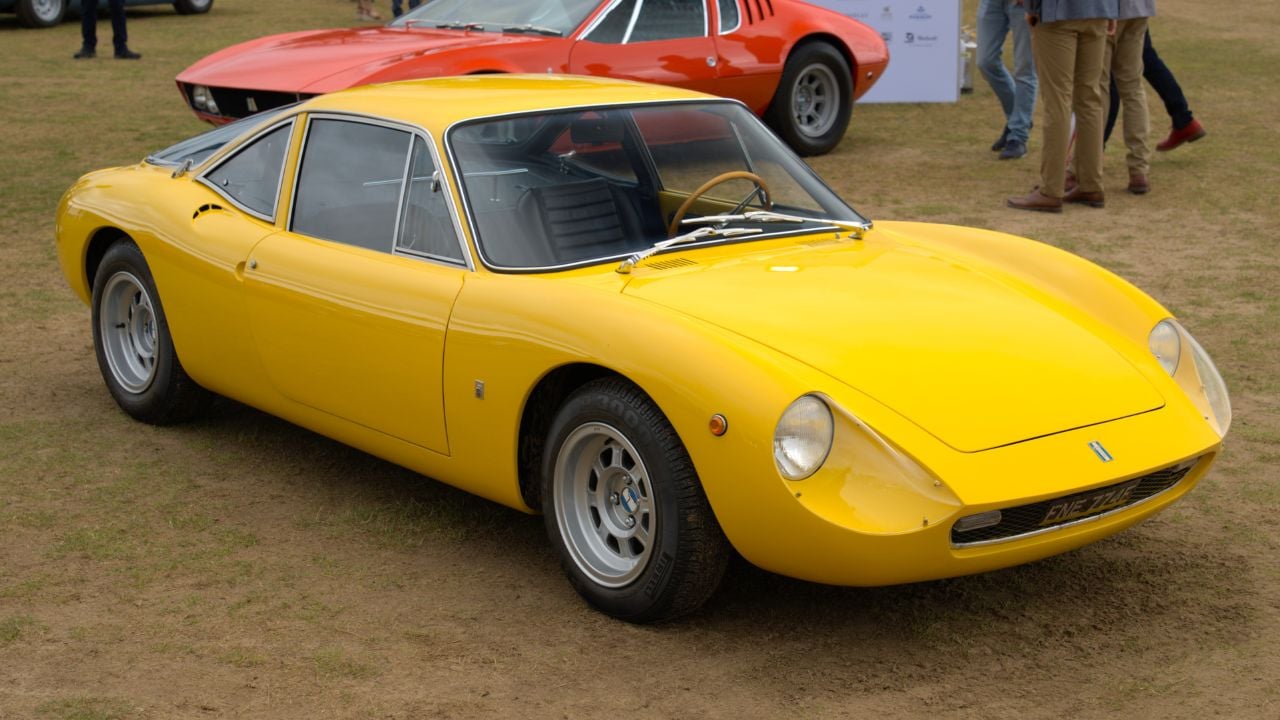
The first De Tomaso production car was the Vallelunga, a small mid-engine sports car that used Ford mechanical components. The Mangusta followed in 1966 with stronger visual drama and a Ford V8 behind the seats, but the Pantera became the car that truly put De Tomaso in front of American buyers.
The formula was simple and brilliant. The original Pantera paired Tom Tjaarda’s Ghia styling with a steel monocoque engineered by Gianpaolo Dallara, whom De Tomaso had lured away from Lamborghini. Behind the cabin sat a Ford 351 cubic inch Cleveland V8, giving the car exotic proportions without exotic engine fragility.
That was the hook. The Pantera looked like a European supercar, but its engine was familiar, strong, and easier to understand than the complex machinery used by Ferrari or Lamborghini. It gave buyers Italian drama with American service logic.
The price helped even more. At just under $10,000 when new, the Pantera gave American buyers a mid-engine Italian exotic for far less than many of the era’s most famous European rivals. More than 5,500 examples were sold through Ford’s Lincoln-Mercury dealer network, giving De Tomaso the kind of U.S. reach most small exotic builders could only dream about.
The GT5-S Gave The Pantera New Life
Ford stopped importing the Pantera to the United States in 1975, but Alejandro De Tomaso was not ready to let the car die. He expanded his business interests with models such as the Deauville and Longchamp, bought design houses Ghia and Vignale, acquired motorcycle brands Benelli and Moto Guzzi, and later took control of Innocenti and Maserati.
Through it all, the Pantera remained the backbone of De Tomaso. Production continued in smaller numbers after the Ford era, but by the late 1970s the car needed a stronger visual answer to the new supercar world. Lamborghini had made the Countach wider and more theatrical, and De Tomaso needed the Pantera to look dangerous again.
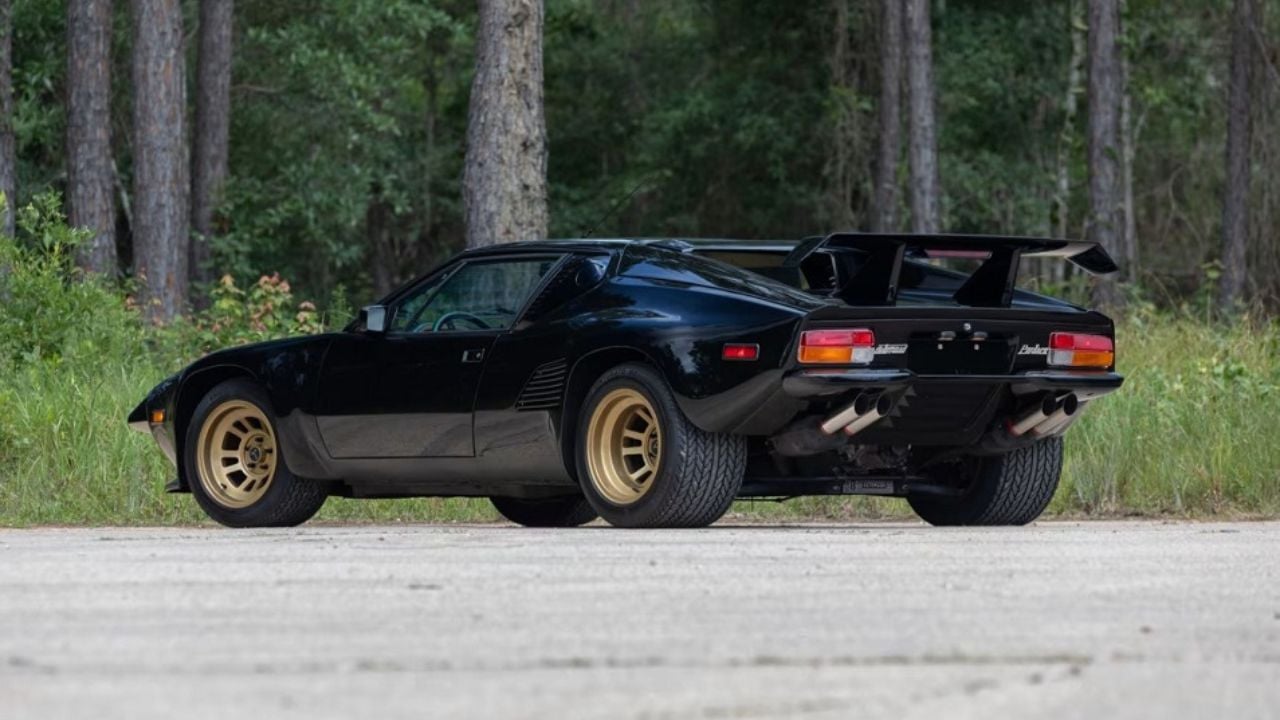
That answer arrived with the Pantera GT5. It brought wider bodywork, huge tires, more aggressive aerodynamics, and a harder-edged personality. The car looked brutal, almost as if it wanted to devour the road in front of it.
De Tomaso presented the more refined GT5-S at the Turin Motor Show in November 1984. Instead of using bolt-on fiberglass extensions like the earlier GT5, the GT5-S received a more integrated body redesign under Aurelio Bertocchi. The result was wider, smoother, and more sophisticated, while still keeping the aggression that made the late Pantera so memorable.
American Muscle Made It Easier To Own
The GT5-S kept the basic doors, windshield, engine cover, and pop-up headlights, but much of the rest of the body was reshaped. The lines became cleaner, the proportions looked more balanced, and the optional rear wing gave the car the drama expected from an 1980s supercar.
Under the skin, the Pantera kept the steel monocoque layout that separated it from De Tomaso’s earlier backbone-chassis cars. The GT5-S added a strengthened structure, updated suspension, wider wheels, larger tires, and larger ventilated front brake discs to match its more aggressive personality.
The engine remained Ford’s 351 cubic inch V8, later sourced from Australia after U.S. Cleveland production ended. In GT5-S form, output was listed at 350 bhp and 333 pound-feet of torque, sent through a ZF five-speed manual transmission and a limited-slip differential.
Performance was serious. The Pantera GT5-S could reach 60 mph in about 5.3 seconds. Official top speed was 158 mph, while the optional 3.77 “Le Mans” axle ratio raised that figure to 164 mph.
It may not have been the most advanced supercar of its decade, but that was never the full point. A Ferrari or Lamborghini could offer more mystique, but the Pantera offered a different kind of appeal: a hand-built Italian body wrapped around a Ford V8 that did not require the same level of specialized fear.
That was its hidden advantage. While many Italian rivals used expensive engines that demanded specialist attention, the Pantera’s heart was familiar to American mechanics. It was a muscle car inside an exotic body.
A Rare Supercar That Deserved More Attention
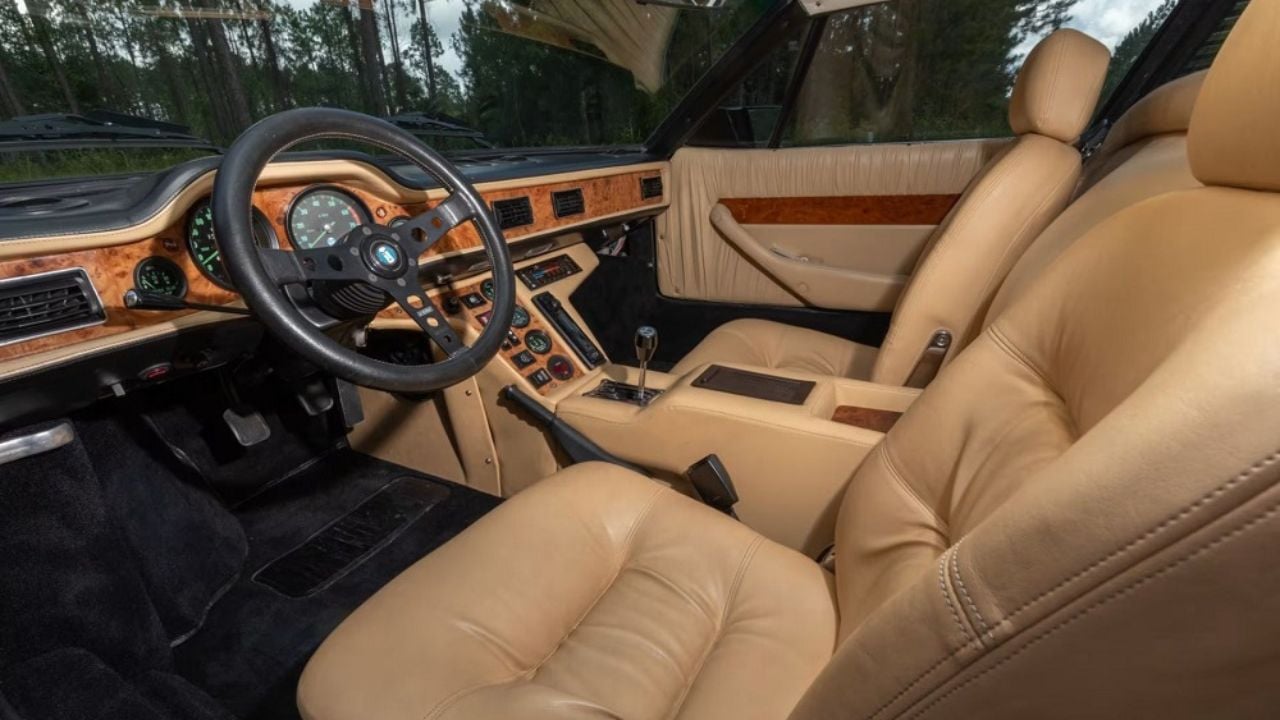
Despite its looks and performance, the GT5-S never achieved the commercial success its presence suggested. Only a maximum of 183 examples are believed to have been completed before the updated Pantera 90 Si replaced it.
The main problem was distribution. Once Ford’s American dealer network was gone, De Tomaso no longer had the same showroom power in the world’s most important exotic car market. Ferrari and Lamborghini had stronger identities, stronger dealer support, and more consistent visibility among wealthy buyers.
Some American enthusiasts, including distributor George Stauffer, kept interest alive by importing cars and converting older Panteras to GT5-style specifications. Even so, the factory GT5-S remained rare.
Today, that rarity works in the car’s favor. The GT5-S is one of the most fascinating supercars of the 1980s because it does not feel like a Ferrari imitation or a Lamborghini copy. It has its own strange confidence.
The De Tomaso Pantera GT5-S remains proof that a small company did not need Ferrari’s budget or Lamborghini’s fame to leave a lasting mark. It was raw, loud, dramatic, and impossible to confuse with anything else.
Every surviving example now feels like a piece of automotive rebellion, a reminder of a time when one determined outsider believed he could challenge the giants with Italian style, American power, and a Ford V8 mounted behind the seats.
This article was originally published by Autorepublika.com and is republished with permission. It has been reviewed and edited by Guessing Headlights.