Walk into any dealership today and you’ll find more SUV choices than ever, ranging from bare-bones budget crossovers to near-luxury rigs that cost as much as a starter home. The sheer number of options is enough to send most shoppers straight to the monthly payment calculator, and that’s exactly the problem. When price becomes the only filter, everything else tends to get ignored until it’s too late.
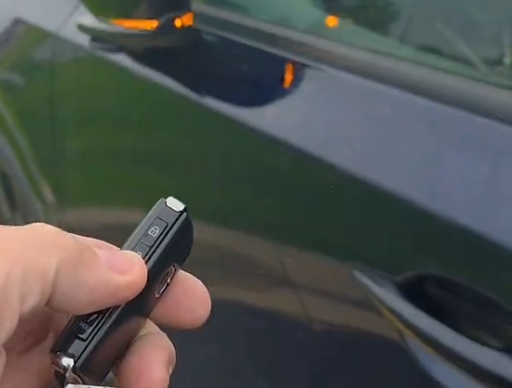
A car salesman named Rob Hansen recently made that point in a social media video that’s been circulating with a few thousand views. His argument is simple: too many buyers walk in, find the lowest number that fits their budget, and drive off the lot without thinking much about what they’re actually living with for the next several years. Noise, rough ride quality, cheap materials that start creaking by the third winter. These are the things that turn a good deal on paper into a daily irritant.
There is, of course, a catch. Hansen’s advice comes packaged with a fairly enthusiastic showcase of the redesigned 2026 Mazda CX-5. So while the underlying point is legitimate, it’s fair to acknowledge that the man is a salesman standing in front of a car he wants you to buy. That doesn’t make him wrong, but it’s worth separating the good advice from the pitch.
And the advice itself holds up. Vehicle ownership is a long game. Most Americans hold onto their cars for six or seven years on average, which means those minor compromises made at signing tend to compound. A noisy cabin that felt like a small trade-off becomes a thing you notice every morning. A touchscreen that takes three taps to change the temperature stops being modern and starts being annoying. Price gets you in the door, but the actual ownership experience is what you live with.
What the 2026 Mazda CX-5 Actually Brings to the Table
@robhansen Most people don’t realize this until it’s too late… #CarBuyingTips #MazdaCX5 #SUVShopping #SmartBuy #CarAdvice ♬ original sound – Rob the Car Magician
Hansen’s vehicle of choice for this lesson is the fully redesigned 2026 CX-5, and it’s not a bad example to use. Mazda gave the CX-5 a proper overhaul this generation. The cabin is meaningfully quieter than before, thanks to added sound deadening in the cargo area, the liftgate, and structural reinforcements around the rear of the body. That’s not marketing language, that’s engineering work that makes a real difference on a long highway stretch.
The suspension received updated dampers and softer spring rates, and the steering has been retuned for more road feel. Rear seat room has increased noticeably, with Mazda noting there’s now enough space for a child to keep a backpack on the floor rather than on their lap. Pricing runs from around $31,500 for the base S trim to approximately $41,000 for the top-spec Premium Plus.
The one legitimate criticism involves the move away from Mazda’s long-running rotary controller in favor of a large touchscreen. Climate controls live on a permanent strip at the bottom of the display, which makes them accessible, but there are no dedicated physical HVAC knobs. The volume control is positioned on the passenger side of the screen, which nudges drivers toward the steering wheel buttons or voice commands. It works, but anyone who values tactile controls will notice the compromise.
Why the “Just Buy Cheaper” Logic Usually Backfires
The compact SUV segment is genuinely competitive right now, and there are solid choices at lower price points. The Toyota RAV4 remains the best-selling compact SUV in the country for good reason. Its reliability record is hard to argue with, and the new generation has kept the practical, sensible formula intact. The Mazda CX-50 Hybrid, a close relative of the CX-5 built on a slightly different platform with more road-oriented character, delivers around 38 mpg and earned praise for how it actually feels to drive.
But the cheaper end of the market is where Hansen’s warning carries the most weight. Entry-level trims from several brands use noticeably harder plastics, less sound insulation, and smaller screens with fewer standard features. They’ll get you from point A to point B reliably enough, but they tend to feel their compromises more acutely over time. The spec sheet might look similar to a better-equipped rival, but fifteen minutes behind the wheel usually tells a different story.
What Buyers in the Comments Had to Say
The comment section on Hansen’s video offered a pretty honest cross-section of opinions. One of the top responses was from someone who specifically chose the CX-50 over the CX-5 because of the touchscreen-only interface, writing that putting everything on a screen was a dealbreaker. That’s a real concern, and frankly a fair one.
Another commenter pushed back on the premise entirely, questioning whether anyone actually buys a vehicle on price alone. It’s a reasonable challenge. Most buyers aren’t purely price-focused, but price is often the ceiling that eliminates options before any real comparison happens, which amounts to much the same thing.
A third commenter took the skeptical route on new vehicles altogether, suggesting that the features Hansen was showing off were the kinds of things that break down and cost money later, making a case for buying used with cash instead. That perspective has plenty of history behind it, even if it’s not the answer for everyone.
The Actual Takeaway for Serious Buyers
Hansen’s core message is worth taking seriously, even if you mentally set aside the fact that he’s selling a specific car. The better approach to SUV shopping is to establish a comfortable budget range rather than a hard ceiling, then test drive several vehicles at different price points to understand what you’re actually trading away. Spend time with the interior materials, pay attention to road and wind noise at highway speeds, and notice how the suspension handles a rough patch of pavement. These are the things that define daily life with a vehicle, not the sticker price.
The 2026 Mazda CX-5 is a legitimate contender in the compact SUV segment, full stop. But so are the RAV4, the CX-50 Hybrid, and a handful of others. The point isn’t which badge is on the hood. It’s that buying on price alone, without accounting for what you’ll actually experience over years of ownership, is how buyers end up wishing they’d spent a little more or chosen a little more carefully.