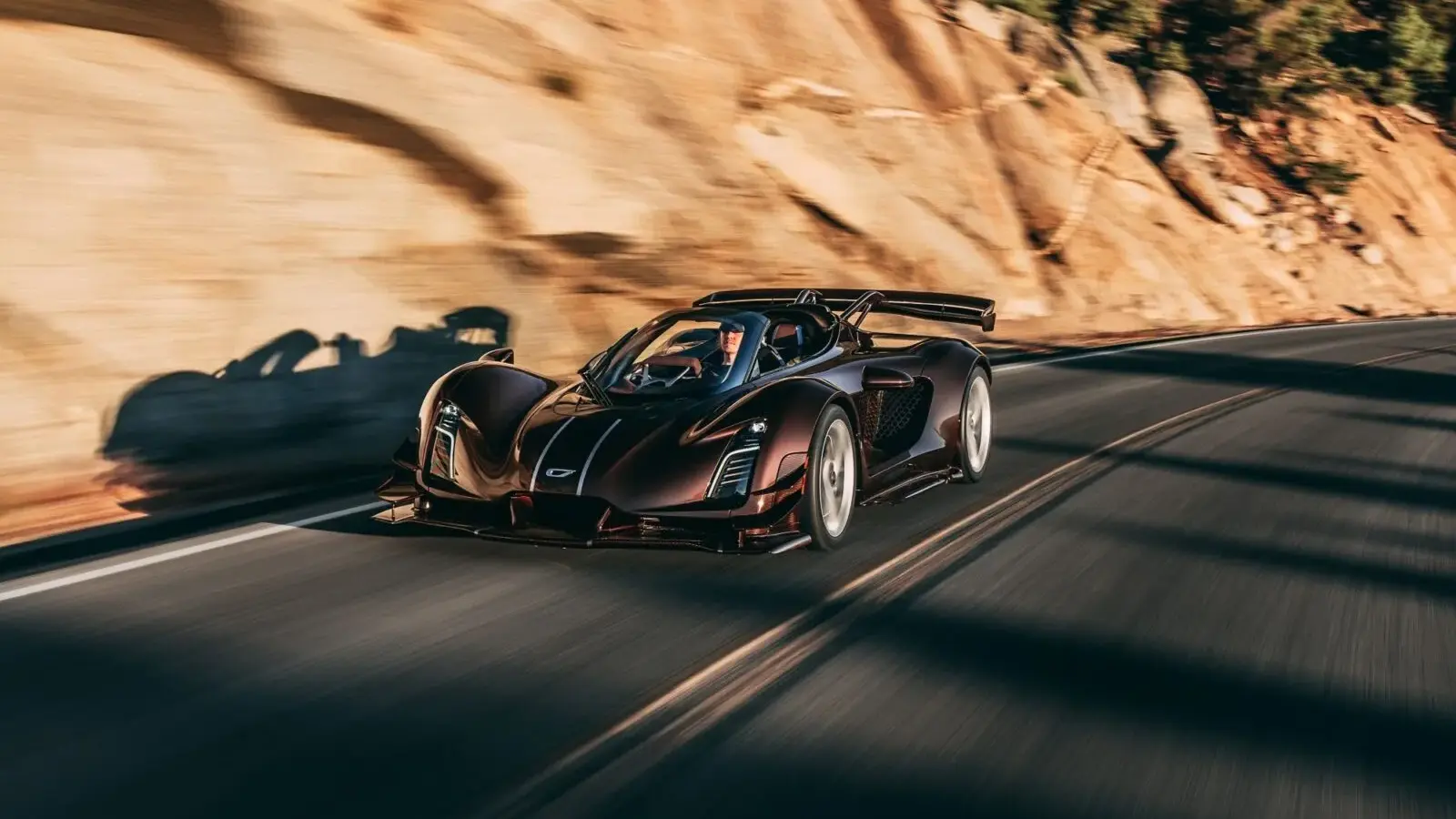
Czinger has taken the already outrageous 21C and removed its roof, creating an even rarer version of its hybrid hypercar. The new Czinger 21C Spyder debuted during 2026 Monterey Car Week with 1,250 horsepower, extreme aerodynamics, and production limited to just 30 examples.
The Los Angeles-based company hasn’t simply converted the existing 21C into an open-top car and stopped there. The Spyder also introduces new braking, suspension, and interior technologies intended to push Czinger’s highly integrated engineering philosophy even further.
Exclusivity will be extreme, even by hypercar standards. Czinger plans to build just 30 cars, and each one starts at $2.75 million before options.
For buyers who manage to secure one, the reward is essentially the same ferocious 21C experience with considerably less separating the driver from its high-revving V8 soundtrack. Considering that engine spins to 11,000 rpm, removing the roof might be one of the more compelling upgrades imaginable.
A 1,250-HP Hybrid With An 11,000-RPM V8

Power comes from Czinger’s in-house 2.88-liter twin-turbocharged flat-plane-crank V8, which works alongside three permanent-magnet electric motors. Together, the system produces 1,250 horsepower and 691 lb-ft of torque, with the combustion engine itself contributing 750 hp.
That output is sent to all four wheels and gives the 21C Spyder some suitably extreme performance claims. Czinger says it can sprint from 0-60 mph in 1.9 seconds and cover the quarter-mile in 8.7 seconds.
Top speed is listed at 205 mph, which should be plenty dramatic in an open-top car. The removable carbon-fiber roof weighs just 22 pounds, although owners will need to decide whether to leave it installed before setting off because there is no onboard storage compartment for it.
That means an unexpected rainstorm could become a particularly expensive inconvenience. On a clear day, however, having an 11,000-rpm V8 directly behind the cabin should make the compromise easier to forgive.
The Downforce Numbers Are Wild
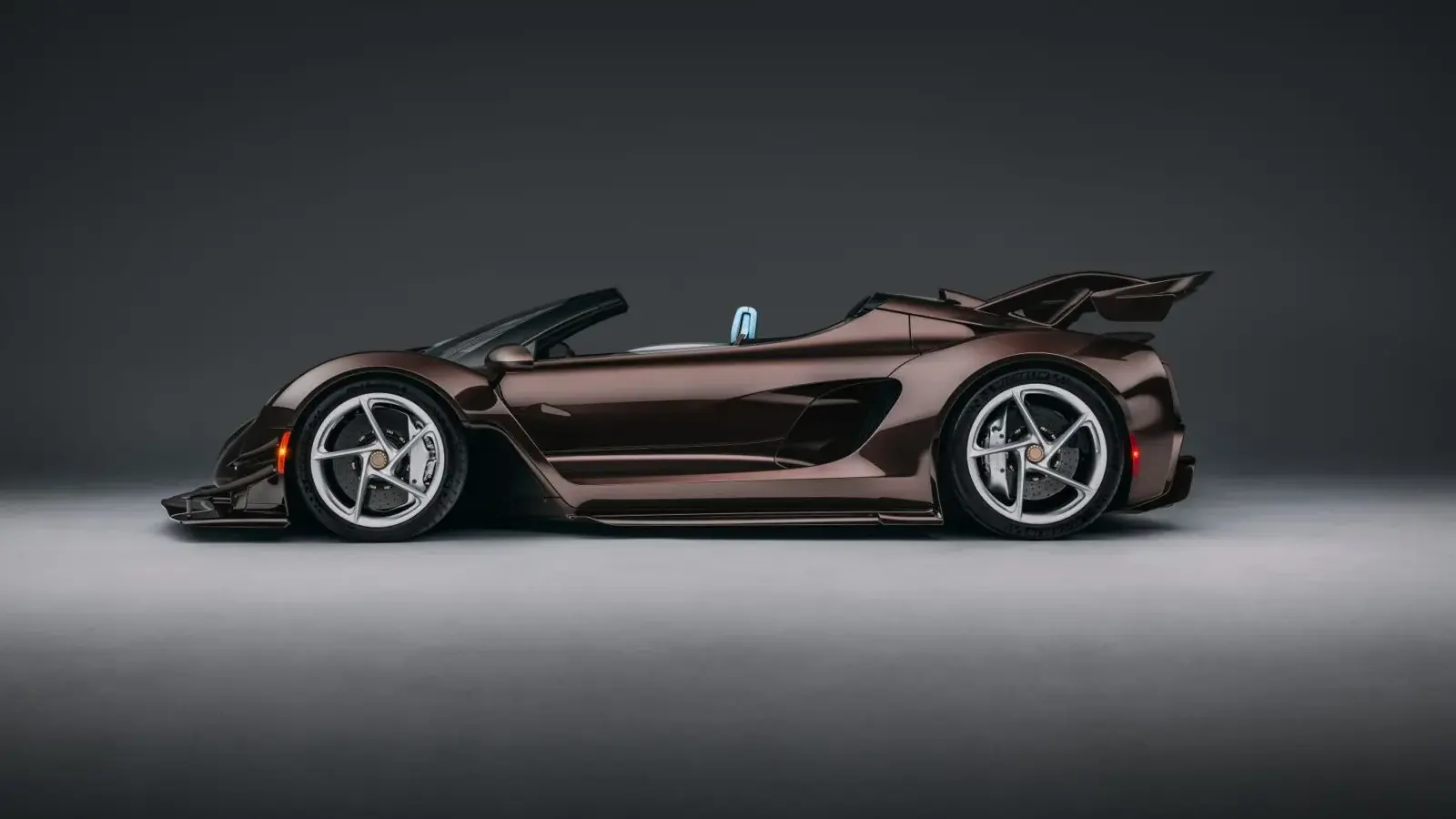
Czinger claims the 21C Spyder produces 3,267 pounds of downforce at 150 mph with the roof removed. Fit the carbon roof, and that figure rises slightly to 3,307 pounds.
Those numbers are remarkable when compared with the car’s quoted 3,571-pound dry weight. In other words, at speed, the aerodynamic load approaches the mass of the car itself.
The Spyder remains heavily focused on track performance despite its open cockpit. Its bodywork and aerodynamic systems are designed to preserve the kind of high-speed stability expected from the hardtop 21C rather than turning the Spyder into a softer grand-touring variant.
Czinger’s New BrakeNode Combines Multiple Parts
One of the biggest technical additions is what Czinger calls BrakeNode. The additively manufactured aluminum component integrates the brake caliper, suspension upright, and internal hydraulic passages into one structure.
Czinger says the design reduces unsprung mass by around 1.5 pounds per corner while improving stiffness by 30 percent. The company also claims the system can contribute to stopping-distance improvements of up to 15 percent.
Massive brakes accompany the new hardware, with 16.1-inch components at the front and 15.3-inch units at the rear. BrakeNode debuts on the Spyder, although Czinger says it will also become available for hardtop 21C variants.
Even The Dashboard Has Been Rethought
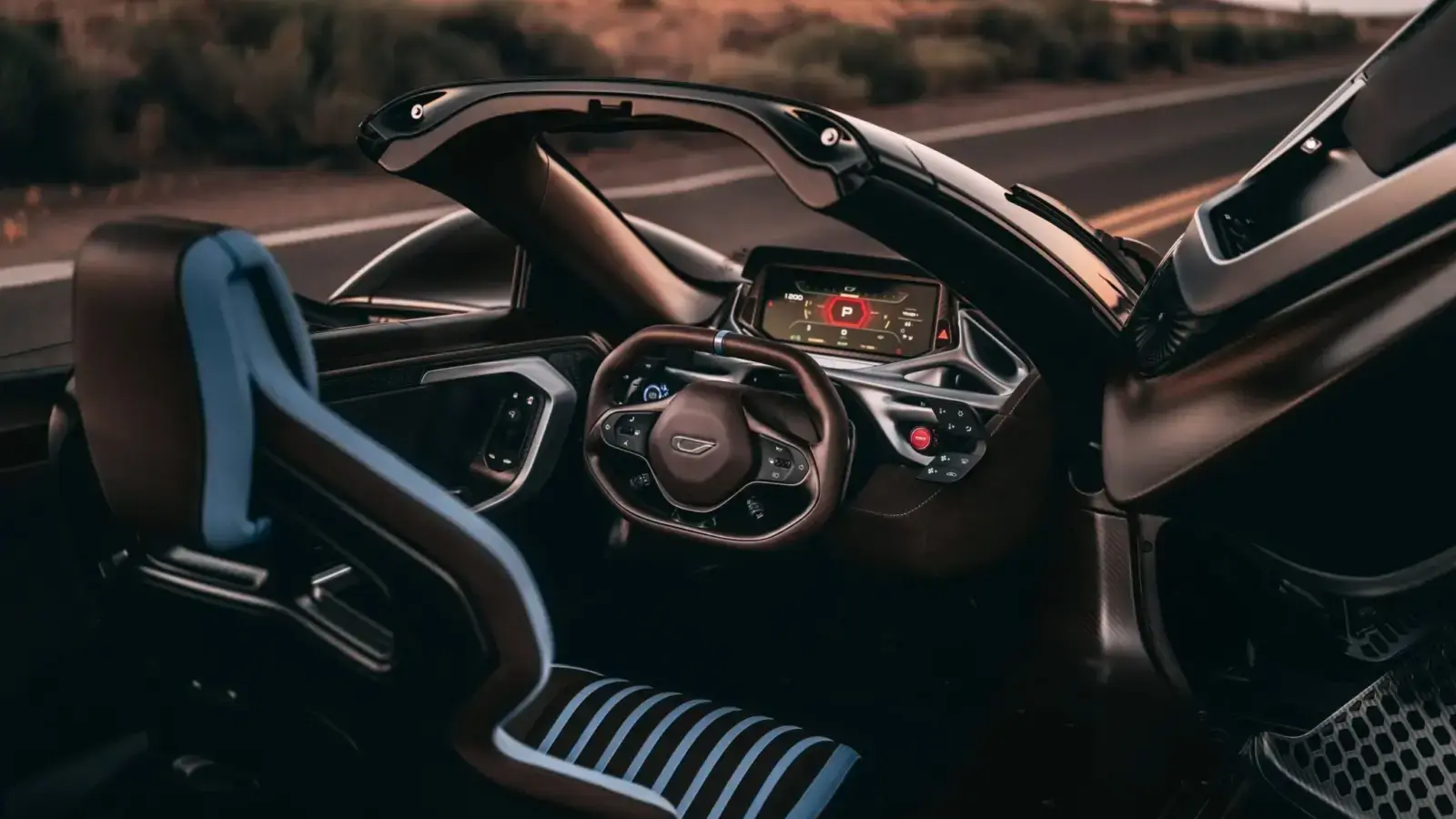
The cabin introduces another system called NeuralNode, which consolidates several conventional dashboard components into a more integrated structure. It incorporates the instrument panel, air vents, and important controls into an arrangement designed around the driver.
Despite the obsessive weight-saving and track focus, Czinger hasn’t completely abandoned everyday technology. Wireless Apple CarPlay is included, along with an eight-speaker, 650-watt audio system that uses carbon-fiber speaker cones.
The 21C Spyder, therefore, isn’t simply a roofless version of Czinger’s existing hypercar. It serves as another showcase for the company’s unusual approach to additive manufacturing, integrated components, and highly concentrated performance.
At $2.75 million, very few people will ever get the chance to find out what it feels like firsthand. With only 30 examples planned, seeing one outside Monterey Car Week might be almost as unlikely as being able to afford one.