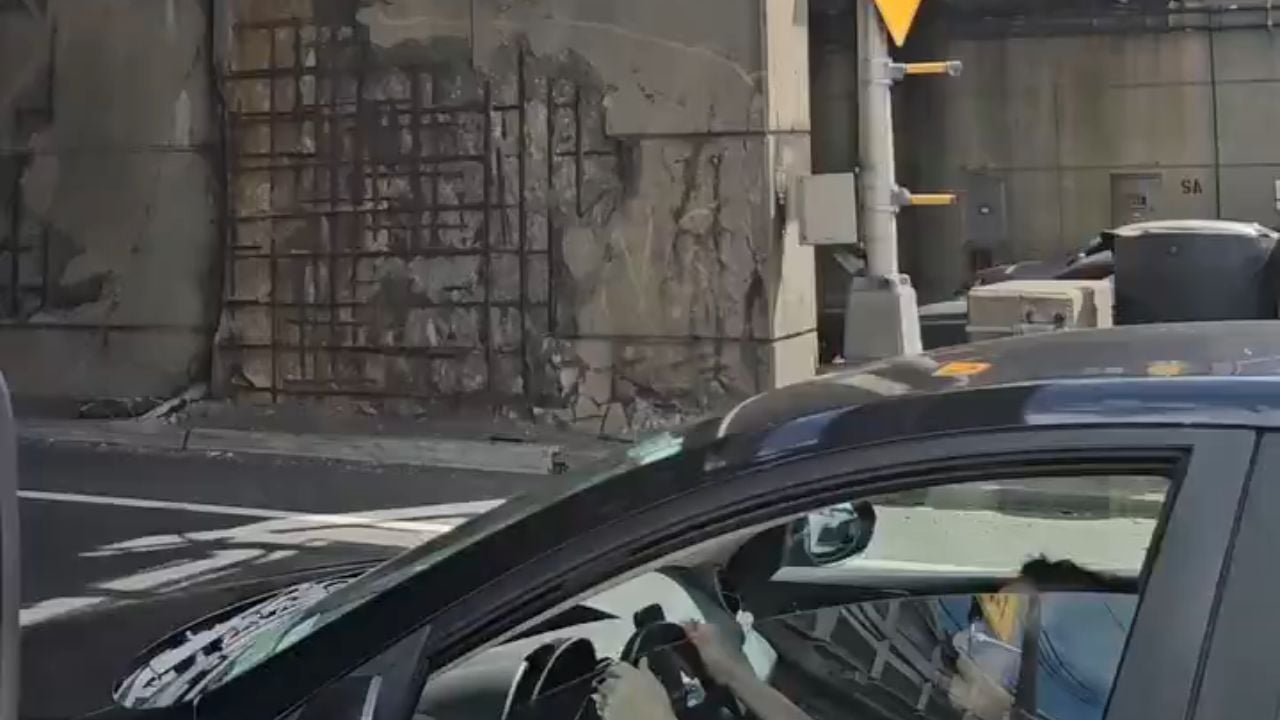

The video shared through the X post by @Horsepower37559 shows a driver moving beneath a concrete overhead structure along the Trans-Manhattan Expressway approach to the George Washington Bridge. The roadway sits under reinforced spans that carry traffic toward the crossing between Manhattan and New Jersey. The driver records the underside of the structure while moving through the lane.
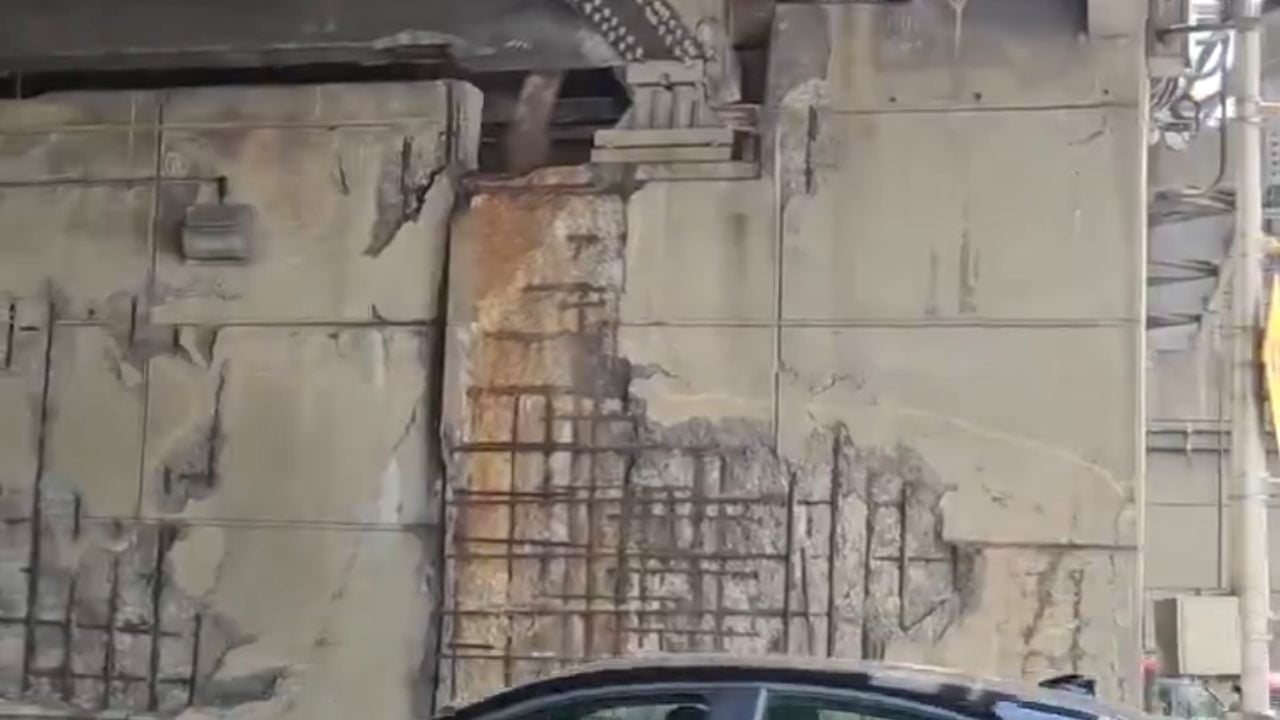
The structure above the roadway shows concrete with exposed steel bars and rust stains. Sections of the surface show loss of material and separation from the main body of the span. Traffic continues underneath while the camera moves forward through the corridor formed by the overpass system.
The post is linked to earlier incidents in May 2026 along the same approach. Reports from that period describe concrete and metal pieces falling onto vehicles traveling under the span. One case involved damage to a car on May 7 with no injuries. Another case on May 13 involved debris striking a vehicle and causing injury to a driver who was taken to hospital.
The incidents led to lane closures, inspection activity, and removal work on loose material above the roadway. Protective netting installation was also carried out in sections where debris had fallen. Traffic flow continued after partial reopening of lanes.
This Is Not a New Bridge With a New Problem
The George Washington Bridge opened in 1931, making it over 90 years old. The Trans-Manhattan Expressway approach roadway runs beneath the bridge’s lower level and supporting spans, meaning vehicles travel directly under infrastructure that has spent the better part of a century absorbing vibration, temperature swings, road salt, and the mechanical stress of carrying one of the busiest traffic corridors in the United States. The GWB handles upward of 100 million vehicle crossings per year, making it consistently one of the highest-volume bridges in the world.
Concrete deterioration at that age and under that load is not surprising to engineers, but it is consequential for everyone driving beneath it. Spalling, which is the technical term for what the video appears to show, occurs when moisture infiltrates concrete, causes embedded steel to rust and expand, and fractures the surrounding material from the inside out. It does not require a catastrophic structural failure to drop a chunk of concrete onto a moving car. Small sections detach on their own schedule, which is precisely what happened in May.
Why Netting Is the Answer (And Why That Should Give You Pause)
Protective netting beneath deteriorating overhead structures is a standard interim measure, and it has genuine value in catching loose material before it reaches traffic. However, the word “interim” is doing some work in that sentence.
Netting is installed when a structure needs attention that cannot happen immediately, whether due to cost, logistics, or the difficulty of closing a major expressway approach long enough to do thorough repair work. It is a responsible stopgap, not a fix.
The May incidents prompted inspections, debris removal, and netting installation in selected areas. The June video shows the corridor still in use with visible concrete deterioration overhead, suggesting that not every compromised section has been permanently addressed.
That is not necessarily unusual for a structure of this size and complexity, but it does mean that drivers passing through are relying on inspectors having correctly identified and secured every section at risk.
What’s going on?!! https://t.co/61r4QR0guq
— Cars&Horsepower (@Horsepower37559) June 5, 2026
What Drivers Are Actually Looking At
The expressway corridor beneath the GWB approach is not a short underpass. Vehicles travel through an extended section of overhead infrastructure, and the spans above form a continuous ceiling rather than a brief crossing. At highway speed, a driver passes through quickly enough that the overhead conditions barely register. At slower speeds, or with a camera pointed upward, the picture is considerably more detailed.
The exposure visible in the footage, bare rebar, surface separation, rust discoloration, is the kind of condition that bridge inspectors flag for monitoring and repair prioritization. It does not indicate that the structure is moments from collapse, but it does indicate that sections of the concrete are no longer intact and that further material loss is a realistic possibility, particularly as summer heat and traffic vibration continue to work on already compromised areas.
For now, the lane is open, the netting is in place, and the approach to one of America’s most trafficked bridges continues to move cars between Manhattan and New Jersey. Whether the pace of repairs matches the pace of deterioration is a question worth watching, preferably from inside a vehicle with a solid roof.