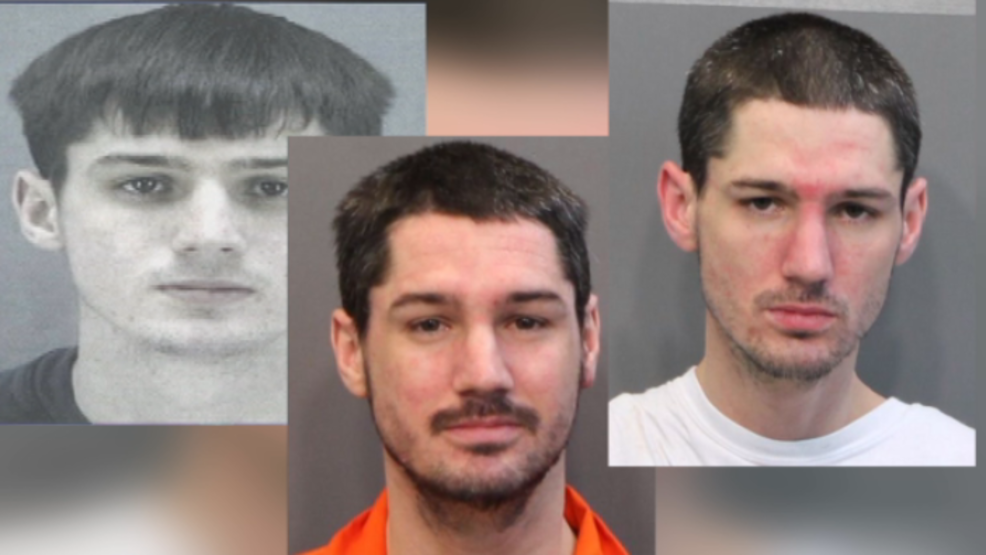
A Tennessee man with over 70 criminal charges and a vehicular homicide conviction on his record was pulled over on Interstate 75 earlier this year, allegedly speeding, driving on a revoked license, and showing signs of impairment. And if that sentence made you do a double take, buckle up, because it gets worse.
Steven Tyler Frizzell was recently arrested in Red Bank, Tennessee on warrants connected to driving under the influence. Court records paint a picture of someone who has had a complicated, to put it very generously, relationship with legal driving for nearly two decades. With charges spanning from the mid-2000s all the way through 2023, Frizzell is not someone who slipped through the cracks once. He has slipped through them repeatedly.
The most haunting chapter of this story goes back to 2007, when Frizzell was convicted in connection with a crash that killed 72-year-old Robert Frizzell, a man who shared his last name but was not related to him. That conviction resulted in a vehicular homicide charge, one of the most serious outcomes a DUI case can produce. And yet, the charges did not stop there. Records show additional driving-related offenses in 2015, 2016, 2017, 2022, and 2023.
When a Tennessee State Trooper pulled Frizzell over on I-75 for speeding in March 2026, the situation was about as bad as it sounds. The trooper discovered his license was revoked, observed signs of impairment, and found evidence of both drugs and alcohol. This was not a close call or a gray area. It was, by any measure, a system failure hiding in plain sight.
A Pattern That Should Have Raised More Alarms
More than 70 charges over the course of a driving career is not a streak of bad luck. It is a pattern, and patterns like this tend to raise a serious question that too many communities avoid asking out loud: why is it so easy for people with this kind of history to keep getting back on the road?
Revoked licenses are, in practice, something of an honor system. There is no physical barrier stopping someone from turning a key in an ignition. Unless a vehicle is confiscated or an ignition interlock device is installed, a revoked license is largely a piece of paper telling someone they are not supposed to drive. And as cases like Frizzell’s demonstrate, some people are not particularly moved by that piece of paper.
The gap between what the law says and what actually happens on the road is wide enough for some repeat offenders to drive through, sometimes literally for years at a time.
What States Are Trying to Do About Repeat DUI Offenders
Legislatures around the country are increasingly fed up with the revolving door that allows repeat DUI offenders to keep endangering the public. One of the more dramatic proposals recently came out of West Virginia, where lawmakers introduced legislation that would make DUI-related fatalities potentially eligible for the death penalty. The proposal is extreme by most legal standards and has drawn significant debate, but it signals just how frustrated some communities have become with the inadequacy of existing consequences.
Short of capital punishment, there are more widely supported approaches gaining traction. Mandatory ignition interlock devices, which require a driver to pass a breathalyzer test before the car will start, have strong evidence behind them. Several states now require these devices even for first-time offenders. For repeat offenders, lifetime bans on interlock removal have been proposed. Some states are also moving toward vehicle forfeiture for habitual DUI offenders, treating the car itself as part of the criminal equation.
There is also growing support for better data sharing across state lines, since one of the oldest tricks in the repeat offender playbook is simply moving to a neighboring state and attempting to get a fresh license there.
What This Case Tells Us About the Gaps in the System
Cases like Frizzell’s are useful, if uncomfortable, mirrors. They force a look at where the system assumes compliance rather than enforcing it. A revoked license means nothing without follow-through, and follow-through requires resources, coordination, and political will.
One concrete takeaway is that courts and licensing agencies need better real-time communication. When someone with a vehicular homicide conviction is stopped for speeding, the responding officer should have immediate, complete access to that person’s full driving history, and the resulting consequences should reflect it. A charge-and-release cycle that stretches across two decades and dozens of offenses is not justice. It is a slow-motion public safety crisis.
Community advocates and public defenders alike have also pointed out that underlying issues like addiction often drive repeat DUI behavior. Purely punitive approaches, without access to meaningful treatment, may address the symptom without ever touching the cause. That does not excuse the danger posed to the public, but it does suggest that the most effective long-term solutions probably need to work on multiple levels at once.
The Bottom Line: One Name, Dozens of Charges, and One Very Big Question
Frizzell’s case is not an anomaly buried in the statistics. It is a name, a face, and a decades-long paper trail that raises one unavoidable question: at what point does the system stop giving someone another chance to hurt someone else?
Robert Frizzell, the 72-year-old killed in 2007, never got another chance at anything. The least that can come from revisiting this case is an honest conversation about whether the tools states currently use to keep dangerous drivers off the road are actually working, and what it will take to make them work better.
It was my grandfather, Robert Frizzell, that his piece of trash killed. I have tried keeping this in the news over the years to get the government to be held accountable for their failure on our case and every time he gets arrested. I’m shocked he hasn’t killed someone else. Thank you for bringing this back up. Especially with the anniversary of my grandfather’s death coming up soon. My family appreciates you.