We have heard some pretty bad excuses for speeding over the years, the kind that usually live in comment sections rather than real traffic stops.
“Sorry, officer, I thought you wanted to race.”
“I thought you were bringing my wife back.”
Are those real explanations? Not really. And now we have a new one—and this might be peak Ricky Bobby energy.
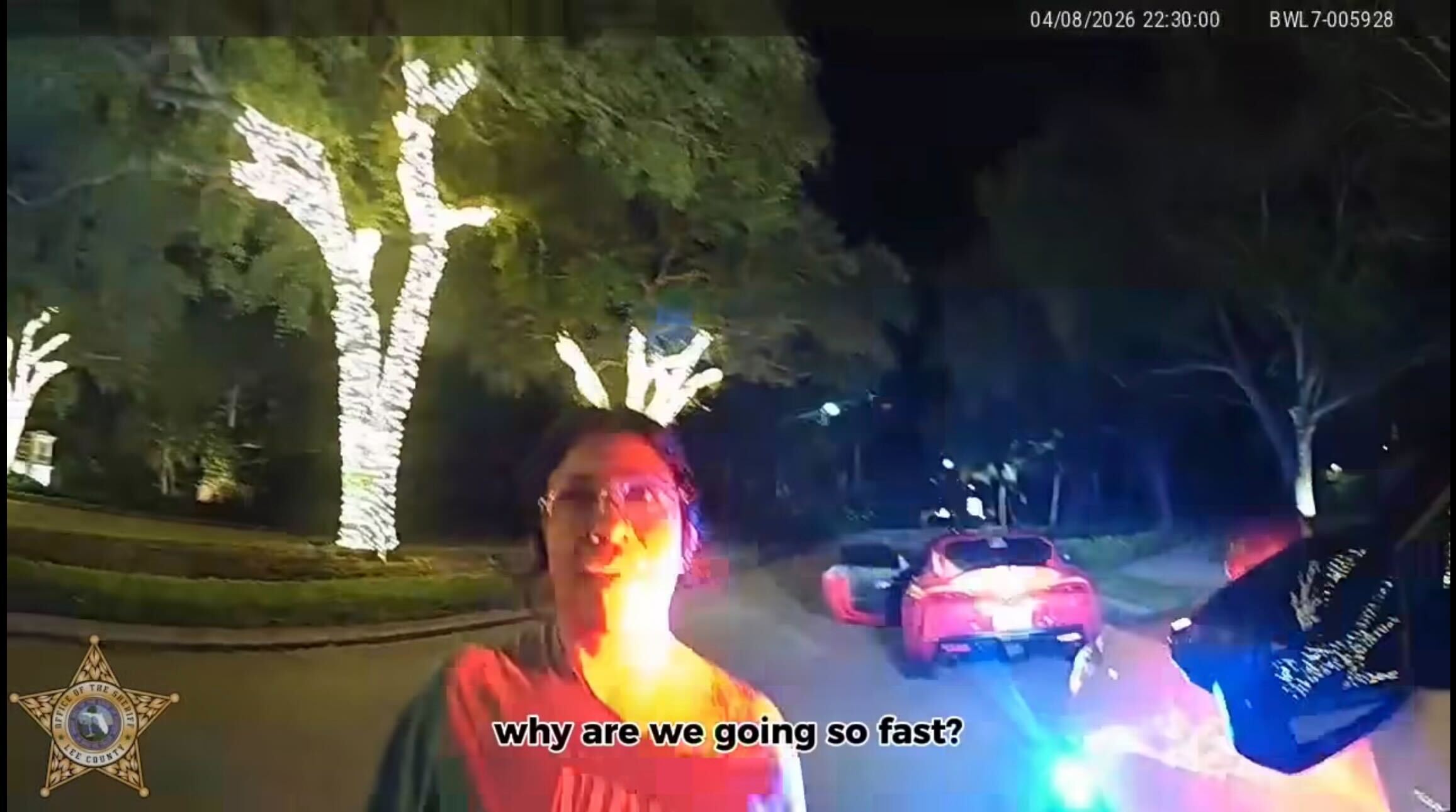
According to deputies, a Bonita Springs woman was pulled over Wednesday night after being clocked at 123 mph on U.S. 41, and when she was asked why she was going that fast, her answer was as direct as it was absurd: “It’s a Supra, that’s why.”
That might be the most honest bad excuse we have heard, and it shows exactly what happens when people do not fear consequences.
The Traffic Stop That Says a Lot
Embedded media follows. Please allow a moment for it to load
The body cam footage makes the situation even harder to ignore once you see how the stop unfolds. As the deputy questions the speed, the passenger, who appears to be connected to the car, pushes back, insisting they were not going that fast, turning the interaction into a back-and-forth that feels less like confusion and more like something the officer has seen before.
Because he has.
At one point, the deputy references a prior stop involving the same car, noting it had already been clocked over 100 mph before. Same car, same road, same kind of speed, and now the same kind of argument on the side of the road. That is not a coincidence; that is a pattern.
According to deputies, the driver, identified as Siria Lopez, also showed signs of impairment and later registered a 0.23 blood alcohol content, nearly three times the legal limit. She was arrested and charged with DUI and driving over 100 mph, along with citations for careless, aggressive driving, a modified exhaust, and an improper turn signal.
At Some Point, It Stops Being an Excuse
You can appreciate deputies doing exactly what they are supposed to do here and still walk away with a bigger concern, because nothing about this stop suggests hesitation. Not the speed, not the impairment, and not even the reaction on the side of the road.
If anything, it suggests comfort. Comfort pushing well past 100 mph, comfort doing it again after being stopped before, and comfort arguing about it like the numbers are up for debate. That kind of behavior does not come from someone who is worried about what happens next; it comes from someone who is not.
The Takeaway
Driving is not a right; it is a responsibility, and situations like this make it hard to ignore how casually that responsibility is sometimes treated. When someone is comfortable going 123 mph while impaired, in a car that has already been stopped for triple-digit speeds, it raises a bigger question about whether the current consequences are actually changing anything.
Because we see this pattern over and over again. The speeds get higher, the excuses get weaker, and the reactions get more casual.
Until something forces it to stop.