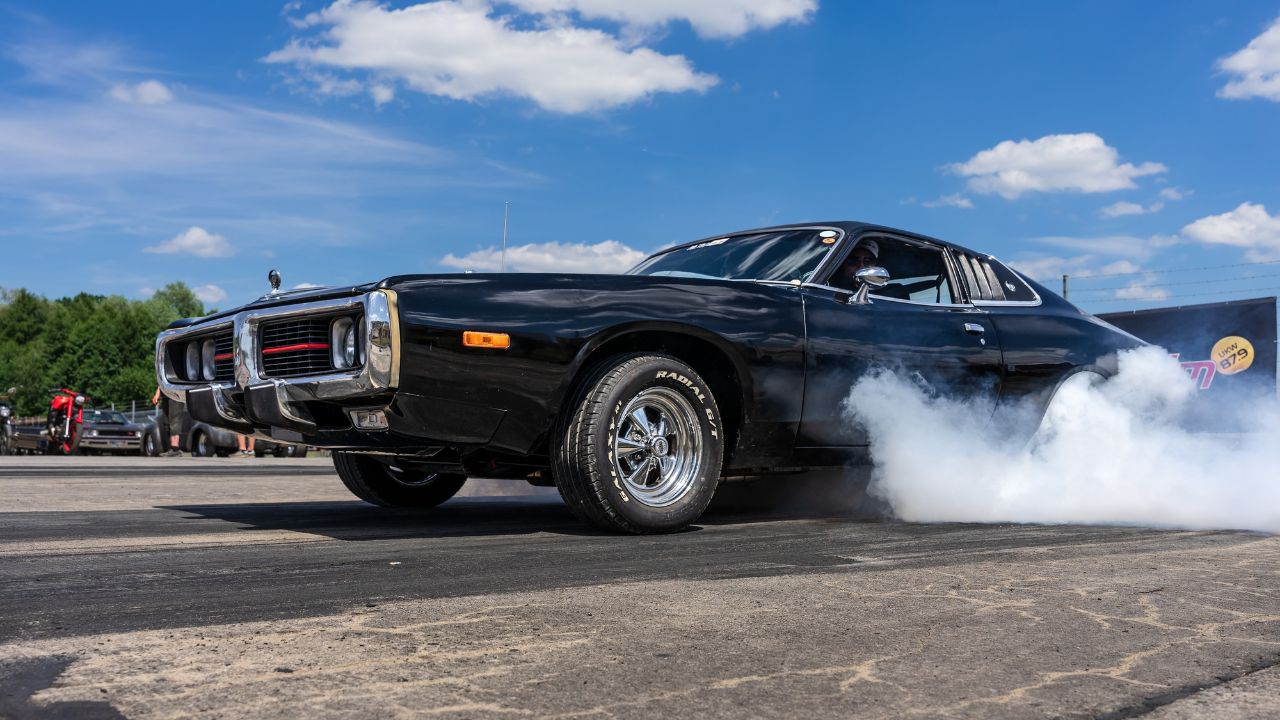
Freedom means different things to different people, but for car enthusiasts, it often comes down to that perfect moment: windows down, engine humming, and endless road ahead. Classic cars captured this spirit in ways that today’s computerized vehicles sometimes struggle to match.
These cars were (and still are) tickets to adventure, symbols of independence, and rolling manifestations of the American dream. Whether it was the promise of Route 66 or just the ability to escape town on a Friday night, certain cars became synonymous with liberation itself.
Let’s take a ride through twelve classics that didn’t just get you from Point A to Point B — they made you feel genuinely free along the way.
Ford Mustang

The Mustang didn’t just launch a new car — it created an entirely new category. When Ford introduced the pony car in 1964, it was designed for young buyers who wanted style and performance without breaking the bank, and by 1966, they’d refined the formula to near perfection.
The ’66 model offered everything from economical inline-sixes to thundering V8s, meaning freedom came in whatever flavor you could afford. Base models started around $2,400, making it accessible to recent college grads and young families alike. With over 600,000 sold that year, it proved that freedom wasn’t just for the wealthy — it was for everyone willing to grab the keys and go.
The Mustang became shorthand for American independence, appearing in countless films and becoming the car you dreamed about in high school.
Chevrolet Camaro Z/28

If the Mustang wrote the pony car rulebook, the Camaro Z/28 added some seriously rebellious footnotes. Built specifically for Trans-Am racing, this wasn’t your neighbor’s grocery-getter — it was a legitimate track weapon you could drive on the street.
The 302 cubic inch V8 delivered around 290 horsepower (though many suspected the real number was higher), and the handling package meant you could actually use that power through corners. Priced around $3,800, it wasn’t exactly cheap, but you were buying racing pedigree wrapped in sheet metal. The Z/28 represented freedom with a side of barely contained chaos; the kind of car that made you take the long way home just because you could.
It was the kinda car that made you tell your parents you’d be home by midnight, then roll in at 12:30 with no regrets.
Plymouth Road Runner

Sometimes freedom means not taking yourself too seriously, and the Road Runner understood this perfectly. Plymouth literally put a cartoon bird on a muscle car, added a “beep beep” horn, and created something that was both hilarious and genuinely quick.
The base 383 cubic inch V8 made 335 horsepower, but you could option up to the legendary 426 Hemi for those who needed to make a statement at every stoplight. Starting around $3,000, it offered big-block performance without the big-block price tag of competitors. The Road Runner proved that freedom could be fun, affordable, and a little bit silly all at once.
It was the muscle car that didn’t take itself seriously but absolutely took performance seriously: a distinction that still matters today.
Chevrolet Corvette Sting Ray

The C2 Corvette, particularly the 1967 model, represents America’s sports car at its most dramatic. With that fastback roofline, hidden headlights, and side exhausts, it looked like it was doing 100 mph while parked in your driveway.
The ’67 brought improvements over earlier C2s, including better brakes and the available L71 427 cubic inch engine making 435 horsepower. At around $4,400 to start, it was pricier than muscle cars, but you were buying genuine sports car capability with style that turned heads everywhere. The Corvette represented aspirational freedom — the car you bought when you’d made it, when you could afford to prioritize fun over practicality.
Driving one meant you’d reached a point where you could choose adventure over utility, and that choice itself was liberating.
Dodge Charger

The second-generation Charger remains one of the most recognizable muscle cars ever built, thanks partly to a certain television show about good ol’ boys. But even without Hollywood help, this thing was special — that flying buttress C-pillar and hidden headlights created a silhouette unlike anything else on the road.
Engine options ranged from a 318 V8 all the way up to the 426 Hemi, giving buyers freedom to choose exactly how much trouble they wanted to get into. Base price started around $3,100, positioning it competitively against other muscle cars of the era. The Charger represented freedom with attitude: this was the car you drove when you wanted everyone to know you were coming.
It combined muscle car brutality with genuine style, proving you didn’t have to sacrifice one for the other.
Chevrolet Bel Air

The ’55 Chevy might seem tame compared to later muscle cars, but it represented freedom for an entire generation. This was the car that helped define 1950s American optimism: affordable, stylish, and available with Chevy’s new small-block V8 that would go on to power everything from boats to race cars.
At around $2,000 for a base model, it was attainable for middle-class families who were discovering that freedom meant mobility and choice. The Tri-Five Chevys became the foundation for hot rodding culture, giving kids in the ’60s and ’70s affordable platforms to build their dreams. Even today, these cars symbolize an era when optimism was high and the open road genuinely felt endless.
They’re proof that freedom doesn’t require big horsepower — sometimes it just requires the ability to go.
Pontiac GTO Judge

The Judge took Pontiac’s already legendary GTO and cranked the personality up to eleven. Named after a catchphrase from Rowan & Martin’s Laugh-In, it came standard with wild graphics, a rear spoiler, and colors like Orbit Orange that made subtlety impossible.
Under the hood, the standard 400 cubic inch Ram Air III V8 made 366 horsepower, with the optional Ram Air IV pushing 370. At around $3,900, it cost more than basic muscle cars, but you were buying more than transportation — you were buying a statement. The Judge represented freedom for those who wanted everyone to know about it, who believed if you’re going to break free from convention, you might as well do it in Orbit Orange.
It was gloriously excessive in all the right ways, reminding us that freedom includes the right to be loud and proud about it.
Chevrolet Corvette Split-Window Coupe

The 1963 Corvette holds a special place in automotive history as the only year for that iconic split rear window. Purists and engineers debated its practicality — it did limit rear visibility — but visually, it was stunning.
The C2 Corvette represented a massive leap forward for America’s sports car, with independent rear suspension and a new ladder frame chassis that actually handled. Engine options ranged from 250 to 360 horsepower, with prices starting around $4,250 for the coupe. This Corvette symbolized freedom through pure driving experience — it was designed for winding roads and weekend escapes, not grocery runs and commutes. The split window became so iconic that its single-year existence made it legendary, proving sometimes freedom means zigging when everyone expects you to zag.
It’s the ultimate “they only made it that way once” collector’s piece.
Ford Mustang GT 390 Fastback

Steve McQueen drove one through San Francisco, and suddenly everyone understood what automotive freedom looked like. The ’68 Mustang grew larger than earlier models, but that meant room for bigger engines like the 390 cubic inch V8 making 325 horsepower.
The GT package added fog lamps, styled steel wheels, and other visual upgrades that made it clear this wasn’t your secretary’s Mustang. At around $3,600 with the GT package and 390 engine, it represented serious performance for reasonable money. The fastback roofline gave it an aggressive stance that suggested speed even at rest.
This Mustang proved that freedom sometimes means having enough power to make movie-worthy chase scenes reality — or at least fantasizing about them during your morning commute.
Oldsmobile 442 W-30

Oldsmobile’s muscle car might have flown under the radar compared to GTOs and Chevelles, but enthusiasts knew the 442 was special. The W-30 package took it further with functional cold-air induction, upgraded internals, and unique graphics.
The 455 cubic inch V8 officially made 370 horsepower, though everyone knew it was making more — GM politics kept the numbers artificially low. Priced around $3,900, it offered serious performance with slightly more refinement than its cousins. The 442 represented freedom for those who didn’t need to prove anything, who appreciated performance without the need to announce it.
It was the muscle car equivalent of speaking softly while carrying a very big stick, perfect for those who valued substance alongside style.
Chevrolet Chevelle SS 396

The Chevelle SS hit a sweet spot between everyday usability and weekend warrior capability. Built on GM’s A-body platform, it was smaller than full-size cars but more practical than pony cars, making it genuinely versatile.
The 396 cubic inch V8 came in various tunes, from 325 to 375 horsepower, letting buyers choose their performance level. At around $3,500, it was positioned competitively in the crowded muscle car market. The Chevelle SS proved you didn’t need to sacrifice practicality for performance — this was a car you could actually live with daily while still destroying competitors at stoplights.
It represented freedom through balance, showing that sometimes the best path to liberation is one that doesn’t require compromise.
Plymouth Barracuda

The 1971 Barracuda represented the last hurrah of the muscle car era before emissions regulations and insurance costs killed the party. The redesigned E-body looked fantastic, with aggressive styling that made even base models look ready to pounce.
Engine options included everything from slant-sixes to the legendary 426 Hemi, though increasingly few buyers checked that expensive box. Prices started around $3,000, but the writing was on the wall—the freedom these cars represented was already fading. The ’71 Barracuda symbolizes a specific kind of freedom: the bittersweet knowledge that good things don’t last forever, making you appreciate them even more.
It was the last time you could walk into a Plymouth dealer and order a genuine muscle car without apology, before the world changed and took some of that automotive freedom with it.
Conclusion

These twelve classics share something beyond horsepower figures and quarter-mile times — they represent moments when cars meant possibility. They came from an era when freedom was measured in cubic inches and proven on backroads, when owning the right car genuinely expanded your world.
Modern vehicles might be faster, safer, and more efficient, but they rarely capture that same sense of liberation these classics offered. Today, these cars remind us that freedom isn’t just about where you’re going — it’s about how you feel getting there. Whether it’s a Mustang, Charger, or Corvette, these machines still symbolize the open road and all the adventures it promises.
They’re rolling reminders that sometimes the journey matters more than the destination, especially when that journey sounds this good.