Every car enthusiast knows the usual suspects when it comes to classic cars. The Mustangs, Camaros, and Corvettes get all the attention at shows and auctions, commanding prices that make most of us wince. But what about those other cars that were just as interesting, just as well-engineered, and sometimes even more innovative?
There’s a whole world of overlooked classics from the 1950s through the 1980s that deserved better than they got. These are the cars that had the goods but somehow missed their moment in the spotlight.
Let’s take a look at 12 classics that should have been household names but remain hidden gems for those in the know.
1963-1964 Studebaker Avanti

The Avanti was genuinely ahead of its time, featuring a fiberglass body, disc brakes, and styling that looked like it came from the future. Designer Raymond Loewy created a shape so timeless that people still mistake these cars for something from a decade later.
Despite breaking speed records at Bonneville and offering genuine performance credentials, Studebaker’s financial troubles meant the Avanti never got the marketing push it deserved. Only about 4,643 were built during Studebaker’s production run, making them rare today. The car was so good that it continued in limited production under different ownership for decades afterward.
If this had worn a Corvette badge, we’d all know its name.
1974-1976 Bricklin SV-1

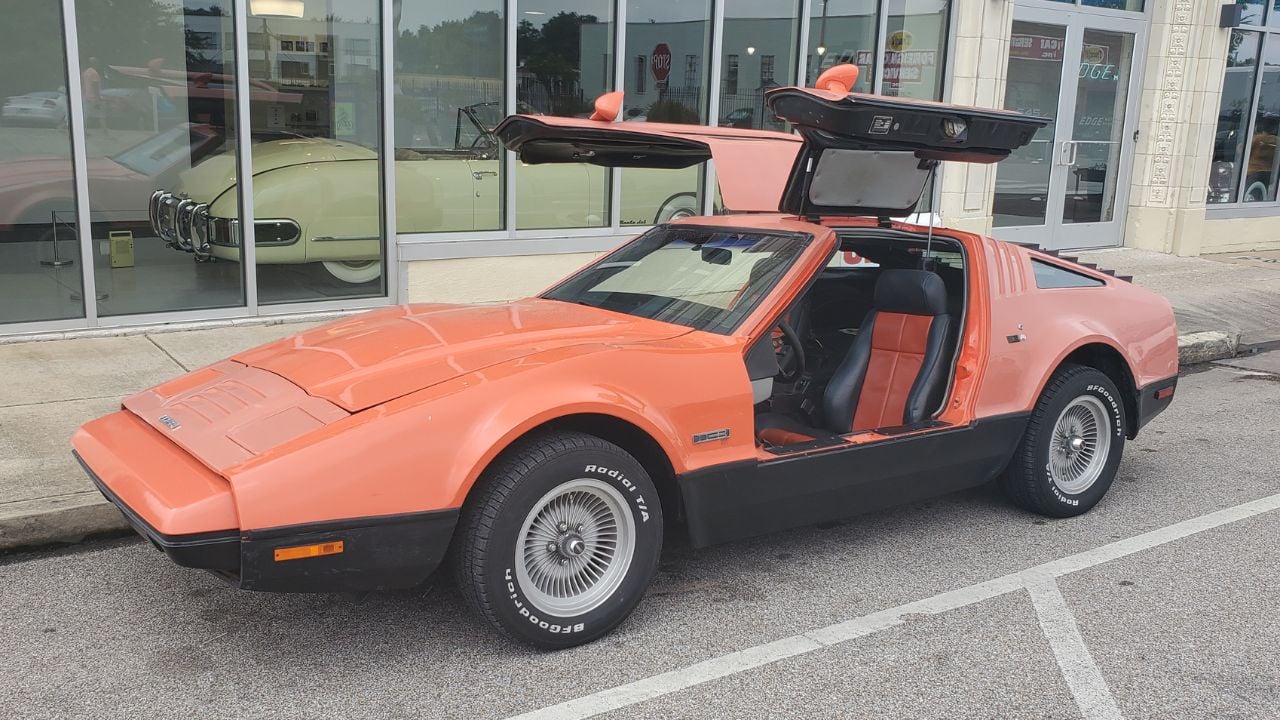
The Bricklin SV-1 was an ambitious attempt at building a safe, stylish sports car in North America, featuring gullwing doors and integrated safety bumpers before they were mandated. Malcolm Bricklin’s vision included acrylic body panels over a steel frame, giving the car a distinctive look that still turns heads today.
With an AMC V8 under the hood, it had respectable performance for the era, but quality control issues and production challenges plagued the company. Only about 2,900 were made before the company folded, leaving the SV-1 as a fascinating footnote in automotive history.
The concept was sound and the execution was interesting, even if the business plan wasn’t sustainable. Today, these cars have a devoted following that appreciates what they were trying to achieve.
1962-1963 Oldsmobile Jetfire

The Jetfire holds a special place in history as one of the first turbocharged production cars sold in America, beating many European manufacturers to the punch. Oldsmobile engineers developed a sophisticated system that used a water-alcohol mixture called “Turbo-Rocket Fluid” to prevent detonation, showing real innovation.
The compact, turbocharged V8 produced an impressive 215 horsepower from just 215 cubic inches, delivering performance that impressed drivers. Unfortunately, owners often forgot to refill the Turbo-Rocket Fluid reservoir, leading to engine problems that gave the car an undeserved reputation. Only 9,607 were built over two years before Oldsmobile pulled the plug on the experiment.
The technology was brilliant, but perhaps a bit too advanced for the maintenance habits of early 1960s car owners.
1971-1974 De Tomaso Pantera

The Pantera was an Italian exotic with an American heart, combining gorgeous Italian styling with the reliability of a Ford Cleveland V8. This mid-engine sports car could match or beat many of its European competitors in performance while being much easier and cheaper to maintain.
Ford imported them through Lincoln-Mercury dealers, giving the car legitimate factory backing and a dealer network for service. Despite this advantage and celebrity owners like Elvis Presley, the Pantera never achieved the recognition of Ferraris or Lamborghinis from the same era. Build quality issues and rust problems hurt its reputation, though the driving experience was genuinely thrilling.
Roughly 5,300 to 6,100 were sold into the U.S. during the Ford era, depending on the source, and they remain one of the better bargains in the exotic car world.
1975-1980 AMC Pacer

The Pacer was genuinely innovative in concept, designed from the inside out to maximize passenger space in a compact footprint with massive greenhouse glass. AMC’s engineers created asymmetric doors, with the passenger side longer than the driver’s side, to improve rear-seat access in an era before minivans.
The wide stance and low beltline gave occupants an airy, open feeling that was unusual for cars of the period. While the styling was unconventional, the Pacer actually sold reasonably well at first, with about 72,000 sold for 1975 and about 117,000 sold for 1976.
The Pacer deserves credit for trying something different at a time when American automakers desperately needed fresh thinking.
1953 Kaiser Dragon

The Kaiser Dragon was an upscale American car that featured luxury touches and distinctive styling that set it apart from the Big Three’s offerings. Kaiser used “bamboo” vinyl with a distinctive pattern, padded tops, and gold-plated exterior trim to create a genuinely premium feel. The Dragon came in four striking color combinations, each named after a type of dragon, with coordinated interiors that showed real attention to detail.
Despite the quality and uniqueness, Kaiser-Frazer was struggling financially and couldn’t compete with the marketing budgets of larger manufacturers. A total of 1,277 Dragons were produced for the 1953 model year, making them quite rare today.
These cars represented American independent automaking at its most creative, and they deserved a better fate.
1970-1974 AMC Gremlin

The Gremlin was actually a clever response to the first wave of fuel-efficient imports, arriving in showrooms on April 1, 1970, as one of the first new domestic subcompacts. AMC created it by essentially cutting down the Hornet platform, which was cost-effective and allowed quick development. The unusual Kammback design was polarizing, but it provided surprising cargo capacity and made the car instantly recognizable.
With prices starting under $2,000 and available with six-cylinder or V8 power, the Gremlin offered genuine value and versatility. Over 671,000 were built during its production run, which isn’t bad, but the car’s reputation suffered from jokes about its appearance.
The Gremlin was actually a practical, honest car that did exactly what AMC intended, and it deserves recognition for that.
1966-1969 Oldsmobile Toronado

The first-generation Toronado was a groundbreaking car, bringing front-wheel drive to a full-size American luxury coupe for the first time since the Cord. Oldsmobile engineers created a sophisticated system that could handle the torque from a 425 cubic inch V8 rated at 385 horsepower in the original 1966 model.
The styling, by David North, was dramatic and elegant, with hidden headlights and a distinctive fastback profile that looked like nothing else on the road. Despite winning Motor Trend’s Car of the Year and offering genuine innovation, the Toronado never outsold the rear-drive Buick Riviera. The engineering accomplishment alone should have made this car more celebrated, but it remained a niche player.
Today, collectors are starting to appreciate what Oldsmobile achieved with the original Toronado.
1959-1960 Edsel Corsair
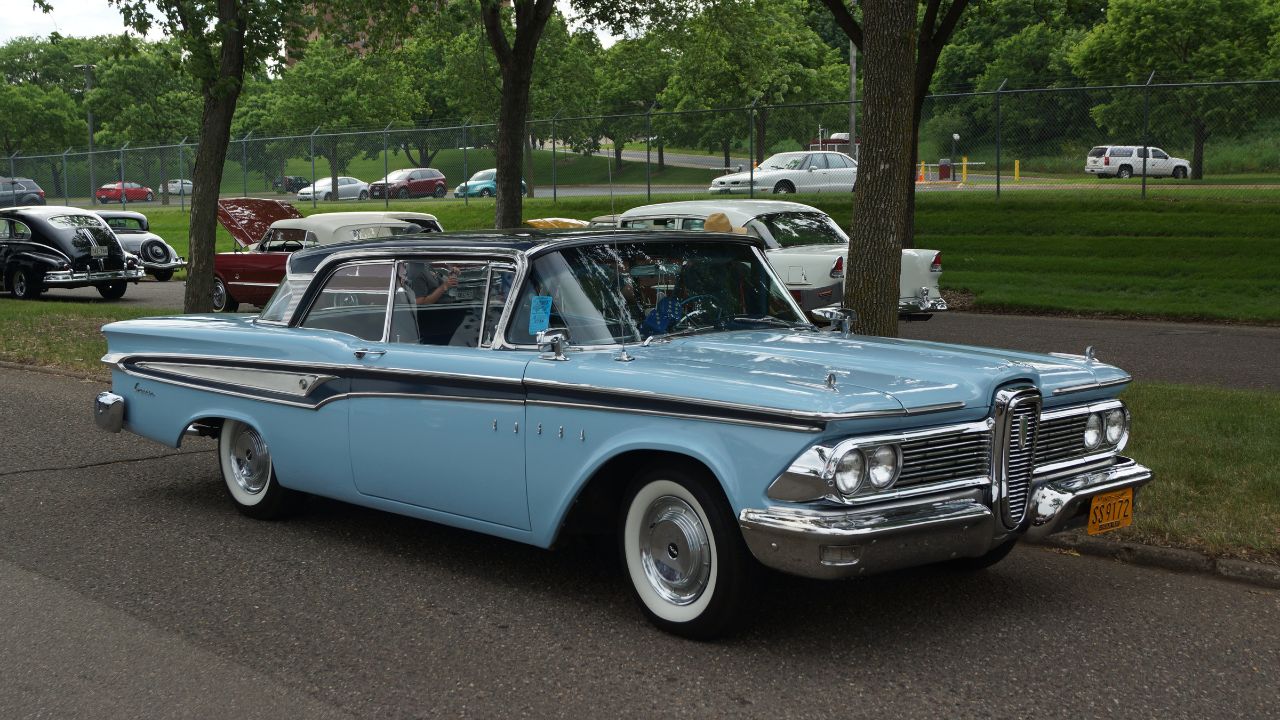
While the Edsel name became synonymous with failure, the 1959-1960 models were actually quite good cars that suffered from their predecessor’s reputation. Ford toned down the controversial styling, creating a more conventional but attractive design that wouldn’t have looked out of place at any dealership. The Corsair was the top trim level, offering genuine luxury features and solid build quality that compared well with other Ford products.
By this point, Ford had worked out most of the mechanical issues that plagued the 1958 models, resulting in reliable transportation. Unfortunately, the damage to the Edsel brand was already done, and these later cars couldn’t overcome the stigma.
Only about 47,700 Edsels were built across 1959 and 1960 before Ford pulled the plug, leaving the improved models as forgotten footnotes.
1971-1973 Buick Riviera

The boat-tail Riviera is one of the most distinctive American cars ever built, featuring a controversial rear-end treatment that you either loved or scratched your head at. Buick’s designers created something genuinely daring, with a long, flowing deck that tapered to a point like a boat hull.
The interior was equally dramatic, with a cockpit-style driver’s area and luxurious appointments throughout that justified the premium price. Despite the bold styling and strong performance from Buick’s big V8 engines, the boat-tail design limited trunk space and divided opinion among buyers. Sales were respectable but not spectacular, and Buick moved to more conservative styling for 1974.
These Rivieras represent a moment when American designers were willing to take real chances, and that spirit deserves appreciation.
1968-1974 AMC Javelin

The Javelin was AMC’s stylish answer to the pony car craze, offering distinctive looks and surprising performance in a package that didn’t follow the Mustang formula. Designer Teague created flowing lines and a long hood that gave the Javelin its own identity rather than copying what Ford and Chevrolet were doing.
AMC offered serious performance with the Go Package and later with the AMX version, including big-block V8s that could run with anything on the street. The Javelin found success in Trans-Am racing with Mark Donohue behind the wheel, proving its capabilities on the track. Despite competitive pricing and genuine style, the Javelin sold in smaller numbers than its more famous rivals, with about 227,600 built over its entire run.
Today’s collectors are discovering that the Javelin offers distinctive looks and strong performance at prices that make those Mustangs and Camaros look expensive.
1965-1967 Buick Skylark Gran Sport

In 1965, Buick introduced the Gran Sport package for the Skylark with a 401 cubic inch V8 rated at 325 horsepower, and later versions of the 401 were rated up to 340 horsepower. Buick marketed this as a gentleman’s muscle car, offering refined performance with luxury touches that set it apart from rawer competitors.
The Gran Sport could run with the best from Pontiac and Chevrolet while providing a more upscale driving experience and better appointments. Despite strong performance credentials and Buick’s reputation for quality, the Gran Sport lived in the shadow of the GTO and Chevelle SS. Production numbers were modest compared to those more famous muscle cars, making Gran Sports relatively rare today.
Collectors who appreciate subtlety and sophistication have long known what a gem the Gran Sport is, but it deserves wider recognition.
Conclusion

These 12 cars represent just a fraction of the interesting metal that didn’t quite get its due during the classic car era. Each one brought something special to the table, whether it was innovative engineering, distinctive styling, or a unique approach to solving automotive challenges. They remind us that automotive history isn’t just about the winners and the most popular choices.
Sometimes the most interesting stories come from the cars that took chances, tried something different, or simply had the misfortune of bad timing. The beauty of the classic car hobby is that there’s always something new to discover and appreciate, even decades after these cars were built.
These overlooked classics offer enthusiasts the chance to own something distinctive without following the crowd, and that’s something worth celebrating.