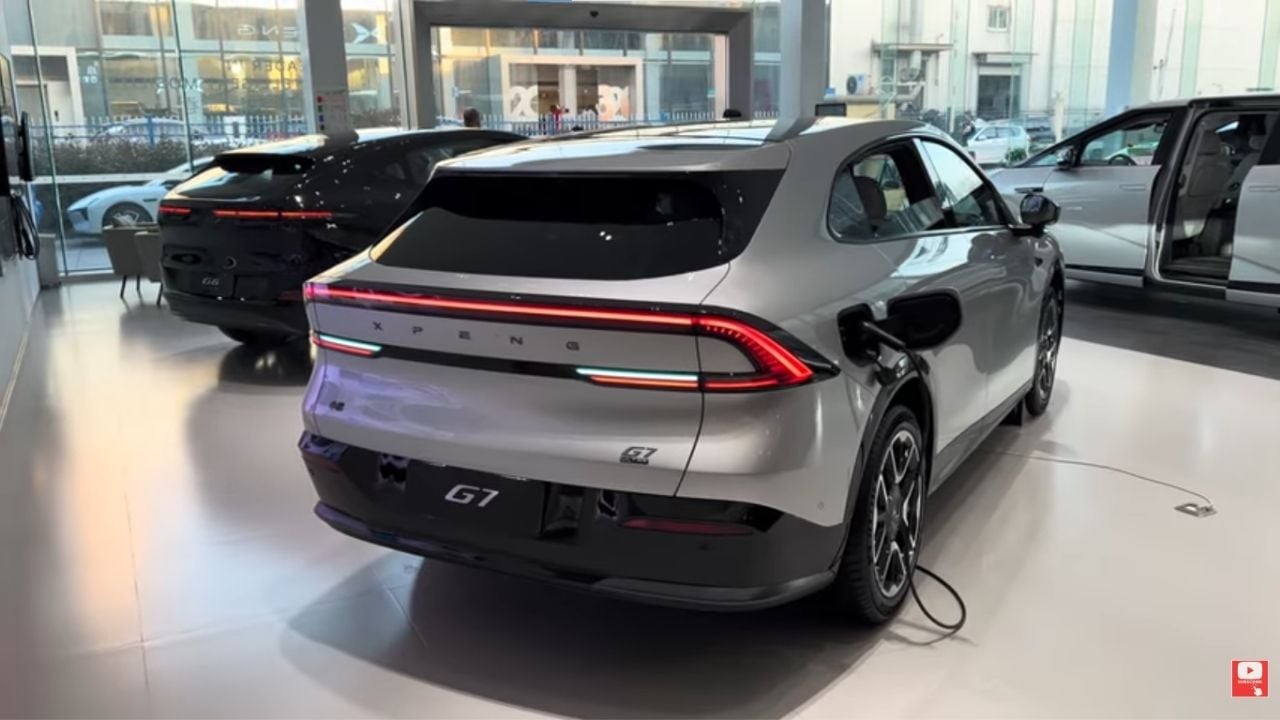

The announcement turned heads from Guangzhou to Silicon Valley, from Los Angeles to New York; Chinese electric vehicle maker Xpeng Motors has debuted an updated version of its G7 SUV that the company says can cover an astonishing 1,704 kilometers without stopping to refuel or recharge.
That is about 1,058 miles on a single go, by the company’s test cycle figures. That’s longer than the entire journey from Seattle to Los Angeles with miles to spare, New York City to Raleigh and, yes, even roughly the distance between Chicago and Toronto — all in one stretch.
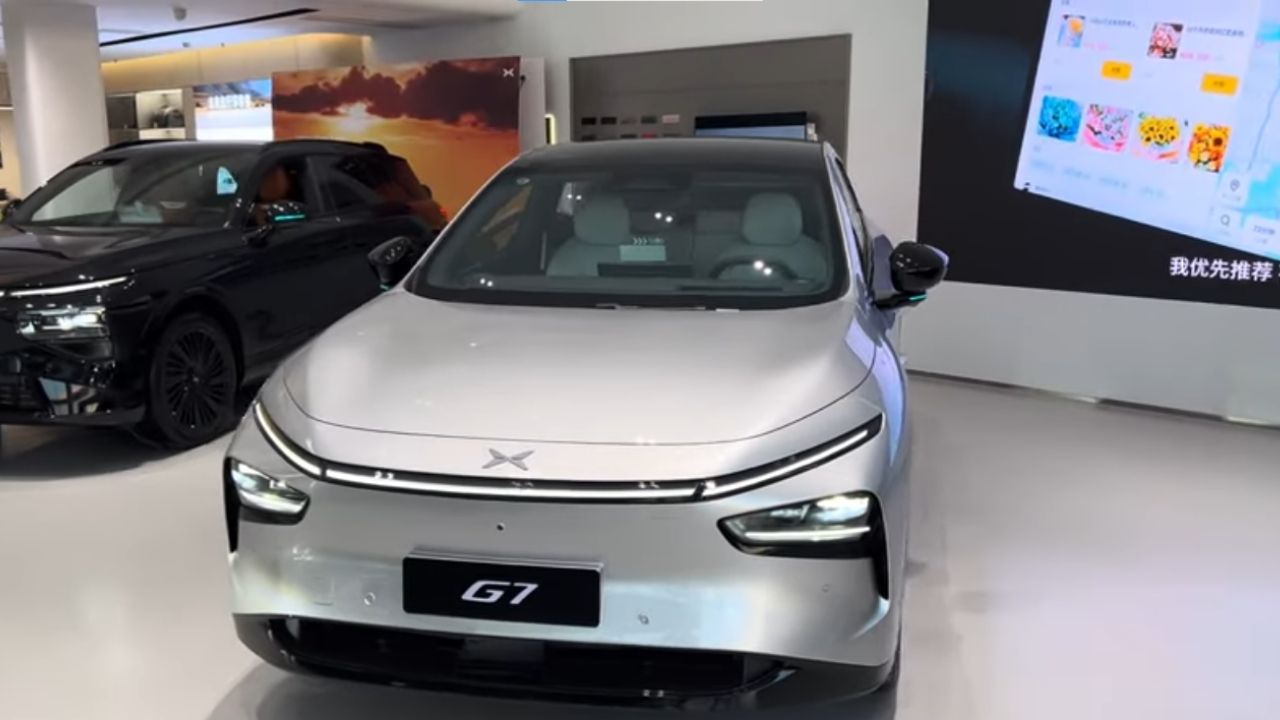
It was at a launch event in Guangzhou that Xpeng officials dropped this jaw-dropping claim: the new G7 model pairs a 55.8 kWh battery pack with a 60-liter petrol tank driving a small internal combustion engine that acts only as a range extender. That petrol unit does not drive the wheels directly; it recharges the battery while the SUV is underway, propping up the electric motor so the G7 keeps rolling much farther than a typical EV.
How Far Is 1,058 Miles?
On paper that 1,000-mile total range tops every other SUV on the planet under the same testing standards. Xpeng calls this world’s longest range for an SUV and positions the G7 squarely against rivals from Tesla to BYD as it expands beyond China’s borders into markets as varied as Europe, the Middle East, Southeast Asia and Africa.
To put that number into perspective using familiar U.S. distances, here are some reveals that show just how bold this claim is:
- Seattle to Los Angeles by road measures about 596–609 miles. The G7’s claimed 1,058 miles would not just make that trip on a single go, it could almost get you to Las Vegas after you arrive.
- Chicago to New York City is about 715 miles. Under Xpeng’s range figures, you’d still have runway to spare for a detour.
- Miami to Atlanta clocks in near 677 miles, another run the G7 could wrap without a pause.
The Psychology of Range
Of course, EV range claims always come with context. The figure Xpeng cites comes from China’s CLTC drive cycle, which typically yields higher numbers than the stricter EPA standard used in the United States.
Automotive analysts who track range metrics suggest that even if the real-world range drops off when tested under EPA methods familiar to U.S. buyers, a well-executed version of this range-extended system could still easily top 1,000 usable miles if conditions are favorable.
That reality makes the G7’s launch less of a niche celebration and more of a potential pivot point. One of the biggest psychological barriers to EV adoption over long distances has always been “range anxiety” — the nagging worry that you might not make it between cities without finding a charging station.
Whether you are driving down Interstate 5 in California, Interstate 90 across the northern U.S. or the long, open stretches of the Trans-Canada Highway, long range has real emotional appeal. Xpeng’s hybrid generation system is meant to offer a bridge between pure EVs and conventional petrol or diesel cars by giving drivers confidence they can make long trips without constant charging stops.
A New Era in the EV Arms Race
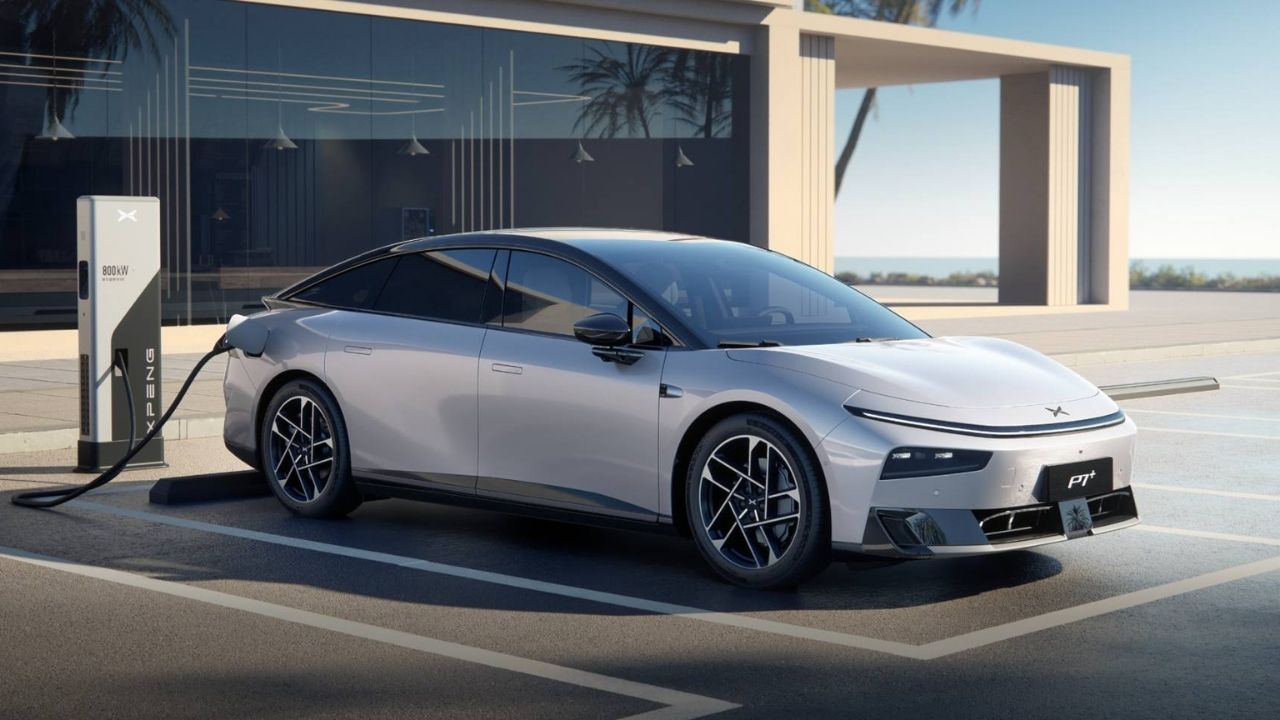
At the same launch, Xpeng also unveiled a version of its P7+ sedan with a “super extended range” of approximately 963 miles (1,550 km) total, riding on the same extended-range logic but fitted into a sleeker five-door package.
Xpeng’s aggressive pitch on range comes amid a fierce global EV arms race. Tesla’s vehicles still dominate headlines and sales in many markets, but competitors from China’s BYD, Nio, Li Auto and others have been closing the gap. In fact, BYD’s own long-range hybrid models have already claimed remarkable distances exceeding 800 miles under certain conditions in recent years.
What’s clear is that Xpeng’s new G7 — for all its hybrid sophistication — signals a broader truth about where electric mobility is headed. If SUVs can soon match or exceed the journeys once reserved for diesel and petrol tanks, long interstate road trips without charging stops may shift from anxiety-ridden fantasy to everyday reality.
Sources: SCMP