
Toyota’s influence on the automotive world stretches far beyond Camrys and Corollas. Thanks to its reputation for bulletproof engineering and smart collaborations, Toyota’s fingerprints can be found on a surprising variety of cars, even ones that never carried its badge.
From British sports cars powered by Toyota engines to American compacts built on Toyota platforms and even identity-swapping Lexus models in Japan, these examples show just how far Toyota’s reach extends.
Here are some of the most interesting vehicles shaped, directly or indirectly, by Toyota.
Lotus Elise, Exige, and Evora
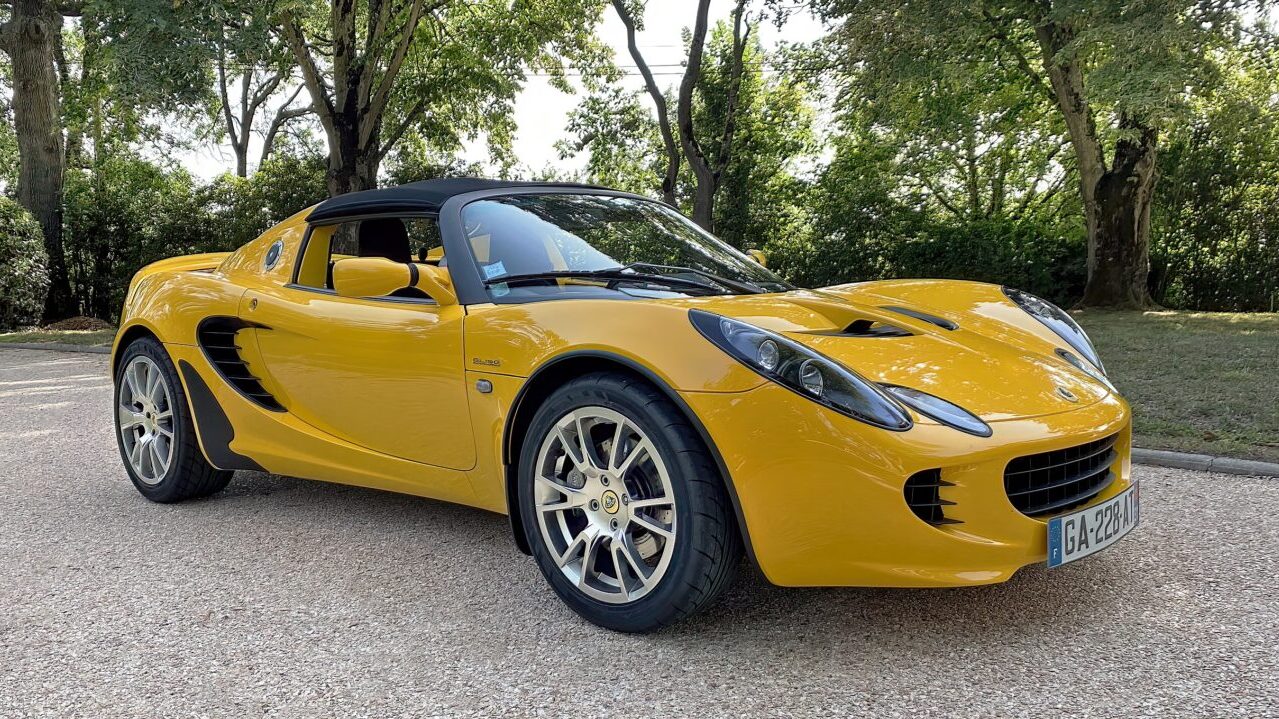
When Lotus needed reliable engines for its lightweight sports cars, it sourced several Toyota powerplants. Many Elise and Exige variants used Toyota 1.8-liter engines such as the 1ZZ-FE and 2ZZ-GE, while the Evora used a Toyota-sourced 3.5-liter 2GR-FE V6, an engine family also found across multiple Toyota and Lexus road cars. These Toyota-sourced engines helped Lotus pair low weight and sharp handling with everyday dependability.
The combination of British handling dynamics with Japanese reliability created some of the most engaging driver’s cars of the 2000s and 2010s.
Pontiac Vibe
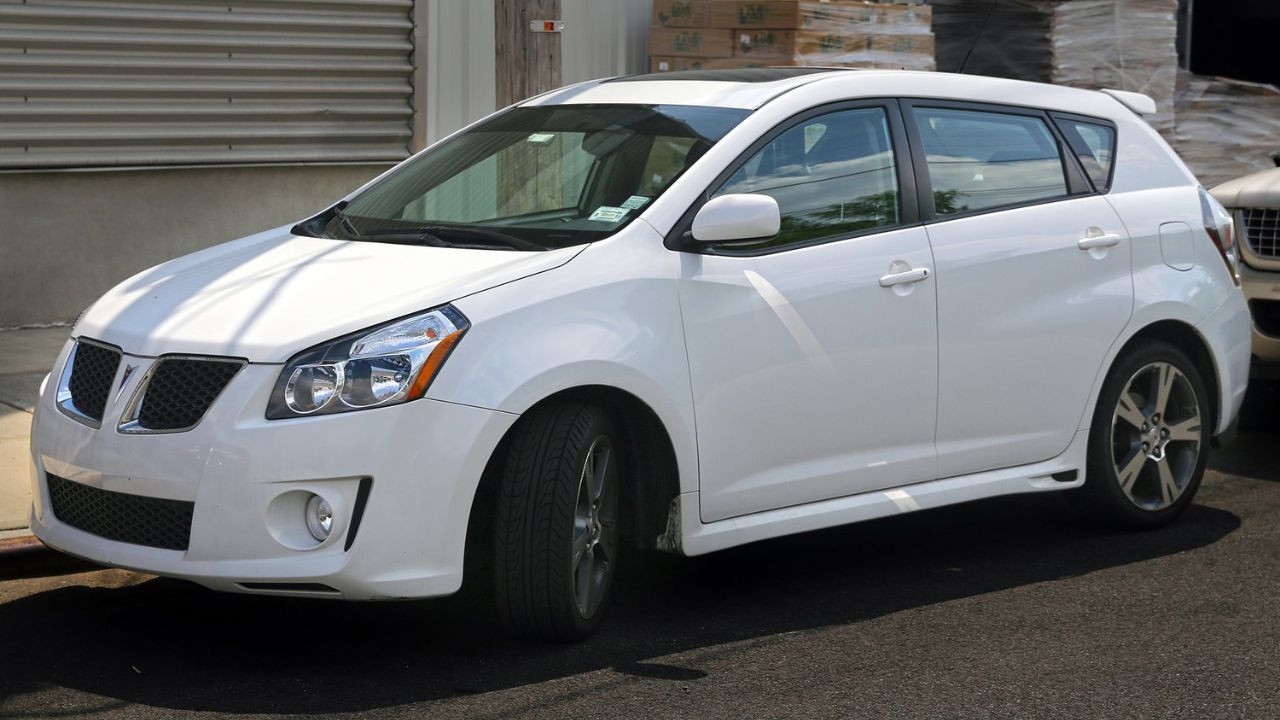
The Pontiac Vibe was more Toyota than Pontiac. Co-developed with the Toyota Matrix, it was assembled at the NUMMI plant in California right alongside its Toyota twin. Beneath the Pontiac styling sat Toyota underpinnings and Toyota four-cylinder engines. Depending on model year and trim, that included 1.8-liter engines such as the 1ZZ-FE and the higher-output 2ZZ-GE in early cars, and later the 1.8-liter 2ZR-FE and 2.4-liter 2AZ-FE options.
That Toyota DNA gave the Vibe a reputation for reliability that stood out in Pontiac’s lineup. Many owners found their Vibes outlasted other GM models of the same era, a testament to the benefits of Toyota engineering hiding under a different badge.
Daihatsu Copen

While Daihatsu is part of the Toyota Group, the Copen is primarily a Daihatsu engineering story. The first generation used a 659 cc turbocharged JB DET engine, and the second generation uses a 658 cc turbocharged KF DET three-cylinder, both from Daihatsu. Toyota’s influence shows up more through corporate ownership and niche variants such as the Toyota-badged Copen GR Sport in Japan, rather than the car borrowing mainstream Toyota engines.
This pint-sized roadster shows that Toyota’s influence extends even to Japan’s unique minicar segment.
Tesla Roadster (Original)

The original Roadster used a heavily modified Lotus Elise architecture; Toyota’s later (2010) investment and the RAV4 EV collaboration were separate from the Roadster’s development and launch. Tesla supplied the electric powertrain. That relationship is real, but it is separate from the Roadster itself, whose drivetrain was Tesla’s and whose underlying chassis came from Lotus.
While the Roadster’s drivetrain was entirely Tesla’s, its existence was made possible through Toyota’s engineering connections and financial backing. In many ways, Toyota played a quiet role in helping Tesla bring the world’s first modern electric sports car to market.
Lexus GS (Aristo in Japan)
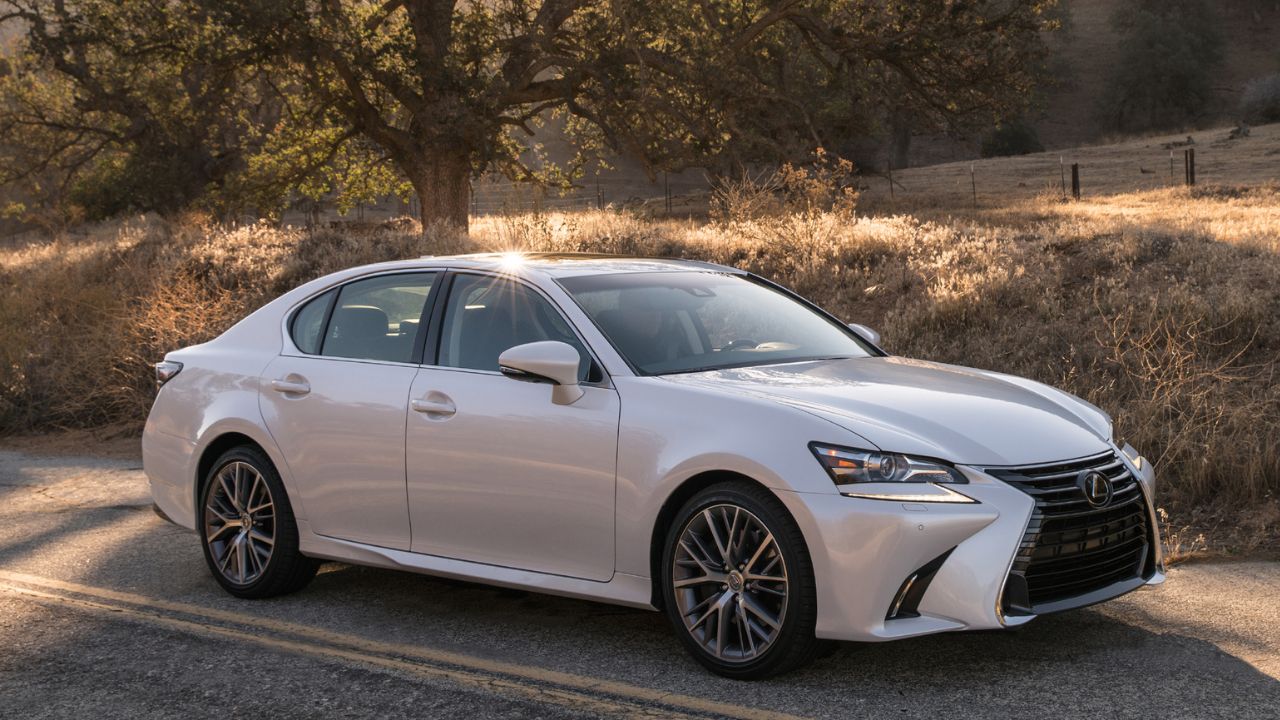
Wait, doesn’t Toyota own Lexus? Yes, but here’s the interesting part: some Lexus models were sold as Toyotas in the Japanese market, creating an identity swap situation. In Japan, the model was sold as the Toyota Aristo from 1991 until 2005, while export markets received it as the Lexus GS starting in the early 1990s. It is essentially the same vehicle line presented under different branding strategies depending on the market.
The engineering was identical, but the branding strategy completely changed how buyers perceived the vehicles.
BMW Z4

The current Toyota Supra shares its platform, inline-six engine, and many components with the BMW Z4. The cars were co-developed, with production taking place at Magna Steyr in Austria, utilizing BMW powertrains.
While purists debated the BMW heart in a Toyota legend, the partnership allowed Toyota to create a sports car that might not have existed otherwise.
Geo Prizm
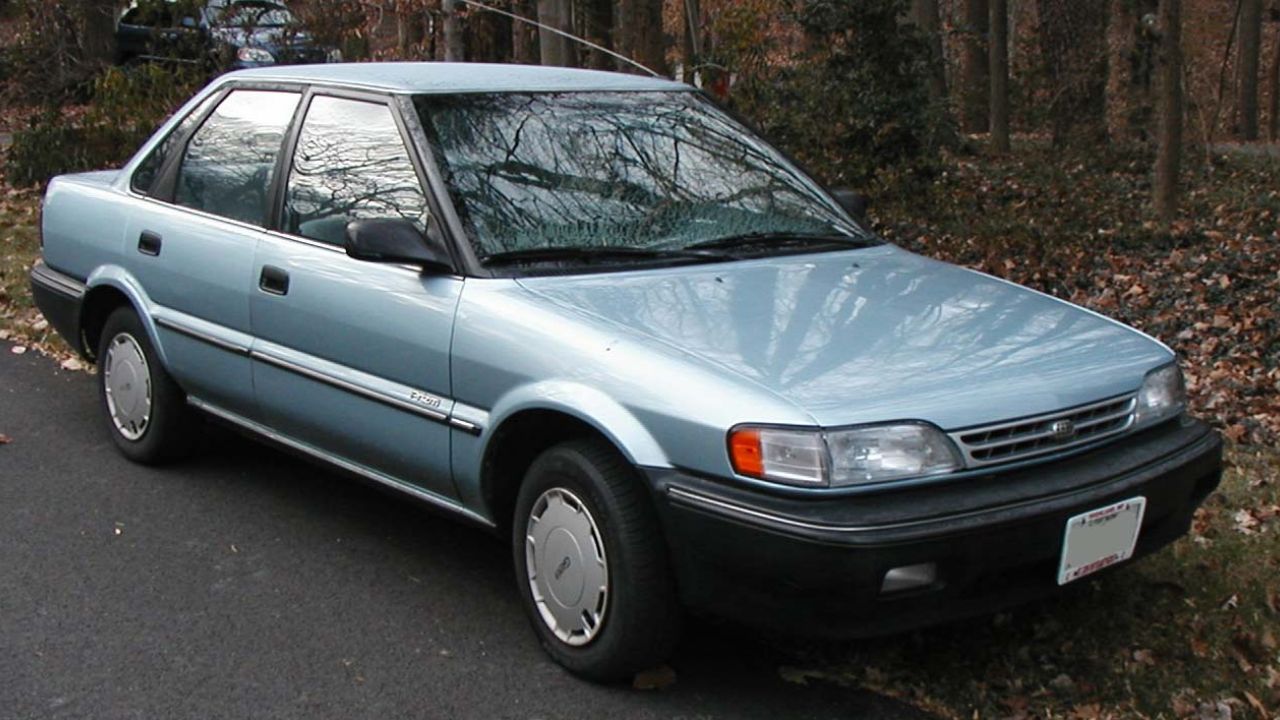
The Geo Prizm was essentially a rebadged Toyota Corolla, built at the NUMMI plant in California using Toyota’s platform, engines, and most components. GM sold this Corolla twin through their Geo and later Chevrolet brands, giving American buyers a Toyota in all but name.
The Prizm earned a reputation as one of the most reliable cars GM ever sold, which makes perfect sense given its Toyota heritage.
PSA Peugeot Citroën Small Vans

Toyota’s European light commercial vans, such as the ProAce and ProAce City, were developed through partnerships with PSA, sharing PSA-sourced platforms and diesel engines in many versions. This gave Toyota a fast path into European LCVs via PSA/Stellantis platforms and manufacturing, while PSA gained additional production volume from a major customer.
Morgan Plus Four (Modern)
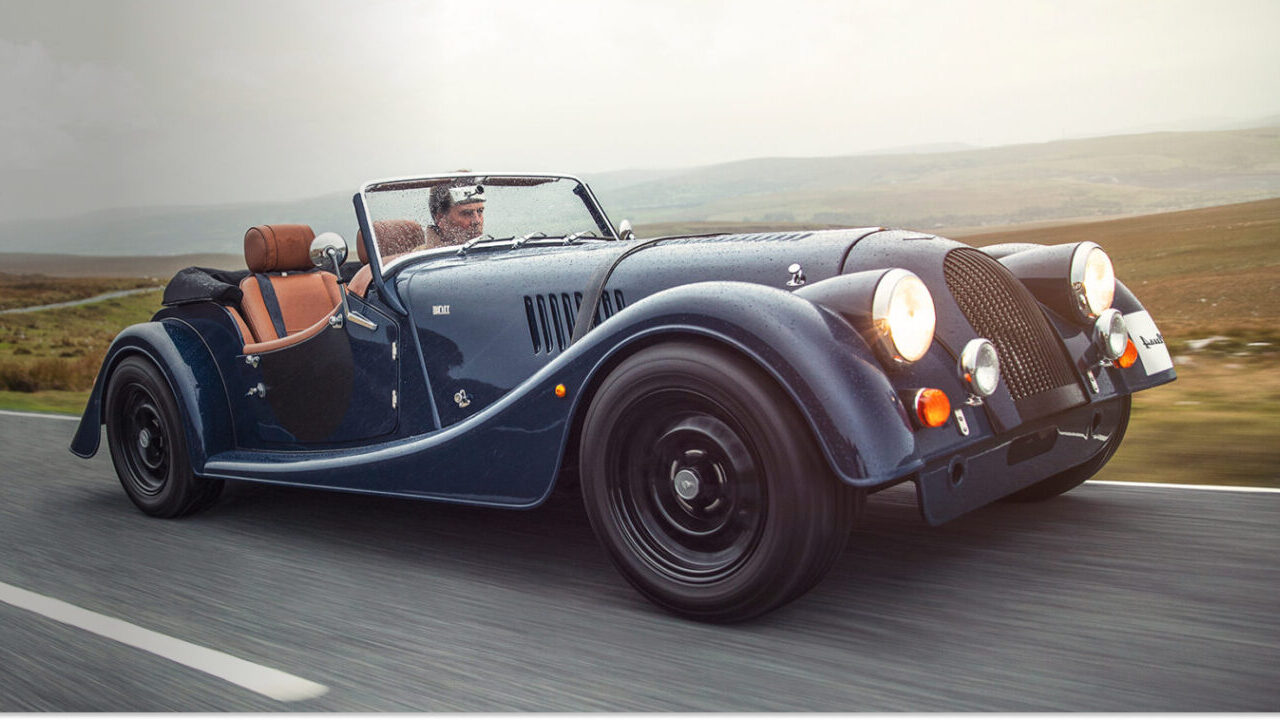
When Morgan modernized its lineup in 2020, the company turned to BMW for power. The Plus Four and Plus Six utilize BMW’s turbocharged engines, specifically the B48 four-cylinder and B58 six-cylinder, which also power the Toyota GR Supra.
This unlikely overlap means that a hand-built British roadster and Toyota’s flagship sports car share their mechanical heart. It’s a reminder of how deeply intertwined today’s global auto industry has become and how Toyota’s collaborations can ripple out into surprising corners of the car world.
Subaru BRZ / Scion FR-S (now Toyota 86)

The BRZ and its Toyota twin were jointly developed and are manufactured at Subaru’s Gunma plant in Japan. The boxer engine is Subaru’s design in both the 2.0-liter and 2.4-liter versions, and Toyota’s contribution includes calibration and development input plus the Toyota D4S direct and port injection system used on these engines.
This collaboration resulted in one of the most affordable and enjoyable-to-drive sports cars on the market, demonstrating that Toyota’s influence extends beyond just powertrains.
Bonus: Toyota Cavalier (Japan)

This one actually did wear a Toyota badge, though under the skin, it was pure Chevrolet. In the mid-1990s, Toyota struck a deal with General Motors to sell the U.S.-built Cavalier in Japan as the Toyota Cavalier.
Launched in 1996, it was available in sedan and coupe forms through more than 1,000 Toyota dealerships. To suit Japanese roads, it was converted to right-hand drive, equipped with revised steering and suspension, and outfitted with Toyota-style trim and safety features, including dual airbags and ABS. Power came from GM’s 2.4-liter twin-cam four paired with a four-speed automatic.
Despite Toyota’s efforts, Japanese buyers never fully warmed to the Cavalier’s American flavor. Sales fell short of targets, leaving the Toyota Cavalier as one of the brand’s strangest badge-engineering experiments.
Bonus 2: Mazda 2 (Scion iA / Toyota Yaris i A)
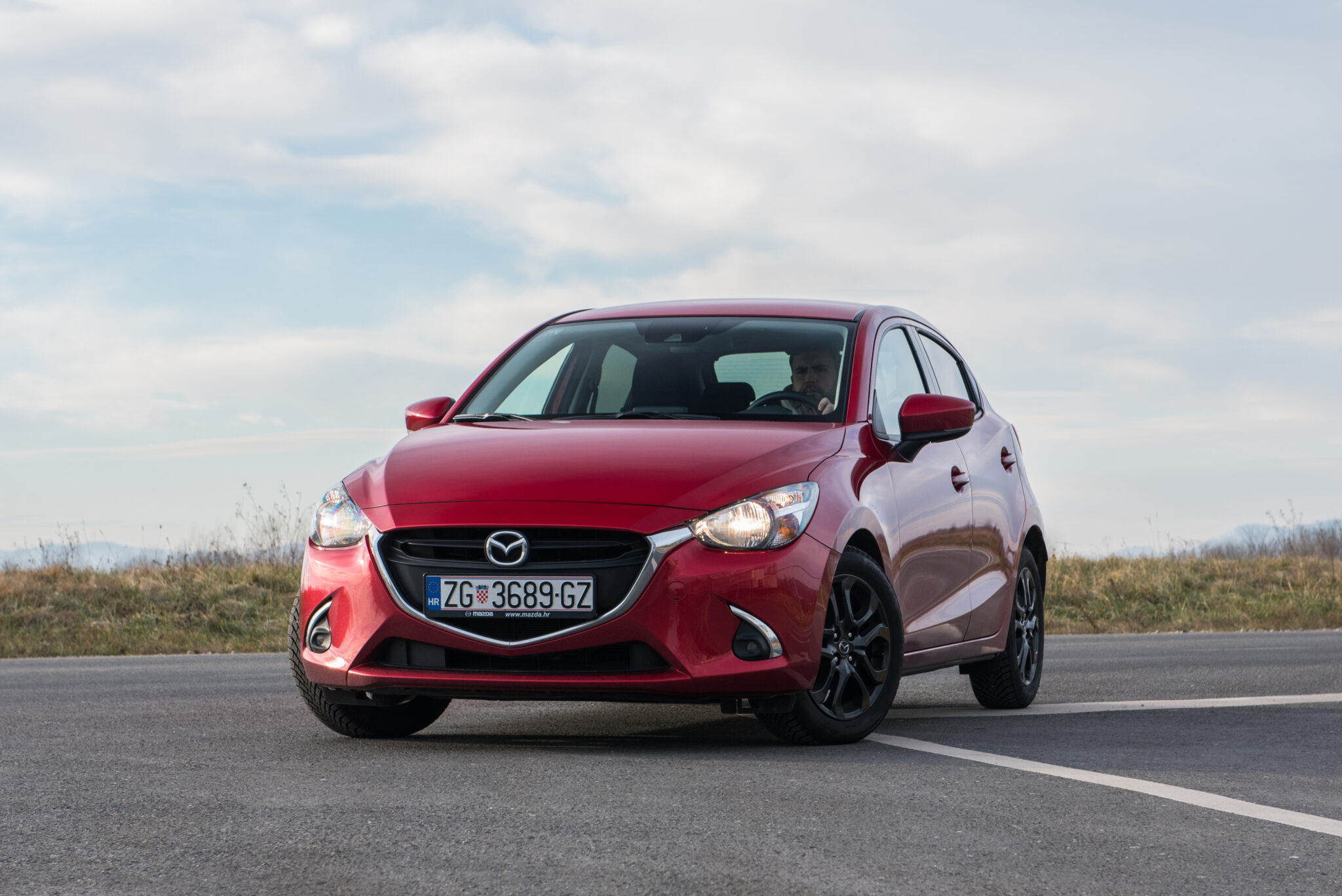
Usually, it’s other brands borrowing Toyota’s platforms and engines, but this time the roles were reversed. For its Scion brand, Toyota rebadged the Mazda 2 sedan as the Scion iA in 2016. After Scion was discontinued, the Toyota Yaris iA continued in North America.
Built in Mexico at Mazda’s plant, the car ran entirely on Mazda’s Skyactiv engine and platform. Toyota added its own branding and sold it through its network, showing how even Toyota was willing to lean on a partner when it needed a small, fuel-efficient sedan for its lineup.
Conclusion

From Lotus sports cars to Pontiac compacts, from Subaru joint ventures to Morgan roadsters, Toyota’s fingerprints are scattered across the global car industry in ways most drivers never realize. Sometimes it’s an engine, sometimes it’s a platform, and sometimes it’s simply Toyota’s engineering know-how shaping how another brand’s car feels on the road.
However, in a few quirky cases, such as the Toyota Cavalier or Mazda-sourced Yaris iA, the relationship was reversed: cars that actually wore a Toyota badge but weren’t really Toyotas underneath.
All of these stories show that in today’s interconnected auto world, the badge on the grille only tells part of the story. Look a little closer, and chances are you’ll find a hint of Toyota magic where you least expect it.