The 1940s were a turning point in automotive history. For much of the decade, production halted as manufacturers shifted focus to support the war effort. But when peace returned, so did the cars, and they came back with renewed purpose, bold styling, and a spirit of innovation.
Despite material shortages and economic uncertainty, automakers across the globe embraced the challenge. Some prioritized luxury and elegance, others leaned into speed and practicality. What united them was a sense of optimism, reflected in the sweeping lines, gleaming chrome, and meticulous craftsmanship that defined the postwar revival.
While names like Lincoln and Packard still resonate, the 1940s also gave rise to daring prototypes, overlooked brands, and design breakthroughs that continue to inspire. These cars helped to redefine what automobiles could be.
Our Selection Process
In researching this article, I explored dozens of lists highlighting the most beautiful and iconic cars of the 1940s, drawing from sources across the automotive world. Unsurprisingly, many of these roundups featured familiar names from legendary brands, vehicles that have long held a place of honor among enthusiasts and historians alike.
But style isn’t limited to the obvious. For this list, I selected a mix of standout models: some celebrated for their innovation and influence, others quietly remarkable and often overlooked. Together, they reflect the diversity, ambition, and enduring appeal of 1940s automotive design.
Figoni & Falaschi Delahaye 135 MS ‘Narval’

This stylish model came from the renowned French coachbuilder Figoni et Falaschi, known for crafting some of the most flamboyant and elegant vehicles of the 20th century. Designed by Giuseppe Figoni, the Narval Cabriolet stood out for its sweeping aerodynamic curves and a bold, protruding grille that earned it the nickname “Narval,” French for narwhal, due to its resemblance to the Arctic sea creature.
Built on the Delahaye 135 MS chassis, only seven Narval Cabriolets were produced, making it an exceptionally rare piece of automotive history. According to Eddy Eckart at Hagerty, Figoni has designed similarly elegant cars for Alfa Romeo and Delahaye throughout the 20th century, with his 1937 Talbot-Lago T150-C-SS Teardrop Coupe selling at auction for over $13 million.
Though the Narval may not have been widely embraced in its time, its legacy has endured. A restored 1947 example won Best in Show at the 29th annual Amelia Concours d’Elegance, proving that true craftsmanship never goes out of style.
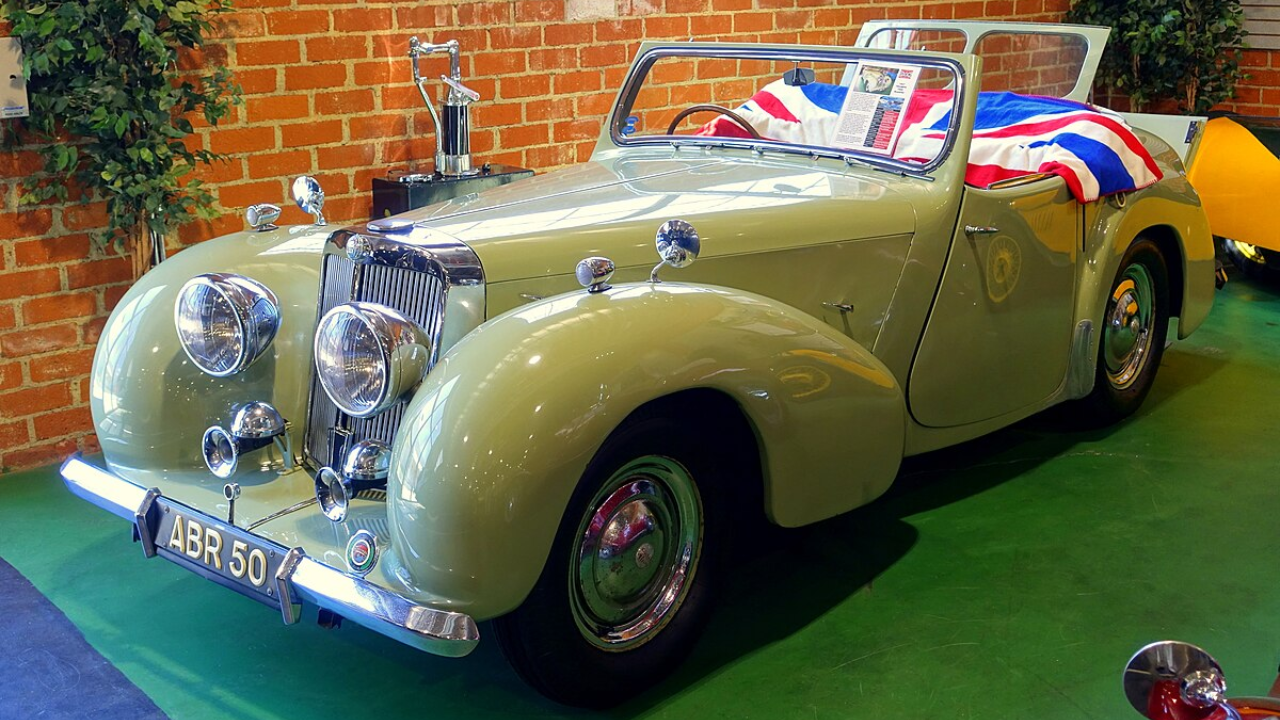
Triumph 1800 Roadster

The Triumph 1800 Roadster was created out of a rivalry between Triumph and Jaguar, who ended up releasing the XK 120 at that time. The XK 120 became a legendary sports car that’s gone for over $1 million at auction, wrote Andrew Newton at Hagerty. Meanwhile, the 1800 Roadster hasn’t been as popular, but is just as deserving of the spotlight.
According to Hagerty, the roadster had a 1,776cc four-cylinder engine within its aluminum and wood body. It was really, really slow, chugging to 60 mph in 24 seconds and reaching just 75 mph. Now worth upward of $50,000, this leisurely and attractive vehicle has definitely gained a following.
Invacar

The Invacar was a three-wheeled vehicle issued by the Ministry of Health with the intention of being used by those with physical disabilities, including wheelchair users. The unusual but useful car was first released after World War II, meant to provide a cost-effective form of transportation.
According to the Hull Museum, the Invacar was powered by a lawnmower engine yet had no issue traveling long distances. One time, an Invacar was said to have traveled 2,750 miles in 16 days. Unfortunately, the car was considered inconvenient and dangerous, and it was banned from UK roads in 2003. But the car lasted several decades for a reason, and it’s still an inspirational concept today.
Bristol 401

After spending six years building aircraft, the Bristol Aircraft Corporation contemplated going into the car business post-World War II. They partnered with the brothers behind Frazer Nash, the early British agency for BMW. According to Hagerty, the brothers visited a bombed-out BMW factory in Berlin, uncovering engines and some design plans.
The 401 was revealed in 1949 as an aerodynamic and lightweight race-focused car that was tested in a wind tunnel. The top speed was 100 miles per hour, allowing the vehicle to finish third at the 1949 Monte Carlo Rally and then second at Targa Florio. Although only around 600 units of this early Bristol design were made, they’re sure to grab attention.
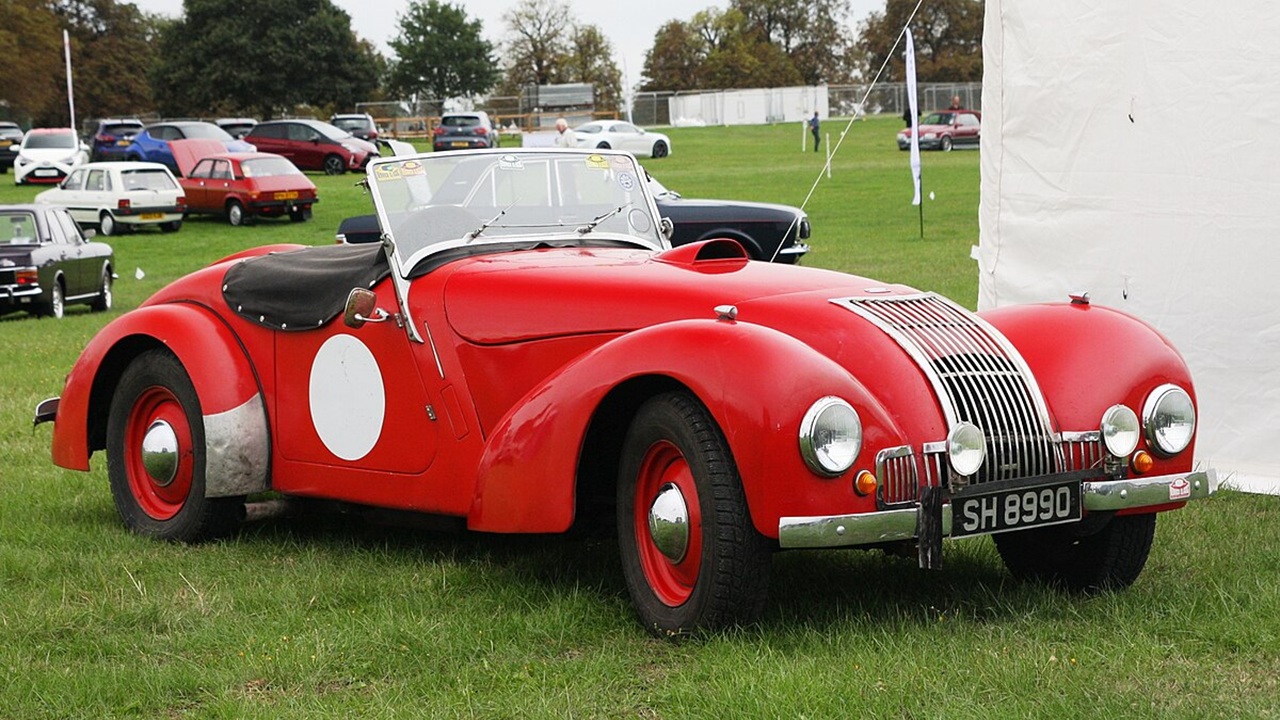
Allard K1

Inspired by the powerful Ford engines widely available in the United Kingdom after World War II, designer Sydney Allard set out to build a European sports car that could rival American muscle. The result was the Allard K1, a lightweight, rear-wheel-drive racer capable of reaching speeds up to 90 mph, according to Cars of the Past.
Built for both track and road, the K1 featured a streamlined body and agile handling. However, its minimal trunk space made it less suited for touring, as noted by the Allard Register. Despite its performance credentials, the K1 struggled to find widespread success in the 1940s.
Today, the Allard K1 is a rare and coveted collector’s item. Only 150 units were produced, and depending on condition and provenance, examples have sold for six-figure sums at auction. While it may have been overlooked in its time, the K1 now stands as a testament to postwar ingenuity and independent design.
HRG 1500

This is a race car that valued performance over comfort. H. R. Godfrey was looking to create a lightweight and minimalistic car that could hit the track, and he came up with the HRG 1500. Not many were produced during its short production run in the ’30s, so it wasn’t the most talked-about car back then.
According to Nick Dellis at SuperCars, the HRG 1500 may not have been popular on the road, but it shined on the track. One of the first prototypes raced at the 1937 24 Hours of Le Mans, placing 13th overall. It won the 1.5-liter class at Le Mans in 1939 and then in 1949.
Tucker 48

The Tucker 48 appeared after World War II to fill a void while the Big Three car manufacturers focused on war efforts. Preston Tucker hoped his vehicle would be exactly what the American public needed. According to the Audrain Automotive Museum, designers like Alex Tremulis quickly whipped up the Tucker 48’s sporty, bold appearance. Then, all 51 cars produced were hand-built in Chicago.
To fund production, Tucker started taking payments for additional features from hopefuls on the car’s waitlist. This led to a fraud investigation by the US Securities and Exchange Commission and a public trial. While Tucker was eventually found innocent, the investigation tarnished his reputation, and investors pulled out of the business. Despite being technologically advanced for the ’40s, the Tucker 48 didn’t gain traction. Now, however, the rare beauty is highly desirable and sells for millions, as seen in sales at Classic.
Maserati A6 1500

After decades of building race cars, Maserati made its first foray into road-legal production with the A6 series. Designed by Ernesto Maserati and Alberto Massimino, the A6 1500 debuted in 1947, marking a new chapter for the brand even before Ferrari’s road cars entered the scene.
Most A6 1500s featured hand-crafted coachwork by Pininfarina, with a sleek, rounded silhouette and a long, elegant front end that wouldn’t look out of place among today’s grand tourers. While the grille and headlights reflect the styling cues of the 1940s, they remain beloved hallmarks of the era.
Only 61 units of the A6 1500 were produced between 1947 and 1950. It was definitely a rare and highly collectible piece in Italian automotive history.
Peugeot 203

Released in 1948, the Peugeot 203 marked the brand’s first postwar production model and played a pivotal role in France’s industrial recovery. Developed over several years and unveiled at the 1947 Paris Motor Show, the 203 featured a sleek fastback silhouette, monocoque (unibody) construction, and a reliable 1.3-liter inline-four engine.
Praised for its durability and modern engineering, the 203 quickly became a symbol of resilience and progress. It was Peugeot’s only model until 1955, helping reestablish the company as a leading force in European car manufacturing during a critical period of economic renewal.
Healey Silverstone

You may have heard of the Austin-Healey 100, but Donald Healey created this showstopper long before that, back in 1949. According to Hyman Ltd, the aggressive and aerodynamic sports car featured a 2.4-liter four-cylinder engine and a very lightweight construction that made it a massive hit with amateur club racers.
As a result, Healey created 104 examples, solidifying the carmaker’s presence in America’s sports car racing scene. It was often used in long-distance rally races, where it often had impressive results. This includes a victory at the Coupes des Alpes and Liege-Rome-Liege in 1951.
Tatra T87

If you’ve never heard of the Tatra T87, you’re not alone, but this Czechoslovakian creation from the late 1940s was one of the most advanced cars of its era. Designed by Hans Ledwinka, the T87 featured a rear-mounted, air-cooled 3.0-liter V8 engine and a streamlined body inspired by aerodynamic principles pioneered in aircraft design.
Capable of reaching speeds up to 100 mph, the T87 had a drag coefficient of just 0.36, remarkably low even by today’s standards. Its futuristic shape, complete with a central rear fin and flowing fastback lines, made it stand out in a world still dominated by boxy sedans.
The T87 earned admiration from designers like Ferdinand Porsche, who reportedly drew inspiration from Ledwinka’s work when developing the Volkswagen Beetle. Though it was never widely known outside Europe, the T87 remains a cult favorite among collectors and design historians, celebrated for its bold engineering and timeless silhouette.
The End of an Era

The 1940s may have been a challenging decade for carmakers, but the vehicles that emerged from it carry a sense of purpose, creativity, and resilience that still resonates today. Some were born out of necessity, others from ambition, and all of them told a story.
Whether it’s the swooping lines of the Delahaye, the bold vision behind the Tucker 48, or the practicality of the Invacar, each car here represents a moment when designers and engineers reached for something more, even in uncertain times.
These aren’t just relics of the past. They are rolling reminders of what’s possible when innovation meets artistry. And while they might not show up on every collector’s radar, they deserve a place in the spotlight. They remind us how far we’ve come and how stylish the journey has been.