For many people, a car is simply transportation — a tool to get from one place to another with as little hassle as possible. But even if you don’t treat your vehicle like a hobby or a passion project, a few simple changes to your daily routine can help you avoid some of the most expensive repairs a car can throw at you. The little habits you sometimes see car enthusiasts practice might look unnecessary, but those same routines are often why their vehicles last longer, run smoother, and sidestep the repair bills that catch other drivers off guard.
The good news? You don’t need to be an expert to protect your car. Small decisions, basic preventive care, and paying attention before problems grow can dramatically reduce your chances of facing a four-figure repair. Here are some of the costliest automotive failures — and the easy, affordable steps you can take today to help prevent them.
Transmission Failure

This is one of the scariest phrases a car owner can hear, because the entire unit is complex and expensive to replace. When the transmission starts shifting poorly, slipping between gears, or refusing to go into gear at all, the repair bill for replacement or a complete rebuild can easily fall in the $4,000 to $8,000+ range.
The reason transmissions fail is usually neglect of the simplest fluid: the transmission fluid itself. Just like engine oil, it breaks down over time, loses cooling properties, and accumulates particles that destroy internal components.
Prevent it: Check your owner’s manual for the service interval — often 30,000 to 60,000 miles where the manufacturer specifies service (some list longer intervals). A fluid service (drain/fill or pan service, depending on transmission) is a minor expense compared to buying a whole new gearbox.
Head Gasket Replacement
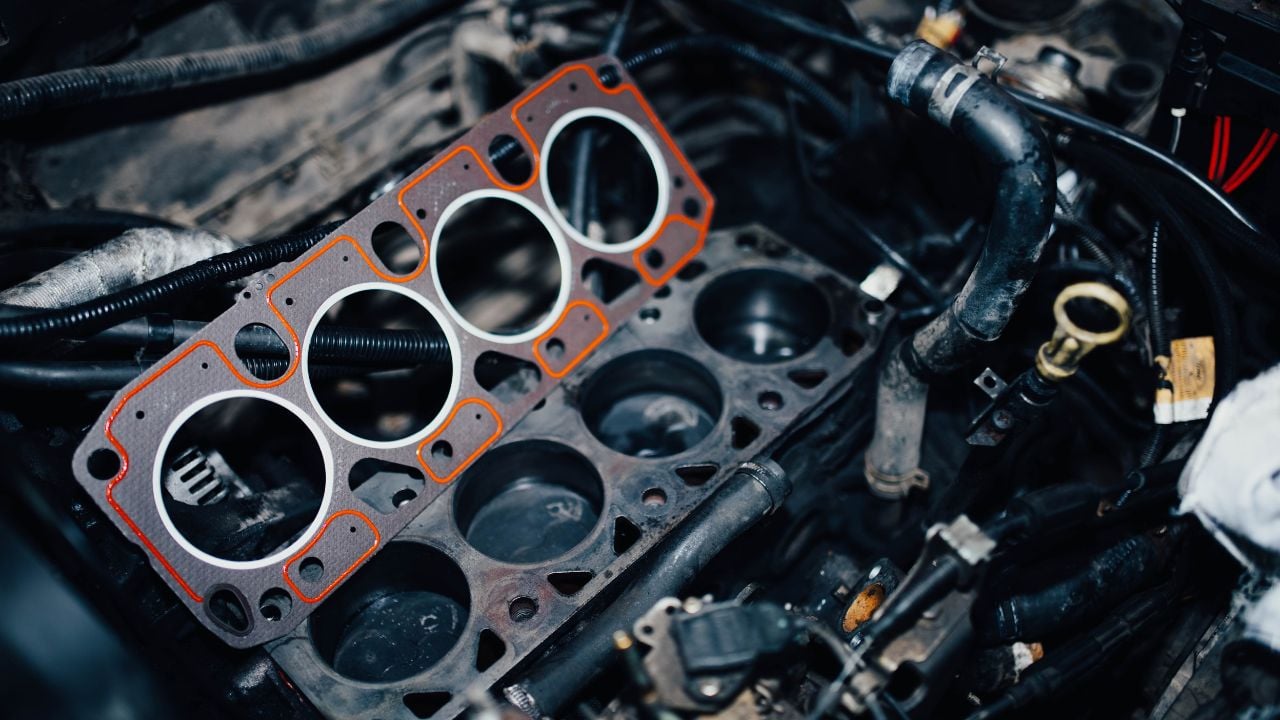
The head gasket is a thin seal between the engine block and the cylinder head, keeping combustion pressure, oil, and coolant separated. When it fails, you might see white smoke, milky oil, or rapid overheating. Repairing a blown gasket is costly because technicians must remove many components to reach the seal.
Bills often run $2,000 to $4,000+, and higher, especially on V-shaped engines with two gaskets.
Prevent it: Most failures come from overheating caused by coolant leaks or thermostat issues. Never allow the temperature gauge to hit the red, and fix cooling problems immediately.
Air Suspension System Leaks
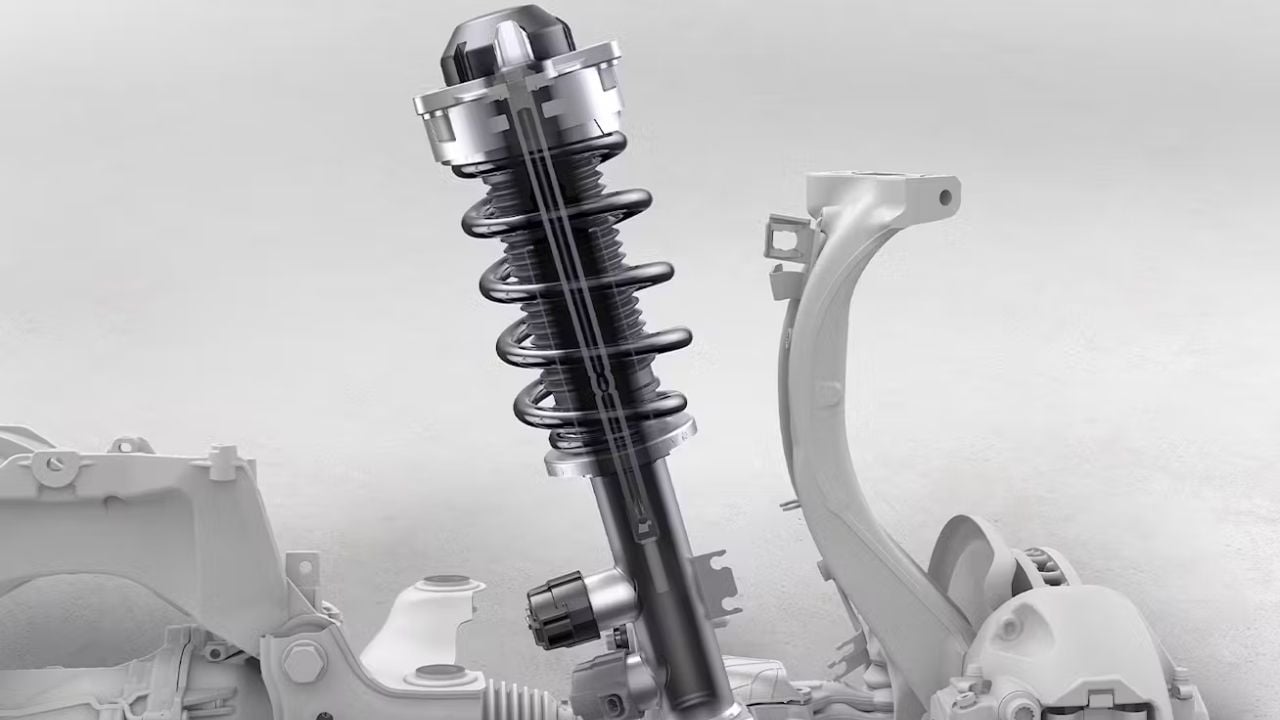
Found on many luxury SUVs and performance sedans, air suspension uses pressurized air springs for an exceptionally smooth ride. If the vehicle sags overnight or one corner drops lower than the rest, you may have a leaking air spring or a failing compressor. Replacing a single air spring often costs $800 to $2,000 (and compressors can be similar).
The root cause is often simple age: rubber bladders dry out, crack, and leak. But many owners overlook how road salt and grime accelerate deterioration. Salt caked on the undercarriage can dry out rubber, corrode fittings, and shorten the life of air lines and sensors.
Prevent it:
- Keep the undercarriage clean, especially in winter climates.
- Address small leaks early before the compressor burns out from overworking.
These steps will not stop wear entirely, but they can prevent a far more expensive repair later.
High-Pressure Fuel Pump (HPFP) Failure
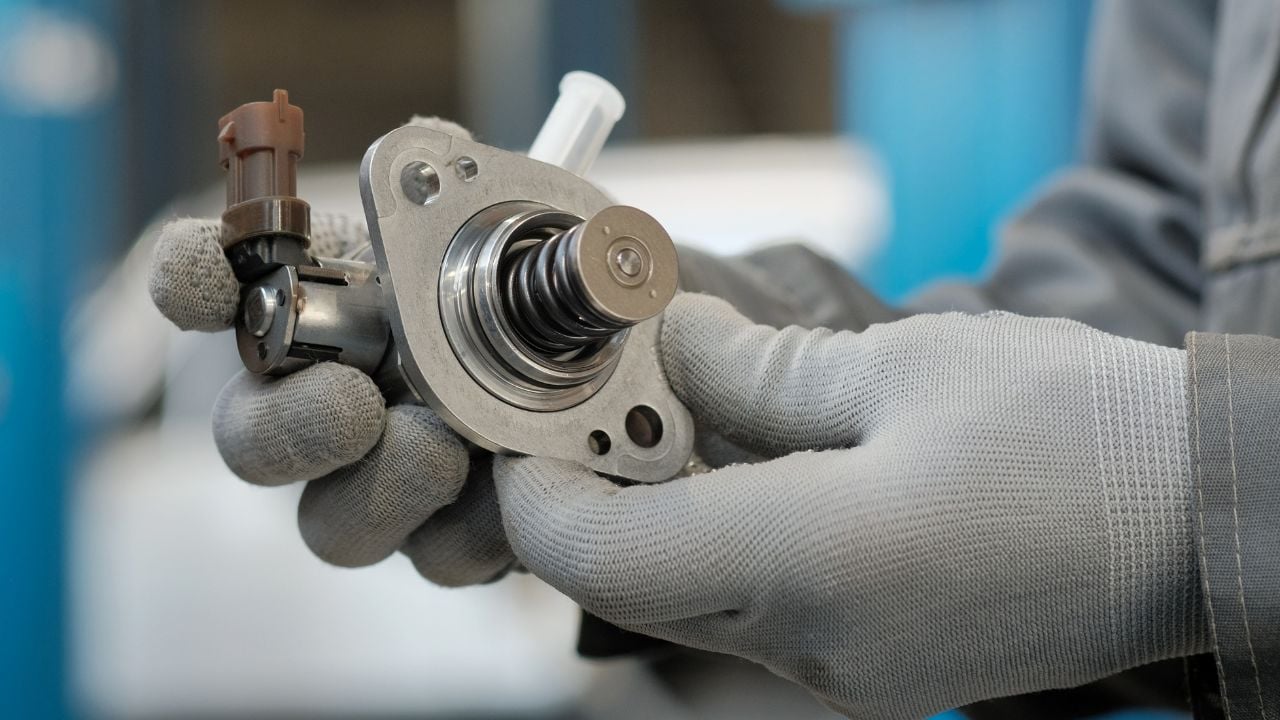
Modern direct-injection engines rely on a high-pressure pump that works under extreme internal force. When it fails, the car may hesitate, stall, or refuse to start. Because the pump is complex and integrated with engine electronics, replacement often costs $1,500 to $3,500.
Prevent it: Use high-quality gasoline. Contaminated or bargain fuel can accelerate internal wear. Stick with trusted stations for peace of mind.
Dual-Mass Flywheel Replacement

Many modern manual-transmission performance cars use a dual-mass flywheel to reduce vibration. When the internal springs wear out, you may hear rattling or feel harsh clutch engagement. Because the transmission must be removed to replace the flywheel, repairs often reach $1,800 to $3,000+.
Prevent it: Avoid aggressive downshifting or excessive clutch slipping in traffic. Smooth driving prolongs the flywheel’s life.
Turbocharger or Supercharger Replacement
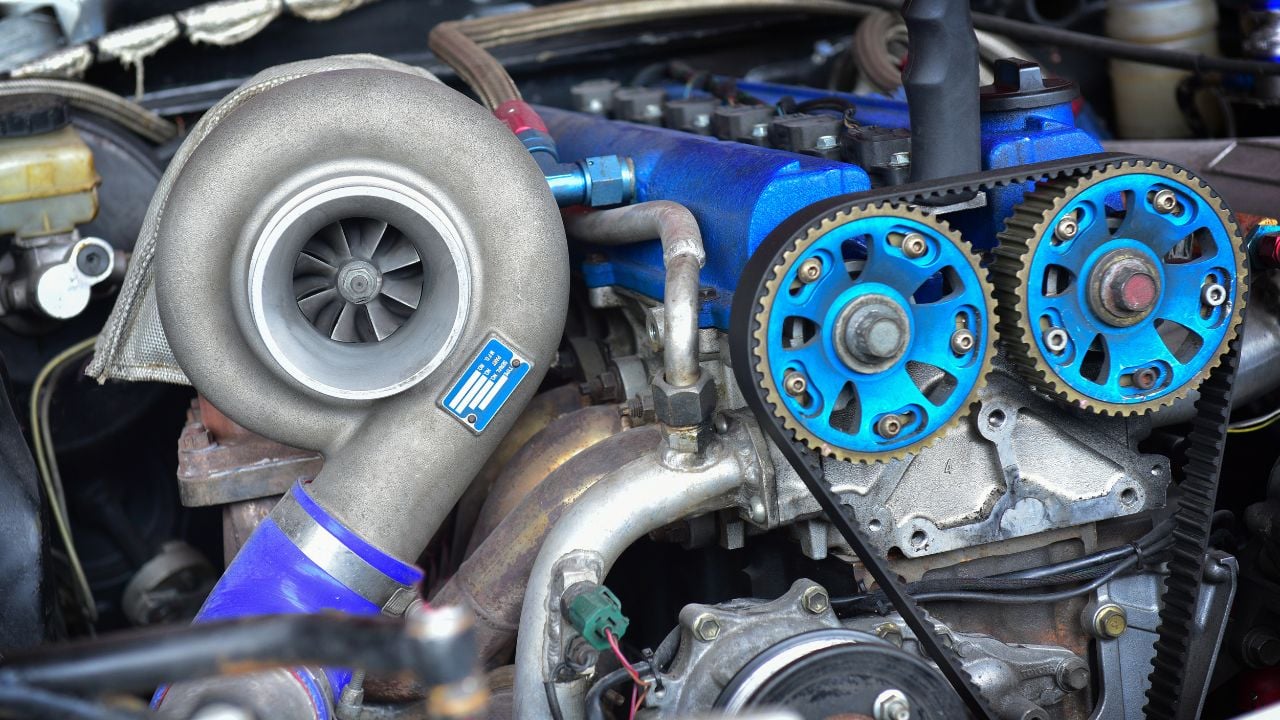
Forced induction dramatically boosts power, but it also adds heat and stress. A whining turbo, blue exhaust smoke, or sudden power loss can indicate bearing failure. Replacement often costs $2,500 to $5,000+, depending on the engine and number of turbos.
Prevent it:
- Use the correct synthetic oil.
- Change oil on schedule.
- After hard driving, drive the last minute gently and/or let it idle briefly before shutdown, especially on older turbo systems
Most turbo failures come from dirty oil or hot shutdowns.
Timing Chain or Belt Replacement

The timing system synchronizes valve and piston movement. If this timing is lost, the engine can destroy itself. Timing belts must be replaced as preventative maintenance every 60,000 to 100,000 miles. Failure can result in a $6,000 to $10,000+ engine replacement.
Timing chains last longer but still wear out when oil changes are neglected.
Prevent it: Replace timing belts on schedule and keep oil clean for chain-driven engines.
Carbon Buildup (Direct-Injection Engines)
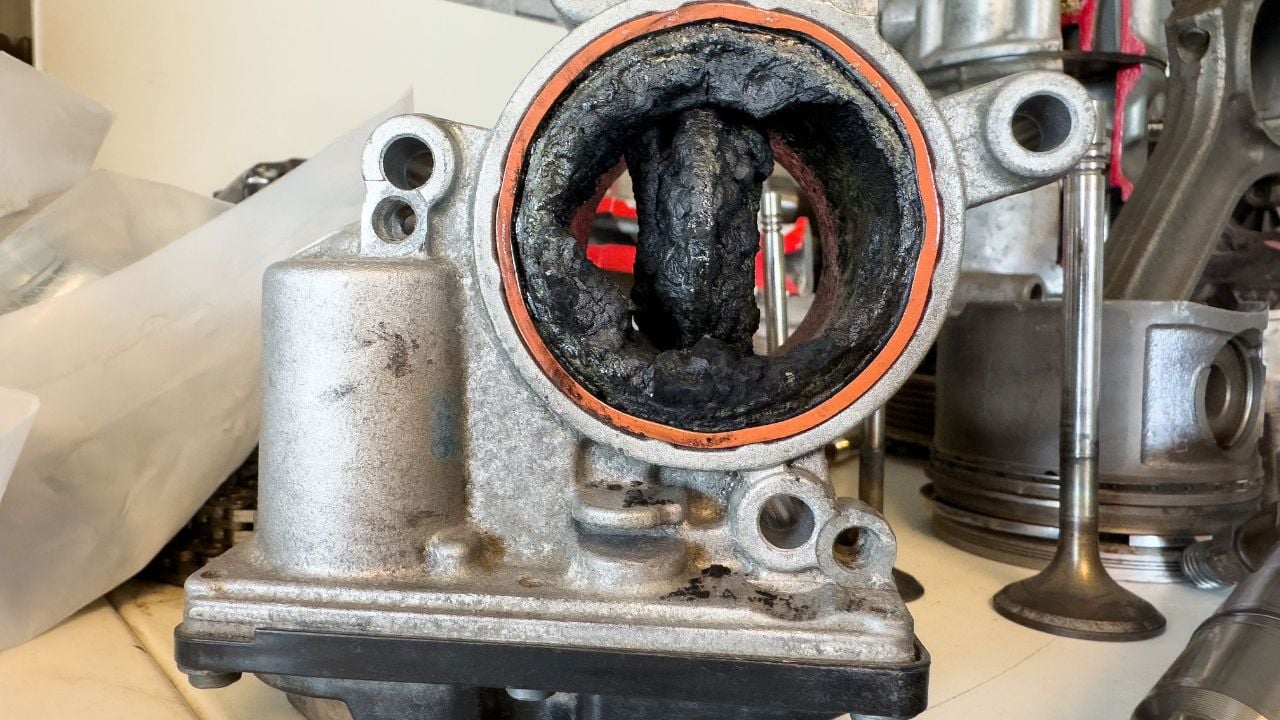
Direct injection sprays fuel directly into the combustion chamber, meaning fuel detergents never wash over the intake valves. Oil vapors accumulate and harden into carbon, reducing airflow, hurting performance, and causing misfires. Cleaning — commonly done via walnut blasting — typically costs $500 to $1,200.
How fast carbon forms often depends on oil and fuel quality. High-quality synthetic oil produces fewer vapors and breaks down more cleanly.
Fuel matters too. Many drivers assume all gasoline is the same, but Top Tier brands (Shell, Mobil, etc.) often cost the same as off-brand stations — and sometimes less with rewards programs. Their enhanced detergent packages help keep injectors and combustion chambers cleaner (and can help reduce deposits overall), though direct-injection intake-valve deposits can still occur, offering added peace of mind.
Using premium synthetic oil, sticking to recommended service intervals, and choosing trusted fuel brands won’t eliminate carbon buildup entirely, but they can significantly slow it.
Corrosion-Related Brake Line Failure

Replacing pads and rotors is routine, but rusted brake lines are far more serious and expensive. In older vehicles or those exposed to heavy road salt, brake lines can corrode from the outside in. A sudden failure can require a full-line replacement costing $1,500 to $3,000.
Labor drives the price: brake lines run through tight spaces along the chassis and can be difficult to access.
Prevent it:
- Keep the undercarriage clean — salt and grime accelerate rust.
- Apply annual rust-inhibiting spray to the lines.
- Drive smoothly and predictably; gentler braking reduces stress on the system.
These steps won’t make brake lines last forever, but they meaningfully delay expensive repairs.
Cracked Dashboard or Interior Trim Repair

This isn’t a mechanical failure, but sun-damaged interiors can be surprisingly expensive. Replacement dashboards in older or premium models often cost $2,000 to $4,000, especially when airbags and electronics must be removed.
Prevent it: Use a windshield sunshade and apply UV-protectant interior products regularly.
Catalytic Converter Theft

Converters contain valuable precious metals, making them targets for thieves. Replacement typically costs $1,500 to $4,000 depending on the vehicle.
Prevent it: Park in well-lit or enclosed areas and consider an aftermarket security shield.
Hybrid Battery Replacement
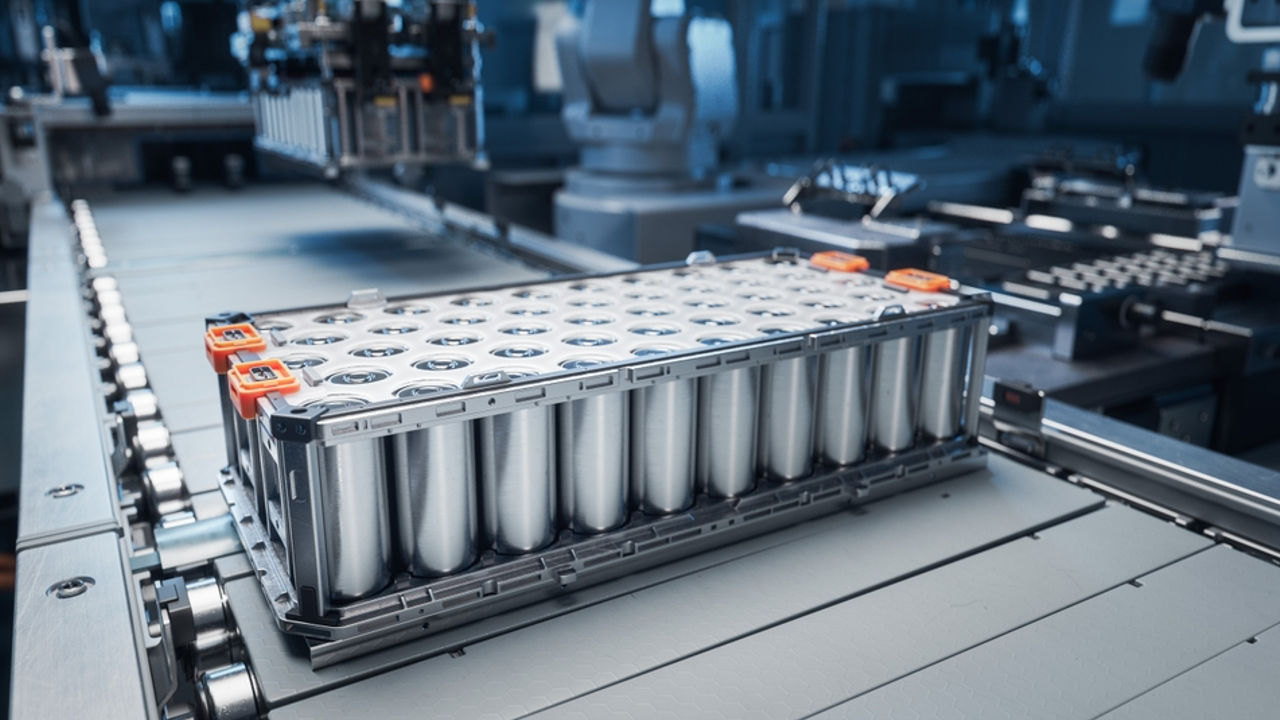
Hybrid and EV batteries degrade over time and eventually lose the ability to hold a charge effectively. Replacement costs vary widely but often fall between $4,000 and $8,000+.
Prevent it: Drive the vehicle regularly. Extended inactivity — especially in extreme heat — accelerates battery wear.
Fuel Pump Replacement (In-Tank)
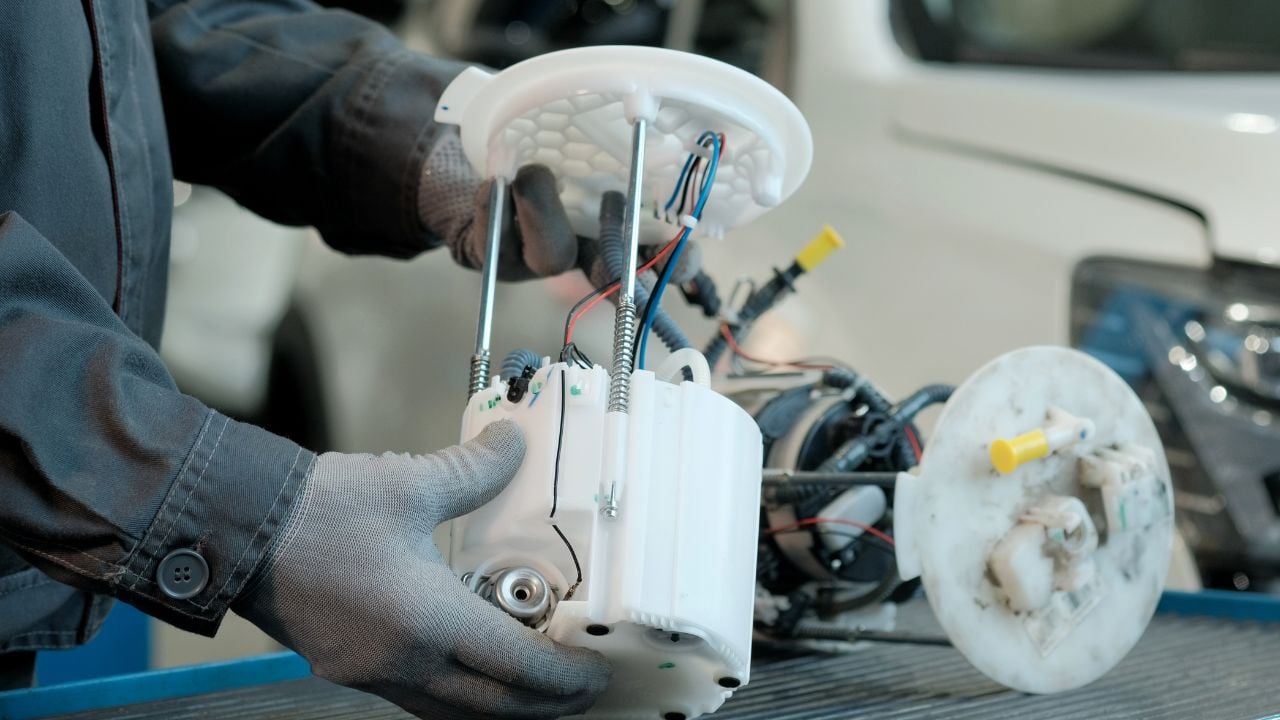
The in-tank fuel pump is responsible for sending fuel to the engine. When it fails, the car will not start. Although the pump itself isn’t expensive, the labor to drop the fuel tank puts the repair at $800 to $1,500.
Running the tank very low can overheat the pump because it relies on being submerged for cooling.
Prevent it: Keep at least ¼ tank of fuel at all times.
Exhaust Gas Recirculation (EGR) Valve Clogging
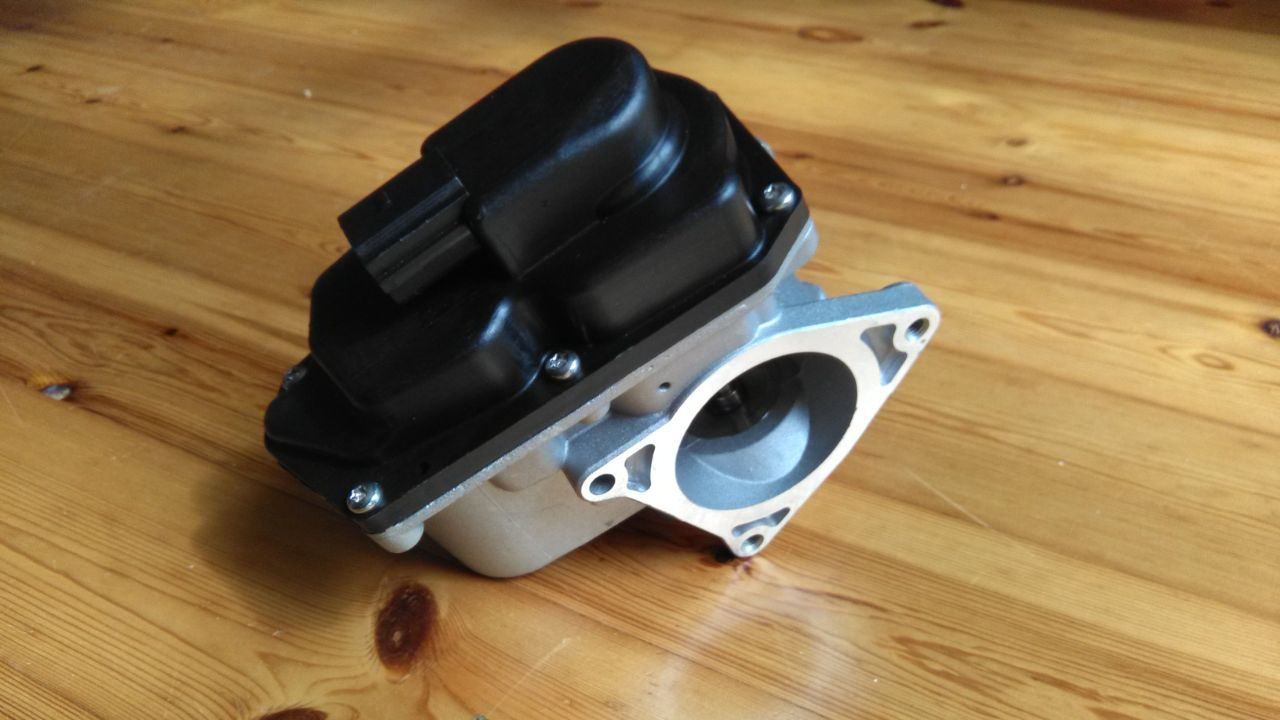
The EGR system reduces emissions by routing small amounts of exhaust back into the engine. Over time, soot and carbon can clog the valve and cooler, causing rough idle and check-engine lights. Cleaning may cost a few hundred dollars; full replacement can reach $1,500 to $2,500.
Prevent it: Regular highway driving helps the engine reach full operating temperature, reducing carbon buildup. Frequent short trips accelerate clogging.
The Value of Proactive Care
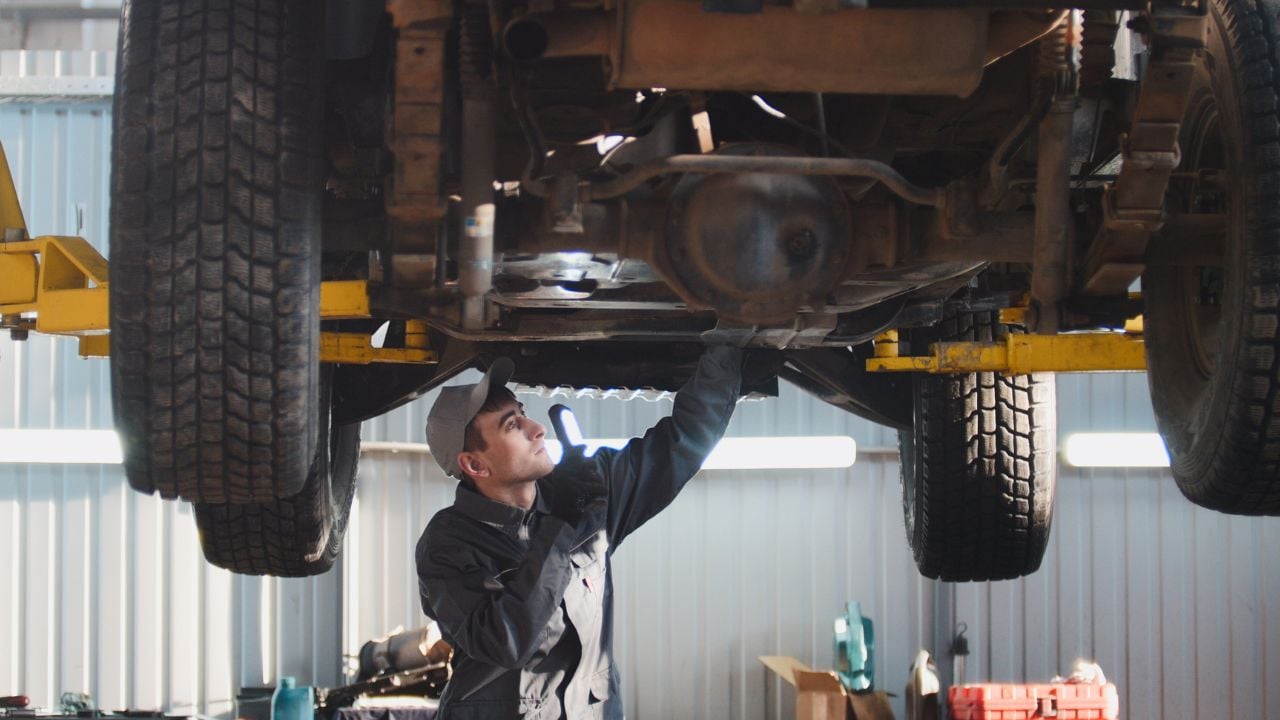
Nearly every major, wallet-emptying repair comes down to ignoring a small, inexpensive maintenance task. A $200 oil change or a $400 belt replacement today can prevent a $6,000 engine failure tomorrow. Following your vehicle’s service schedule ensures it stays a reliable, cost-effective tool rather than a looming financial headache.